
Reviewed · SãO PAULO TOURS
São Paulo: Private 4-Hour Architecture Tour
São Paulo’s architecture reads like a city-sized timeline. In four hours, you can move from colonial construction and European-inspired facades to Modernism, Brutalism, and contemporary design, while a private guide explains why these styles appeared and how they shaped the city.
I like the private vehicle and hotel pickup, since São Paulo is spread out and major buildings are not gathered in one easy walking district. I also like the flexible approach: guides such as Doris, Bruno, and Danilo have adapted routes to personal interests, including a stronger focus on current urbanism when requested.
The main drawback is the price: $290 for a private group of up to one person is a serious outlay, especially if architecture is only a passing interest. Four hours also gives you an informed survey rather than time to study every building at length, and food and drinks are not included.
Key points to know before booking
- A chronological look at São Paulo: The route can connect the city’s earliest construction with later European styles, Modernism, Brutalism, and current architecture.
- Private transport saves time: A vehicle, hotel pickup, and hotel drop-off make it practical to cover scattered parts of central São Paulo.
- Strong focus on Brazilian architects: Expect discussion of Lina Bo Bardi, Oscar Niemeyer, Paulo Mendes da Rocha, Vilanova Artigas, Ruy Ohtake, Isay Weinfeld, and others.
- Flexible guiding: Doris has tailored routes to individual interests, while Danilo adjusted one visit toward modern architecture and urbanism.
- Language choice: Live guiding is available in English, Spanish, or Portuguese.
- Good for serious architecture fans: The tour is wheelchair accessible, private, and best suited to adults and children over five who can manage a four-hour city outing.
São Paulo as a living architecture lesson
São Paulo can seem visually confusing at first. A colonial structure may sit near a Neoclassical building, an Art Deco facade, a severe concrete work from the twentieth century, and a polished contemporary project. This tour gives you a way to read those contrasts rather than simply photograph them.
The city’s architectural story begins with buildings made from local organic materials and early colonial methods. Later, European styles gained force in Brazil from the middle of the nineteenth century onward. Neoclassical, Eclectic, Art Nouveau, Art Deco, and Neocolonial examples all became part of São Paulo’s built fabric.
That mixture is the central appeal. You are not visiting a single museum district where every building follows the same plan. You are looking at a large city that changed in stages, often without removing everything that came before.
I would choose this tour early in a São Paulo stay if architecture matters to you. Once a guide points out the differences between a colonial form, an Eclectic facade, and a Modernist structure, you will notice more during the rest of your time in the city.
A few more Sao Paulo days to weigh up
- São Paulo: Main City Sights in 7 Hours – Shared Group Tour
★ 4.9 · 587 reviews - São Paulo: City Highlights Guided Tour
★ 4.5 · 307 reviews - Private São Paulo City Tour
★ 4.8 · 264 reviews
Why a private car makes sense for four hours
São Paulo covers a lot of ground. A private vehicle lets the guide connect examples across the city without asking you to spend much of the four-hour outing working out routes or waiting for transport.
Hotel pickup and drop-off are included for hotels in central São Paulo. That is useful if you are staying in the center and want a simple start and finish. It also keeps the experience focused on buildings rather than on the practical work of moving between them.
The vehicle is not just a comfort feature. It affects what the guide can show you. A walking tour usually needs to stay within a small area, while this format can present a broader sequence of styles and architects.
You should still expect some architecture to be viewed from the vehicle or from public areas rather than through long interior visits. The supplied details describe a city tour with transportation, not a program of guaranteed building entries. If a particular interior matters to you, ask about it before booking.
The opening chapter: colonial São Paulo
The first stage of the route is likely to set the city’s early architectural context. Colonial buildings made from organic materials show a different approach from the concrete and steel associated with later São Paulo.
This section matters because it gives the rest of the tour a starting point. Without it, the later architecture can look like a series of unrelated styles. With it, you can follow the city’s movement from early construction toward imported European ideas and then toward distinctly Brazilian Modernism.
Do not expect a large colonial quarter preserved in one continuous group. São Paulo’s architectural story is spread through a changing metropolis, and the value here is the comparison between periods.
A guide can also explain the work of Ramos de Azevedo, an important figure in São Paulo architecture. His name helps connect the city’s growth with the institutions and public buildings that gave São Paulo a more formal urban identity.
European influence from Neoclassical to Art Nouveau
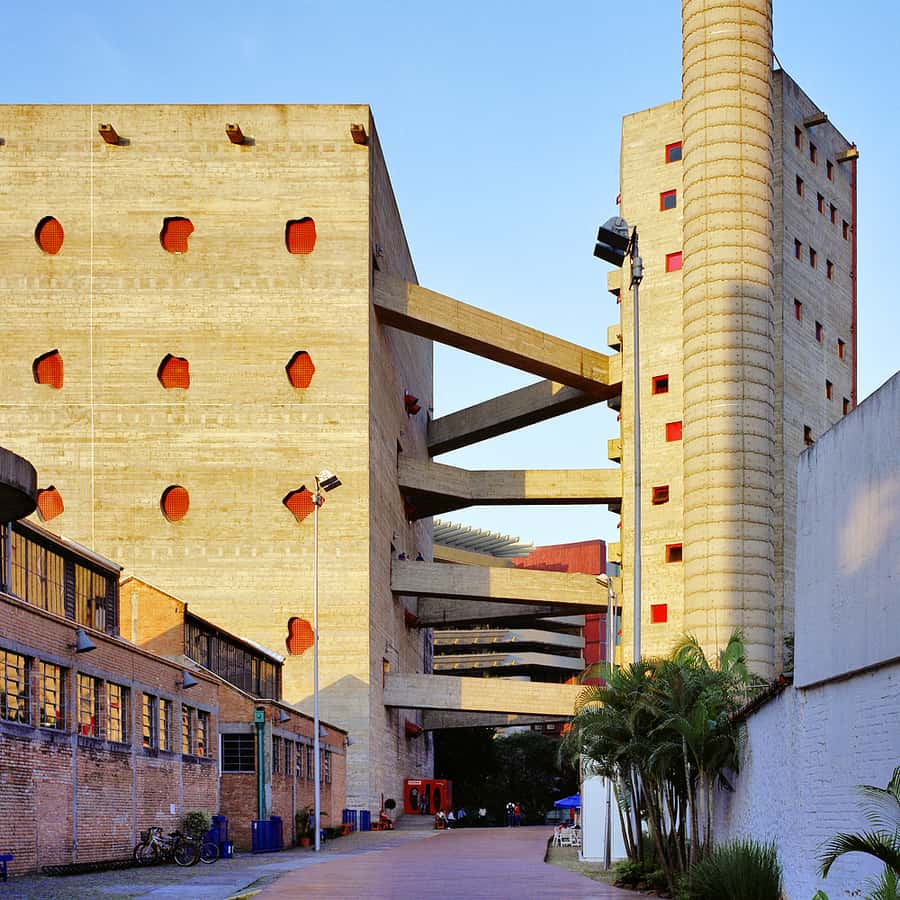
The nineteenth and early twentieth centuries brought several European styles into Brazilian architecture. On this part of the tour, you may see Neoclassical, Eclectic, Art Nouveau, Art Deco, and Neocolonial examples.
These labels can sound academic, but they are useful on the street. Neoclassical buildings tend to suggest order and formal proportion. Eclectic architecture mixes references. Art Nouveau brings more decorative, flowing forms, while Art Deco is often more geometric. Neocolonial design looks back to earlier local traditions while using a later architectural language.
The guide’s job is to show you these differences without turning the outing into a vocabulary test. The strongest part of a route like this is the explanation of why a style mattered at the time, not simply the name attached to a facade.
This is also where a private format helps. If you are especially interested in decorative details, the guide can spend more attention on them. If you prefer the transition to Modernism, you can ask to keep the historical survey brisker.
Same city, a completely different kind of day:
- São Paulo: Downtown Historical Bike Tour
★ 4.9 · 191 reviews - From São Paulo: Santos, São Vicente & Guarujá Day Trip
★ 4.7 · 165 reviews - City Tour Meet São Paulo Half-Day
★ 4.5 · 150 reviews - São Paulo: Bar and Street Art Crawl with Local Guide
★ 4.9 · 102 reviews
São Paulo’s Modernist turn
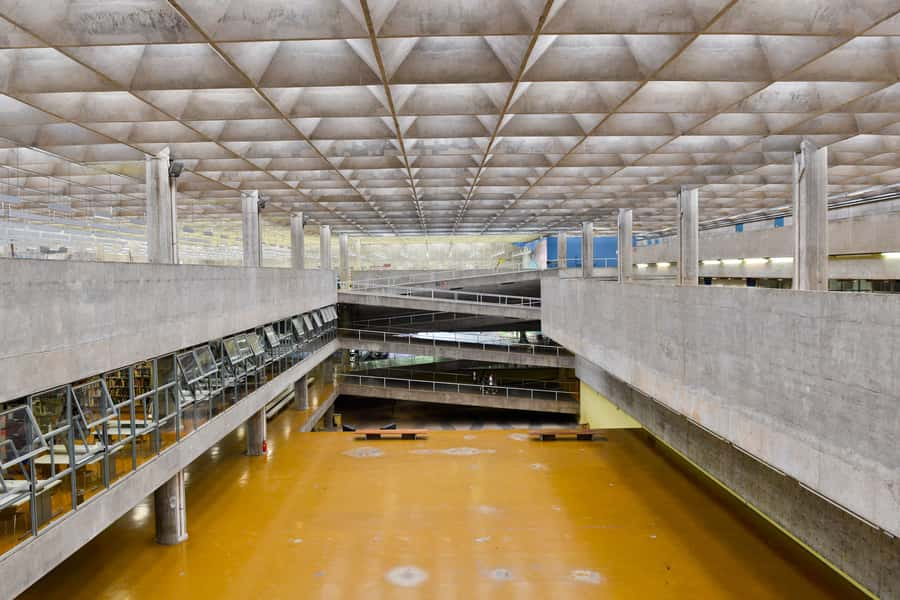
Modernist architecture is one of the major reasons to book this experience. São Paulo became an important setting for architects who rejected excessive decoration and explored new ways to use space, structure, light, and concrete.
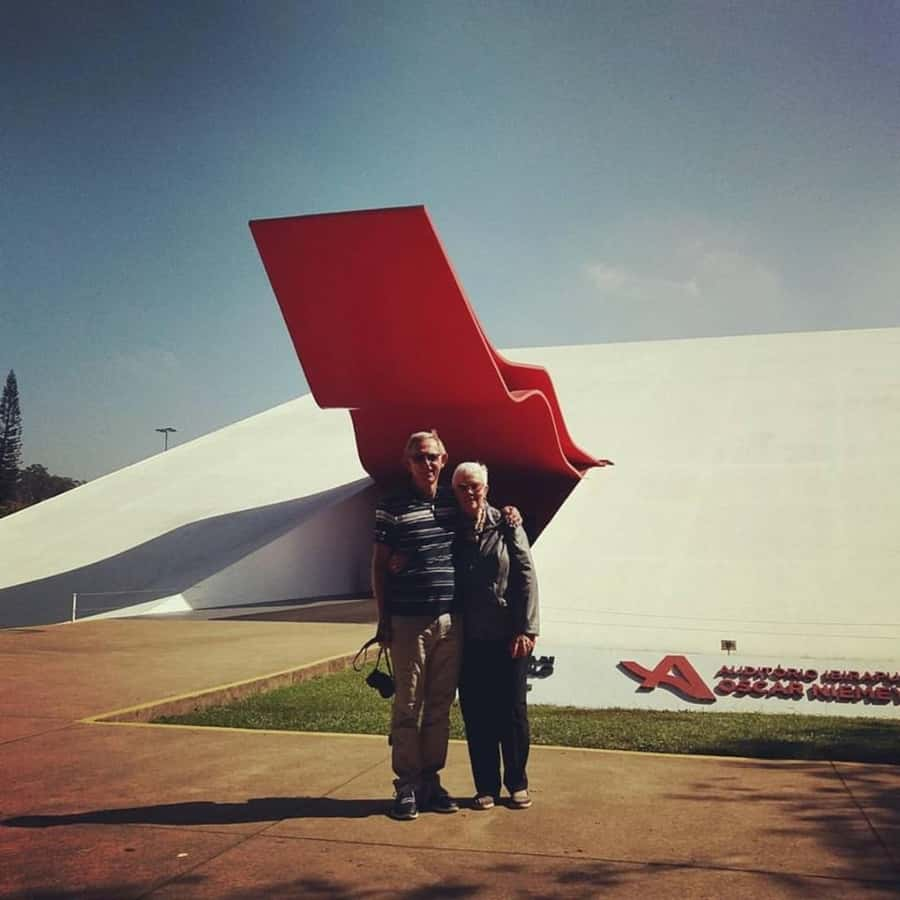
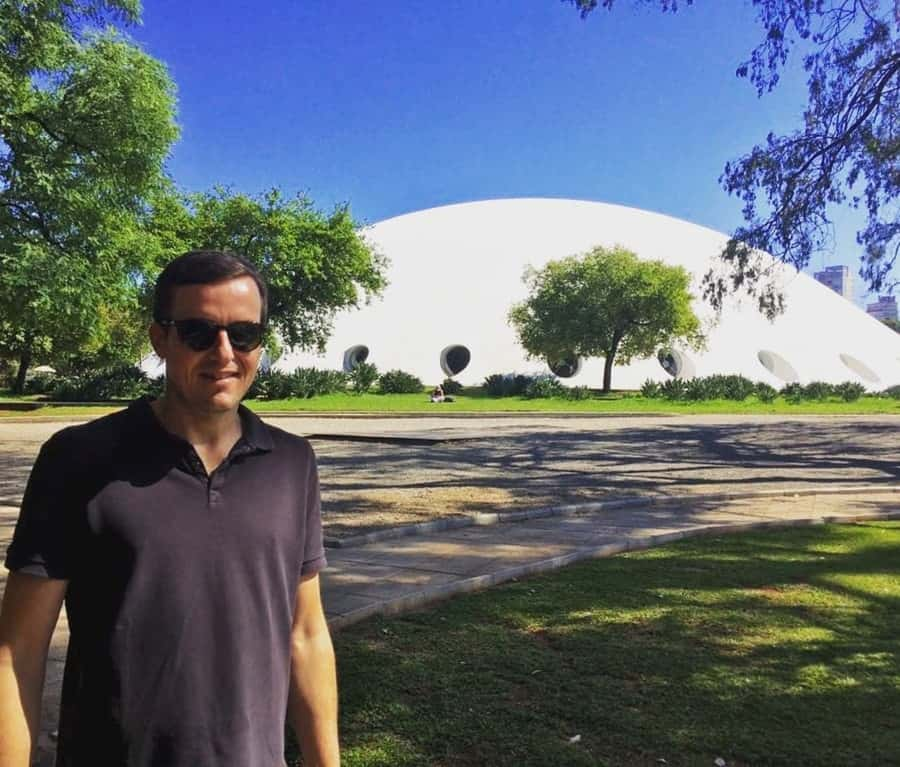
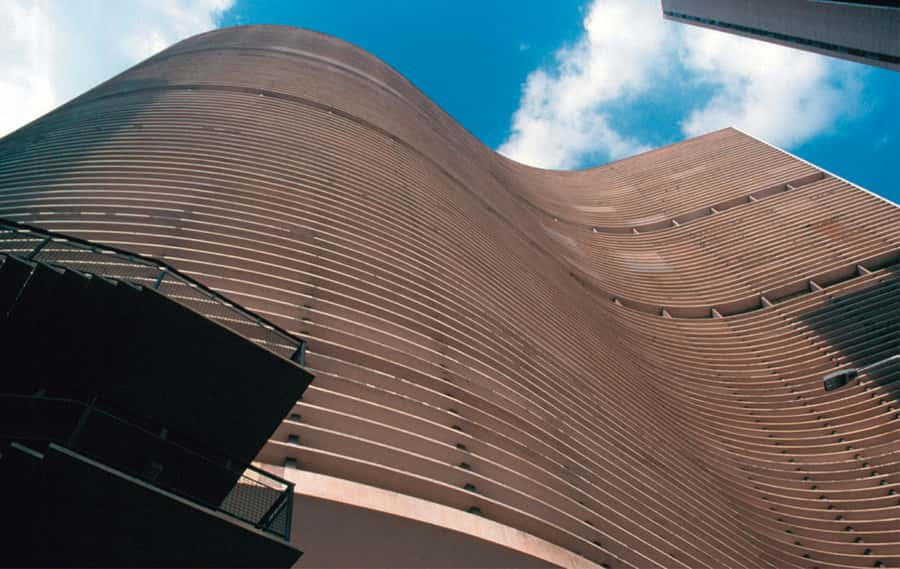
Oscar Niemeyer is one of the best-known names associated with Brazilian Modernism, but this tour also brings in Vilanova Artigas, Lina Bo Bardi, and Paulo Mendes da Rocha. Their work gives you a broader view than a simple Niemeyer highlights tour.
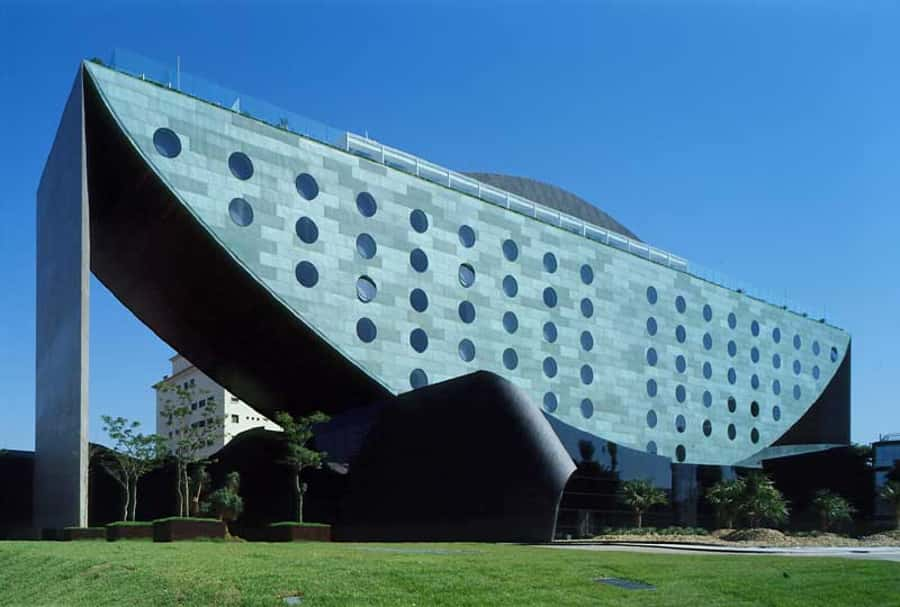
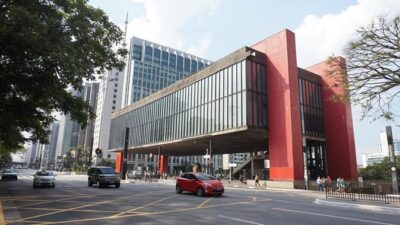
Lina Bo Bardi is especially important to São Paulo’s architectural identity. Her work is often discussed for its direct use of materials, strong public purpose, and unusual relationship between people and space. Paulo Mendes da Rocha is central to the city’s Brutalist tradition, where exposed concrete and large structural forms can feel both severe and powerful.
The tour does not promise entry to every major building by these architects, so your experience will depend on the route and access on the day. Still, hearing the buildings explained by someone who knows the city can change how you see plain concrete. What first looks unfinished may reveal a careful idea about structure, movement, and public life.
Brutalism and the drama of concrete
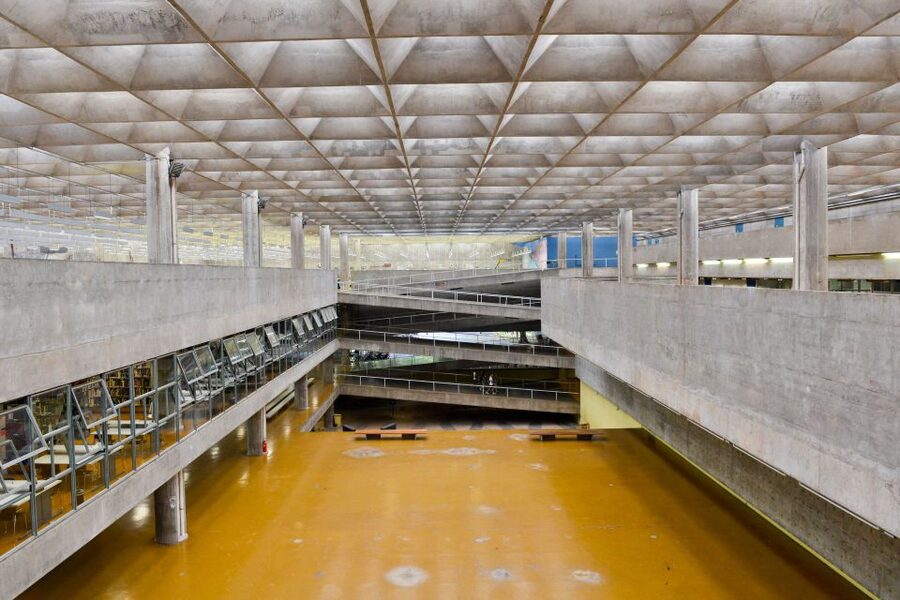
Brutalism is not for everyone. Large concrete surfaces can seem cold, heavy, or even unfriendly. That is precisely why a guide adds value here. You can learn to look at the structure, the scale, the use of shadow, and the way a building meets the street.
Paulo Mendes da Rocha and Vilanova Artigas are key names for this part of São Paulo’s story. Their work helps explain why the city became such an important place for twentieth-century architecture.
I would recommend telling your guide how much time you want to spend on Brutalism. One visitor specifically wanted more modern architecture and current urbanism, and Danilo adjusted the route accordingly. That kind of request is worth making at the start, especially if you would rather study concrete structures than spend equal time on older decorative styles.
For photographers, Brutalism can be rewarding but demanding. You need to look for lines, openings, shadows, and people beside the structure to understand scale. Bring a camera, but also bring patience. A quick photo from a car window will not always show why a building matters.
Contemporary work and São Paulo today
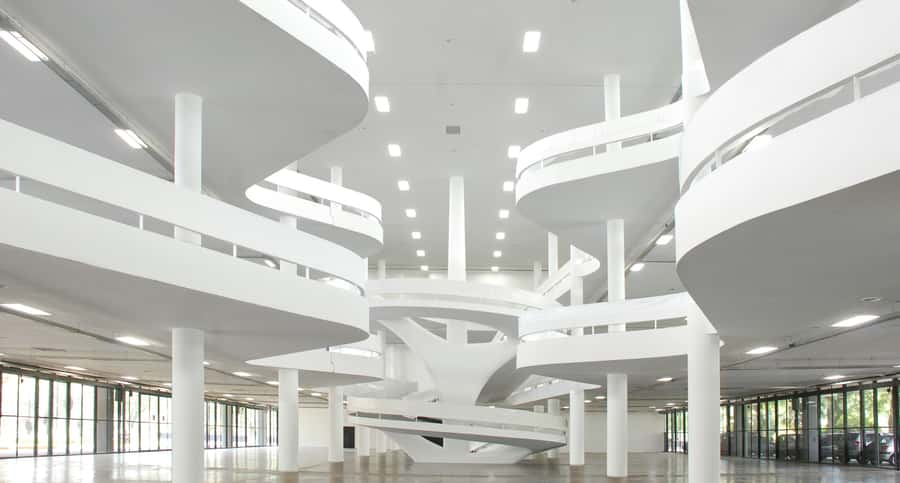
The final part of the architectural story reaches contemporary São Paulo. Names such as Ruy Ohtake and Isay Weinfeld broaden the discussion beyond the famous early Modernists.
This section can be especially useful if you are interested in how the city keeps changing. Contemporary architecture does not erase the older styles. It joins them, sometimes in sharp contrast and sometimes in quieter dialogue.
A four-hour tour cannot provide a full survey of every recent project in São Paulo. What it can do is give you a framework for understanding newer buildings alongside the colonial, European, and Modernist examples seen earlier.
If current urbanism is your priority, say so when you meet the guide. Danilo has adapted the route in that direction before, and Doris has also tailored visits to personal interests. The private format makes such a request more realistic than it would be on a fixed group outing.
Guides who shape the experience
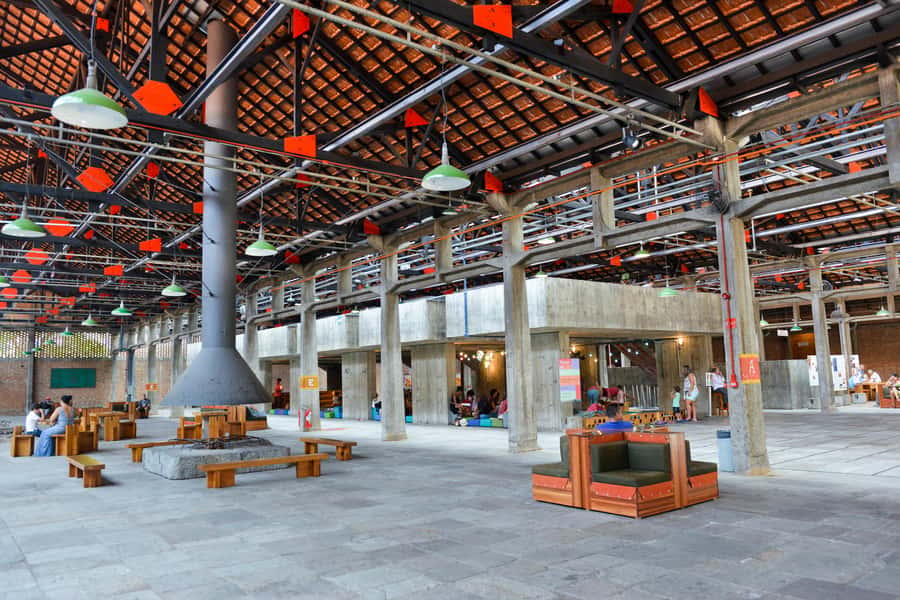
The guide is the most important variable in this tour. The route covers a wide range of styles, and the quality of the explanation will determine whether the experience feels like a clear story or a rapid list of buildings.
Doris has been praised for her passion, warmth, and ability to take visitors to favorite places they might not find alone. She has also adjusted the route around personal interests. If you want a guide-led introduction to São Paulo rather than a standard set of photo stops, that flexibility is valuable.
Bruno has served as both driver and guide. His role has included explaining the city’s history and buildings, adapting the outing to particular interests, and keeping to the planned hotel return time. That combination is practical when you want both transport and interpretation from the same person.
Danilo has been described as punctual, precise, and especially good for a route centered on modern architecture and urbanism. If your interest is contemporary São Paulo rather than colonial history, it is worth requesting that emphasis.
Guiding is offered in English, Spanish, or Portuguese. Since the architectural vocabulary can be technical, choose the language in which you can comfortably ask questions about structure, materials, and historical change.
What the four-hour schedule feels like
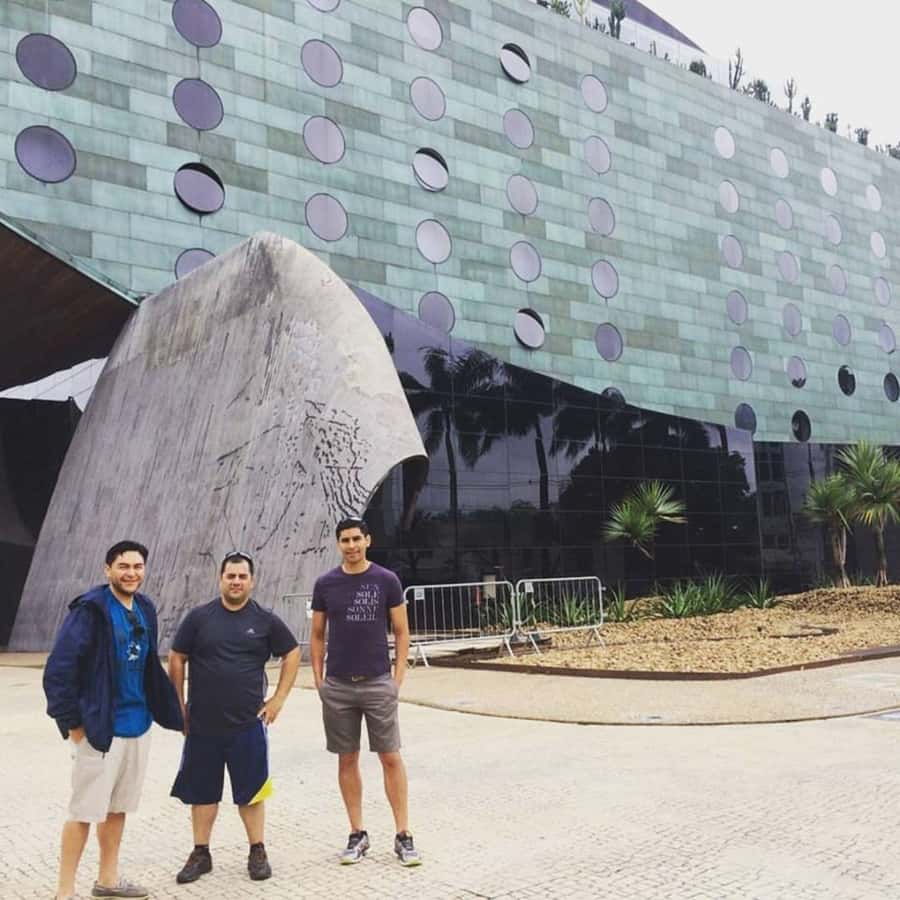
Four hours is long enough for a useful overview but short enough to fit into a compact São Paulo itinerary. You can expect a steady sequence of neighborhoods, buildings, and explanations rather than a slow visit to one site.
The chronological approach is a strength. Starting with original construction and the foundation of São Paulo, then moving through later periods, gives the route a clear shape. It also helps you understand why styles coexist instead of treating the city as an accidental collection of facades.
The tradeoff is depth. You may see examples of Colonial, Neoclassical, Eclectic, Art Nouveau, Art Deco, Neocolonial, Modernist, Brutalist, and Contemporary architecture, but you will not become an expert in each category in four hours.
Wear comfortable shoes even though transportation is included. You may stop, walk short distances, or examine details outside the vehicle. Sunglasses, a sun hat, and a camera are also recommended.
Price, private value, and who should pay it
The listed price is $290 per group up to one person. That makes this a premium experience, not a casual sightseeing add-on. The cost includes a professional bilingual guide, private vehicle transport, hotel pickup, and hotel drop-off.
The value improves if your main goal is architecture and you want a route shaped around your interests. You are paying for private time, local interpretation, and the ability to move between separated parts of São Paulo without arranging transport yourself.
The value is weaker if you only want a general city overview. In that case, a standard sightseeing option may give you a broader introduction at less cost. This tour earns its price through subject focus and personal attention, not through meals or entrance tickets.
Food and drinks are not included. Plan to eat before or after the outing, particularly if you are sensitive to a four-hour schedule without a meal stop.
Accessibility, children, and practical limits
The experience is wheelchair accessible, which makes the private vehicle format useful for visitors who need a more controlled way to move around the city. Specific building access can vary, so ask about any particular stop you need to enter.
Children under five are not suitable for this tour. Children up to age ten need special seats, and you must provide that information in advance or transport cannot be arranged.
Unaccompanied minors are not allowed. Pets and smoking are also not allowed.
Cancellation is free up to 24 hours before the tour for a full refund. You can also reserve now and pay later, which helps if your São Paulo schedule is still changing.
Should you book this São Paulo architecture tour?
Book it if you want to understand São Paulo through its buildings, especially if Lina Bo Bardi, Paulo Mendes da Rocha, Oscar Niemeyer, or Brazilian Modernism already interest you. The private car, central hotel pickup, language choice, and flexible guiding make it a strong fit for a focused four-hour introduction.
I would also recommend it to repeat visitors who have already seen the standard sights and want a more thoughtful way to read the city. Ask for Doris, Bruno, or Danilo when possible, and explain whether your priority is colonial architecture, Modernism, Brutalism, or contemporary urbanism.
Skip it if $290 feels too high for a specialized tour, or if you want long interior visits at a small number of buildings. For everyone else, this is a practical way to see how São Paulo grew from early construction into one of Brazil’s most interesting architectural cities.
FAQ
How long is the São Paulo architecture tour?
The tour lasts four hours.
What languages are available?
Live guiding is available in English, Spanish, and Portuguese.
Is hotel pickup included?
Yes. Pickup and drop-off are included for hotels in central São Paulo.
Is transportation provided during the tour?
Yes. Transportation is by private vehicle.
Is the tour private?
Yes. It is offered as a private group experience.
Is the tour wheelchair accessible?
Yes, the activity is listed as wheelchair accessible.
Can children join the tour?
Children under five are not suitable for the tour. Children up to age ten require special seats, and this must be arranged in advance.
What does the price include?
The listed price is $290 per group up to one person. It includes a professional bilingual guide, private vehicle transportation, hotel pickup, and hotel drop-off. Food and drinks are not included.
Just added around Sao Paulo
- REIKI – Crystal Therapy – by Venus’ Secret Spa – San Francisco★ 5.0 · 41 reviews
- Art Of Wine – Travel Through The So-Called Wine Route Visiting Various Wineries★ 5.0 · 40 reviews
- Private Half-Day Guided Tour to São Paulo★ 5.0 · 50 reviews
- Terraço Italia Restaurant experience★ 4.5 · 43 reviews
- Private Tour: São Paulo’s Top Attractions–6 Hours, Hotel/Airport★ 5.0 · 50 reviews
- Downtown Photo Tour★ 5.0 · 45 reviews
- Full Day Private Beach Tour Santos & Guarujá – Combine Culture, History & Beach★ 5.0 · 37 reviews
- Private Street Art Tour of São Paulo with Batman´s Alley Visit★ 5.0 · 30 reviews
São Paulo Tours, compared.
São Paulo 5 Hour Private Tour With Fruit Tasting
Read our review →
Downtown-Center History Walking Tour – in English
Read our review →Browse the lists this tour appears in