
Reviewed · TIJUCA FOREST TOURS
Tijuca Forest w/ Chinese View,cascatinha Taunay,horto waterfall and parque laje
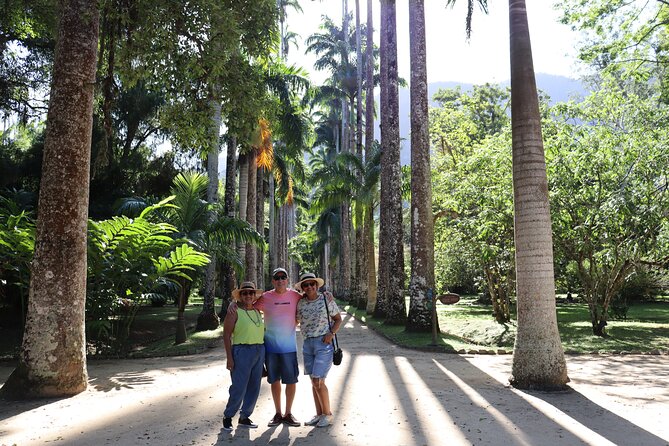
Rio can feel crowded, noisy, and wonderfully overwhelming. Then you turn into Tijuca Forest, where steep green hills, waterfalls, and wildlife sit surprisingly close to the city. This half-day outing links the forest’s best-known viewpoints with Parque Lage, a handsome old estate in the Jardim Botânico neighborhood.
I like the easy mix of nature and history. You get broad views from Vista Chinesa, a look at the old Imperial-era road at Emperor’s Table, and the graceful stone bridge beside Cascatinha Taunay. I also like the small-group setup, with the possibility of a personal outing and guides such as Ederson, Jael, or Jabier bringing local context to the stops.
The main consideration is time. Four hours goes quickly, and this is a scenic sampler rather than a long forest walk. The tour title includes Horto Waterfall, but the supplied stop details do not give a separate visit time for it, so confirm the exact route before booking.
Key points to know before booking
- Vista Chinesa offers one of Rio’s finest city views, reached by a paved trail with a steep climb.
- Emperor’s Table connects the forest to Brazil’s Imperial past, including the old road toward Alto da Boa Vista.
- Cascatinha Taunay is the highest waterfall in Tijuca National Park, with a stone Roman-arch bridge in front.
- Parque Lage adds an elegant urban stop, with forest, an old mansion, and access to the Jardim Botânico neighborhood.
- Wildlife is a real possibility, including monkeys and toucans, though sightings cannot be promised.
- The tour lasts about four hours and accepts up to 14 people, with car or Jeep transport listed for larger groups.
A half-day escape inside Rio
This experience works because it packs several sides of Rio into one short outing. You see the city from above, enter one of the world’s notable urban forests, pause at a waterfall, and finish near Parque Lage and the Botanical Garden district.
I would choose it for a first or second day in Rio if you want nature without giving up much of your sightseeing schedule. The four-hour format also suits anyone who wants an active morning or afternoon, then plans to spend the rest of the day at the beach, in Ipanema, or around another city attraction.
The guide makes a difference here. Ederson is named in several of the published responses, while other visitors specifically mention Jael or Jabier. The strongest praise centers on guides who explain the setting, adjust the pace, and give the outing a personal feel. That matters because the forest’s history is easy to miss if you only stop for photographs.
The outing is not designed as a demanding hike. Vista Chinesa involves a steep climb, but the access is paved. Most people can participate, according to the activity information, though you should be comfortable with some uphill walking and uneven outdoor surroundings.
More Waterfall Tours in Rio de Janeiro
- Rio: Tijuca Forest Small Group Hike to Caves and Waterfalls
★ 4.9 · 536 reviews - Rio: Tijuca Forest & Horto Waterfalls Circuit Tour
★ 4.7 · 99 reviews - Hiking in the Tijuca Forest : Waterfalls and Caves
★ 5.0 · 72 reviews
Vista Chinesa and the big Rio view
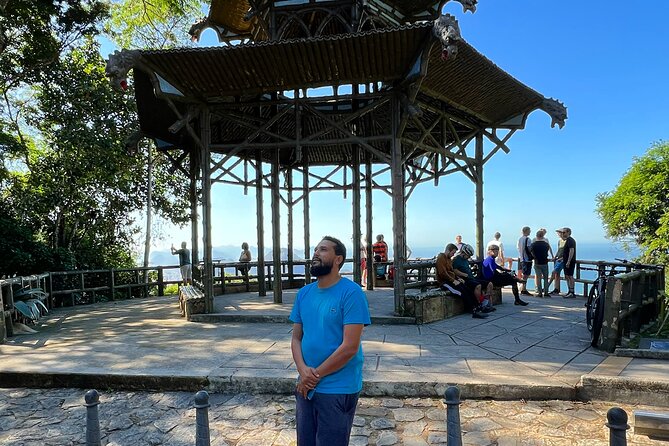
Vista Chinesa is the visual high point of the first part of the tour. The small pavilion was built in the early twentieth century to honor Chinese people and the cultivation of imported tea in Brazil. Its design recalls bamboo, linking the monument to the Chinese presence that shaped this part of Rio’s story.
The view opens across the southern zone of Rio, with a wide sweep of green and the city below. On a clear day, this is the place that makes the forest’s location feel so unusual. You are not far from major neighborhoods, yet the lookout feels removed from the traffic and high-rise streets.
The access trail is paved and described as easy to reach, but the climb to the lookout is steep. I would wear shoes with a secure sole and avoid treating this as a stop where you can simply step from the vehicle to the viewpoint. The walking time listed for Vista Chinesa is about 30 minutes, so you should have enough time for photographs and a short look around, but not an extended hike.
Wildlife can add something special. One outing included a sighting of about 20 monkeys moving through the trees near the Chinese lookout. That is a wonderful bonus, but it is best to regard animals as luck rather than a promised part of the schedule.
Emperor’s Table and the road to Alto da Boa Vista

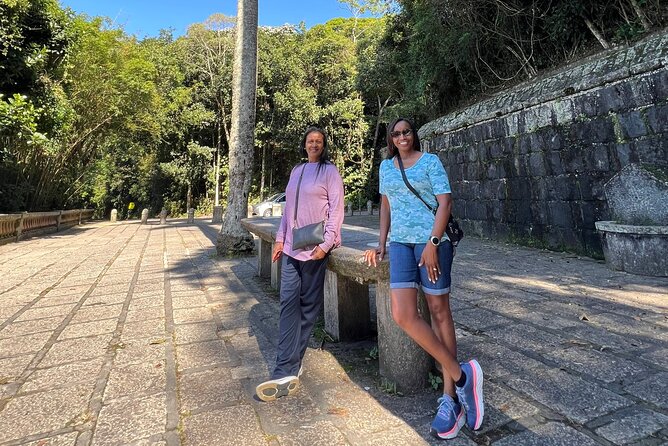
Emperor’s Table, or Mesa do Imperador, gives the tour a useful historical pause. From 1856, a cantilevered road connected the Botanical Garden with Alto da Boa Vista. The road was linked to Baron of Bom Retiro and engineer Thomas Cochrane, and Chinese laborers were used in its construction.
The site also recalls the failed attempt to grow tea in Brazil. Chinese tea planters had arrived during the period of Dom João VI, and the area retained traces of that early experiment. An 1844 map even recorded a building called Casa dos Chinas, or House of the Chinese.
The name Emperor’s Table comes from its use as a resting place during walks by the Imperial family. That small detail helps you picture the old road as more than a route through the forest. It was also a place for royal leisure, long before Rio became the modern city you see today.
The stop is scheduled for about 30 minutes and has no admission charge. It is not likely to be the most dramatic stop visually, but I would not skip it. The best value of this stop comes from hearing how roads, agriculture, migration, and the Imperial court shaped the forest.
Cascatinha Taunay and its Roman-arch bridge
Cascatinha Taunay is the most substantial waterfall stop on the route. It is formed by water from the Tijuca River, the Conde River, and other tributaries, and it is described as the highest waterfall in Tijuca National Park.
A stone bridge in front of the waterfall gives the scene an old-world look. Engineer Job de Alcântara was commissioned by the Imperial Government in 1860 to construct the Roman-arch bridge. The result is more than a viewpoint for a quick photograph. The bridge frames the cascade and shows how people once built formal structures into the forest.
The waterfall is tied to painter Nicolas Antoine Taunay, who built a small house nearby in 1817. He painted the cascade and hosted gatherings for the court, earning a reputation as one of the forest’s great social figures. His house was demolished in 1946, and the former Cascatinha restaurant site is being prepared for a café and new restaurant.
You have about an hour here, the longest scheduled stop. That gives you time to look at the water, bridge, and forest setting without rushing. Do not expect a long trail excursion, though. The value is the combination of scenery, history, and access by vehicle.
More Tijuca Forest hikes and jeep runs:
- Rio de Janeiro: Christ, Selaron Steps, and Tijuca Park Tour
★ 4.7 · 857 reviews - Rio de Janeiro: Guided Jeep Tour through Tijuca Rainforest
★ 4.3 · 740 reviews - Jeep Adventure: Guided Tour through Tijuca Rain Forest
★ 4.0 · 554 reviews - Rio: Half-Day Jeep Tour at Floresta da Tijuca
★ 4.5 · 353 reviews
The Horto Waterfall question
The experience title includes Horto Waterfall, but the detailed stop schedule names Vista Chinesa, Emperor’s Table, Cascatinha Taunay, and Parque Lage. No separate duration or description is provided for Horto Waterfall.
That does not necessarily mean the route cannot include it. It does mean you should ask Trip In Rio to confirm whether Horto is included on your date, whether it replaces another stop, and how much time is available there. This is especially important if Horto is the main reason you are booking.
The distinction matters because a four-hour tour has limited room for extra stops. A route that includes every named site may allow only brief visits, while a route focused on the four detailed stops gives you more time at each one.
Parque Lage, the polished final stop
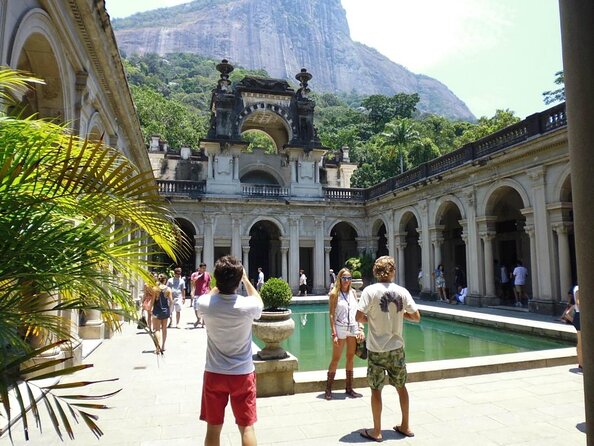
Parque Lage changes the mood. After the forest roads and waterfall, you arrive in the Jardim Botânico neighborhood at a 52-hectare park surrounded by Atlantic Forest and included within the Tijuca National Park area.
The park is known for its old mansion and its setting beneath the forested hills. The supplied timing allows about 50 minutes, enough to walk around, take in the architecture, and pause for a drink if the facilities are operating. One especially appealing version of the visit included a walk through the forest followed by a drink in the old mansion.
I like Parque Lage because it gives you a softer ending than another lookout. You get greenery, architecture, and a neighborhood connection rather than only another scenic stop. It also sits close to the Botanical Garden and Christ the Redeemer area, so it can help you understand how Rio’s major attractions fit together geographically.
Do not assume this tour includes admission to the Jardim Botânico itself. Parque Lage and the Botanical Garden are separate attractions, even though they are close to one another. The detailed information lists Parque Lage as the stop and does not list a Botanical Garden admission ticket.
Wildlife, pace, and the value of a guide
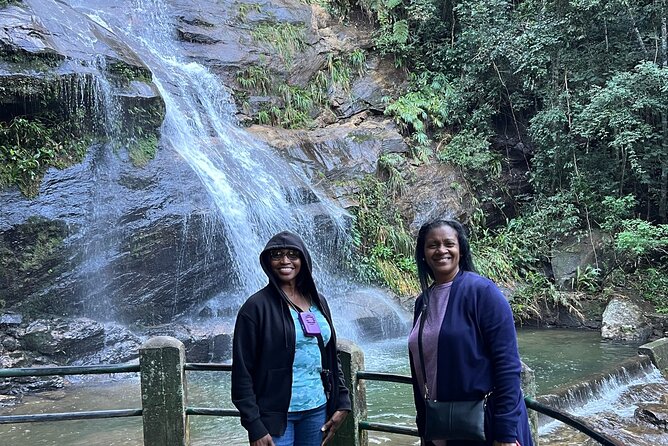
The forest is home to Brazilian flora and fauna, and the outing gives you a chance to see them in their natural setting. Monkeys have been seen swinging through the trees, and toucans have also appeared during the tour.
The important word is chance. Wildlife sightings depend on timing and conditions, and the tour does not promise a particular animal. I would bring patience, keep your eyes moving, and let the guide point out what is easy to miss.
A good guide is particularly useful here. A forest can look like a wall of green when you do not know what you are seeing. The guides praised in the supplied material were described as pleasant, attentive, and able to explain both nature and history. The experience is strongest when you want more than a driver who simply stops at viewpoints.
The small-group limit also helps. The maximum is 14 people, but the tour can sometimes be more personal, depending on bookings. One outing operated with a single participant, creating a private-feeling experience. You should not count on being alone, but the format leaves room for a quieter group than a large coach tour.
Is $88.21 a fair price?
At $88.21 per person, this is not the cheapest way to see a waterfall or viewpoint in Rio. The price makes more sense if you value door-to-door transport, a guide, and the ability to connect several spread-out places in roughly four hours.
Admission to the listed stops is free, so you are mainly paying for the guide’s time, vehicle, route planning, and local explanation. For a group of up to five using a suitable private vehicle, the convenience can be worthwhile. For a larger group, the listed car or Jeep arrangement helps avoid arranging separate transport.
The price is easier to justify if you want history along with scenery. Without a guide, Vista Chinesa is simply a lookout, Emperor’s Table is simply a forest stop, and Cascatinha Taunay is simply a waterfall. With context, the route explains Chinese tea cultivation, Imperial-era road building, royal walks, and the artists who helped make Tijuca part of Rio’s cultural story.
Food and bottled water are not included. Bring your own water and a small snack, especially if you are booking this around a meal. The tour is short, but the combination of vehicle time, uphill access, and outdoor stops can make refreshments useful.
Timing, weather, and who should book
The experience lasts about four hours, making it a good fit for a half-day schedule. You can book it in the morning or afternoon, but the exact start time is not provided here, so check the available option before making plans around it.
Good weather matters. If poor weather forces cancellation, you are offered a different date or a full refund. You can also cancel for a full refund up to 24 hours before the start time. Changes or cancellations inside that window are not accepted for a refund.
I would recommend this tour to you if:
- You want rainforest scenery without committing to a full-day hike.
- You enjoy pairing views and waterfalls with local history.
- You prefer a guide and vehicle rather than managing several rides.
- You are comfortable with a steep paved climb at Vista Chinesa.
- You want a small-group outing that may feel personal.
I would look elsewhere if your main goal is a long, strenuous trek, a guaranteed wildlife encounter, or a full visit to the Botanical Garden. I would also confirm the Horto Waterfall plan before paying, since its separate timing is not stated.
Should you book the Tijuca Forest tour?
I would book this if you want an efficient introduction to Rio’s forested side. The route has a good rhythm: a grand view at Vista Chinesa, history at Emperor’s Table, water and architecture at Cascatinha Taunay, then the more refined setting of Parque Lage.
The strongest reason to choose it is the guide-led context. The scenery is attractive on its own, but the stories about Chinese tea cultivation, the Imperial family, the old road, and Taunay’s house give the stops a clear connection to Rio’s past.
Just keep your expectations practical. This is a four-hour highlights tour, not an expedition. Confirm the Horto Waterfall details, bring water, allow for the steep lookout climb, and book it if you value variety, convenience, and a personal guide more than extended time on one forest trail.
FAQ
How long does the Tijuca Forest tour last?
The experience lasts approximately four hours.
What places are included in the route?
The detailed route includes Vista Chinesa, Emperor’s Table, Cascatinha Taunay, and Parque Lage. The tour title also mentions Horto Waterfall, but no separate timing is provided for that stop.
Is transportation included?
A tour guide is included, and car or Jeep transport is listed for groups of more than five people. Confirm the exact vehicle arrangement when booking.
How many people can join the tour?
The maximum group size is 14 people.
Are entrance tickets included?
The listed stops show free admission. No separate paid entrance is listed for the included route.
Is the tour suitable for most people?
The activity information says most people can participate. Vista Chinesa does require a demanding, steep climb, although the access trail is paved.
Are food and bottled water included?
No. Snacks and bottled water are not included.
Can I see monkeys or toucans?
Wildlife sightings are possible. Monkeys and toucans have been seen during the tour, but specific sightings are not guaranteed.
What happens if the weather is poor?
If the experience is canceled because of poor weather, you are offered a different date or a full refund. Free cancellation is also available up to 24 hours before the start time.
Just added around Rio de Janeiro
- Rio de Janeiro: Zip Lining and Canopy Tree Tour★ 3.3 · 6 reviews
- Vidigal Favela Tour★ 4.4 · 26 reviews
- Hang gliding flight in Rio de Janeiro★ 5.0 · 6 reviews
- Rio de Janeiro: Attend a Vasco da Gama game with local guide★ 4.8 · 9 reviews
- Unforgettable Boat Party★ 5.0 · 3 reviews
- Rio Highlights: Christ, Sugarloaf, and More in a Private Tour★ 5.0 · 36 reviews
- Tijuca Forest Hike – Waterfalls & Caves, Nature & Wild Life!★ 5.0 · 51 reviews
- City Tour Full VIP – Corcovado Train + Churrascaria Rodízio★ 5.0 · 43 reviews
Tijuca Forest Tours, compared.
Jeep Adventure: Guided Tour through Tijuca Rain Forest
Read our review →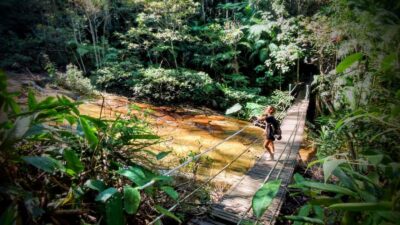
Tijuca Forest Small Group Hike to Caves and Waterfalls
Read our review →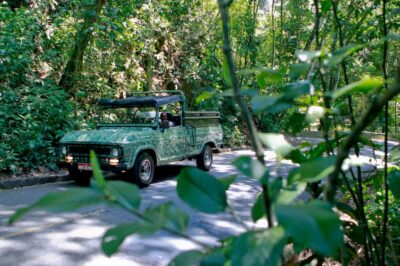
Rio de Janeiro Botanical Garden & Tijuca Forest Tour
Read our review →
Browse the lists this tour appears in