
Reviewed · STREET ART
Rio Street Art Tour
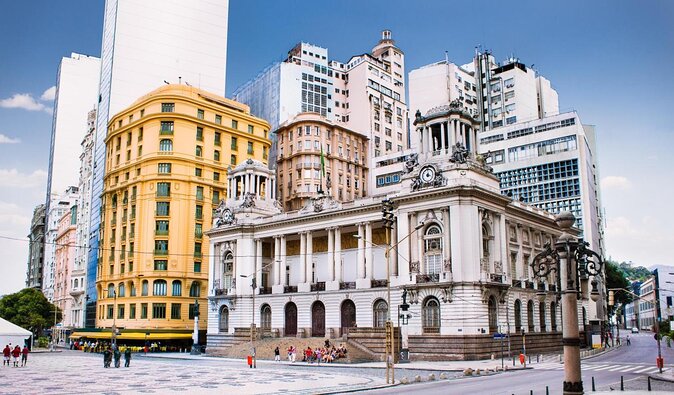
Rio Street Art Tour is really a city tour told through paint. You move from the Municipal Theater through Cinelândia, Selarón Staircase, and Porto Maravilha, using Rio’s subway and VLT along the way. The final mural is the star: a huge work in the port district, alongside the Museum of Tomorrow and other major museums.
I like the small private format, which lets Wellington adjust the conversation to your interests. I also like the way the route links graffiti with politics, Carnival, samba schools, architecture, and Afro-Brazilian culture instead of treating murals as mere photo backdrops. The main drawback is the pace: three hours includes a lot of walking and public transport, so bring water and expect an active outing.
Key points to know before you book
- Wellington is the named guide, and his tour focuses on the stories and social meaning behind Rio’s murals.
- The route uses the subway, VLT, and walking, giving you a practical look at central Rio as well as its art.
- Porto Maravilha finishes the tour, with the world’s largest graffiti mural and nearby museums.
- Little Africa adds important context, especially around slavery, Afro-Brazilian culture, and the old port.
- The private setup works for solo visitors and families, with only your group taking part.
- The $68.61 price buys about three hours, including guiding, local context, and help navigating the route, but admission to listed stops is free.
Rio’s murals tell more than one story
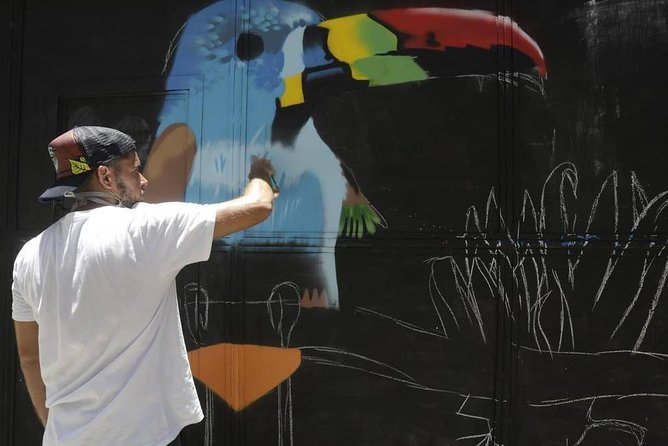
The best reason to book this experience is that it does not separate art from everyday Rio. A painted wall can lead to a discussion of political messages, Carnival, race, neighborhood change, architecture, and the people shown in the artwork.
Wellington’s approach is personal and conversational. He is a native of Rio, speaks English well, and is open to questions. One especially useful detail is his attention to the meaning of individual figures and symbols in the murals. You are not simply pointed toward a large wall and left to take pictures.
The tour also works as an introduction to central Rio. You pass formal public buildings, old streets, transport stations, museums, and port redevelopment projects. That mix gives you a better sense of how different parts of the city fit together.
More street art walks in Rio de Janeiro:
- Rio Street Art Tour
★ 5.0 · 76 reviews - São Paulo: Bar and Street Art Crawl with Local Guide
★ 4.9 · 102 reviews - Street Art and Park Bike Tour
★ 5.0 · 56 reviews
Starting at the Municipal Theater and Cinelândia
The meeting point is the Municipal Theater of Rio de Janeiro at Praça Floriano, in central Rio. This is a sensible place to begin because Cinelândia brings together several of the city’s important cultural buildings.
The area is known for its main theater and libraries, and the architecture reflects European influence in Rio. The contrast is useful: ornate public buildings sit within a modern city, while street art offers a more direct and current voice.
You will spend roughly 30 minutes around Cinelândia before taking the VLT toward the Olympic Boulevard area. That transport connection is part of the experience, not just a way to save time. You get to see how central Rio moves and how the old center connects with the redeveloped port district.
If you are hoping for a long architecture walk, this tour is not designed for that. The buildings provide context, but the focus remains on the relationship between public space, murals, and city life.
Selarón Staircase, Rio’s most familiar stop
The Escadaria Selarón is one of Rio’s best-known sights and is described as the city’s third most visited tourist spot. Its brightly tiled steps are a natural stop on a street-art route, though the setting can feel more touristy than the other parts of the tour.
You get about 20 minutes here. That is enough to see the staircase, take pictures, and hear how it fits into the city’s artistic identity. It is also a useful point of contrast. Selarón is famous and heavily photographed, while some of the other murals on the route are easier to miss without a guide.
The staircase can be crowded, so do not expect a quiet art viewing. I would treat it as a lively landmark rather than the most local part of the outing. The value comes from placing it beside the less obvious walls and neighborhoods that follow.
The subway and VLT are part of the lesson
This is not a coach tour with a guide pointing through windows. You move through Rio on foot, by subway, and by VLT, the light rail system used in the center and port area.
That makes the tour feel more connected to daily life. You get a sense of distance between neighborhoods and see how the route works in practice. One past visitor also appreciated the guide’s help with the train ticket, avoiding the risk of an incorrect fare or possible fine.
Expect some standing, station changes, and street walking. The route is described as easy to walk, but one person found there was a lot of walking. Those two points can both be true: the ground is manageable, yet the total movement adds up.
Wear comfortable shoes. Bring water. If you have limited stamina, ask about the exact route and transport plan before booking.
A few more Rio de Janeiro days to weigh up
- Rio de Janeiro: 6-Stop Highlights of Rio with Lunch
★ 4.4 · 5,157 reviews - Christ the Redeemer Entry Ticket by Corcovado Train
★ 4.4 · 4,476 reviews - Rio de Janeiro: Rocinha Favela Walking Tour with Local Guide
★ 4.8 · 3,052 reviews - Rio de Janeiro: Sugarloaf Cable Car Official Ticket
★ 4.6 · 2,873 reviews
Boulevard Olimpico and the museum district
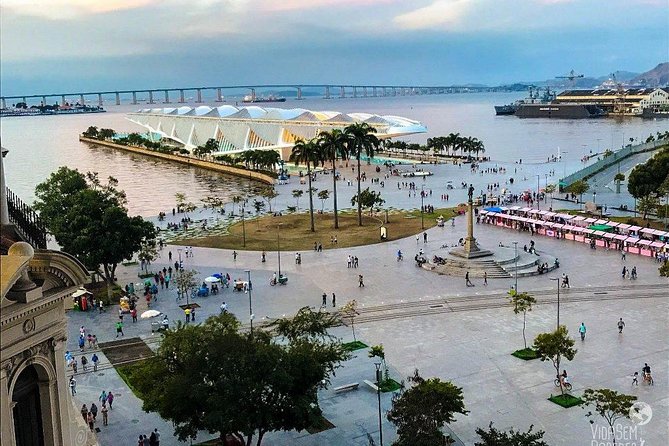
The Olympic Boulevard area is home to some of Rio’s main museums. The route brings you into this large public zone after the Cinelândia section and continues toward Porto Maravilha.
The area matters because it shows a newer side of central Rio. Here, major museums and open public spaces sit alongside large-scale murals. The art is not tucked away inside a gallery. It is part of the streetscape and can be read alongside the city’s redevelopment.
The Museum of Tomorrow is one of the major visual landmarks near the end of the route. The tour does not list an interior visit, so do not book this expecting museum admission or a guided museum tour. You are seeing the district and its public art, with the museums as part of the setting.
This section is also good for photographs, but Wellington’s explanations give it more weight than a quick stop for pictures. He connects the artwork to current issues and the way Rio presents itself in public spaces.
Porto Maravilha and the enormous final mural
The final hour takes place in Porto Maravilha, where you see the world’s largest graffiti mural. This is the visual payoff of the tour. Its scale makes more sense when you have already seen smaller works in central Rio and learned how public art can carry social and political messages.
The mural is associated with the port area’s broader story, including its connection to enslaved Africans. That link gives the final stop serious historical weight. You are not only looking at a giant wall. You are standing in a part of Rio where the past, present-day redevelopment, and public memory meet.
The port district also places you near Little Africa, the Museum of Tomorrow, and the Museu de Arte do Rio. One of the strongest aspects of Wellington’s guiding is the way he brings Afro-Brazilian culture into the discussion rather than leaving the tour at surface-level graffiti.
The stated time here is about one hour. That is useful because a mural this large needs time. You can look at sections, discuss recurring themes, and understand why the work matters without rushing straight to the next stop.
What Wellington adds beyond the artwork
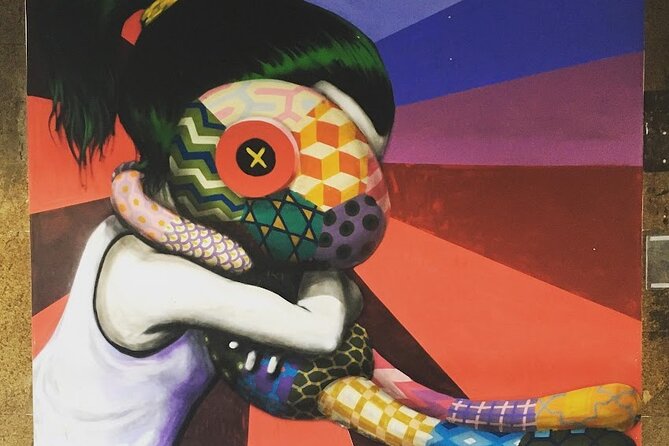
The guide is the main reason this experience feels different from walking around with a map. Wellington explains the murals in relation to Rio’s social and political issues, but he also brings in architecture, Carnival, samba schools, and his own experience of the city.
That wider frame is important. Street art can be hard to read if you do not know the local references. A face, color, gesture, or public figure may carry meaning that is not obvious to someone visiting from abroad.
The tour can also shift toward Little Africa if that is your main interest. A private group previously asked for more focus on that area, and Wellington adapted the experience to address slavery and Afro-Brazilian history. If that subject matters to you, raise it when booking so you can discuss the best emphasis for your group.
Some art on the route may be older rather than brand-new. One person wished for more recent or younger graffiti. That is a fair consideration if you want a survey of Rio’s newest street-art scene. The strength here is context and place, not a promise that every work will be newly painted.
What the $68.61 price means
At $68.61 per person, this is not the cheapest way to see a mural. But the cost needs to be weighed against the private format, roughly three hours of guiding, and the amount of interpretation built into the route.
The listed stops have no admission charge. You are paying mainly for Wellington’s time, route planning, cultural explanations, and help with public transport. That can be good value for a solo visitor, couple, or family that wants a focused introduction to central Rio without joining a large group.
For a solo visitor, the private format is especially useful. You do not need to gather a minimum group, and the guide can answer questions at your pace. For families, the personal format can also make it easier to adjust the amount of walking or explain the art in a way that keeps younger participants interested.
If you only want quick photographs of Selarón Staircase and the giant mural, the price may feel high. If you want to understand what you are seeing, connect several central neighborhoods, and use local transport with a guide, the value is stronger.
Who should book this Rio experience
I would recommend the tour to you if you like cities best when art, public life, and history are mixed together. It suits first-time visitors who want an introduction to central Rio beyond the usual postcard stops.
It is also a good choice for solo visitors. You get a private experience without needing to find companions, and the route provides an easy way to see several areas that might be confusing to connect on your own.
Families and groups of friends should find the format comfortable, especially if everyone enjoys asking questions. The tour has also worked well for people interested in architecture, Carnival, samba, Afro-Brazilian culture, and politics, not only graffiti.
You may want a different experience if you dislike walking, public transport, or urban areas. The tour is active, and Selarón Staircase can be crowded. It also requires good weather, so a rainy forecast can affect the plan.
Confirmation is provided when you book, and the activity is near public transportation. Most people can participate, but the amount of walking makes comfortable shoes and water sensible. You can cancel for a full refund up to 24 hours before the start time. If poor weather forces cancellation, you are offered another date or a full refund.
How to get the most from the three hours
Start by arriving at the Municipal Theater with enough time to find Praça Floriano. The route moves through central Rio, so being ready at the meeting point helps preserve time for the art itself.
Ask Wellington questions as you go. If you are curious about Little Africa, Carnival floats, samba schools, architecture, or political symbols, say so early. The private format gives the conversation room to follow your interests.
Keep your phone or camera ready, but do not let photography take over. The murals are large and visually strong, yet the explanations about who is represented and why the work appears in that location are what make the tour worthwhile.
You might also ask about nearby food at the end. Wellington has pointed out places to eat among locals, and the route finishes in an area with options around Porto Maravilha. Food is not included, but the final neighborhood can be a useful place to continue your afternoon.
Should you book the Rio Street Art Tour?
Book it if you want Rio explained through public art rather than seen from a vehicle. Wellington’s strength is the connection between murals, politics, city history, architecture, Carnival, and Afro-Brazilian culture.
Skip it if you want a short, low-effort sightseeing stop or a tour devoted only to the newest graffiti. The route covers a lot in three hours, and the walking and public transport are part of the deal.
For most visitors who enjoy culture and independent-looking city walks, I consider the $68.61 reasonable. You leave with more than photographs of Selarón Staircase and the giant Porto Maravilha mural. You also gain a clearer sense of how Rio uses public space to remember, argue, celebrate, and tell its own story.
FAQ
Where does the Rio Street Art Tour start?
The tour starts at the Municipal Theater of Rio de Janeiro, at Praça Floriano, S/N, Centro, Rio de Janeiro, Brazil.
Where does the tour finish?
The activity ends at a different location from the meeting point, in the Porto Maravilha area near the large graffiti mural and major museums.
How long does the tour last?
The tour lasts approximately three hours.
How much does the tour cost?
The listed price is $68.61 per person.
Is this a private tour?
Yes. Only your group participates in the activity.
Does the tour use public transportation?
Yes. The route includes the subway and the VLT, as well as walking between stops.
Are admission tickets included?
The listed stops have free admission. The tour description does not include entry to the interiors of the nearby museums.
Can most people participate?
Most people can participate, and the route is described as an easy walking route. You should still expect a fair amount of walking and bring water.
Can I cancel for a full refund?
Yes. You can cancel at least 24 hours before the experience starts for a full refund. If poor weather causes the operator to cancel, you are offered a different date or a full refund.
Just added around Rio de Janeiro
- Rio de Janeiro: Zip Lining and Canopy Tree Tour★ 3.3 · 6 reviews
- Vidigal Favela Tour★ 4.4 · 26 reviews
- Hang gliding flight in Rio de Janeiro★ 5.0 · 6 reviews
- Rio de Janeiro: Attend a Vasco da Gama game with local guide★ 4.8 · 9 reviews
- Unforgettable Boat Party★ 5.0 · 3 reviews
- Rio Highlights: Christ, Sugarloaf, and More in a Private Tour★ 5.0 · 36 reviews
- Tijuca Forest Hike – Waterfalls & Caves, Nature & Wild Life!★ 5.0 · 51 reviews
- Tijuca Forest w/ Chinese View,cascatinha Taunay,horto waterfall and parque laje★ 4.5 · 29 reviews
Street Art, compared.

Private Street Art Tour of São Paulo with Batman´s Alley Visit
Read our review →
Browse the lists this tour appears in