
Reviewed · WALKING TOURS
São Paulo: Jewish History Downtown Private Walking Tour
São Paulo’s Jewish story is easiest to understand on foot, where former immigrant streets, synagogues, bakeries, and memorials reveal how the community helped shape Bom Retiro. This two-hour private walk links several important sites with the Holocaust and Jewish immigration to Brazil.
I like the personal format, which lets you ask questions and request more detail about family history, architecture, or local customs. I also like the chance to see a side of São Paulo many city tours skip, including the small Jewish bakery and restaurant area that can be easy to miss on your own.
The main consideration is access: you cannot enter the synagogues, and much of the tour is viewed from the street. The former Jewish quarter is now largely Korean, so you should book this for context and storytelling rather than a large collection of preserved Jewish buildings.
Key points
- Start at Sinagoga Talmud Thora Lubavitch: Meet outside Nonaz Bar & Lanches on R. Talmud Thorá, not inside the restaurant.
- Walk through former immigrant streets: Bom Retiro shows how São Paulo’s Jewish quarter has changed over time.
- See four synagogues from outside: The route includes Talmud Thora Lubavitch, Beit Hakneset Adat Ishurum, Ahavat Reim, and Beth Itzchak Elchonon.
- Visit the Jewish Immigration and Holocaust Memorial: This small memorial adds photographs, objects, and local historical material to the walk.
- Hear about different immigrant communities: Your guide explains how individual synagogues were linked to Jews from particular countries.
- Get personal advice for São Paulo: Restaurant, café, and pub suggestions are included, with food and drinks paid separately.
What this two-hour walk is really about
This is not a museum-heavy tour or a synagogue interior visit. It is a guided history walk through Bom Retiro, using façades, street names, community buildings, and the memorial to explain how Jewish immigrants built lives in São Paulo.
That distinction matters. If you want grand interiors, active worship spaces, or a long stop at each site, this may feel thin. If you want a compact introduction to the city’s Jewish past, the private format gives the subject more room than a standard sightseeing route.
The tour covers about 25 to 30 minutes of actual walking, with the rest of the two hours spent stopping and listening. The pace is described as moderate, but expect uneven surfaces and some steps. Comfortable shoes are a sensible choice, especially in wet weather.
Your guide speaks English, Spanish, or Portuguese. The guide is licensed and can adjust the pace to your group. One guide handles groups of up to 25 people, with extra guides arranged for larger parties at a higher cost.
More Historical Tours in São Paulo
- São Paulo: Downtown Historical Bike Tour
★ 4.9 · 191 reviews - Sao Paulo: Downtown-Center History Walking Tour – in English
★ 5.0 · 91 reviews - Gastronomic Tour São Paulo – Culture & History Through The Art Of Food – Private
★ 5.0 · 50 reviews
Meeting outside Talmud Thora Lubavitch

The walk begins in front of Nonaz Bar & Lanches at R. Talmud Thorá, 331, in Bom Retiro. Do not enter the restaurant to ask about the tour. The staff is not connected with the activity, so wait outside for your guide.
The first stop is Sinagoga Talmud Thora Lubavitch. You can admire the façade and hear about its place in São Paulo’s Jewish community, but entry is not included. That limitation is worth keeping in mind from the start because it applies to the other synagogues on the route as well.
The opening stop helps set the tone. You are not simply checking off buildings. You are learning how religious institutions served immigrants who needed places for prayer, community support, and cultural continuity. The guide supplies the links between the visible building and the people who used it.
The meeting point deserves a little planning. One Brazilian participant arranged to meet the guide at Tiradentes Metro Station instead and found that easier, particularly when unfamiliar with the area. That is not the standard meeting point, so contact the operator in advance if you need a different arrangement.
Bom Retiro, from Jewish quarter to Korean district
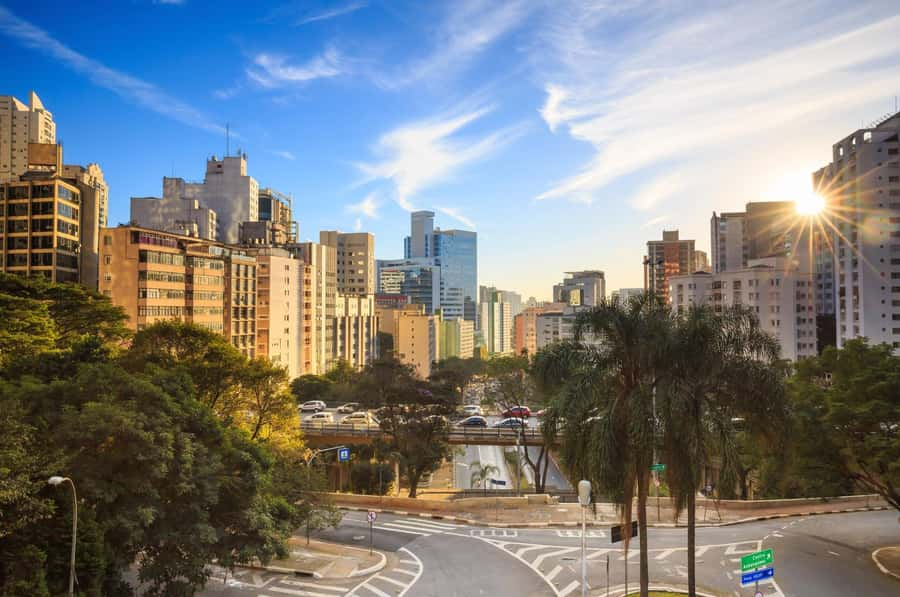
Bom Retiro is the most revealing part of the tour because the neighborhood’s present-day identity does not match its earlier role. It was once a major home for Jewish immigrants, but today much of the area is associated with Korean businesses and culture.
That change is not a flaw in the tour. It is the point. Cities do not freeze around one immigrant group. A walk here lets you see how one community established itself, changed the district, and was later joined by another population.
Still, you should set realistic expectations. You may find a Jewish bakery or restaurant, but there is little continuous Jewish activity visible on every block. The streets do not form a preserved open-air museum. The story comes through your guide’s explanation more than through a steady sequence of obvious signs.
One strong feature is the comparison between old and new. Your guide can explain why particular synagogues were connected with immigrants from different countries, while the surrounding shops show how Bom Retiro has continued to change. The result is a more honest picture of urban history than a neatly preserved heritage zone.
Four synagogues, four community stories

The route includes four synagogues beyond the opening stop:
- Sociedade Religiosa Beit Hakneset Adat Ishurum
- Sinagoga Ahavat Reim
- Sinagoga Israelita Beth Itzchak Elchonon
- Sinagoga Talmud Thora Lubavitch
The guide uses these buildings to discuss faith, migration, and the customs that held communities together. Each synagogue had its own congregation and background, with some linked to Jews from specific countries. Those differences give the tour useful detail. Jewish immigration was not one single experience, and these institutions help show that.
From the street, however, the buildings may not impress you architecturally. One account of the tour found the exteriors fairly modest, and that is a fair warning. The appeal lies less in dramatic design than in the history attached to each address.
Because access is restricted, you should expect to remain outside. The guide may point out architectural features and explain how each place fits into the district, but interior worship spaces are not part of the booking. If entering a synagogue is important to you, confirm separately before paying.
The final synagogue, Beth Itzchak Elchonon, links Jewish heritage with São Paulo’s modern development. Ending there gives the route a sense of continuity, from early immigrant life to a community that remains part of the city even as the neighborhood around it changes.
More Walking Tours in São Paulo
- Sao Paulo: Downtown-Center Walking Tour | 2 Hours – English
★ 4.9 · 84 reviews - Ecological walk in sao paulo
★ 5.0 · 61 reviews - Night Walking Tour through the Bars of São Paulo
★ 5.0 · 51 reviews - São Paulo : Must-See Sites Walking Tour With A Guide
★ 4.4 · 25 reviews
The Jewish Immigration and Holocaust Memorial
The Memorial da Imigração Judaica e do Holocausto provides the tour’s most focused historical stop. It is a small memorial in a building connected with an early synagogue, and it presents information about the Holocaust, Jewish immigration, and the lives rebuilt in Brazil.
You will see photographs, objects, and signs about Jewish life in São Paulo during the 1930s and 1940s. Some of the material is in Portuguese, so ask your guide to explain anything you cannot read. The memorial also serves an educational purpose for Brazilians, introducing local Jewish history alongside the wider story of the Holocaust.
For visitors with a Jewish background, some Holocaust information may be familiar. The local photographs and community records are the more distinctive part. They shift the focus from Europe alone to the people who came to Brazil, formed institutions, and carried on after persecution and war.
This stop adds emotional weight, but it is not a large museum visit. You should expect a compact memorial rather than an extensive collection. The guide’s narration is important here because the physical display is limited.
A guide-led story, not just a route
The success of this experience depends heavily on the guide. A good guide must explain a district where much of the visible evidence has faded, and must connect modest façades with larger events without turning the walk into a dry lecture.
Maria has led at least one particularly well-received version of the tour. Her approach included a small local treat in the now largely Korean part of Bom Retiro, showing how a guide can connect the Jewish past with the neighborhood’s present. If Maria is assigned to your booking, you can expect a friendly, story-centered walk with room for questions.
That does not mean every guide will follow the same route or offer the same food stop. Treat the included restaurant, café, and pub advice as a useful bonus rather than a guaranteed tasting. Food and drinks are not included in the price.
I would use the private setting to ask specific questions. You might ask about Jewish immigration from different countries, the history of a particular synagogue, or where to eat nearby after the tour. A private guide can spend more time on your interests than a fixed group tour.
How much walking and time you should expect

The advertised duration is two hours, but the actual route is not a long-distance hike. Walking accounts for roughly 25 to 30 minutes, with stops making up much of the schedule.
That makes the tour manageable for many people who do not want a full-day excursion. You will still need shoes suited to pavement, uneven surfaces, and possible steps. The walk runs in rain or shine, so check the forecast and dress for the weather.
The private group format is useful for families, couples, and small groups with a shared interest in Jewish history. It also helps if someone in your party needs a slower pace. The guide can adjust the speed, and special arrangements for people with disabilities may be possible if requested ahead of time.
The route is not designed as a food tour, shopping tour, or broad survey of São Paulo. Plan another activity after it if you want more time in Bom Retiro. The walk gives you a clear introduction, not a full day in the district.
Is the $124 price fair?
At $124 per person, this is a costly two-hour walk if you measure value by the number of attractions entered. No synagogue admission is included, no attraction tickets are included, and food is extra. The route covers a short distance and includes several exterior stops.
The price makes more sense for people who place a high value on a private guide and a tailored conversation. You are paying for language support, historical interpretation, flexibility, and local recommendations. For a couple or small group, that can be worthwhile, especially if Jewish heritage is a central reason for visiting São Paulo.
The value is weaker if you are comfortable researching sites on your own. You could walk around the district, view the exteriors, and read about the buildings independently. The guide earns the fee by supplying context, explaining the community links, and helping you understand what is no longer visible.
I would also compare the price with your schedule. If you have only a short time in São Paulo and want a focused introduction, two hours is efficient. If you already plan to visit the memorial independently, or if you mainly want synagogue interiors, this booking is harder to justify.
Who should book this experience?
I would recommend it to:
- People with a personal or family connection to Jewish history
- History fans who want to understand immigration to Brazil
- First-time visitors seeking a less familiar side of São Paulo
- Small groups who prefer private guiding and questions in their own language
- Visitors who appreciate changing neighborhoods rather than polished heritage districts
I would be more cautious if you want a visually dramatic sightseeing tour. The synagogues are mostly viewed from outside, and the neighborhood now has limited visible Jewish activity. You need to enjoy stories, context, and urban change.
The tour is also a good fit if you want practical advice after the history walk. Your guide can suggest local restaurants, cafés, and pubs, and the small food stop offered on one version of the route shows how the experience may connect past and present.
Booking and preparation tips
Check your email the day before for the operator’s final instructions. There was at least one case where a language or date change was discussed late, so confirm the time, language, and guide as early as possible if your schedule is tight.
Arrive at the meeting point outside Nonaz Bar & Lanches. Do not rely on the restaurant staff for directions. If you feel uneasy walking from your accommodation or want a clearer arrival point, ask in advance about meeting near Tiradentes Metro Station.
Wear comfortable shoes and bring weather protection. Keep your expectations clear: this is a guided outdoor history walk with a memorial visit, not a tour of synagogue interiors.
Cancellation is free up to 24 hours before the start, and you can reserve now and pay later. Those terms help if your São Paulo plans are still shifting, but they do not change the main question of value: are you paying for access, or for interpretation?
Should you book this Jewish history walk?
Book it if you want a private, focused explanation of Jewish São Paulo and are happy to see most sites from the street. The best parts are the guide’s personal storytelling, the link between immigrant communities and individual synagogues, and the Memorial da Imigração Judaica e do Holocausto.
Skip it if you expect grand buildings, synagogue entry, or a district packed with visible Jewish life. At $124, the tour asks a lot for two hours, so its value rests on the guide. If possible, request a guide such as Maria, confirm the language and meeting point, and use the private format to ask detailed questions. With those expectations, the walk can add a thoughtful historical layer to your time in São Paulo.
FAQ
How long is the São Paulo Jewish history walking tour?
The tour lasts two hours. It includes approximately 25 to 30 minutes of walking, with the remaining time spent at stops and listening to the guide.
Can I enter the synagogues?
No. Entry to the synagogues is not included because access is restricted. You will view the buildings from outside and hear about their history and congregations.
Where does the tour meet?
Meet your guide outside Nonaz Bar & Lanches at R. Talmud Thorá, 331, Bom Retiro, São Paulo. Do not enter the restaurant because its staff is not informed about the tour.
Which languages are available?
The tour is available with a live guide in English, Spanish, or Portuguese.
Is food included?
No. Food and drinks are not included, though the guide can recommend local restaurants, cafés, and pubs. A small food stop may be offered, but it is not listed as an included part of the price.
Can I cancel or pay later?
You can cancel up to 24 hours in advance for a full refund. The reserve-now, pay-later option lets you book without paying on the day of reservation.
Just added around Sao Paulo
- REIKI – Crystal Therapy – by Venus’ Secret Spa – San Francisco★ 5.0 · 41 reviews
- Art Of Wine – Travel Through The So-Called Wine Route Visiting Various Wineries★ 5.0 · 40 reviews
- Private Half-Day Guided Tour to São Paulo★ 5.0 · 50 reviews
- Terraço Italia Restaurant experience★ 4.5 · 43 reviews
- Private Tour: São Paulo’s Top Attractions–6 Hours, Hotel/Airport★ 5.0 · 50 reviews
- Downtown Photo Tour★ 5.0 · 45 reviews
- Full Day Private Beach Tour Santos & Guarujá – Combine Culture, History & Beach★ 5.0 · 37 reviews
- Private Street Art Tour of São Paulo with Batman´s Alley Visit★ 5.0 · 30 reviews
Walking Tours, compared.


Sunrise and Sunrise Walk Two Brothers with Local Guide
Read our review →
Downtown-Center History Walking Tour – in English
Read our review →
Downtown-Center Walking Tour | 2 Hours – English
Read our review →
Learn the History of Rio with an Unforgettable City Center Walking Tour
Read our review →
Rio’s city walking tour: a glimpse of history and olympic legacy
Read our review →Browse the lists this tour appears in