

Reviewed · FAVELA TOURS
Rio De Janeiro: Half-Day Rocinha Favela Walking Tour
Rocinha is best understood on foot, with a local guide who can explain the homes, businesses, social challenges, and daily routines around you. Guides such as Wellington, Alberto, Daniel, and Martin have strong ties to the community, and some have lived there all their lives.
I like the small-group, walking format, which feels more respectful than passing through in a vehicle. I also like the chance to hear personal stories and see Rocinha from a rooftop viewpoint. The main drawback is the physical effort: narrow lanes, steep stairs, and uneven footing make this a poor fit for anyone with mobility or knee problems.
Key points at a glance
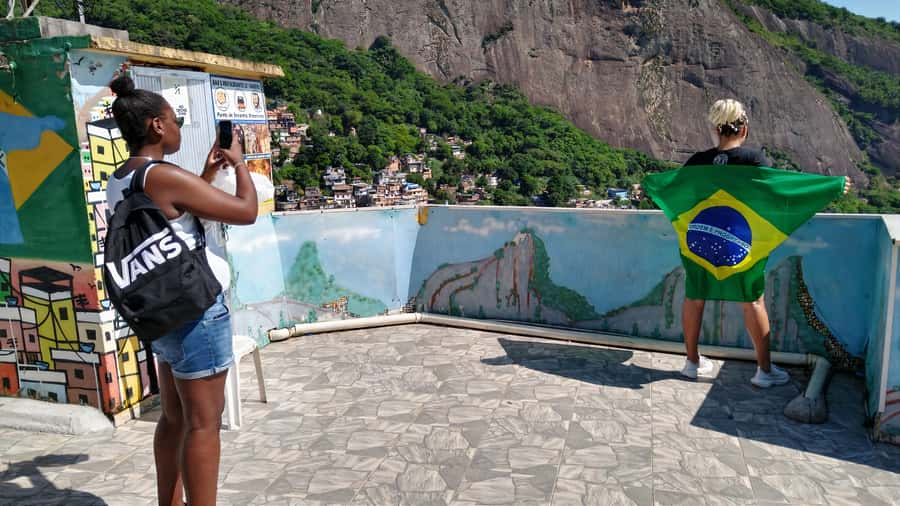
- Walk through Rocinha with local hosts: You see the community at street level instead of from a jeep or motorbike.
- Hear personal accounts: Guides including Wellington, Alberto, Daniel, and Martin explain favela life through local experience.
- Expect stairs and tight alleys: The route can be physically demanding and requires comfortable, secure shoes.
- Look for the rooftop view: A viewpoint above Rocinha offers striking views across Rio, though a drink or video may cost extra.
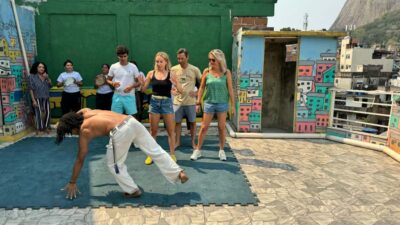
- Capoeira may be part of the afternoon: Local demonstrations and music provide a useful link to community culture.
- Good value at $35: The price covers a three-hour walking tour and includes a contribution to the favela community.
Why walking Rocinha changes the picture

Rocinha is often reduced to a few dramatic headlines or movie scenes. This tour takes a different route, using a local guide and a small walking group to show you a working neighborhood rather than a staged attraction.
That difference matters. From street level, you can ask questions, notice how homes and shops fit together, and hear about the social and economic pressures that shape life here. You are not simply looking down from a vehicle and taking photographs from a distance.
The aim is not to pretend that Rocinha has no problems. Guides discuss insecurity, limited public services, poverty, and the ways residents organize their own lives. At the same time, the tour shows ordinary routines, local pride, music, work, family life, and the effort people make to build stable lives.
I find that balance important. You should leave with a fuller picture, not the easy idea that a favela is either dangerous or picturesque. It is a community with difficulties and strengths, and the guide’s role is to help you see both.
More Half-Day Tours in Rio de Janeiro
- Rio: Half-Day Jeep Tour at Floresta da Tijuca
★ 4.5 · 353 reviews - Two of Rio’s Best: Christ the Redeemer & Sugarloaf Mountain Half-Day Tour
★ 4.5 · 294 reviews - Rio de Janeiro: Historic Rio and Santa Teresa Half-Day Tour
★ 4.4 · 228 reviews
Meeting at Copacabana Palace
The tour begins at 13:25 in front of the Belmond Copacabana Palace Hotel at Avenida Atlântica 1702. Look for the statue of journalist Ibrahim Sued on the same sidewalk as the hotel’s main entrance, and wait beside it.
This is a clear meeting point, but give yourself time to find the statue. The hotel is large and the beachfront road can be busy. The tour does not include hotel pickup, so you need to reach Copacabana Palace on your own.
The afternoon timing works well if you are staying in Copacabana or nearby. It also leaves your morning free for another Rio sight, though you should avoid planning anything that depends on an exact return time. The advertised duration is three hours, and the walking route can slow down when the group stops for explanations, views, or local activities.
Entering Rocinha with a local guide

The strongest part of this experience is the guide. A guide who grew up in Rocinha can explain details that are hard to understand from a map or news report. Alberto, for example, has been connected to the favela for more than 60 years, while other guides such as Wellington and Daniel are praised for their warmth, clear English, and ability to answer questions.
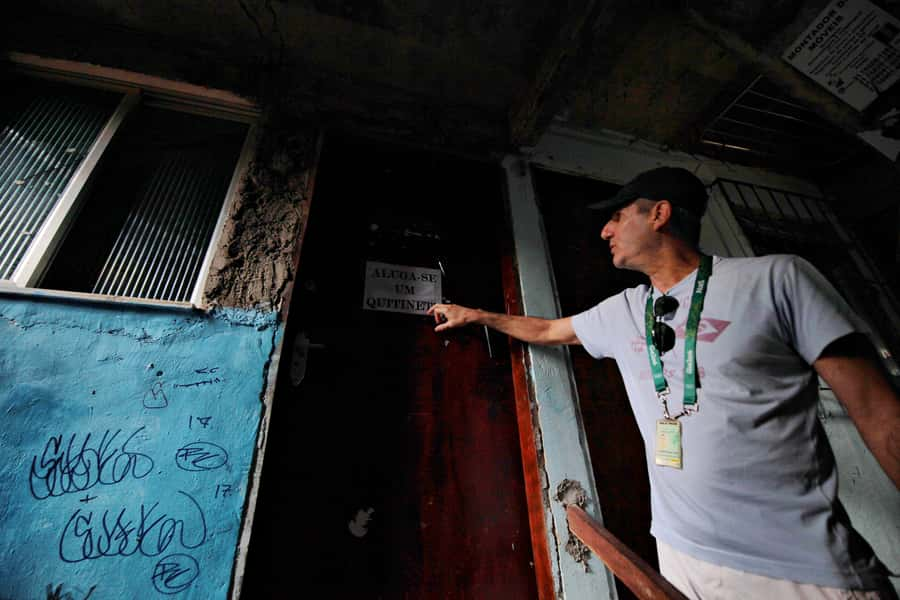
You may have a guide who shares personal stories, points out where he lives, or explains how the neighborhood functions. That personal connection gives the tour its tone. Instead of treating residents as scenery, the guide creates context and helps you behave like a respectful visitor.
The languages offered are English, Spanish, and Portuguese. English communication is especially important here because the subject is complex. You will want to ask about history, public services, community rules, culture, and the contrast between Rocinha and the wealthy areas nearby.
The mood is not presented as a formal lecture. Guides are described as friendly, funny, and willing to pause for questions. That makes a difference during a walk where you may need a moment to take in what you are seeing.
Narrow alleys, stairs, and everyday life

Rocinha is a walking tour in the literal sense. Expect narrow alleys, steep stairways, and uneven sections. You need comfortable shoes with good grip, and you should be happy walking uphill and downhill for much of the three-hour visit.
This is not the right outing for a wheelchair user or anyone with limited mobility. The activity is also not recommended for people with knee problems or recent surgery. The stated restrictions exclude children under six, people over 70 or 75, and people above the listed weight limits of 130 or 140 kilograms. Since the supplied information gives two different age and weight limits, check the current booking terms before paying if any of these apply to you.
The physical work is part of what makes the route useful. A road tour can give you a quick look, but walking lets you notice how daily life fits into steep terrain and tight spaces. You can stop at viewpoints, hear the guide explain the neighborhood, and move through back streets rather than seeing only the main road.
Bring a camera if you want photographs, but use good judgment. Ask before photographing people, homes, or children. The tour is designed to be non-intrusive, and your behavior should support that goal.
More Walking Tours in Rio de Janeiro
- Rio de Janeiro: Rocinha Favela Walking Tour with Local Guide
★ 4.8 · 3,052 reviews - Sunrise and Sunrise Walk Two Brothers with Local Guide
★ 5.0 · 193 reviews - Rio de Janeiro: Little Africa Heritage Walking Tour
★ 4.9 · 177 reviews - Learn the History of Rio with an Unforgettable City Center Walking Tour
★ 5.0 · 82 reviews
Personal stories instead of stereotypes
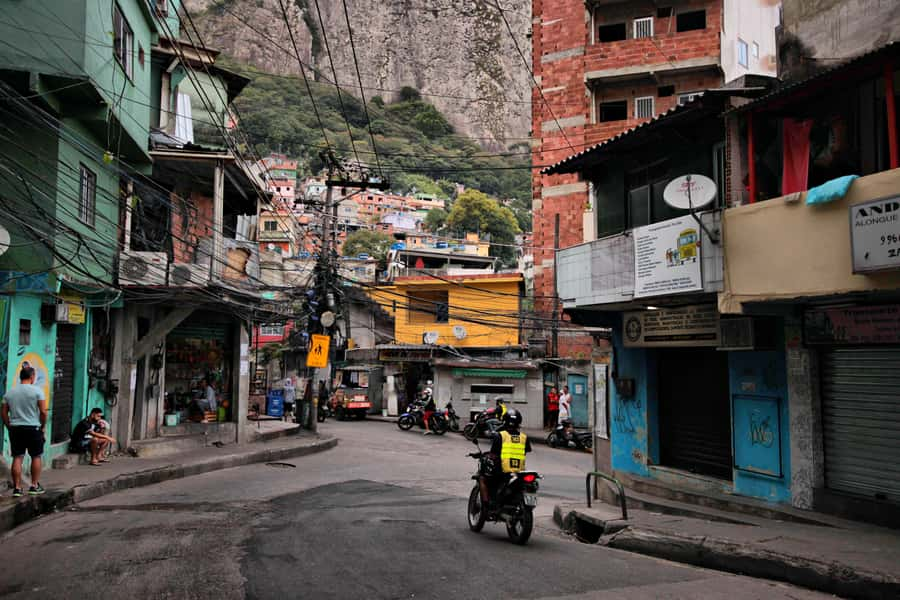
A good guide does more than point out buildings. The guide explains how Rocinha developed, why favelas formed, and how residents deal with economic and social challenges. The result is a closer look at the gap between Rio’s wealthy districts and communities built under very different conditions.
Some guides have spoken about their own homes and families. That can make the subject more human, but it also means you should listen carefully and avoid treating personal hardship as entertainment. Ask thoughtful questions rather than pushing for dramatic stories.
The tour does not promise a sanitized picture. You may hear about areas affected by gangs or about the absence of regular police intervention. At the same time, the safety of the group is a clear concern. The guides manage the route, explain where to go, and help the group move through the neighborhood with confidence.
Many people report feeling safer with the guide than they expected. That does not mean you should ignore normal caution. Keep valuables out of sight, follow instructions, stay with the group, and do not wander off to explore on your own.
The rooftop view above Rocinha

One of the most memorable parts of the afternoon can be a rooftop stop with wide views over Rocinha and Rio. From above, you see the sharp contrast between the dense favela and the more affluent districts nearby. It is a powerful visual reminder that Rio’s social divisions can exist almost side by side.
A rooftop bar may offer drinks such as caipirinhas. Food and drinks are not included in the $35 price, so carry some Brazilian reais if you want to buy something. One reported option also offered a drone video of the group for about R$200. Treat that as an optional purchase, not part of the tour cost.
The view is a strong reason to bring a camera, but do not let it turn the visit into a photo stop. The best value comes from listening to the guide explain what you are looking at and how the neighborhood relates to the rest of Rio.
Capoeira, music, and community culture
The tour may include a visit to a capoeira school or a local demonstration. This is more than a colorful performance for visitors. Capoeira combines movement, music, rhythm, and history, and the sessions described on this route also connect with local children and community programs.
You may see a demonstration, try some instruments, or learn about the cultural meaning of capoeira. A session led by Tiane was especially praised for its energy and for the way it connected the activity with local children. Donations may be suggested, so keep a little cash available if you want to support the school.
This part of the visit helps broaden the picture of Rocinha. The neighborhood is not only a place defined by housing shortages or crime stories. It is also a source of music, dance, art, sport, and community projects. Still, the activity may vary by day, so do not book solely for a guaranteed performance unless the provider confirms it.
What the $35 price really covers

At $35 per person, this is a fairly modest way to spend three hours in Rio. The fee includes the local guide and walking tour, plus a monetary contribution to the favela community. That contribution gives the price a purpose beyond the guide’s time, though the exact amount and destination are not specified.
The cost does not include hotel pickup, food, drinks, rooftop purchases, drone videos, or possible donations connected with capoeira. That keeps the base price low, but you should budget extra if you want a drink, a snack, or a community activity.
The value depends on what you want from Rio. If you only want a quick scenic stop, the city’s famous viewpoints may suit you better. If you want context, direct conversation, and a closer look at how people live outside the postcard version of Rio, this tour offers more substance for the money.
The large number of positive ratings, with an overall score of 4.7 from 2,272 ratings, points to a consistently well-received experience. Still, one useful criticism is that the tour can feel somewhat touristy, and one person wanted more explanation during the walk. Your experience will depend partly on the guide and on how actively you ask questions.
How to get the most from the afternoon
I would wear light, comfortable clothing and secure walking shoes. Rio can be hot, and the route includes stairs, so avoid heavy bags and anything that makes movement awkward.
Arrive at the meeting point a little early. The official meeting time is 13:25, and the statue beside the main entrance is the landmark to use. Since there is no hotel pickup, plan your route to Copacabana Palace before the day begins.
Keep your group small and stay close to the guide. Do not assume that a guide’s calm manner means every part of the neighborhood is suitable for independent exploring. You are visiting someone else’s home, so ask before taking close-up photos and avoid blocking doorways or shop entrances.
Use the walk to ask about things you can see directly: housing, work, schooling, transport, local businesses, public services, music, and community organization. Specific questions usually produce a better conversation than asking only if Rocinha is safe.
Who should book this walking tour
This suits adults and older children who are comfortable on stairs and interested in social history, urban life, and local culture. It is particularly useful if you want to understand Rio beyond Copacabana, Ipanema, Sugarloaf Mountain, and Christ the Redeemer.
You will probably enjoy it if you value personal stories and are willing to listen without expecting a polished show. The experience is strongest when you see it as a guided conversation with a community, not as a checklist of photo stops.
It is less suitable if you have mobility limits, knee trouble, a recent surgery, or a strong dislike of uneven walking. It may also disappoint you if you expect a fixed itinerary with guaranteed capoeira, food, or a specific guide. The local guides are the heart of the experience, but guide assignments can vary.
Should you book Rocinha?
I would book this tour if you want a respectful introduction to favela life and are prepared for a physically demanding walk. The local guides, personal stories, rooftop views, and possible capoeira visit give the afternoon more meaning than a drive-by look.
Book with realistic expectations. Rocinha is not a theme park, and the tour cannot remove the neighborhood’s social problems or guarantee that every stop will happen exactly as imagined. You will need comfortable shoes, an open mind, and good manners.
At $35, the experience offers strong value for anyone who wants to question Rio’s stereotypes and meet the city on more human terms. If you can manage the stairs and want more than postcard scenery, it is a worthwhile addition to your Rio plans.
FAQ
How long is the Rocinha walking tour?
The tour lasts three hours.
How much does the tour cost?
The listed price is $35 per person.
Where is the meeting point?
Meet in front of the Belmond Copacabana Palace Hotel at Avenida Atlântica 1702 in Copacabana. Wait beside the statue of journalist Ibrahim Sued on the same sidewalk as the hotel’s main entrance.
What time should I meet the guide?
The meeting time is 13:25.
Is hotel pickup included?
No. You need to make your own way to the meeting point.
Which languages are available?
The tour is offered in English, Spanish, and Portuguese.
What does the price include?
The price includes a local guide and the walking tour. It also includes a monetary contribution to the favela community.
Are food and drinks included?
No. Food and drinks are not included. Drinks or other purchases at a rooftop bar cost extra.
Is the route physically demanding?
Yes. You will walk through narrow alleys and use stairs in Rocinha. Comfortable shoes are recommended, and the route is not suitable for people with mobility impairments or knee problems.
Can I cancel for a full refund?
Yes. You can cancel up to 24 hours in advance for a full refund. You can also reserve now and pay later, according to the booking terms.
More Half-Day in Rio De Janeiro
- Sugar Loaf Mountain Half-Day Tour
★ 4.0 · 217 reviews - Rio: Christ the Redeemer & Selarón Steps Half-Day Tour
★ 4.3 · 136 reviews - Christ the Redeemer and Escadaria Selarón Half-Day Tour
★ 4.2 · 103 reviews - Rio de Janeiro: Half-Day Christ the Redeemer and City Tour
★ 4.4 · 101 reviews
More Favela Tours
- Rio de Janeiro: Favela Santa Marta Top Tour with Local Guide
★ 4.9 · 488 reviews - Rio de Janeiro: Favela Santa Marta Tour with Resident Guide
★ 4.6 · 220 reviews - Rio: Favela Rocinha Tour with Local Guide & Secret Spots
★ 4.7 · 218 reviews - Rio de Janeiro: Vidigal Favela Tour and Two Brothers Hike
★ 4.5 · 121 reviews
Just added around Rio De Janeiro
- Rio de Janeiro: Zip Lining and Canopy Tree Tour★ 3.3 · 6 reviews
- Vidigal Favela Tour★ 4.4 · 26 reviews
- Hang gliding flight in Rio de Janeiro★ 5.0 · 6 reviews
- Rio de Janeiro: Attend a Vasco da Gama game with local guide★ 4.8 · 9 reviews
- Unforgettable Boat Party★ 5.0 · 3 reviews
- Rio Highlights: Christ, Sugarloaf, and More in a Private Tour★ 5.0 · 36 reviews
- Tijuca Forest Hike – Waterfalls & Caves, Nature & Wild Life!★ 5.0 · 51 reviews
- Tijuca Forest w/ Chinese View,cascatinha Taunay,horto waterfall and parque laje★ 4.5 · 29 reviews
Favela Tours, compared.


Favela Rocinha Tour with Local Guide & Secret Spots
Read our review →

Favela Tour The Original, Rocinha & Vila Canoas since 1992
Read our review →
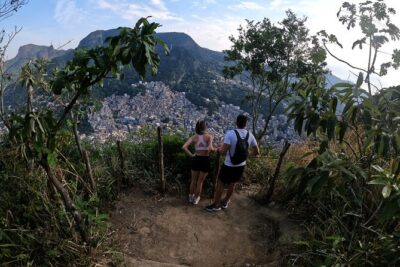
Sunrise at Morro 2 Irmãos – Vidigal – Rio de Janeiro
Read our review →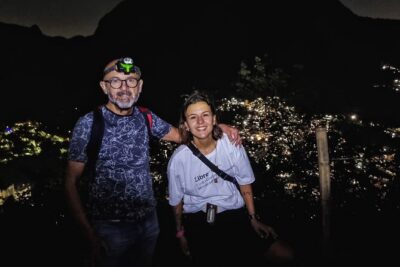
Half Day Hiking Tour Morro Dois Irmaos and Favela Vidigal
Read our review →Browse the lists this tour appears in