
Reviewed · FOOD & DRINK
São Paulo: Liberdade Street Food Tour
São Paulo’s Liberdade neighborhood turns a short food walk into a lesson in migration, memory, and changing city life. You’ll taste Japanese pastel with sugarcane juice, try onigiri and takoyaki, and look beyond the shop signs to understand how Japanese immigrants helped shape this part of Brazil. I like the small group of up to 10 and the way food is tied to local history rather than treated as a string of unrelated samples. I also like that the route includes Japanese, Brazilian, Korean, and Argentinian flavors.
The main drawback is time. Two hours goes quickly, and the food stops are generous enough that you may leave full before you have seen every corner of Liberdade. The schedule also starts strictly on time, and one weekday tasting may change from takoyaki or tempura to an Argentinian empanada.
What makes this Liberdade food walk worth your time
- A meeting point in the heart of Liberdade: Find the large red Banco Bradesco Prime branch beside Liberdade Square.
- Four culinary traditions in one short route: Expect Japanese and Brazilian snacks, Korean pastry, and possibly Argentinian empanadas.
- A guide-led look at immigration: Giuliano explains Japanese settlement in São Paulo and the neighborhood’s newer communities.
- Three main food tastings plus drinks: The package includes Japanese pastel and onigiri, a hot savory snack, Korean choux pastry, water, sugarcane juice, and a final soft drink or coffee.
- A compact English-speaking group: The maximum is 10 people, making it easier to hear explanations and ask questions.
- A 4.9 rating from 73 bookings: The strongest praise centers on the guide’s energy, communication, food choices, and clear connection between dishes and local history.
Starting beside Liberdade Square
Your meeting point is outside the large red Banco Bradesco Prime branch in the middle of Liberdade Square. This is a useful location because you are not being asked to hunt for a small café or a hidden doorway in an unfamiliar neighborhood.
Plan to arrive early. The tour starts strictly on time, and once the group sets off, the guide does not check his phone. If you are coming by taxi, public transport, or on foot, allow extra time to locate the bank and get your bearings around the square.
The activity lasts two hours, with about 105 minutes listed for the guided walk and food tasting. That is enough time for a focused introduction to Liberdade, but it is not a leisurely all-day food crawl. You will move between stops, eat along the way, and hear short explanations rather than settle in for long meals.
More Food Tours in São Paulo
- São Paulo 5 Hour Private Tour With Fruit Tasting
★ 5.0 · 93 reviews - Gastronomic Tour São Paulo – Culture & History Through The Art Of Food – Private
★ 5.0 · 50 reviews - From São Paulo: São Roque Wineries Route and Tasting of Wine
★ 4.9 · 22 reviews
Why Liberdade gives the food a bigger story
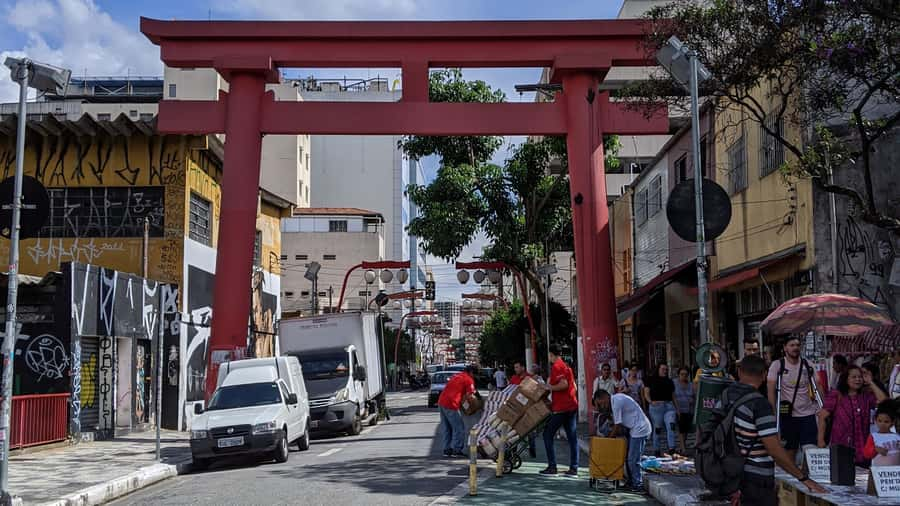
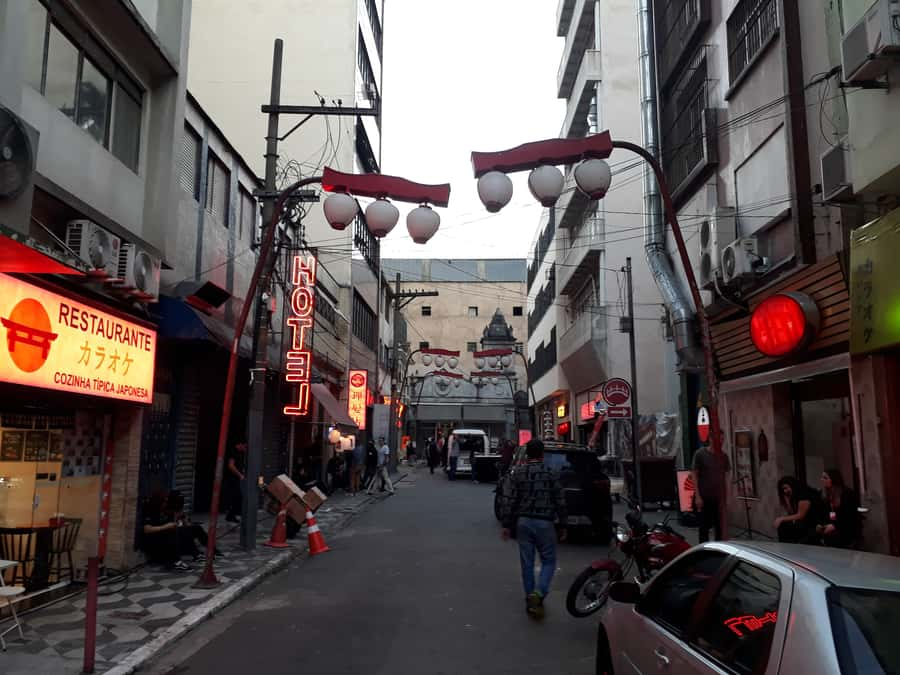
Liberdade is widely associated with São Paulo’s Japanese community, one of the largest Japanese communities outside Japan. The neighborhood became a center for Japanese immigrants about a century ago, but its story does not end there.
The area was once a military district. Today, it also reflects communities from China, Korea, Congo, and Haiti, along with a strong Afro-Brazilian heritage. That mix helps explain why a single walk can move from Japanese snacks to Brazilian street food, Korean pastry, and Argentinian empanadas.
I like this approach because it keeps the food connected to people and place. You are not simply checking off dishes from different countries. You are looking at how migration changes a neighborhood and how food carries those connections into daily life.
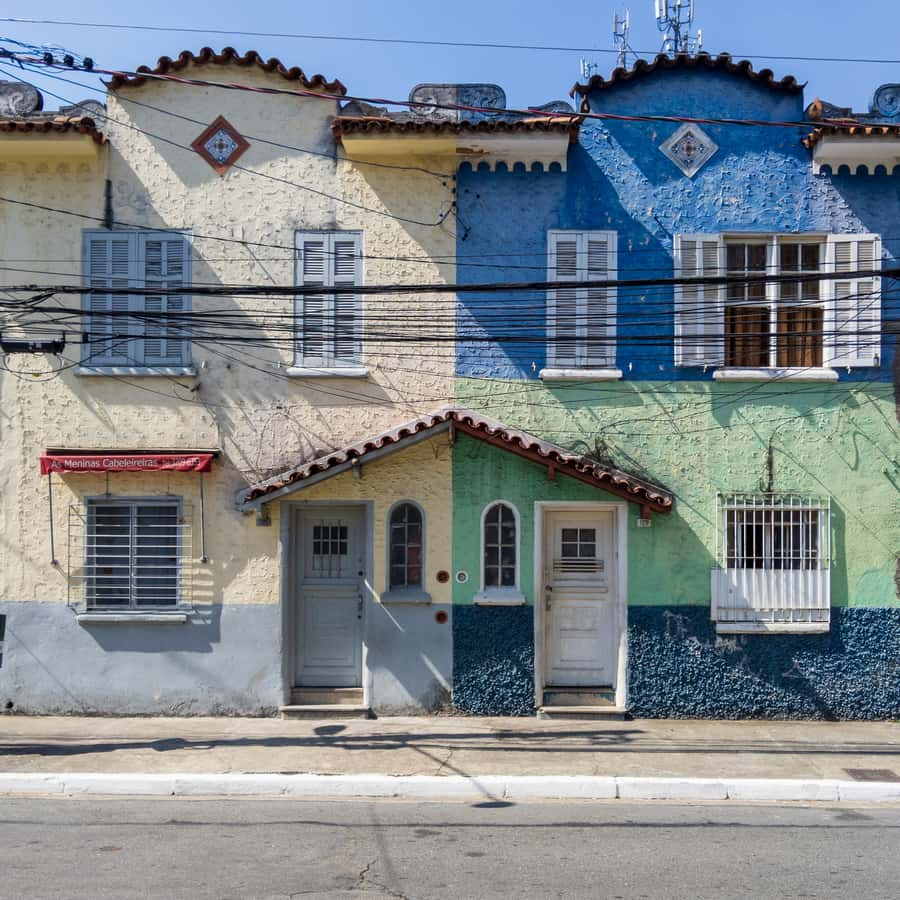
The tour also includes a walk to notice architectural details and learn more about who lives in the area. The supplied information does not promise a long architectural tour, so think of this as a food-focused neighborhood walk with visual and historical context, not as a dedicated architecture outing.
Japanese pastel, onigiri, and the first tastes
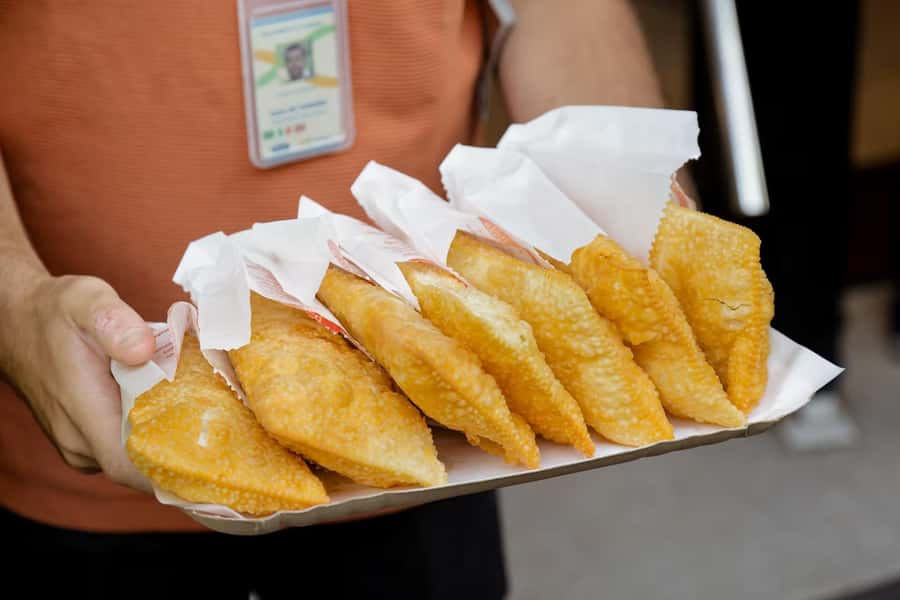
The first main food combination includes Japanese pastel and onigiri. Pastel is a familiar Brazilian snack, usually associated with a thin, crisp pastry shell, while the Japanese version gives you a local example of how a food can take on a different identity in São Paulo.
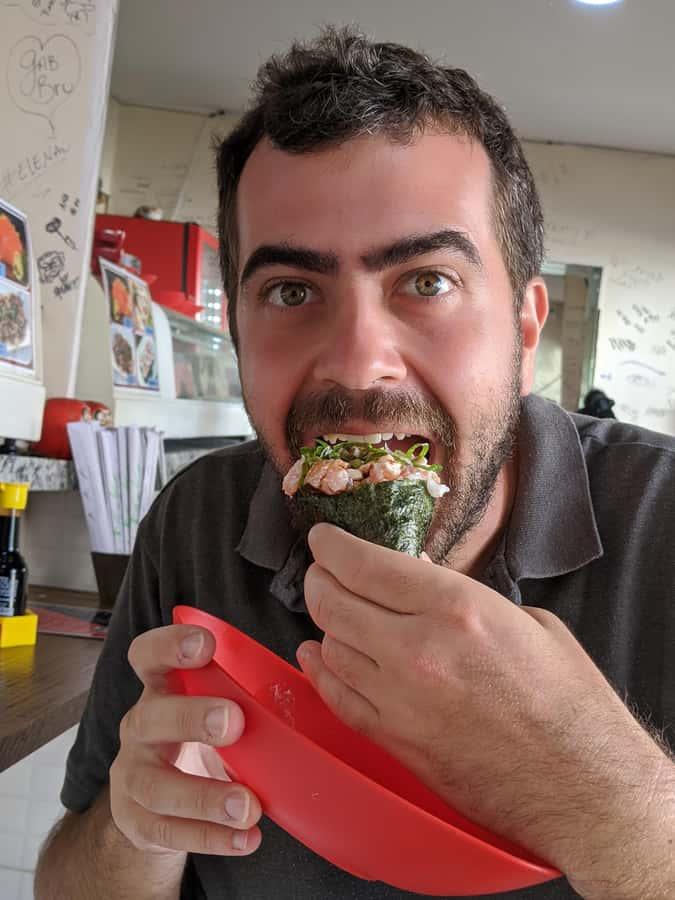
Onigiri provides a contrasting taste and texture. It is a compact Japanese rice snack, and here it helps set up the connection between Liberdade’s Japanese roots and its present-day food scene.
The pairing is useful for first-time visitors because it shows that local food culture is not divided into neat national boxes. A snack can be Brazilian in format, Japanese in name or influence, and thoroughly part of São Paulo’s street-food life.
The amount of food is not described by weight or portion size, but the overall tasting is repeatedly described as filling. You should arrive hungry, especially if you plan to eat again soon after the tour.
Sugarcane juice with a tropical São Paulo touch
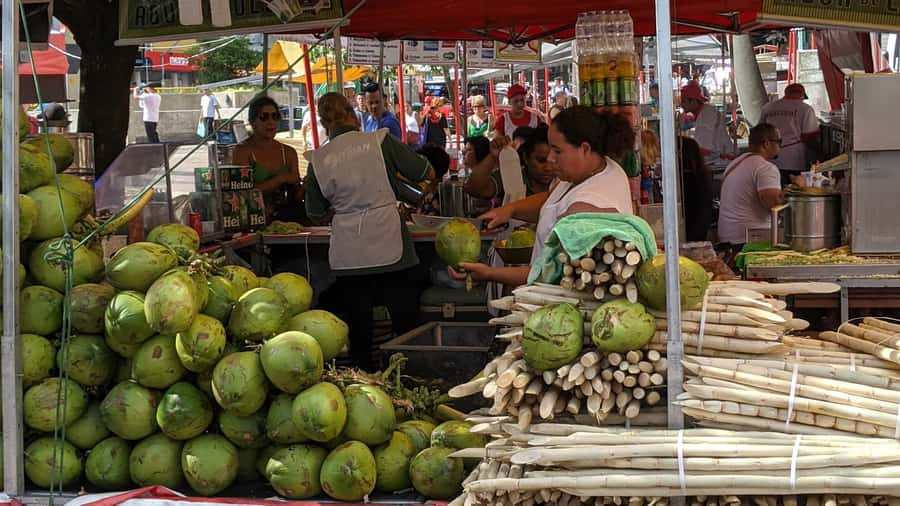
The included sugarcane juice is one of the more memorable pairings. It gives you something cold and sweet between savory tastings and adds a distinctly Brazilian note to the Japanese-influenced food.
The tour provides one bottle of water as well, which is practical in São Paulo’s warm weather. You should still bring sunscreen and an umbrella, since the walk takes place outdoors and conditions can change.
The drinks also help control the pace. A food walk can become tiring when every stop is heavy or fried. The sugarcane juice offers a refreshing break, while the final drink gives the group a clear ending point.
Same city, a completely different kind of day:
- São Paulo: Main City Sights in 7 Hours – Shared Group Tour
★ 4.9 · 587 reviews - São Paulo: City Highlights Guided Tour
★ 4.5 · 307 reviews - Private São Paulo City Tour
★ 4.8 · 264 reviews - São Paulo: Downtown Historical Bike Tour
★ 4.9 · 191 reviews
Takoyaki, tempura, or an Argentinian empanada
Another tasting is listed as traditional takoyaki or tempura. On weekdays, this may be replaced by an Argentinian empanada. That substitution is worth noting when you book because the menu is not completely fixed.
Takoyaki gives you a Japanese street-food favorite, while tempura offers a lighter, crisp option. An empanada shifts the focus toward Argentina, but it still fits the larger theme of Liberdade as a meeting place for different communities and cooking traditions.
If you have strong food preferences, ask about the weekday option before you go. The available information does not specify whether substitutions are based on opening hours, supply, or the day’s route, so it is best to treat the tasting as flexible rather than guaranteed dish by dish.
One of the strongest food comments from the available feedback praised the empanadas in particular. Another person enjoyed the final stop but did not care for all of the food. That is a useful reminder that taste is personal, and the tour’s value does not depend on loving every single snack.
Korean choux pastry and the changing neighborhood
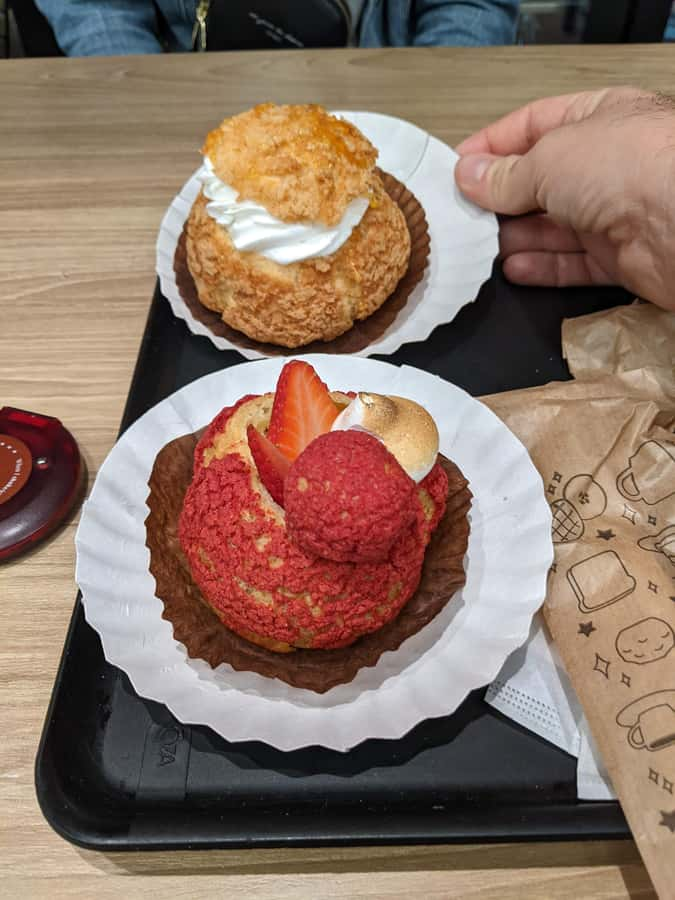
The included Korean choux au craquelin adds a sweet stop to a route otherwise built around savory street food. Choux pastry is known for its light pastry shell, while craquelin adds a crisp topping. On this tour, it represents the Korean side of Liberdade’s present-day cultural mix.
This is where the route moves beyond a simple Japanese food tour. You begin with the neighborhood’s most famous association, then see how later migration has added new flavors and identities.
The available details do not name the particular bakery or explain the exact filling, so you should expect the guide to introduce the item during the walk rather than assume a specific version. The final sweet bite can also make the tour feel more like a complete snack route than a series of isolated samples.
Meeting Giuliano and learning through food
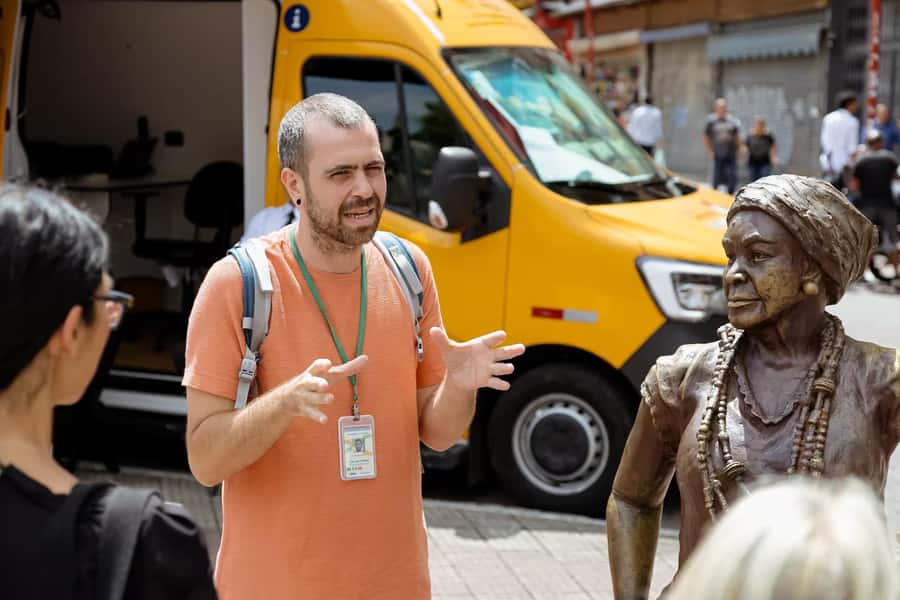
Giuliano is repeatedly described as the guide for this experience, with one reference spelling the name Juliano. He is an Italian who has lived in Brazil for many years, and his background gives him a personal connection to both the country and the experience of explaining it to English-speaking visitors.
The most consistent praise concerns his energy, clear English, friendliness, and ability to connect food with the wider story of São Paulo. You can expect explanations about Liberdade, Japanese immigration, Brazilian food, and the lives of immigrant communities in the area.
This matters because a food tour can easily become a list of names and flavors. Here, the guide is meant to explain why a dish matters and how it relates to the neighborhood. The strongest comments describe the balance as informative without becoming dull, with enough food to keep the walk lively.
You should also know that the tour is guide-dependent. Giuliano appears to be the main guide named in the material, but the booking information only guarantees a live English-speaking guide, not a specific person. If meeting Giuliano is important to you, confirm that before booking.
What the two-hour format feels like
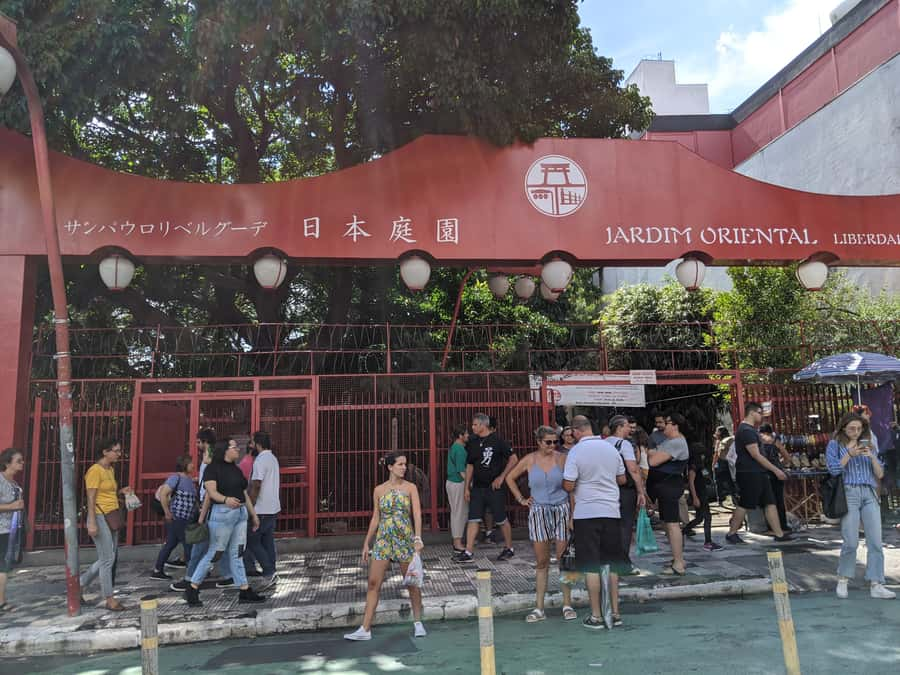
The route starts at the bank near Liberdade Square and finishes at Restaurante Kazu. That gives you a clear beginning and end, rather than sending you back to the original meeting point.
The food tasting and guided neighborhood walk take about 105 minutes, while the advertised duration is two hours. The extra time likely allows for gathering the group, moving between vendors, and finishing the final drink, but no exact timing for each stop is provided.
You should expect a steady outing rather than a seated meal. The group is limited to 10, which is small enough for conversation and questions but large enough to feel like a shared activity.
The route is wheelchair accessible according to the activity details. Since this is an outdoor neighborhood walk, you may still want to ask about the precise route if you have particular mobility needs. The provided information confirms accessibility but does not describe pavement, slopes, seating, or restroom access.
What the $60 price includes
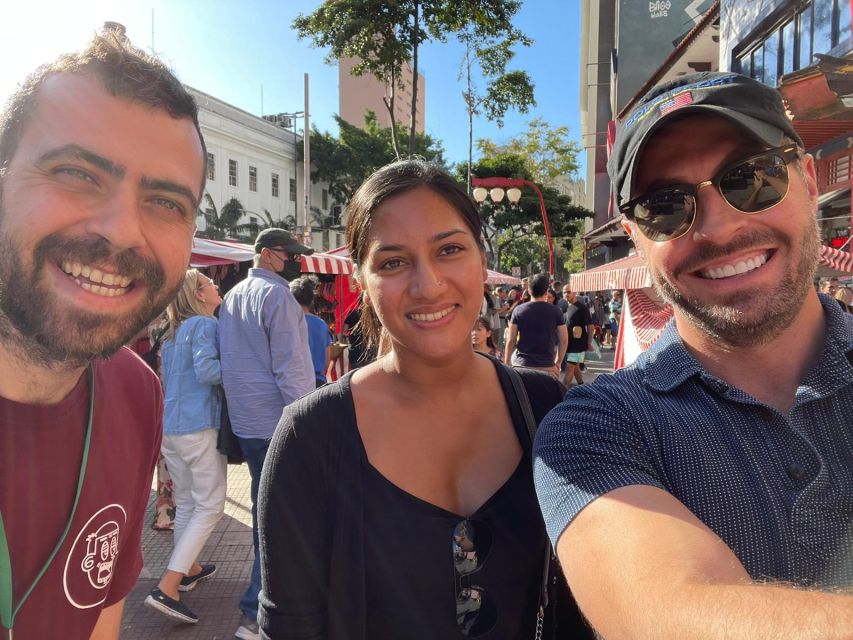
At $60 per person, this is priced above simply buying a few snacks in Liberdade. The value comes from combining food with a guide, a planned route, interpretation in English, and a compact introduction to one of São Paulo’s most distinctive neighborhoods.
Included are three main snacks, Japanese pastel and onigiri, traditional takoyaki or tempura, or possibly Argentinian empanadas, Korean choux au craquelin, one bottle of water, sugarcane juice, and a final soft drink or coffee.
Additional food and drinks cost extra. That matters if you are hoping to turn the activity into a full meal or want to keep sampling after the included tastings. The package should leave you satisfied, but it is not an open-ended food budget.
I see the price as fair for visitors who want context and a guide. If you already plan to spend an afternoon eating independently in Liberdade and enjoy finding vendors on your own, you may get better value by exploring without a tour. If you want someone to explain the neighborhood and select the stops, the fee is easier to justify.
Who will enjoy this most
I would choose this tour if you are visiting São Paulo for the first time and want an easy introduction to Liberdade. It is also a good fit if you like trying several small dishes but do not want to spend hours planning which stalls or shops to visit.
The experience suits curious eaters who enjoy cultural background with their food. You do not need to be an expert in Japanese, Brazilian, Korean, or Argentinian cuisine. The point is to notice the connections between them.
It may be less suitable if you need a fixed menu, dislike mixed group activities, or want a long sit-down meal. The weekday substitution means you should not book expecting every listed dish to appear exactly as written.
Families and older visitors may appreciate the short duration and accessible format, though the information does not give a minimum age or describe how much seating is available. Bring sunscreen and an umbrella, and wear something comfortable for walking.
Booking, cancellation, and practical details
The tour is offered in English and accepts a maximum of 10 participants. You can reserve now and pay later, and cancellation is free up to 24 hours before the start for a full refund.
Those terms help if your São Paulo schedule is still changing. The strict start time works in the opposite direction, so do not treat the two-hour booking as a loose arrival window.
The experience has a 4.9 rating from 73 reviews. The strongest pattern is clear: people value the guide’s communication, the history of Liberdade, the range of food, and the feeling of leaving well fed. The one less positive food reaction shows that the guide and setting may be more dependable than every individual flavor.
Should you book the Liberdade Street Food Tour?
Book it if you want a compact, guided introduction to Liberdade with enough food to replace a light meal. Giuliano’s clear English, the small group, and the link between immigration and cuisine make this more useful than a walk that simply points out restaurants.
Skip it if you prefer to explore alone, need a guaranteed menu, or want a longer food adventure. For most visitors, though, $60 buys a sensible mix of tastings, drinks, local context, and orientation in a neighborhood that can be hard to understand on a first visit.
Arrive early, bring sunscreen and an umbrella, and save room for the empanada, pastel, onigiri, or whichever snack ends up being your favorite.
FAQ
Where does the São Paulo Liberdade Street Food Tour meet?
The meeting point is outside the large red Banco Bradesco Prime bank in the middle of Liberdade Square.
Where does the tour finish?
The tour finishes at Restaurante Kazu.
How long does the experience last?
The advertised duration is two hours. The guided walk and food tasting are listed as taking about 105 minutes.
What language is the tour conducted in?
The tour is conducted in English with a live guide.
How many people can join the group?
The group is limited to 10 participants.
Is the tour wheelchair accessible?
Yes. The activity is listed as wheelchair accessible.
What food is included?
The included food consists of three main snacks: Japanese pastel and onigiri, traditional takoyaki or tempura, and Korean choux au craquelin. On weekdays, the takoyaki or tempura may be replaced by an Argentinian empanada.
What drinks are included?
You receive one bottle of water, one sugarcane juice, and a final soft drink or coffee.
Are extra food and drinks included?
No. Additional food and beverages are not included in the price.
Can I cancel for a full refund?
Yes. You can cancel up to 24 hours in advance for a full refund.
Just added around Sao Paulo
- REIKI – Crystal Therapy – by Venus’ Secret Spa – San Francisco★ 5.0 · 41 reviews
- Art Of Wine – Travel Through The So-Called Wine Route Visiting Various Wineries★ 5.0 · 40 reviews
- Private Half-Day Guided Tour to São Paulo★ 5.0 · 50 reviews
- Terraço Italia Restaurant experience★ 4.5 · 43 reviews
- Private Tour: São Paulo’s Top Attractions–6 Hours, Hotel/Airport★ 5.0 · 50 reviews
- Downtown Photo Tour★ 5.0 · 45 reviews
- Full Day Private Beach Tour Santos & Guarujá – Combine Culture, History & Beach★ 5.0 · 37 reviews
- Private Street Art Tour of São Paulo with Batman´s Alley Visit★ 5.0 · 30 reviews
Food & Drink, compared.
Pub Crawl in Lapa with Cachaça Tasting and Live Samba
Read our review →
Jolimont Winery Tour – Visitation and Tasting – Canela RS
Read our review →
São Paulo 5 Hour Private Tour With Fruit Tasting
Read our review →
Guided Market Fruit Tasting in Rio with 15+ Exotic Flavors
Read our review →
Gastronomic Tour São Paulo – Culture & History Through The Art Of Food – Private
Read our review →
Historical Tour with Cachaça Tasting – BY PARATY TOURS
Read our review →
Browse the lists this tour appears in