
Reviewed · WALKING TOURS
Walking tour of the bohemian neighborhoods of Santa Teresa and Lapa
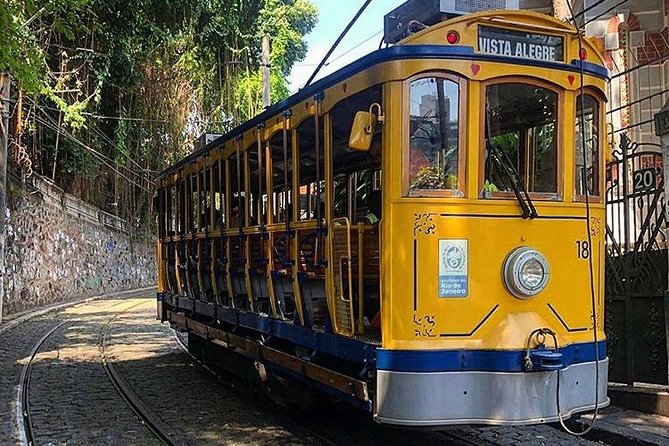
Rio’s yellow Santa Teresa tram is the star of this half-day outing. It climbs from the city center into Santa Teresa, where old houses, artists’ studios, cafés, and street art give the hilltop district a character all its own. You then walk downhill toward Lapa, the Selarón Steps, the old aqueduct, and Cinelândia.
I like the easy mix of transportation and walking, and I like the small group size, capped at 12 people. Guides such as Edmundo, Lorena, and Ivan are praised for their local ties, flexibility, and warm manner. The main consideration is that this is a walking tour with hills and uneven streets, and the tram schedule or neighborhood conditions can require a change of plan.
Key points to know before booking
- The tram ride sets the tone: The famous yellow Bonde climbs into Santa Teresa on a roughly 30-minute panoramic journey.
- Santa Teresa gets the most attention: You have time at Largo dos Guimarães and Parque das Ruínas, not just a quick photo stop.
- The route connects two different Rio districts: You move from the leafy, artistic hill neighborhood down through Lapa and into central Rio.
- Local guides make the difference: Edmundo, Lorena, and Ivan are noted for personal knowledge of Santa Teresa and an easy way with people.
- The group stays small: A maximum of 12 people allows more room for questions and route adjustments.
- Plan for a half-day on foot: The tour lasts about 3 hours and 30 minutes and includes walking on sloping, older streets.
Why Santa Teresa is the right place to begin
Santa Teresa feels unlike the beachfront districts most people picture when they think of Rio. It sits on a hill above central Rio, with old homes, narrow streets, small restaurants, bars, and a strong connection to local art. The neighborhood has an unhurried feel, though it is still very much part of the city.
The ride up is a big part of the experience. From the Santa Teresa tram station, you board the bright yellow Bonde for a roughly 30-minute climb. The route is more than a practical transfer. It gives you a moving view of the city and brings you into the district in the same way many locals and visitors have long reached it.
The tram ride is included in the tour price. Some arrangements described by participants also included metro tickets, though the stated meeting point is the Copacabana Palace, A Belmond Hotel, at 9:00 in the morning. Confirm the exact pickup instructions before setting out, especially if you are staying somewhere else in Copacabana or in another part of Rio.
A tram ride can be affected by local conditions. Lorena once adjusted the opening of the tour when an issue in the neighborhood prevented the planned streetcar ride at first. That is useful to keep in mind: the tram is a highlight, but a good guide may need to rearrange the order rather than waste your morning waiting.
More Walking Tours in Rio de Janeiro
- Rio de Janeiro: Rocinha Favela Walking Tour with Local Guide
★ 4.8 · 3,052 reviews - Rio De Janeiro: Half-Day Rocinha Favela Walking Tour
★ 4.7 · 2,272 reviews - Sunrise and Sunrise Walk Two Brothers with Local Guide
★ 5.0 · 193 reviews
Largo dos Guimarães and the old Santa Teresa feel
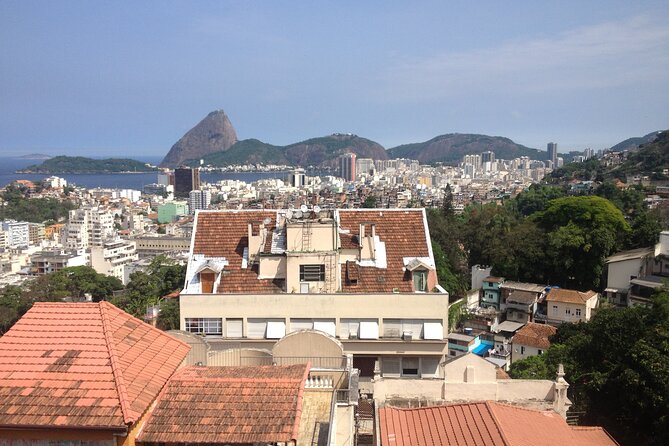
After arriving uphill, you spend about 45 minutes around Largo dos Guimarães. This is the social heart of Santa Teresa, with old houses dating from the late 19th and early 20th centuries, places to eat and drink, and views across parts of Rio.
This stop works best when you want more than a checklist of monuments. Your guide can point out the details that make the district feel different: the architecture, the street pattern, the small businesses, and the way art and daily life share the same blocks. Ivan is a native of Santa Teresa, while Edmundo is also an artist and has strong connections in the neighborhood. A guide with those local ties can give the visit a more personal texture.
Allow yourself to look upward and sideways here. Santa Teresa is not a place you understand by marching from one famous object to the next. The appeal is in the combination of old buildings, views, painted walls, and ordinary neighborhood life.
The stop is not a formal museum visit, so anyone seeking a long historical lecture may find it lighter than a specialist architecture tour. That is also part of its charm. The focus is on seeing the area with someone who can explain how it fits into Rio today.
Parque das Ruínas offers the best city views
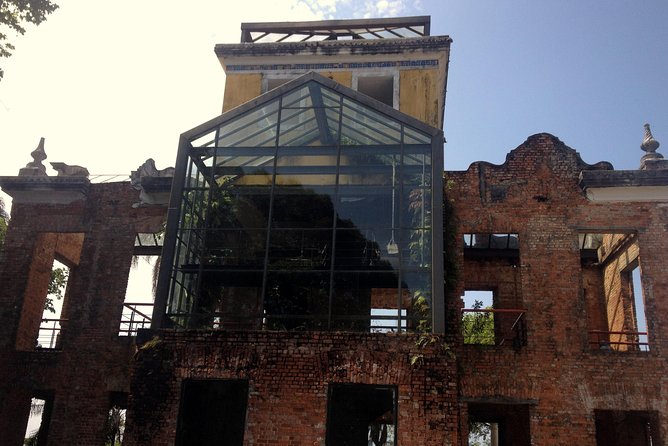
The next major stop is the Centro Cultural Municipal Parque das Ruínas, reached after about 30 minutes. The site was once the home of Laurinda Santos Lobo and is now an open cultural center and viewpoint.
This is one of the strongest parts of the route. From the ruins, you can look toward central Rio, the Lapa Arches, Christ the Redeemer, and Botafogo. The view helps you understand Rio’s unusual geography, with the city pressed between steep hills, water, and dense urban neighborhoods.
The site is visually memorable because it combines old architectural remains with open viewing areas. It is not simply a lookout with a railing and a quick photo. The setting gives you a sense of the old Santa Teresa buildings and the city spread below.
I would pay attention to the weather here. On a clear morning, you may get several major landmarks in one view. Cloud or haze can reduce what you see, though the setting remains worthwhile. Your guide can also help identify the sights, which matters when the city’s hills and districts begin to blur together.
Walking downhill toward the Selarón Steps
From Santa Teresa, the route continues down toward Lapa and the famous Escadaria Selarón. The staircase takes about 30 minutes to visit, though the actual time on site depends on how much you want to examine and photograph it.
Chilean artist Jorge Selarón worked on the staircase over about two decades, covering its steps and walls with colorful tiles. The result is one of Rio’s most recognizable public art sites. It is lively, crowded in appearance, and packed with small details, so your guide can help you see more than the broad pattern.
The steps are also a good example of how art changes a public space. You are not entering a quiet gallery. You are walking through a working part of the city where the artwork forms the setting itself.
Take care on the stairs. You will be standing, walking, and looking down at the tiles as well as up at the walls. Comfortable footwear is sensible, and the sloping route makes this less suitable for anyone who wants a flat, low-effort morning.
Lorena has been praised for adjusting the route when someone had already seen one of the scheduled sights. That kind of flexibility is useful here. If you have visited the Selarón Steps before, tell the guide early. The itinerary may be adapted rather than repeated without purpose.
More Lapa nights and walks:
- Rio: Pub Crawl in Lapa with Cachaça Tasting and Live Samba
★ 4.7 · 881 reviews - Santa Teresa, Lapa, and Cinelândia with Tram Ride and Selarón Steps
★ 4.5 · 274 reviews - Rio de Janeiro: Rio Scenarium Entrance, Dinner, and Open Bar
★ 4.2 · 126 reviews - Historical Downtown and Lapa – Walking Tour
★ 5.0 · 44 reviews
Lapa’s Arches connect the past to the present
The walking continues through Lapa to the Arcos da Lapa, a former aqueduct dating from the 18th century. It supplied water to Rio until the end of the 19th century, and the Santa Teresa tram now passes over the arches on its way into the hill district.
This stop ties the morning together. You have already ridden the tram, and now you see the structure that carries it. The arches are also a reminder that central Rio is not just a collection of colorful walls and nightlife venues. Its streets were shaped by older systems of water, transport, and city growth.
The route around Lapa includes graffiti along the walls. That gives the walk a changing visual rhythm after the older homes of Santa Teresa. You move from a neighborhood of villas and views into a more central district known for public art, old infrastructure, and major city landmarks.
The stop at the arches lasts about 20 minutes. That is enough to understand their role and take photographs, but not enough for a detailed study of Lapa’s entire past. If you want a long archaeology or urban-planning discussion, you may need a separate tour.
Cinelândia brings the walk into central Rio
The final scheduled area is Cinelândia, reached after about 20 minutes. Here your guide presents the square and its major buildings, including the Teatro Municipal, Rio’s opera house; the Museu das Belas Artes; the Câmara Municipal; the Biblioteca Nacional; and the Teatro Odeon, identified as the only cinema in the square still in operation.
Cinelândia gives the tour a strong finish because it widens the story beyond Santa Teresa and Lapa. You see how Rio’s cultural and civic institutions gather around a central public space. After the more intimate streets of the hill district, the scale here feels grander and more formal.
The tour does not list inside visits to these buildings. Expect an outdoor introduction and explanation rather than a museum or theater admission. That keeps the morning moving, but you should plan a separate visit if one of the institutions interests you enough to explore indoors.
The activity ends back at the original meeting point. Since the full experience lasts about 3 hours and 30 minutes, a 9:00 start should take you into the early afternoon, depending on the walking pace and any adjustments to the route.
The guides are a major part of the value
The clearest strength of this experience is the guide service. Edmundo is described as an artist who knows many people around Santa Teresa, and that can make the neighborhood feel more welcoming and less like a set of staged attractions. His style suits visitors who enjoy personal stories and a sense of connection to the place.
Lorena brings a different strength: patience and flexibility. She has handled a tram-related change at the start of the tour and adjusted the route when a participant had already seen a scheduled attraction. She is also praised for explaining Rio with humor and candor.
Ivan is especially well suited to visitors who want local Santa Teresa knowledge. As someone from the neighborhood, he can explain its streets and connections from a lived perspective. A route with Ivan may also include a local art boutique, which adds a practical stop if you want small gifts connected to Rio’s art scene.
Guide assignments are not guaranteed in the details provided, so book the tour for the route and format rather than expecting one specific person. If you have a strong preference, ask the operator before booking. The company is Good Guide In Rio.
Is $72.09 a fair price?
At $72.09 per person, this is not the cheapest way to see Santa Teresa and Lapa. The value comes from combining several moving parts in one organized morning: the tram ride, a small group, local interpretation, and a route that links the hill district with central Rio.
You are paying for more than transport. A guide can explain why the tram matters, identify views from Parque das Ruínas, add context at the Selarón Steps, and connect the Lapa Arches to the route you have just traveled. That is useful in Rio, where the visual highlights are spread across districts and the meaning of a place is easy to miss when you are moving quickly.
The price looks strongest for a first visit to Rio, especially if you want an introduction rather than a full day devoted to museums. It is less compelling if you already know Santa Teresa well, prefer to explore alone, or plan to visit Cinelândia and the Selarón Steps independently.
The small group limit of 12 matters here. On narrow streets and at busy photo stops, a group of 12 is easier to manage than a large coach party. You also have a better chance to ask questions and request a sensible adjustment.
Who should book this walking tour?
I would recommend it to you if you want to see a creative, older side of Rio beyond Copacabana and Ipanema. It suits people who enjoy urban walks, street art, views, historic buildings, and local stories in one outing.
It is also a good fit if you are uneasy about arranging the tram and the route through Santa Teresa on your own. The guide handles the flow of the morning and helps you move between the hill district, Lapa, and central Rio.
You should think twice if stairs, hills, or extended walking are difficult for you. The tour includes the tram, but much of the experience happens on foot. It is also not designed as a slow museum tour, since the scheduled stops are relatively short.
The experience has a five-star rating from 59 reviews and is recommended by 100 percent of participants. That strong record matches the tour’s best qualities: local guides, a well-connected route, and a good balance of transport, views, art, and architecture.
Booking is non-refundable and cannot be changed for any reason. The tour also requires a minimum number of participants, though a cancellation for that reason comes with the choice of another date or experience, or a full refund.
My take: a smart first look at Rio’s hill neighborhoods
Book this tour if you want a guided introduction to Santa Teresa that also gives you a clear route into Lapa and central Rio. The tram ride, Parque das Ruínas, and Selarón Steps provide the visual highlights, while the guides add the personal context that makes the neighborhoods easier to understand.
I would not book it expecting long indoor visits or a relaxed café morning. You are buying a compact, active outing with several stops and a fair amount of walking. For a first visit, though, it offers a useful slice of Rio: old homes, public art, city views, historic infrastructure, and the warm, informal character of local guides.
FAQ
How long does the tour last?
The tour lasts approximately 3 hours and 30 minutes.
What time does the tour start?
The scheduled start time is 9:00 in the morning.
Where does the tour begin?
The meeting point is the Copacabana Palace, A Belmond Hotel, at Avenida Atlântica, 1702, Copacabana, Rio de Janeiro.
Where does the tour finish?
The activity ends back at the meeting point.
Is the Santa Teresa tram ride included?
Yes. The itinerary includes admission for the approximately 30-minute ride on the Santa Teresa tram.
How many people can join the tour?
The group has a maximum of 12 participants.
Which neighborhoods does the tour visit?
The route explores Santa Teresa, Lapa, and the Cinelândia area of central Rio.
Which main sights are included?
Stops include the Santa Teresa tram station, Largo dos Guimarães, Parque das Ruínas, the Selarón Steps, the Lapa Arches, and Cinelândia.
Who operates the tour?
The experience is operated by Good Guide In Rio.
Can I cancel for a refund?
The experience is non-refundable and cannot be changed for any reason. If the operator cancels because the minimum number of participants is not reached, you are offered another date or experience, or a full refund.
More Santa Teresa Tours
- Rio de Janeiro: Historic Rio and Santa Teresa Half-Day Tour
★ 4.4 · 228 reviews - Ancient Rio and Santa Teresa Tour with Hotel pick-up and drop-off
★ 4.5 · 154 reviews - Centro Historico and Lapa – Santa Teresa Walking, Historical and Bohemian Tour
★ 5.0 · 44 reviews - Santa Teresa – Bohemia and Art
★ 4.6 · 23 reviews
Just added around Rio de Janeiro
- Rio de Janeiro: Zip Lining and Canopy Tree Tour★ 3.3 · 6 reviews
- Hang gliding flight in Rio de Janeiro★ 5.0 · 6 reviews
- Vidigal Favela Tour★ 4.4 · 26 reviews
- Rio de Janeiro: Attend a Vasco da Gama game with local guide★ 4.8 · 9 reviews
- Unforgettable Boat Party★ 5.0 · 3 reviews
- Rio Highlights: Christ, Sugarloaf, and More in a Private Tour★ 5.0 · 36 reviews
- Tijuca Forest Hike – Waterfalls & Caves, Nature & Wild Life!★ 5.0 · 51 reviews
- Tijuca Forest w/ Chinese View,cascatinha Taunay,horto waterfall and parque laje★ 4.5 · 29 reviews
Walking Tours, compared.


Sunrise and Sunrise Walk Two Brothers with Local Guide
Read our review →

Downtown-Center History Walking Tour – in English
Read our review →
Downtown-Center Walking Tour | 2 Hours – English
Read our review →
Learn the History of Rio with an Unforgettable City Center Walking Tour
Read our review →
Rio’s city walking tour: a glimpse of history and olympic legacy
Read our review →Browse the lists this tour appears in