
Reviewed · WALKING TOURS
Sao Paulo: Downtown-Center History Walking Tour – in English
São Paulo’s center tells the story of Brazil in bold layers: Jesuit foundations, coffee wealth, Japanese immigration, modernist architecture, street markets, churches, and underground shopping arcades. This 3-kilometer walk links those pieces from Edifício Itália to Liberdade, giving you a useful first look at a city that can feel enormous and hard to read on your own.
I like the small limit of 10 people, which makes it easier to ask questions, and I like the route’s mix of grand landmarks and everyday places such as the Gallery of Rock and Liberdade’s food streets. Giuliano is often praised for clear explanations, good pacing, restaurant and coffee suggestions, and stories that go beyond standard guidebook facts. The main catch is strict timing: the tour begins at 10:00 am, and late arrivals cannot be accommodated.
Key points at a glance
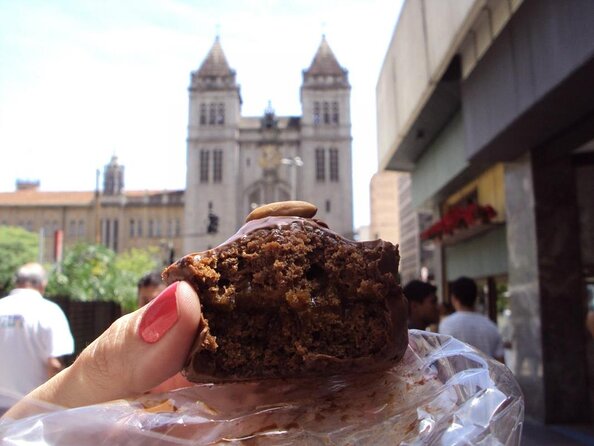
- A clear route through central São Paulo: Walk from Edifício Itália and Copan to the Municipal Theatre, Pátio do Colégio, Sé Cathedral, and Liberdade.
- Small groups of up to 10: You get a better chance to hear the guide and ask questions than on a large city tour.
- Architecture with social context: Learn how coffee money, modernism, migration, religion, and inequality shaped the city.
- A useful food stop at Liberdade: See market produce and hear about Japanese-Brazilian foods and the neighborhood’s changing identity.
- A good first-day orientation: The walk helps you understand central São Paulo and can lead to useful tips about food, coffee, and evening activities.
- Strict 10:00 am start: Arrive early. The guide cannot hold the group for late arrivals.
Why this two-hour walk works well in São Paulo
São Paulo is not a city that reveals itself in one postcard view. Its center is a crowded mix of towers, churches, cultural halls, plazas, shopping corridors, and streets shaped by several waves of migration. This tour gives those pieces a sensible order.
You begin in Centro Novo, then walk toward the older core and finish in Liberdade. That direction matters. You see the city move from 20th-century vertical growth and cultural ambition toward its colonial foundations and immigrant neighborhoods.
The walk lasts about two hours, covers roughly 3 kilometers, and pauses at eight main places. Each stop is listed as about 15 minutes, though the actual time can shift with questions and the group’s pace. You should expect plenty of standing, outdoor walking, photo stops, and short explanations rather than lengthy interior visits.
At $31.24 per person, the value rests mainly in the guide’s interpretation. You can photograph Copan, Sé Cathedral, and the Municipal Theatre without paying for a walking tour. What you are paying for is the link between these places, plus practical orientation and local stories that are difficult to pick up from a quick solo walk.
More Historical Tours in São Paulo
- São Paulo: Downtown Historical Bike Tour
★ 4.9 · 191 reviews - Gastronomic Tour São Paulo – Culture & History Through The Art Of Food – Private
★ 5.0 · 50 reviews - Full Day Private Beach Tour Santos – Culture, History & Beach (Pickup São Paulo)
★ 5.0 · 47 reviews
Edifício Itália begins the story in the modern center
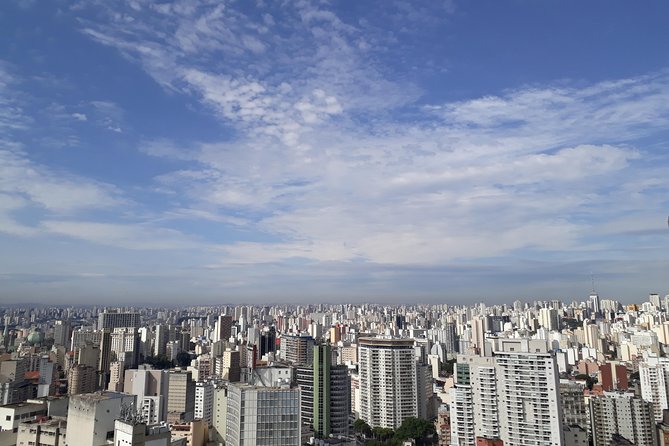
Meet at Av. Ipiranga, 344, beside Edifício Itália, at 10:00 am. This famous tower was once São Paulo’s tallest building and remains one of the city’s best-known landmarks.
It is a smart starting point because the building places you in Centro Novo, an area shaped by São Paulo’s rapid growth and vertical construction. From here, the city feels modern, crowded, and ambitious. The tour uses that setting to introduce the larger question of how São Paulo changed from a smaller colonial settlement into Brazil’s largest city.
You will not spend the whole morning inside buildings, so plan to appreciate the exteriors and the surrounding streets. Arriving early is especially important here. The guide’s strict start-time policy is clear, and arriving three minutes late can mean missing the entire experience.
Copan shows São Paulo reaching for the sky
The next stop is Copan, designed by Oscar Niemeyer. Its great curved form is one of the most recognizable pieces of Brazilian modernism.
Copan is more than an attractive building to photograph. Its wide, flowing shape contrasts with the straight-sided towers around it, and its scale reflects the mid-century push to build upward. The guide connects the structure to São Paulo’s optimism, disorder, and fast expansion.
This is one of the tour’s strongest architecture stops because you do not just hear the architect’s name and take a picture. You get a sense of why a building like Copan made sense in a city trying to present itself as modern and forward-looking.
The stop is outside, so the amount you see depends on access and the group’s position. The value comes from the explanation and the view of the building in its urban setting.
The Gallery of Rock brings in the city’s counterculture
The walk then shifts from major landmarks to the Gallery of Rock and nearby shopping corridors. This area is filled with vinyl records, antiques, manga, and pop culture items.
That change of subject keeps the tour from becoming a parade of churches and official buildings. You see a more informal side of central São Paulo, shaped by music, collecting, youth culture, and small businesses. It is a useful reminder that city history is not only found in monuments.
The guide also uses this part of the walk to discuss resistance and identity in everyday urban life. A reference to AC/DC and its influence on street art has even entered the tour’s memorable collection of local connections. You may not buy anything here, but you get a glimpse of a part of the center that many first-time visitors would miss.
More Walking Tours in São Paulo
- Sao Paulo: Downtown-Center Walking Tour | 2 Hours – English
★ 4.9 · 84 reviews - Ecological walk in sao paulo
★ 5.0 · 61 reviews - Night Walking Tour through the Bars of São Paulo
★ 5.0 · 51 reviews - São Paulo : Must-See Sites Walking Tour With A Guide
★ 4.4 · 25 reviews
The Municipal Theatre links Europe and Brazilian modernism
At the Municipal Theatre, the focus turns to culture and national identity. The building’s European-inspired design reflects the wealth and taste of São Paulo’s coffee era, when local elites wanted the city to look cosmopolitan.
The theatre also hosted the 1922 Week of Modern Art, an important moment when Brazilian artists challenged old European models and searched for a more distinct local voice. The tour presents the building as a place where elegance and rebellion met.
This is a particularly useful stop if you want more than architectural facts. The guide explains why the theatre mattered in a country working out how to define itself culturally. You will likely get time for photographs and questions, but the tour does not promise a full theatre performance or an extended interior visit.
Coffee wealth appears in the Centro Cultural Banco do Brasil
At the Centro Cultural Banco do Brasil, you examine art deco details and grand façades linked to São Paulo’s coffee boom. Coffee financed roads, railways, public buildings, cultural institutions, and business growth.
It also created sharp social contrasts. That point gives the stop more weight than a simple look at decorative façades. The buildings show wealth and confidence, while the city’s wider story includes workers, migration, inequality, and rapid change.
This is where the tour’s social history becomes especially useful. You can look at a handsome building and understand that it was also part of an economic system that changed the city’s transport, architecture, politics, and population.
The cultural center may also provide a useful pause during the morning. Some tour participants have appreciated having restroom access at stops along the route, though the tour does not guarantee specific facilities or time inside every building.
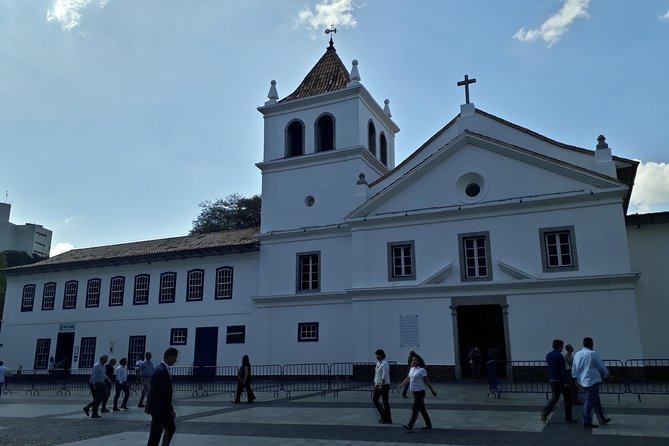
Pátio do Colégio reaches back to 1554
At Pátio do Colégio, the tour moves to the city’s official foundation in 1554. Jesuit missionaries established the settlement, but the story also includes the Tupi-Guarani peoples who lived in the region and whose role is essential to understanding São Paulo’s beginnings.
This stop gives the route its oldest historical layer. It also avoids presenting colonization as a simple founding tale. The guide addresses the connection between religion, political power, Indigenous communities, and resistance.
The plaza is an important pause because it helps you see that the modern towers and busy streets grew from a contested colonial settlement. You may find this section more serious than the earlier architecture stops, but it is needed to make sense of the city’s origins.
Sé Cathedral marks the symbolic center
Sé Cathedral is the next major landmark. It is a large neo-Gothic church built at São Paulo’s symbolic ground zero, and its scale can make the surrounding plaza feel unusually monumental.
The guide explains the cathedral not only as a religious building, but also as a place for public gatherings, protest, and civic identity. That wider role matters in São Paulo, where central plazas have long served as stages for political and social life.
You will have a strong photo opportunity here and a chance to consider how religious buildings can become public symbols. The area is central and busy, so keep an eye on your belongings and stay attentive to the group. One participant found the center less threatening than expected, but also stressed the sensible rule for any large city: remain alert.
Liberdade ends the walk with food and migration
The final stop is Praça da Liberdade, near the Base da PM at Praça da Liberdade, 125. This district is widely known as the largest Japanese neighborhood outside Japan, though its identity is broader than that single description.
Lanterns, markets, food stalls, and multicultural streets reflect the neighborhood’s immigrant past and its ongoing changes. The tour includes the Liberdade street market, where you learn about produce and authentic foods sold in the area.
This is one of the most useful endings because it leaves you somewhere you can continue exploring after the guide says goodbye. You might browse the market, choose a meal, or return later with a better sense of what you are seeing.
The stop also rounds out the tour’s theme. São Paulo was shaped first by Indigenous peoples and colonization, then by coffee wealth, industrial growth, modern architecture, and immigration. Liberdade shows that the city is still being remade by new communities and cultural combinations.
Giuliano’s guide style and what you can expect
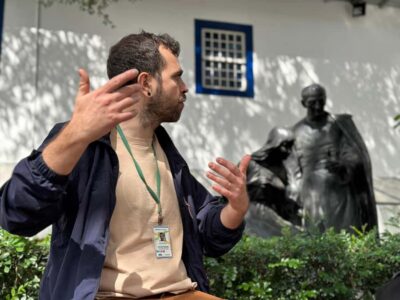
Giuliano is the guide most closely associated with this experience. The feedback supplied for the tour repeatedly points to his enthusiasm for São Paulo, strong command of the city’s past and present, and ability to answer detailed questions.
His style appears to balance serious subjects with an easy manner. He has been praised for keeping the walk light, maintaining a comfortable pace, finding shade when possible, and leaving room for photographs and conversation. He also gives suggestions for food, coffee, restaurants, and cultural events. One participant followed recommendations for El Pablo Juan and Teatro Oficina and enjoyed both.
The group may include people from different countries, and Giuliano has been praised for speaking several languages fluently. The advertised tour is in English, so confirm that English is the language you need when booking.
The small group limit is important. With no more than 10 people, you can ask about architecture, politics, food, or neighborhoods without shouting across a crowd. It also lets the guide adjust explanations to the group’s interests.
Timing, walking conditions, and safety
The walk starts at 10:00 am and ends in Liberdade at about noon. You cover approximately 3 kilometers, so comfortable walking shoes are more useful than formal clothing.
The route includes city streets, plazas, and outdoor stops. São Paulo weather can affect the experience, and the activity requires good weather. If poor weather causes cancellation, you are offered another date or a full refund.
Arrive early rather than trying to cut the timing close. São Paulo traffic can be unpredictable, and the guide does not delay the group for late arrivals. The guide also turns off the phone during the walk to focus on the people present, so do not depend on a last-minute message after the tour has started.
The activity is near public transportation, service animals are allowed, and most people can take part. The supplied information does not give a detailed step-free access assessment, so ask ahead if you need specific mobility arrangements.
Who will get the most from this tour
I would choose this walk for a first morning in São Paulo, especially if you want to understand the center before exploring it alone. It gives you landmarks, history, neighborhood context, and practical suggestions in a short period.
It also suits repeat visitors. One person who had been to São Paulo many times still found new places and ideas through Giuliano’s explanations. That is a good sign for anyone who already knows the main sights but wants more context.
The tour is less suitable if you want long interior visits, a relaxed café morning, or a completely flexible schedule. The route is structured, the start time is firm, and the two-hour format means some subjects receive a compact explanation rather than a full lecture.
Solo visitors and couples should find the small group format comfortable. Friends can use it as a shared orientation before choosing where to eat or what cultural events to see later.
Booking value and cancellation terms
At $31.24, this is a reasonable price for a two-hour, small-group introduction to central São Paulo. The strongest value comes from the guide’s storytelling and the route design, not from paid admissions. All listed stops have free admission, so you are mainly buying time, organization, local interpretation, and the chance to ask questions.
The tour is popular enough that it is booked an average of 19 days ahead, so reserving early is sensible if your schedule is fixed. Confirmation arrives within 48 hours, subject to availability.
Free cancellation is available up to 24 hours before the start time for a full refund. Changes or cancellations made less than 24 hours before the experience are not accepted for a refund. The same 24-hour cut-off is based on local time, so check your booking carefully.
Should you book it?
Book this tour if you want a concise, thoughtful introduction to São Paulo’s center and prefer buildings explained through culture, economics, migration, and politics. The combination of Copan, the Municipal Theatre, Pátio do Colégio, Sé Cathedral, and Liberdade gives you far more range than a simple sightseeing loop.
I would schedule it early in your stay, arrive well before 10:00 am, and leave the rest of the day open for Liberdade or another part of the city. Skip it only if you dislike walking, need a late start, or want extensive time inside each landmark. For most first-time visitors, the small group, practical advice, and Giuliano’s detailed local explanations make $31.24 a fair buy.
FAQ
How long is the São Paulo Downtown-Center History Walking Tour?
The tour lasts approximately two hours and covers about 3 kilometers on foot.
What time and where does the tour begin?
It begins at 10:00 am at Edifício Itália, Av. Ipiranga, 344, Centro Histórico de São Paulo.
Where does the tour finish?
The walk ends in Liberdade at the Base da PM, Praça da Liberdade, 125.
Is the tour offered in English?
Yes. This experience is an English-language walking tour.
How many people can join the tour?
The group has a maximum of 10 participants.
Does the tour visit Liberdade’s market?
Yes. The walk ends in Liberdade and includes the street market, with information about local produce and authentic foods.
What happens if the weather is poor or I need to cancel?
If poor weather cancels the activity, you can choose another date or receive a full refund. You can cancel up to 24 hours before the start time for a full refund.
Just added around Sao Paulo
- REIKI – Crystal Therapy – by Venus’ Secret Spa – San Francisco★ 5.0 · 41 reviews
- Art Of Wine – Travel Through The So-Called Wine Route Visiting Various Wineries★ 5.0 · 40 reviews
- Private Half-Day Guided Tour to São Paulo★ 5.0 · 50 reviews
- Terraço Italia Restaurant experience★ 4.5 · 43 reviews
- Private Tour: São Paulo’s Top Attractions–6 Hours, Hotel/Airport★ 5.0 · 50 reviews
- Downtown Photo Tour★ 5.0 · 45 reviews
- Full Day Private Beach Tour Santos & Guarujá – Combine Culture, History & Beach★ 5.0 · 37 reviews
- Private Street Art Tour of São Paulo with Batman´s Alley Visit★ 5.0 · 30 reviews
Walking Tours, compared.
Sunrise and Sunrise Walk Two Brothers with Local Guide
Read our review →
Downtown-Center Walking Tour | 2 Hours – English
Read our review →
Learn the History of Rio with an Unforgettable City Center Walking Tour
Read our review →
Rio’s city walking tour: a glimpse of history and olympic legacy
Read our review →
Browse the lists this tour appears in