Reviewed · RIO DE JANEIRO TOURS
Climb Rio de Janeiro: Rock Climbing Tailored for All Levels
Rio’s Sugarloaf Mountain becomes your climbing wall on this three-hour outing, with the city, beaches, and harbor spread below. You get up to two hours on the rock, and the route is matched to your ability, from first-time top-rope climbing to advanced multi-pitch work.
I like the two climbers per instructor setup, which gives beginners room to ask questions and lets experienced climbers focus on the route. I also like that the tour includes individual gear, ropes, anchor equipment, and the cable car descent ticket when you climb Sugarloaf.
The main consideration is the price, $127.42 per person, for a fairly short activity. It is a solid value if you want a guided climb with a small group and iconic views, but less so if you only want a quick photo stop at the mountain.
Key points to know before you climb
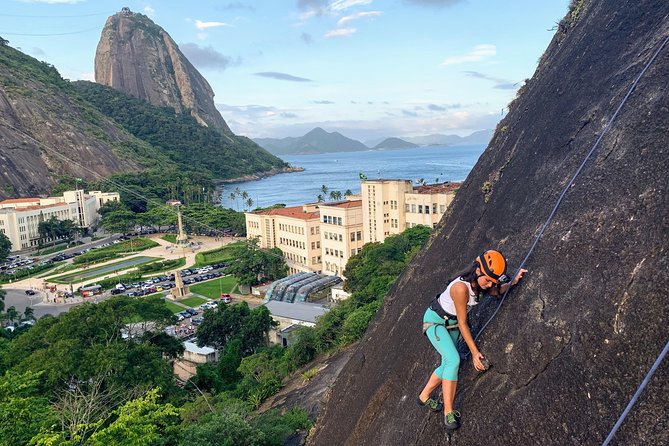
- Routes match your ability: Choose top-rope for a first climb or a multi-pitch route for beginner, intermediate, or advanced climbing.
- Small-group instruction: The ratio is capped at two people per instructor, giving you close guidance on the rock.
- Up to two hours climbing: The full experience lasts about three hours, with time also used for preparation and the return to Urca.
- Sugarloaf views: The setting puts you among Rio’s most famous sights, with views toward the beach and Sugarloaf Mountain.
- Morning or afternoon options: You can choose a time that fits around the rest of your Rio plans.
- Weather matters: Bad conditions can lead to a new date or a full refund.
Why Sugarloaf makes a memorable climbing wall
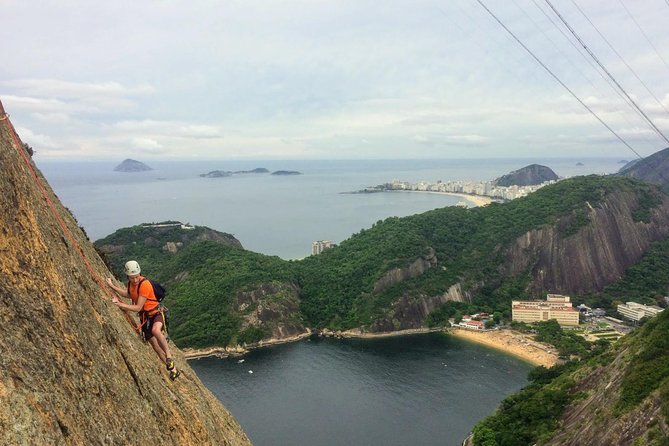
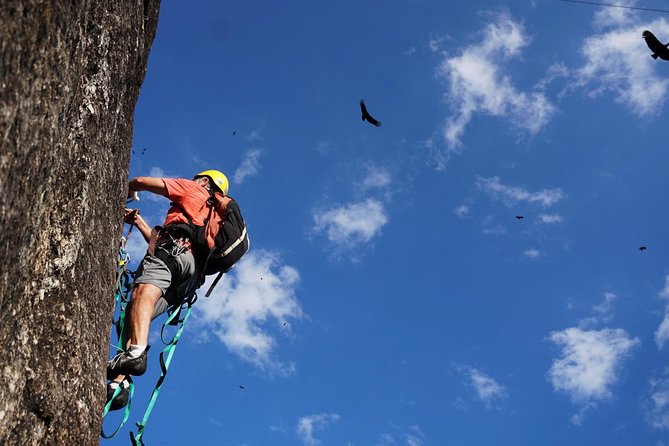
Many people see Sugarloaf Mountain from the beach, a taxi window, or the cable car. This experience gives you a different angle. You approach the rock with climbing shoes, a harness, helmet, rope, and belay equipment, then work upward while Rio opens around you.
That setting is the main reason to consider this tour. You are not climbing at an indoor gym with painted holds and padded floors. The rock is part of Rio’s real outdoor world, and the views become part of the effort. One guide begins with instruction and practice in front of the beach and Sugarloaf, which gives a first-time climber a useful way to get comfortable before the route becomes more demanding.
The activity takes place in Urca, a practical base for Sugarloaf. You meet at Praça General Tibúrcio, 75, and finish back at the same point. The meeting location is near public transportation, so you do not need to arrange a separate transfer from one side of Rio to another.
A few more Rio de Janeiro days to weigh up
- Rio de Janeiro: 6-Stop Highlights of Rio with Lunch
★ 4.4 · 5,157 reviews - Christ the Redeemer Entry Ticket by Corcovado Train
★ 4.4 · 4,476 reviews - Rio de Janeiro: Rocinha Favela Walking Tour with Local Guide
★ 4.8 · 3,052 reviews
Choosing the right climbing route
The most important booking decision is your experience level. The provider offers top-rope climbing for first-time climbers and beginners, along with multi-pitch routes for beginner, intermediate, and advanced climbers.
Top-rope is the clearest choice if you have never climbed outdoors. The rope is arranged to protect you as you work up the rock, while the guide manages the belay system and explains the basic movement. You still do the physical work, but you are not expected to arrive with outdoor climbing skills.
A beginner multi-pitch route may suit you if you have some climbing experience and want a longer route with more than one section. The supplied information does not give exact route grades or lengths, so you should describe your background honestly when booking. The Itaway agent uses your past experience to choose an appropriate route.
Intermediate and advanced climbers have a reason to book this instead of a standard sightseeing outing. You can ask for a route that makes better use of your existing ability, including multi-pitch climbing. The small ratio should also help the guide spend more time on technique, rope work, and route decisions.
Do not choose an advanced option simply because it sounds more exciting. A route that is too difficult can turn a beautiful outing into a stressful one. Your climbing history matters more than your general fitness, and the provider specifically asks you to choose the option that fits your skill level.
What the three-hour schedule feels like
The tour lasts about three hours, with up to two hours devoted to climbing. That leaves time for meeting your instructor, checking equipment, practicing, reaching the route, and returning to the meeting point.
The first part should feel practical rather than rushed. Your certified bilingual instructor provides your climbing shoes, harness, helmet, and belay or rappel device. The group also has ropes, quickdraws, and equipment for building anchors. For a beginner, this preparation is valuable because outdoor climbing equipment can feel unfamiliar even if you have watched climbing videos or used a gym wall.
Expect instruction before the main climbing begins. One account describes practicing in front of the beach and Sugarloaf, a useful step for anyone who wants to understand how the rope system works before committing to the rock. You will want to use this time to ask about foot placement, belaying, rappelling, and what the guide expects from you.
The climbing itself can last up to two hours. That is enough time to make the outing feel like a real activity rather than a short novelty, though the exact amount of climbing will depend on your chosen route and conditions. Afterward, the group returns to the meeting point in Urca.
If you climb Sugarloaf Mountain, a cable car descent ticket to Morro da Urca is included. This is a useful detail, since the return from a climb can be tiring and the cable car avoids making you solve that part on your own. The included ticket applies when climbing Sugarloaf, not necessarily to every possible climbing arrangement.
Close instruction from Victor, Adilio, and the guiding team
The guide is central to this experience. You are not simply renting gear and finding a wall. A certified bilingual instructor chooses or confirms the route, teaches the basic systems, manages the rope setup, and stays with your group.
Victor is named in guest feedback as a guide who helped two women feel comfortable on their first outdoor climb. That matters because outdoor climbing can feel intimidating at the start, especially when you are moving from an indoor wall to natural rock. The same feedback highlights his ability to make climbers feel secure while teaching them.
Adilio is also named as a guide, with praise for a pleasant route, good views, and friendly service. If you are assigned one of these guides, you can expect a personal style of instruction. You should not assume a particular guide is guaranteed, but their names give you a better sense of the team behind the experience.
The bilingual format is another practical plus. The supplied details do not specify which languages are offered, so confirm that the available language works for you when booking. Clear communication matters most when a guide is explaining belay commands, rope handling, or safety instructions.
Same city, a completely different kind of day:
- Rio de Janeiro: Sugarloaf Cable Car Official Ticket
★ 4.6 · 2,873 reviews - Rio: Christ the Redeemer, Sugarloaf, Selaron & BBQ Lunch
★ 4.5 · 2,428 reviews - Rio De Janeiro: Half-Day Rocinha Favela Walking Tour
★ 4.7 · 2,272 reviews - Rio de Janeiro: Angra dos Reis and Ilha Grande Full-Day Tour
★ 4.6 · 1,673 reviews
A private experience with only two climbers per instructor
This is a private activity, and only your group participates. The stated ratio is two people per instructor, which is much more personal than a large group climbing session.
I see two benefits here. First, a beginner can ask basic questions without holding up a large party. Second, an experienced climber can get more direct attention while working through a multi-pitch route. The arrangement also makes it easier for the guide to adjust the pace to the two people present.
The tradeoff is that a private, low-ratio experience usually costs more than joining a crowded group. At $127.42 per person, the price reflects instruction, equipment, a small group, and the setting. It is not a budget way to see Sugarloaf, but it is easier to justify if you specifically want to climb rather than simply ride the cable car.
The price includes all individual climbing equipment and the shared technical equipment. You do not need to bring climbing shoes, harness, helmet, belay device, rope, quickdraws, or anchor-building equipment. Snacks and bottled water are not included, so bring your own water and a small snack if needed.
The Urca meeting point and the cable car return
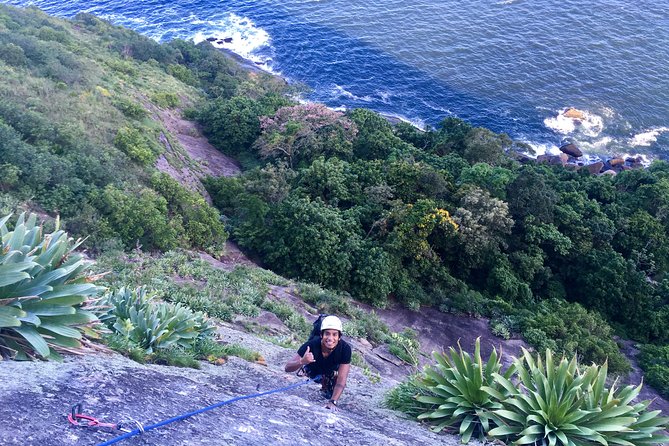
You meet at Praça General Tibúrcio, 75, in Urca. The activity also ends there, which keeps the day simple and avoids a one-way transport problem. The meeting point is near public transportation, another help if you are building the outing into a wider Rio schedule.
The tour offers morning and afternoon departures. A morning session may be easier to fit before a long sightseeing day, while an afternoon session can work well if you want to spend the morning elsewhere. Since the climbing depends on good weather, leave some flexibility in your plans if possible.
The cable car descent ticket to Morro da Urca is included when the activity involves climbing Sugarloaf Mountain. That detail adds value because it gives you a clear finish after the climb. It also means you should not treat the climb and cable car as completely separate expenses when comparing this tour with other outdoor options.
The experience does not include food or drinks. Pack water before you arrive, especially since three hours of outdoor activity can make hydration important. Tips are also not included. A tip of 10 to 20 percent of the trip cost is typical if you feel the guide provided good service, so include that in your real budget.
Is the physical challenge right for you?
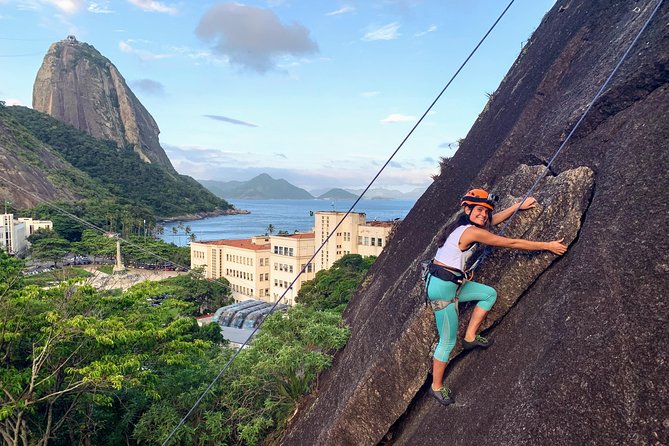
The experience is described as suitable for all abilities, and most people can participate. That does not mean the activity is effortless. You will be climbing natural rock, wearing a harness and helmet, and following the guide’s instructions for movement and rope systems.
Your previous climbing experience determines the route. First-time climbers can use top-rope, while more experienced participants can choose multi-pitch climbing at a suitable level. You should select carefully and give an accurate account of your past climbing rather than guessing at your ability from general athletic fitness.
The information provided does not give a minimum age, weight limit, medical restriction, or exact physical requirement. If any of those details affect your booking, ask the provider before paying. The activity is listed as suitable for most people, but your own comfort with heights and outdoor exertion still matters.
Weather can change the plan
Good weather is required. If poor weather causes cancellation, you are offered another date or a full refund. That policy protects you from losing the full price because rain or unsafe conditions make climbing impossible.
You also get free cancellation if you cancel at least 24 hours before the start time. A cancellation made less than 24 hours before the activity is not refunded, and last-minute changes are not accepted. The cut-off uses Rio local time.
That timing matters if your schedule is uncertain. Book when you are reasonably sure you can attend, but keep an eye on the forecast. If weather is the concern, let the provider handle the decision rather than assuming the climb will proceed.
Who will get the most from this Rio climbing tour?
I would choose this experience if you want more than a view from the cable car. It suits a first-time outdoor climber who wants patient instruction, a couple or pair of friends who prefer a private outing, and experienced climbers who want to use their skills in a famous Rio setting.
It is also a good choice for people who value the guide relationship. Victor’s and Adilio’s feedback points to friendly, reassuring instruction, which is especially useful for first-time outdoor climbing. The two-person instructor ratio gives you a better chance of getting help exactly when you need it.
I would think twice if your main goal is a cheap Sugarloaf visit, a relaxed sightseeing stop, or a long full-day adventure. The activity is only about three hours, and the cost is high compared with ordinary sightseeing. You are paying for technical instruction, equipment, a private format, and access to the rock, not simply for transport up the mountain.
Should you book Climb Rio de Janeiro?
Book it if you want to climb Sugarloaf rather than just photograph it. The combination of a certified bilingual guide, full climbing equipment, routes for several ability levels, and only two climbers per instructor gives the experience real value.
For a beginner, the strongest reasons are the top-rope option, careful practice before the climb, and close support from the guide. For an experienced climber, the multi-pitch choices and private format are more important. The $127.42 price is fair for that level of support, though snacks, water, and a possible tip add to the final cost.
Choose your route honestly, keep your schedule flexible for weather, and bring water. If those points work for you, this offers a more active and memorable way to meet Rio’s most famous mountain.
FAQ
Where does the rock climbing tour meet?
You meet at Praça General Tibúrcio, 75, in Urca, Rio de Janeiro. The activity ends back at the same meeting point.
How long does the experience last?
The tour lasts approximately three hours. Up to two hours of that time is used for rock climbing.
Is the tour suitable for beginners?
Yes. First-time climbers and beginners can choose a top-rope option. Beginner, intermediate, and advanced multi-pitch routes are also available.
How is the climbing route chosen?
The route is based on your past rock climbing experience, as determined by an Itaway agent. You should select the tour option that best matches your ability.
How many people are assigned to each instructor?
The experience uses a small-group format with no more than two people per instructor.
What climbing equipment is included?
Individual equipment includes climbing shoes, a harness, helmet, and belay or rappel device. Shared equipment includes rope, quickdraws, and anchor-building equipment.
Is the cable car ride included?
A cable car descent ticket to Morro da Urca is included if you are climbing Sugarloaf Mountain.
What happens if the weather is poor?
The experience requires good weather. If it is canceled because of poor conditions, you can choose another date or receive a full refund.
Just added around Rio de Janeiro
- Rio de Janeiro: Zip Lining and Canopy Tree Tour★ 3.3 · 6 reviews
- Vidigal Favela Tour★ 4.4 · 26 reviews
- Hang gliding flight in Rio de Janeiro★ 5.0 · 6 reviews
- Unforgettable Boat Party★ 5.0 · 3 reviews
- Rio de Janeiro: Attend a Vasco da Gama game with local guide★ 4.8 · 9 reviews
- Rio Highlights: Christ, Sugarloaf, and More in a Private Tour★ 5.0 · 36 reviews
- Tijuca Forest Hike – Waterfalls & Caves, Nature & Wild Life!★ 5.0 · 51 reviews
- Tijuca Forest w/ Chinese View,cascatinha Taunay,horto waterfall and parque laje★ 4.5 · 29 reviews
Rio de Janeiro Tours, compared.


Christ the Redeemer Entry Ticket by Corcovado Train
Read our review →

Christ the Redeemer, Sugarloaf, Selaron & BBQ Lunch
Read our review →