Reviewed · PRIVATE
Porto Alegre: Private Citytour na Capital dos Gaúchos
Porto Alegre’s best introduction is not one monument, but the way its civic squares, football stadiums, old churches, leafy streets, and Guaíba waterfront fit together. This five-hour city tour gives you that broad view in one outing, with a local guide adding the stories that turn a long list of stops into a readable portrait of the capital of Rio Grande do Sul.
I like the private group format and hotel pickup, especially if you have only one morning to get your bearings. I also like the flexible guiding style: Carlos tailored the route for an engineer’s interests, while Bruno adjusted his pace and route during road closures. The main caution is that the advertised private rate covers up to four people, while the general tour details also mention groups of up to 15, so confirm the exact arrangement when booking.
Key points at a glance
- Five hours across old and new Porto Alegre: You’ll cover central squares, palaces, churches, stadiums, parks, and the Guaíba shore.
- A guide who can adapt the outing: Carlos tailored one tour around an engineer’s interests, and Bruno handled a marathon and a protest without letting the day fall apart.
- A useful first-day overview: The route helps you see in one morning what could otherwise take several days to piece together.
- Three language options: Tours are offered in Portuguese, English, and Spanish.
- Good value for a small party: At $180 for up to four people, the cost works out to $45 each when full.
- Some route planning is essential: Porto Alegre traffic and blocked roads can affect the order or timing of stops.
A five-hour introduction to Porto Alegre
This is a sightseeing drive with stops, not a walking tour built around one neighborhood. That matters because Porto Alegre spreads its main sights across several areas, from Moinhos de Vento in the north to the Guaíba shore and central civic district.
You’ll spend enough time at selected points to look around and take photos, while the guide provides the links between them. The route is designed for orientation. By the end, you should have a practical sense of the city’s central areas, its public institutions, its football culture, and its relationship with the water.
The city’s identity comes through in contrasts. A polished neighborhood gives way to a famous tree-lined street. A football stadium shares the itinerary with a nineteenth-century church. Historic government buildings lead toward the open Guaíba waterfront. I like that mix because it avoids reducing Porto Alegre to only colonial architecture or only modern city views.
The route is also useful if you are short on time. A morning of independent sightseeing could leave you moving slowly between distant areas or missing context. Here, the guide and vehicle do the connecting.
A few more Brazil days to weigh up
- Private São Paulo City Tour
★ 4.8 · 264 reviews - Rio de Janeiro: Private Guided City Tour
★ 4.6 · 207 reviews - Private Helicopter tour – Rio de janeiro in 30min
★ 4.8 · 173 reviews
Moinhos de Vento and Gonçalo de Carvalho Street
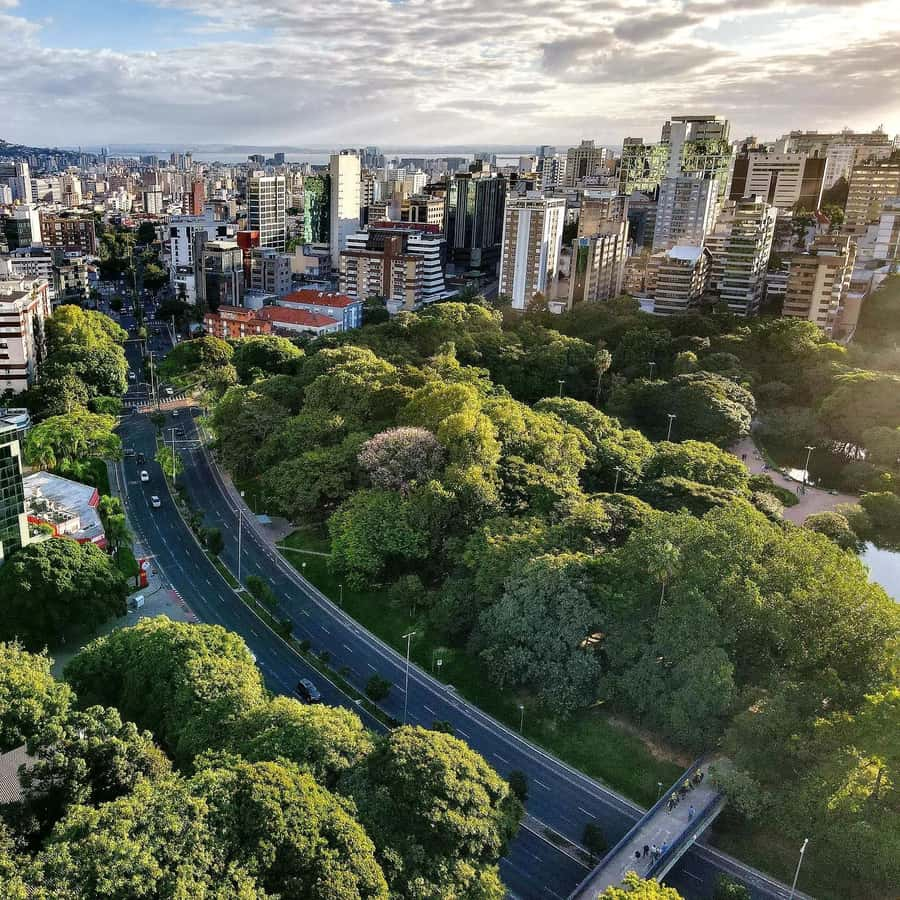
The outing begins with Moinhos de Vento, one of Porto Alegre’s best-known neighborhoods. The itinerary then includes Calçada da Fama and Gonçalo de Carvalho Street, often praised for its dense canopy of trees and frequently described as one of the world’s most beautiful streets.
These stops show a more residential, polished side of the city. Gonçalo de Carvalho is not a grand monument in the usual sense. Its appeal comes from the street itself, with trees forming a green ceiling over the road and sidewalks. You’ll want to pause here rather than simply photograph it through a car window.
Calçada da Fama adds a different note, connected with local public figures and cultural life. Porto Alegre has long been associated with writers, intellectuals, artists, and politicians, and these early stops help explain why the city is known for its strong cultural voice.
One practical point: a leafy street depends on the season, weather, and traffic for its full effect. Treat it as a visual city stop, not a museum visit with a fixed indoor display.
The Public Market and the central civic core
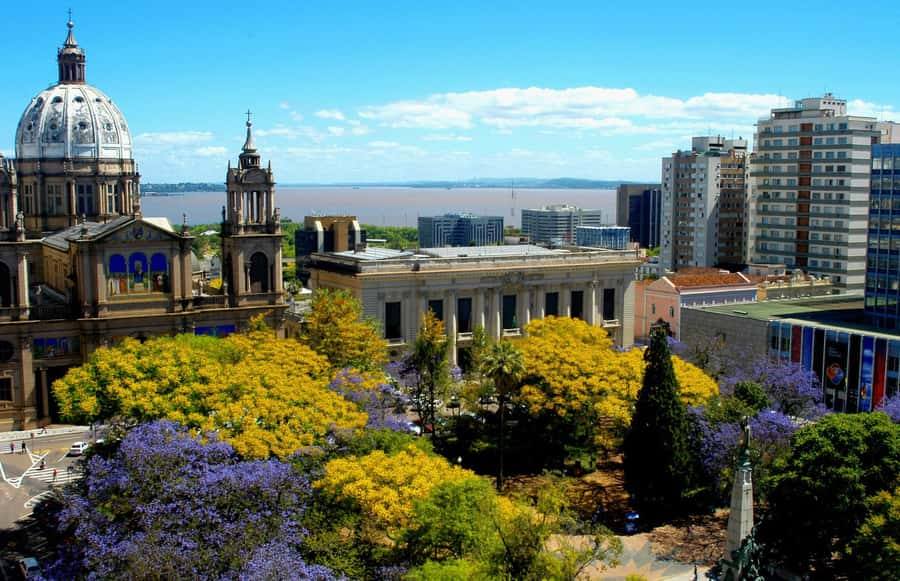
The Public Market is one of the most useful stops for understanding everyday Porto Alegre. It brings the tour down from broad city themes to a place connected with food, shopping, and ordinary urban life.
Your time here may be shorter than you would want for a full market visit, since the tour also has a long list of stops. If you enjoy browsing stalls slowly, ask the guide how much time is available. If your goal is simply to see the building and get a feel for the city center, the stop works well.
From there, the route moves through City Hall and the central civic district. Nossa Senhora das Dores Church, Matrix Square, the Metropolitan Cathedral, and São Pedro Theater each add a different layer to the city center.
Matrix Square gives you a useful public-space view of the historic core. The Metropolitan Cathedral brings scale and religious importance, while São Pedro Theater points to Porto Alegre’s performing arts tradition. Nossa Senhora das Dores Church adds an older architectural presence and a quieter counterpoint to the larger civic buildings.
These are places where the guide matters most. A quick look at a façade tells you only so much. A local guide can explain why a building matters, how it fits into the city, and which details deserve your attention.
Palaces that explain Rio Grande do Sul politics
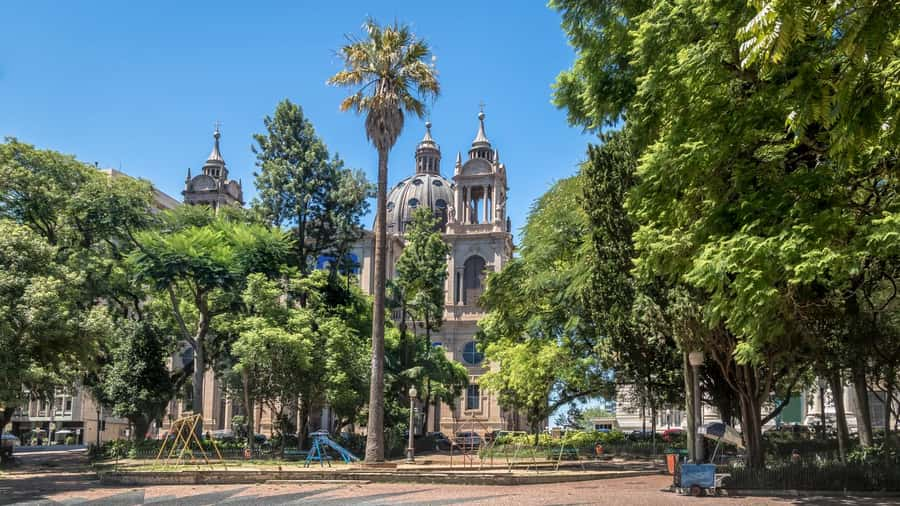
Farroupilha Palace and Piratini Palace give the central route a political dimension. These buildings connect Porto Alegre with the government of Rio Grande do Sul and the state’s role in Brazilian history.
Do not expect a long palace tour based on the information provided. The experience is a city tour, so these stops are primarily about viewing the buildings and hearing their context. That makes the guide’s commentary important. Valdecir, Bruno, and Carlos are among the guides associated with the experience, and the language options include Portuguese, English, and Spanish.
The political stops are especially useful if you know little about southern Brazil. Porto Alegre is not presented as a generic Brazilian city. Its identity includes the culture of the gaúcho, state politics, regional memory, and a strong tradition of public debate. The palaces give those themes a physical setting.
I would pay attention to the order of the route rather than trying to memorize every building. The value here is seeing the city’s government district as part of a larger story that also includes markets, theaters, churches, and public squares.
Same city, a completely different kind of day:
- Rio de Janeiro: 6-Stop Highlights of Rio with Lunch
★ 4.4 · 5,157 reviews - Christ the Redeemer Entry Ticket by Corcovado Train
★ 4.4 · 4,476 reviews - Rio de Janeiro: Rocinha Favela Walking Tour with Local Guide
★ 4.8 · 3,052 reviews - Rio de Janeiro: Sugarloaf Cable Car Official Ticket
★ 4.6 · 2,873 reviews
Beira-Rio and Grêmio Arena
Porto Alegre’s football rivalry is a major part of its character, and this tour gives both sides space. You’ll see Beira-Rio Stadium, associated with Sport Club Internacional, and Grêmio Arena, home of Grêmio.
Even if you do not follow Brazilian football, these stops help you read the city. Football is not treated as a side attraction here. The presence of two major clubs, each with its own stadium and loyal following, gives Porto Alegre a social and cultural energy that a standard architecture tour would miss.
The stadium stops are generally exterior sightseeing points based on the itinerary. You should not assume that admission, an inside tour, or a match is included. Their value is the chance to see where the local rivalry lives and to compare the two large venues during one city outing.
For football fans, this may be one of the strongest reasons to book. For everyone else, it is still a useful reminder that a city’s identity is built not only in government halls and churches, but also in the places where people gather and argue about their teams.
The Guaíba waterfront and Gasometer Plant
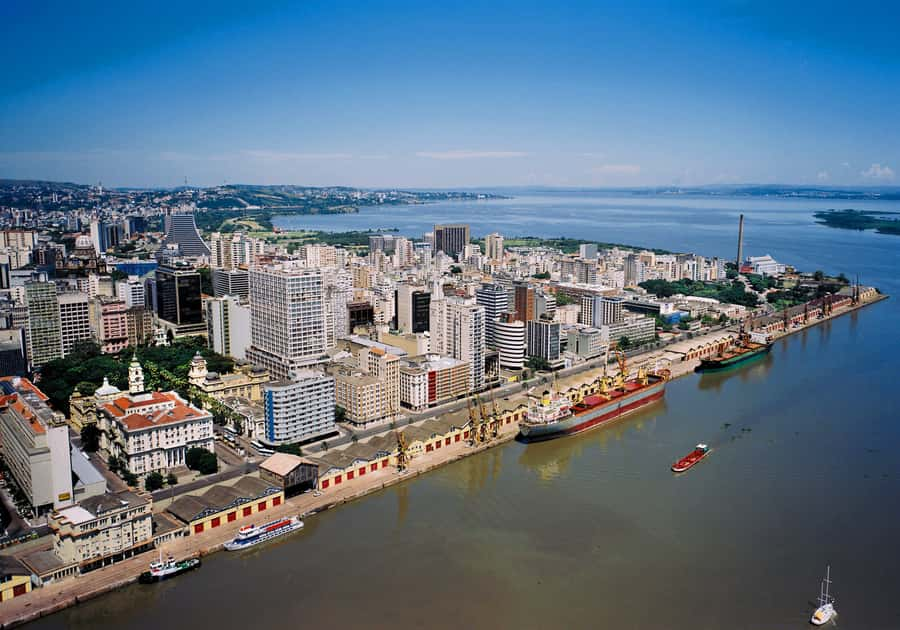
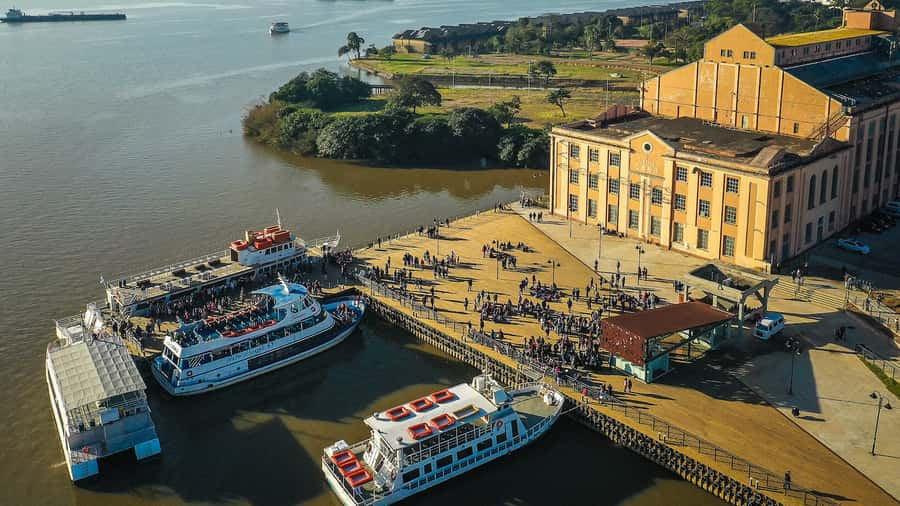
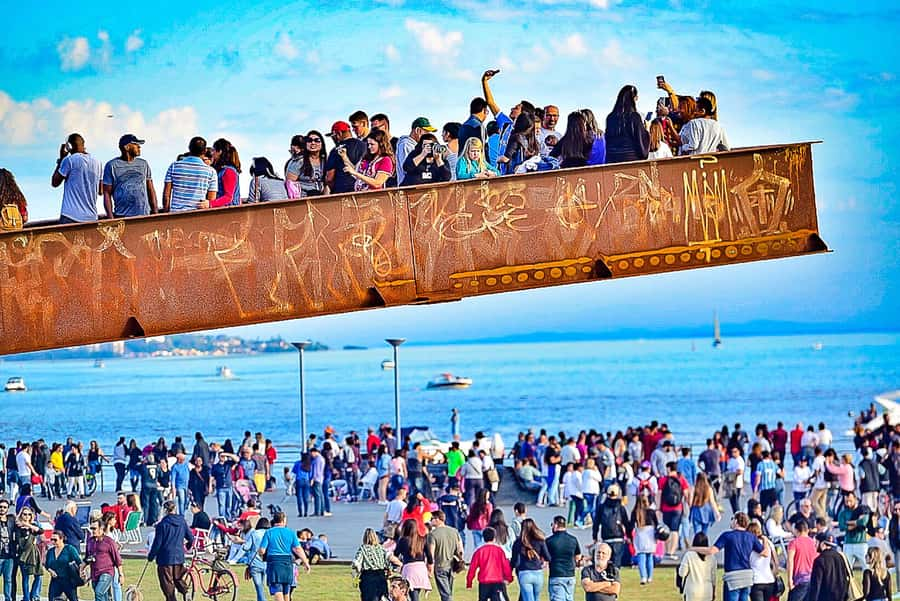
The route becomes more open as it reaches the Gasometer Plant, Guaíba Orla, Pier Embarcadero, and Orla Mirante. These stops bring you to Porto Alegre’s relationship with the Guaíba, the broad body of water that shapes the city’s western edge.
The Gasometer Plant is an industrial landmark rather than a polished historic monument. Its presence gives the waterfront a strong visual marker and shows how old working structures can become part of a city’s public image.
The Guaíba Orla and Pier Embarcadero offer a change of pace. Instead of looking up at buildings, you’ll have room to look outward. Orla Mirante is included for views, and the waterfront is likely to be one of the more relaxed parts of the tour.
Timing and weather matter here. A clear day should give you the best chance of enjoying the open views, while poor weather can make a waterfront stop feel brief. Still, the route makes sense even in less-than-perfect conditions because it shows how the city turns toward the water.
This is also a good place to ask the guide about the best return point for a later walk. The tour itself lasts five hours, but the waterfront may be an area you want to revisit at your own pace.
Harmony Park, Stone Bridge, and the Azorean Monument
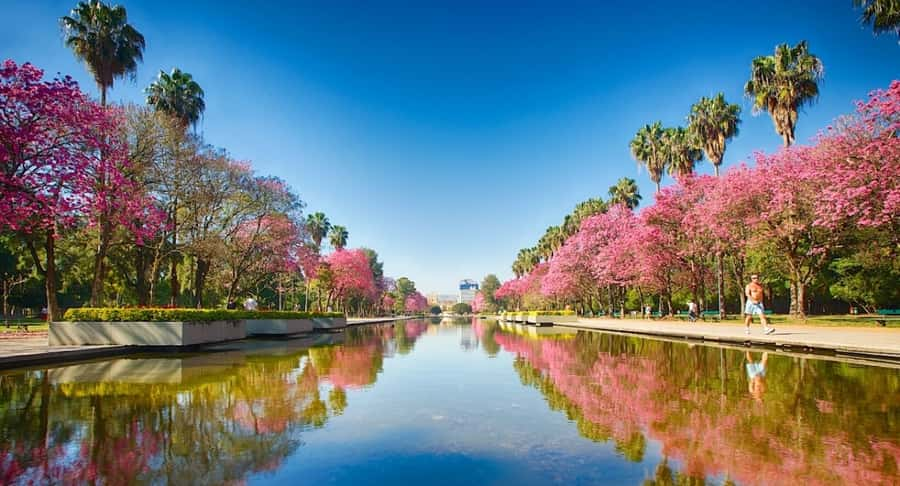
Harmony Park and the Stone Bridge add public recreation and regional identity to the itinerary. Harmony Park, or Parque da Harmonia, connects with the gaúcho traditions that shape the state’s image and culture.
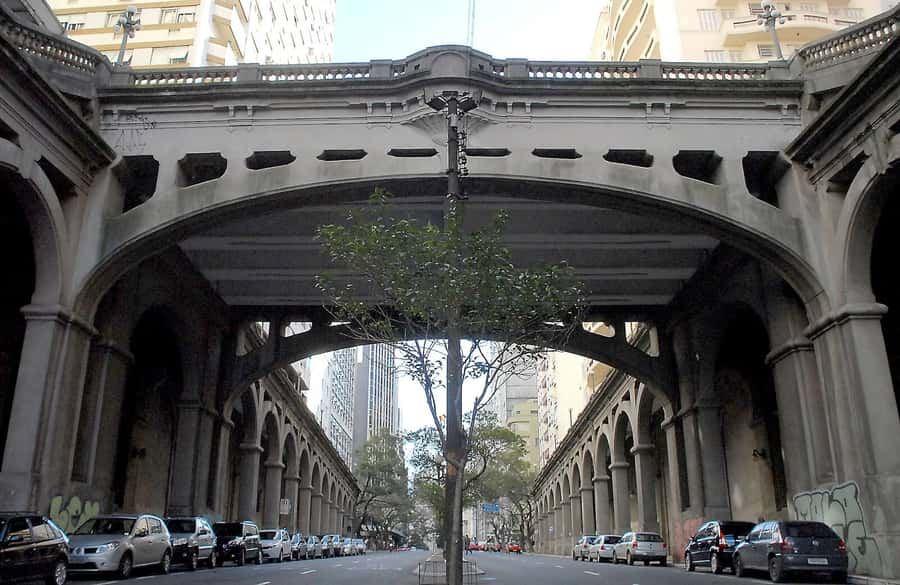
The Stone Bridge offers another visual change. It is a simple reminder that Porto Alegre’s story is not confined to grand government buildings or busy central streets. The route uses these smaller points to keep the day from becoming a procession of façades.
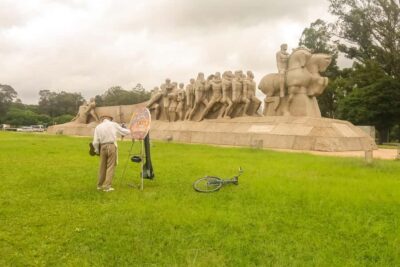
The Azorean Monument points to the Portuguese island heritage that helped shape southern Brazil. This is one of the stops where a short explanation can make a plain-looking monument much more meaningful. You’ll get more from it if you listen for the connections between migration, regional culture, and the city’s population.
Taken together, these stops widen the picture. Porto Alegre is presented as multicultural by nature, with influences that reach beyond one single tradition. That is a useful message for first-time visitors who might otherwise see only the central business district.
Redemption Park and the final city view
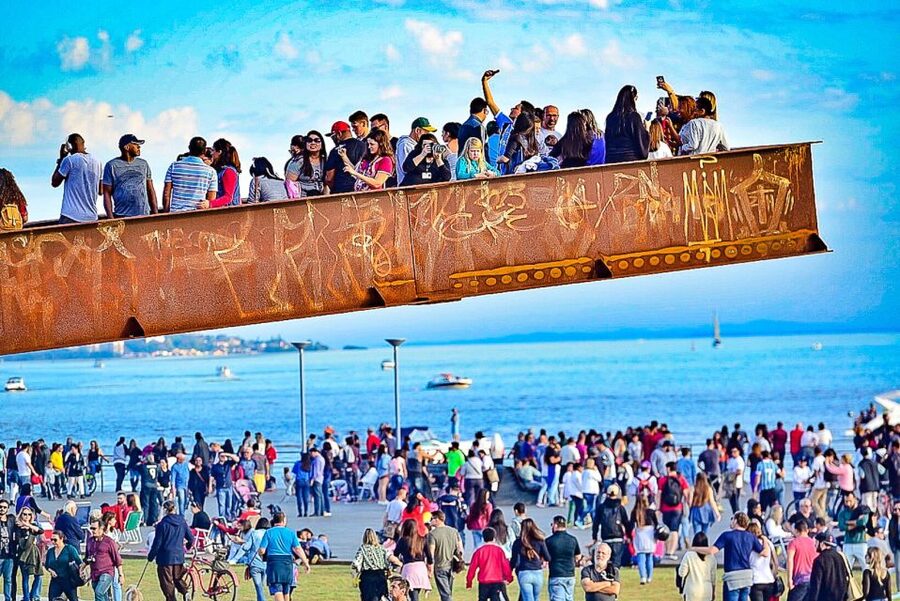
Redemption, also known as Farroupilha Park, gives the tour a broad public green space near the end of its route. After churches, stadiums, palaces, and waterfront landmarks, a park provides a more ordinary view of city life.
The stop may appeal to you if you enjoy watching how residents use public space. It also offers a chance to slow down after a busy schedule. As with several points on this route, the exact amount of time available depends on traffic and the guide’s handling of the day.
This is a long itinerary, and that is both its strength and its limitation. You get a wide introduction, but you cannot explore every site at museum length. I would use the tour to choose where you want to return later, rather than expecting it to replace several full local visits.
How the guiding style affects the experience
The most useful feature is not simply that the guide speaks your language. It is the ability to adjust the tour to your interests and the conditions of the day.
Valdecir guided in clear English for one guest and allowed enough time at stops to explore and enjoy them. Bruno was praised for speaking at a comfortable pace and staying flexible when a marathon and a demonstration blocked roads. Carlos adapted the experience around an engineer’s interests instead of forcing a fixed list of standard tourist points.
Those details suggest that you should tell the guide what interests you before setting off. Mention architecture, politics, football, public spaces, local culture, or photography. The route already covers all of these, but your guide may be able to give more attention to the subjects you care about.
The provider is My Driver. Pickup is included from accommodation in Porto Alegre, and you should wait in the hotel lobby 10 minutes before the scheduled time. Drivers wait no longer than five minutes after pickup time, so this is one case where being early is wise.
Price, group size, and practical value
The listed price is $180 per group of up to four people. At the full four-person limit, that is $45 per person for five hours, including a guide, vehicle service, and hotel pickup. For a couple, the per-person cost is higher, but the private format can still make sense if you value a tailored pace.
The general details also describe a small group limited to 15 participants. Because that does not fully match the group price and private-tour wording, I would confirm whether your booking is exclusively for your party or part of a larger small group.
The tour is wheelchair accessible, and live guiding is available in Portuguese, English, and Spanish. It also offers free cancellation up to 24 hours before the start time and a reserve-now, pay-later option, both useful if your schedule in Porto Alegre is still changing.
Traffic can affect the plan. The tour has enough stops that the guide may need to change the order when roads close. That is not necessarily a problem, as Bruno’s handling of major road blocks shows, but you should keep a little flexibility around the five-hour window.
Who should book this Porto Alegre tour?
I would recommend it to first-time visitors who want a quick, structured introduction and to anyone staying only briefly in the city. It is also a good match for couples or families who would rather pay for a private vehicle than organize several separate rides.
Football fans get both major stadiums. Architecture and civic-history enthusiasts get churches, theaters, government palaces, and the central squares. People interested in local identity get the market, Harmony Park, the Azorean Monument, and the waterfront.
I would be more cautious if you want long visits inside individual attractions. This route covers a lot of ground, but the information provided does not include entry to stadiums, palaces, theaters, or museums. You are paying for a guided city overview, not a series of full interior tours.
Should you book it?
Book this tour if you want to understand Porto Alegre’s layout and character in one five-hour outing. The strongest reasons are the broad route, hotel pickup, three language choices, and guides who can adjust the commentary to your interests.
Before paying, confirm the private-group arrangement and tell the operator what you most want to see. If you have four people, the $180 price is fair for the coverage. If you prefer slow walks, long market browsing, or detailed interior visits, use this as an orientation day and plan separate visits afterward.
FAQ
How long does the Porto Alegre city tour last?
The tour lasts five hours. Starting times depend on availability.
What languages are available?
Guiding is available in Portuguese, English, and Spanish.
Is hotel pickup included?
Yes. Pickup is included from accommodation in Porto Alegre. You should wait in the hotel lobby 10 minutes before the scheduled pickup time.
How many people can join?
The price is listed for a private group of up to four people. The general activity details also mention a small group limited to 15 participants, so confirm the exact group arrangement when booking.
Is the tour wheelchair accessible?
Yes, the activity is listed as wheelchair accessible.
What is included in the route?
The route includes Moinhos de Vento, Calçada da Fama, Gonçalo de Carvalho Street, City Hall, the Public Market, Beira-Rio Stadium, Grêmio Arena, Nossa Senhora das Dores Church, Matrix Square, the Metropolitan Cathedral, São Pedro Theater, Farroupilha Palace, Piratini Palace, the Gasometer Plant, the Guaíba waterfront, Pier Embarcadero, Orla Mirante, Harmony Park, the Stone Bridge, the Azorean Monument, and Redemption.
Can I cancel the booking?
Yes. You can cancel up to 24 hours in advance for a full refund. You can also reserve now and pay later.
Just added around Brazil
- Paraty Historical City Walking Tour★ 4.1 · 8 reviews
- Walking Tour of São Luís do Maranhão★ 4.4 · 14 reviews
- Rio de Janeiro: Zip Lining and Canopy Tree Tour★ 3.3 · 6 reviews
- Vidigal Favela Tour★ 4.4 · 26 reviews
- Hang gliding flight in Rio de Janeiro★ 5.0 · 6 reviews
- Buzios: City Tour by Trolley with 12 Beaches and Pickup★ 4.5 · 4 reviews
- Rio de Janeiro: Attend a Vasco da Gama game with local guide★ 4.8 · 9 reviews
- Unforgettable Boat Party★ 5.0 · 3 reviews
Private, compared.

Private Helicopter tour – Rio de janeiro in 30min
Read our review →
Iguazú Falls Private Day-tour on Both Brazillian & Argentinean
Read our review →
Private Transfer GIG International Airport To or From Rio de Janeiro
Read our review →