Reviewed · TOURS
Germanic Roots Tour Blumenau and Pomerode
Blumenau and Pomerode offer a useful lesson in how German immigration shaped Santa Catarina. On this full-day trip from Balneário Camboriú, you move from Blumenau’s grand civic buildings and Oktoberfest grounds to Pomerode’s smaller streets, craft shops, chocolate makers, and family attractions. The Germanic Roots Tour gives you a lot of ground in one day.
I like the strong historical focus, especially with guides such as Fábio and Edna, who explain far more than the buildings themselves. I also like the mix of stops: beer, chocolate, architecture, museums, animals, and classic cars. The main drawback is the pace. Twelve listed stops in roughly 10 hours means some visits are brief, and several popular attractions require extra payment.
Key points to know before booking
- Blumenau’s Historic Center includes the founder’s mausoleum, a colonial family museum, Hercílio Luz Square, and the unusual Cemitério dos Gatos.
- Pomerode adds variety, with chocolate, German-style shopping streets, a zoo, dinosaur park, automobile museum, and toy museum.
- Fábio and Edna are especially strong guides, praised for clear explanations of regional history and geography.
- The $28.91 price is good for transportation and guiding, but entrance fees, food, and Colonial Coffee are not included.
- The 28-person maximum keeps the group manageable, though the vehicle and stop times can affect comfort.
- Plan for a long day, starting at 8:00 a.m. and returning to the Balneário Camboriú meeting point.
Why Blumenau and Pomerode make a good day trip
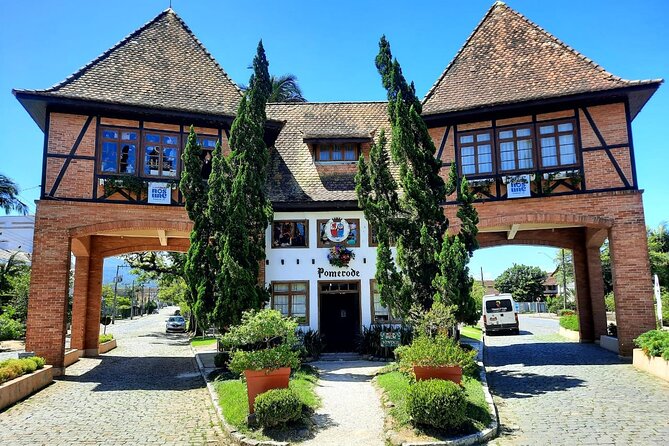
The appeal here is not simply that the towns use German-style architecture. The tour shows how immigration affected streets, homes, festivals, food, brewing, crafts, and public life in this part of Brazil.
Blumenau is the larger and more ceremonial of the two cities. Its center includes grand buildings, a cathedral, a theater, and the famous Rua XV de Novembro, where the Oktoberfest parade takes place. Pomerode feels smaller and more intimate, with shops, breweries, chocolate, museums, and attractions aimed at families.
You get both sides in one outing. Blumenau gives you the broad civic story. Pomerode gives you more time for browsing, tasting, and choosing an attraction that fits your interests.
The tour begins at 8:00 a.m. in Balneário Camboriú and lasts about 10 hours. Transport is by air-conditioned van or executive minibus with reclining seats, stereo, and DVD. That matters on a full day with repeated drives, though comfort can vary depending on the vehicle assigned.
One past problem involved a van that leaked during rain. The company said the vehicle had been hired from another operator and that it would stop using that arrangement. I would still check the weather and expect the vehicle experience to depend on the day’s group and transport assignment.
Other Brazil days people book alongside this one:
- Rio de Janeiro: 6-Stop Highlights of Rio with Lunch
★ 4.4 · 5,157 reviews - Christ the Redeemer Entry Ticket by Corcovado Train
★ 4.4 · 4,476 reviews - Rio de Janeiro: Rocinha Favela Walking Tour with Local Guide
★ 4.8 · 3,052 reviews
Blumenau’s Historic Center and the story behind the city
The first hour focuses on Blumenau’s Historic Center. This is the most important part of the day if you want context rather than just photographs.
At Hercílio Luz Square, your guide explains the city’s foundation and colonization. This is a good opening because it gives meaning to the buildings you see later. Instead of treating the German influence as a decorative theme, the tour connects it to settlement and local development.
The Mausoleum of Dr. Otto Blumenau honors the city’s founder. Inside, you can see photographs, artifacts, and objects connected with the Blumenau family. It is a compact stop, but it helps turn a name on a street sign into a person with a role in the city’s story.
The Cemitério dos Gatos is one of the most unusual places on the route. It is connected with Edith Gaertner, remembered for her love of animals. This stop adds a personal and slightly quirky note to an otherwise formal history tour. If you prefer odd local stories to standard monuments, pay attention here.
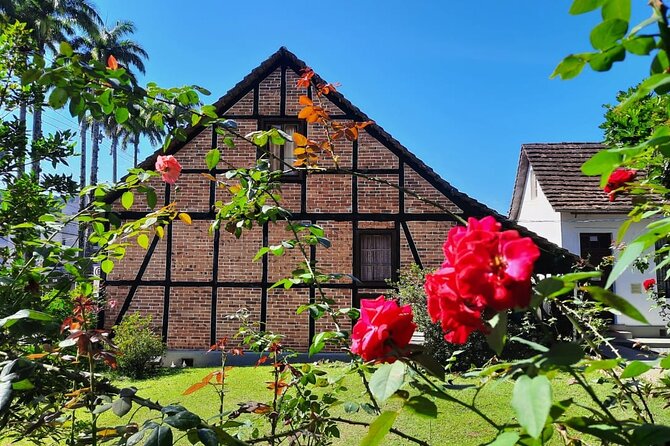
The Colonial Family Museum occupies the first house built in the half-timbered style. Half-timbering is one of the visual features that makes the region feel different from much of Brazil, and seeing it in an early home gives you a clearer sense of the building tradition.
You also visit Alameda Duque de Caxias, described as Blumenau’s first planned street. Together, these stops form a useful introduction to the city. The limitation is time. The Historic Center portion is listed at about one hour, so you should expect a guided overview, not a slow museum visit.
Beer, Rua XV de Novembro, and Blumenau’s public face
The Beer Museum gets about 30 minutes. You learn about the history of beer and how it is produced, but admission is not included. This is a short stop, so it works best as a quick cultural visit rather than a full brewery tour.
The subject fits Blumenau well. Beer is tied closely to the city’s German identity and to its Oktoberfest celebrations. If you are interested in brewing, you may want to ask the guide how much of the visit is museum viewing and how much concerns production. The supplied details do not promise a tasting.
The panoramic drive along Rua XV de Novembro provides one of the day’s best photo opportunities. This is where the Oktoberfest parade takes place, and you pass the São Paulo Apostle Cathedral, the Castelinho, and the Carlos Gomes Theater.
The Castelinho is a replica of the city hall in Michelstadt, a city in southern Germany. That detail helps explain the visual connection between Blumenau and German architectural models. The theater adds another piece of local culture, while the cathedral gives the street a strong civic and religious landmark.
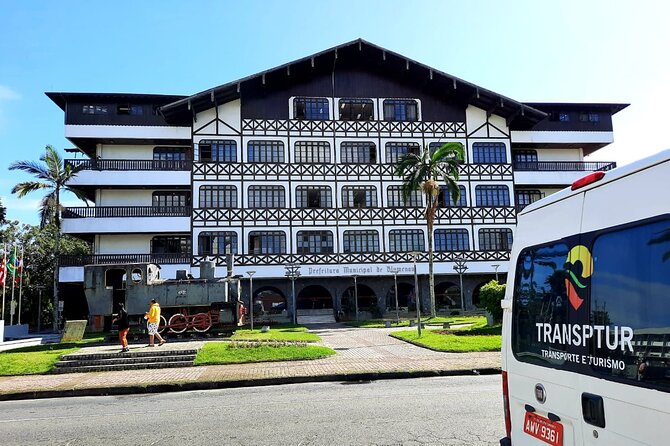
At Blumenau City Hall, you see a building inspired by old Colonial-period homes. The visit lasts about 15 minutes and admission is free. It is a quick stop, but the building helps you compare domestic architectural ideas with the larger public structures seen elsewhere in the city.
The Iron Bridge adds an industrial note. It was built for the first locomotive purchased from Germany. This is a reminder that the German connection was not limited to houses, food, or festivals. It also influenced transport and commerce.
Vila Germânica, where festivals become architecture
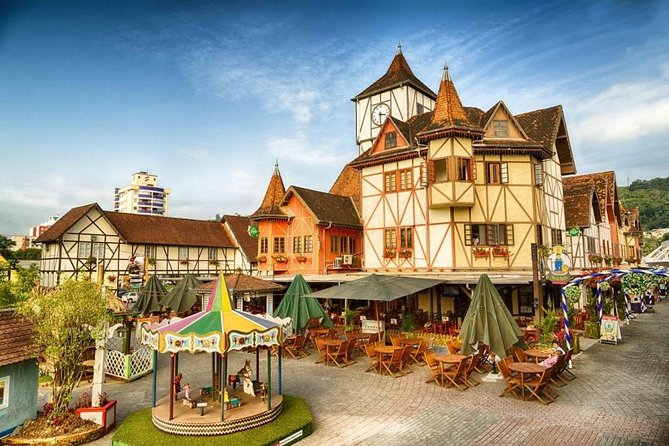
Parque Vila Germânica gets about one hour and admission is free. The complex uses European-style architecture and includes restaurants, souvenir shops, regional products, and typical crafts.
Its main value depends on what you want from the day. If you like shopping and food, this is one of the more useful stops. You can look for local crafts and regional products, and you may find a suitable place for a meal, since food is not included in the tour price.
The complex hosts events linked with local customs, including Oktoberfest, Osterdorf, Weihnachtsdorf, the Brazilian Beer Festival, and Festitália. If your visit does not coincide with one of those events, you will still see the setting where they take place, but the atmosphere will be quieter.
You should allow time for browsing without expecting a long, unstructured break. The schedule continues to Pomerode, so this is not the place to spend an entire afternoon.
Same city, a completely different kind of day:
- Rio de Janeiro: Sugarloaf Cable Car Official Ticket
★ 4.6 · 2,873 reviews - Rio: Christ the Redeemer, Sugarloaf, Selaron & BBQ Lunch
★ 4.5 · 2,428 reviews - Rio De Janeiro: Half-Day Rocinha Favela Walking Tour
★ 4.7 · 2,272 reviews - Rio de Janeiro: Angra dos Reis and Ilha Grande Full-Day Tour
★ 4.6 · 1,673 reviews
Pomerode’s welcome, chocolate, and town center
The drive to Pomerode shifts the mood. This city is described as calm and charming, and the stops are more compact and varied.
At the Portal Turístico Sul, you can take photographs in typical German clothing and see local handicrafts. The stop lasts about 15 minutes and is free. It is clearly designed as a welcome point, so think of it as a short photo and orientation stop rather than a major museum visit.
Next comes Nugali Chocolates, a Brazilian maker with internationally awarded products. You have about 15 minutes at the central store. This is a good place to buy a small gift, but the timing is tight if you want to compare products carefully.
The Pomerode Tourist Center brings together several small attractions. Paseo Pomerano offers souvenir shops, cachaça, chocolates, crystals, and confectionery in a German-style setting. Handgemacht is a craft house where artisans join together to make and sell their work.
You also see the Municipal Theater and the Schornstein Brewery, located in the old Weege Market building. The brewery’s official bar, Schornstein Kneipe, sits beside the factory and is marked by a 30-meter chimney made from handmade solid bricks.
This is one of the best parts of the route for independent browsing, but the listed time is only 30 minutes. I would choose your priorities before arriving. If you want chocolate, crafts, beer, and souvenirs, you will need to move quickly.
Family attractions and the cost of optional admissions
The next part of the day is where the tour becomes more flexible, but also more expensive.
Vila Encantada Parque dos Dinossauros offers children’s attractions, including eight life-size dinosaur species, pirates, an adventure area, and an interactive village. Admission is not included, and the visit is scheduled for about 30 minutes.
That short slot makes the park a better choice for families who want a quick look than for anyone expecting a full theme-park visit. Children may enjoy the dinosaur displays and play areas, but parents should consider the extra ticket cost and the limited time.
The Pomerode Zoo receives about 50 minutes. It is described as the first zoo in southern Brazil and now has more than 1,000 animals representing 242 species. The zoo is one of the stronger optional stops because 50 minutes gives you enough time to see part of the collection without turning the day into a single attraction visit.
The route does not include the zoo ticket. If animals are a priority, this is probably the admission fee I would examine first. The tour’s schedule cannot guarantee a complete zoo visit, so treat it as an introduction rather than a full day there.
The final stop is the Pomerode Automobile Museum, with 30 classic cars made between the 1940s and 1970s. The same visit includes the Toy Museum, whose collection covers toys from 1920 to the present and includes more than 3,000 cataloged pieces.
Admission is extra. This stop suits older children, collectors, and anyone who enjoys the design of earlier decades. It also gives the day a welcome change of pace after buildings, shops, and outdoor attractions. Twenty minutes is brief, so you will need to choose between focusing on cars, toys, or a quick look at both.
What the guide service adds
The guides are a major part of the experience. Fábio is praised for turning the route into a clear lesson in history and geography, while Edna receives repeated praise for her warmth, organization, and attention to families. Fernando is also named as a strong guide with experience and a good command of local history.
The practical benefit is that you are not left to guess why a replica building, old bridge, or family museum matters. The company also has experience handling groups that include adults and children, and it has assisted Spanish-speaking participants by explaining schedules and meeting times.
That said, the quality of a full-day guided trip depends on the guide assigned that day. The available feedback points strongly toward good communication and punctuality, but no tour can guarantee a particular guide unless the company confirms one directly.
Is $28.91 good value?
At $28.91 per person, the tour is priced well for a full day of transport and a Cadastur-accredited guide. Driving from Balneário Camboriú to two inland cities, managing a long schedule, and providing an air-conditioned vehicle would be difficult to arrange independently at that price.
The low headline price needs context. You must pay separately for food, personal purchases, Colonial Coffee, the Beer Museum, Vila Encantada, Pomerode Zoo, the Automobile Museum, and the Toy Museum. If you enter every paid attraction, your final cost can rise quickly.
The best value comes from treating the tour as a guided introduction. Enjoy the free historic sites, then choose one or two paid attractions that matter most to you. Trying to pay for everything may stretch both your budget and your time.
The tour is recommended by 100 percent of the supplied ratings and carries a 4.9 rating from 54 reviews. The most praised qualities are punctuality, friendly service, detailed explanations, and the care shown by Fábio and Edna.
Who should book the Germanic Roots Tour?
I would choose this tour if you are staying in Balneário Camboriú and want to see more of Santa Catarina without renting a car. It suits families, first-time visitors, history fans, and anyone curious about German-Brazilian culture.
It also works well for mixed groups. Children have dinosaurs, animals, toys, and chocolate, while adults get museums, architecture, beer, crafts, and local stories.
I would hesitate if you dislike tight schedules or prefer slow museum visits. The route covers a lot, but several stops last only 15 to 30 minutes. You also need to be comfortable spending much of the day in a van or minibus.
Book at least 24 hours ahead if your plans may change, since cancellation is free up to that point. The trip depends on good weather and a minimum number of participants. If conditions or numbers force a cancellation, you are offered another date, another experience, or a full refund.
Final recommendation
Book this tour if you want a broad, affordable introduction to Blumenau and Pomerode, especially with a family group or without your own car. The strongest reason to go is the guiding, which gives purpose to the architecture and local customs.
Skip it if you want a relaxed day centered on one museum, brewery, or zoo. For everyone else, the combination of German-style streets, local chocolate, beer culture, family attractions, and clear regional storytelling makes this a useful day trip from Balneário Camboriú.
FAQ
Where does the Germanic Roots Tour begin and end?
It begins in Balneário Camboriú, Santa Catarina, at 8:00 a.m., and returns to the same meeting point at the end of the day.
How long does the tour last?
The tour lasts approximately 10 hours.
What type of transportation is provided?
Transportation is provided by an air-conditioned van or executive minibus with stereo, DVD, and individual reclining seats.
Is a guide included?
Yes. The tour includes an accredited Cadastur tourist guide. Guides named in the available information include Fábio, Edna, and Fernando.
Are meals included?
No. Food, personal expenses, and Colonial Coffee are not included.
Which attraction tickets are not included?
Tickets for the Beer Museum, Vila Encantada, Pomerode Zoo, Automobile Museum, and Toy Museum are not included.
How many people can join the tour?
The tour has a maximum group size of 28 participants.
Can I cancel for a full refund?
Yes, you can cancel for a full refund up to 24 hours before the experience start time. Cancellations or changes made less than 24 hours before the start are not accepted for a refund.
Just added around Brazil
- Paraty Historical City Walking Tour★ 4.1 · 8 reviews
- Walking Tour of São Luís do Maranhão★ 4.4 · 14 reviews
- Rio de Janeiro: Zip Lining and Canopy Tree Tour★ 3.3 · 6 reviews
- Vidigal Favela Tour★ 4.4 · 26 reviews
- Hang gliding flight in Rio de Janeiro★ 5.0 · 6 reviews
- Buzios: City Tour by Trolley with 12 Beaches and Pickup★ 4.5 · 4 reviews
- Rio de Janeiro: Attend a Vasco da Gama game with local guide★ 4.8 · 9 reviews
- Unforgettable Boat Party★ 5.0 · 3 reviews
Tours, compared.