
Reviewed · WALKING TOURS
Rio’s city walking tour: a glimpse of history and olympic legacy
Rio’s downtown story is told in church interiors, imperial squares, old cafés, and narrow commercial streets, not from a coach window. This walking tour links those pieces into a useful first look at the city, with hotel pickup making the trip into the center less of a chore.
I like the chance to see São Bento Monastery’s gilded carvings and paintings, and I like the way the route connects old Rio with the Olympic-era renewal around Mauá Square. The drawback is that traffic can eat into walking time, and guide quality can vary, so you should book this for a broad introduction rather than a perfectly timed museum tour.
Key points to know
- São Bento Monastery is the artistic highlight: Its chapel is known for ornate gilt work and paintings.
- Mauá Square shows modern Rio: The former Olympic legacy area links the Museum of Tomorrow, Rio Art Museum, and large Cobra mural.
- The route covers several downtown landmarks: Candelária, Praça XV, Paço Imperial, Tiradentes Palace, Confeitaria Colombo, and the Metropolitan Cathedral all fit into the afternoon.
- Hotel pickup is included from key beach districts: Pickup and return apply to most hotels in São Conrado, Leblon, Ipanema, and Copacabana.
- The best guides add flexibility: JB, Juan Bautista, Melanie, and André are specifically praised for clear explanations, warmth, and adapting the route.
- Expect a moderate physical effort: You will walk through central Rio, although the pace is usually described as manageable.
Why old Rio is worth four hours of your trip
Rio is often sold through beaches, viewpoints, and samba. Those are essential, but downtown explains how the city became Brazil’s capital, how Portuguese power shaped its buildings, and how modern Rio is trying to reuse its waterfront.
This tour gives you that wider frame in about four hours. You begin around the old port and central district, then move through imperial squares, churches, market streets, cultural buildings, and a café that has become part of Rio’s public life.
I would choose it for your first or second day. A good guide can help you understand the city’s layout and point out places you may want to return to, including the market streets near the cathedral and cultural sites around Mauá Square.
The tour costs $60.77 per person. That is not the cheapest way to walk downtown, since the main attractions are close enough to visit independently. The price makes more sense if you value hotel transport, an English-speaking local guide, historical context, and the comfort of moving through unfamiliar streets with someone who knows the area.
The group can reach 35 people, though some departures are much smaller. A small group or private-feeling outing allows the guide to adjust the pace and add places that match your interests. A full group will feel more structured.
More City Tours in Rio de Janeiro
- Rio: Carnival Backstage Tour at Samba City with Cocktail
★ 4.6 · 520 reviews - Rio de Janeiro: Private Guided City Tour
★ 4.6 · 207 reviews - Rio de Janeiro: Half-Day Christ the Redeemer and City Tour
★ 4.4 · 101 reviews
Candelária Church and São Bento Monastery
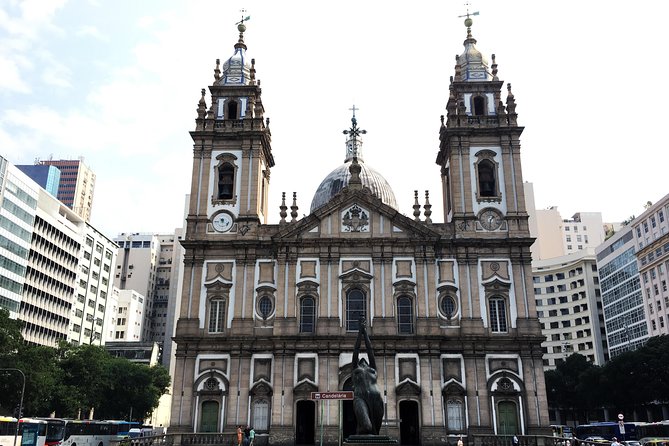
The first major stop is the Church of Our Lady of Candelária, usually called Candelária Church. Construction began in 1630 and finished in 1775, and the building’s neoclassical design gives you an early lesson in the scale and ambition of colonial Rio.
You have about 10 minutes here. That is enough for a focused visit, but not enough for a slow architectural study. Listen closely as the guide explains the church’s place in the city’s past, then take a moment to look upward and around the interior rather than rushing straight back outside.
São Bento Monastery is another short stop, also listed at about 10 minutes. Founded in 1590 by two monks from Bahia, it is considered one of Brazil’s important architectural treasures.
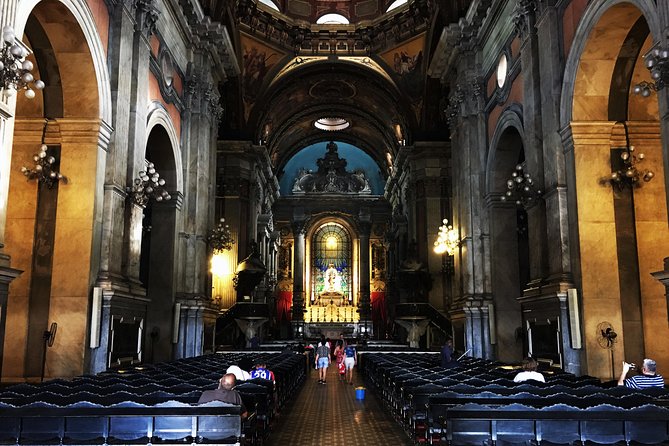
For many people, this is the artistic peak of the afternoon. The Benedictine chapel is known for paintings and heavy gilt carvings, and its interior is far more ornate than the plain exterior might suggest. You may also be taken to the old Portuguese Library, an especially memorable building mentioned by several people who enjoyed the tour.
The scheduled time is brief, so this is where a guide’s judgment matters. If the group is small, you may get more time for questions or a closer look. If the afternoon is running behind, you may need to keep moving.
Mauá Square and Rio’s Olympic legacy
The route then reaches the renewed Mauá Square, one of the clearest signs of Rio’s Olympic-era redevelopment. The area became a new center for art and entertainment, with the Rio Art Museum, the Museum of Tomorrow, and the large Cobra murals.
This section gives the tour a useful change of tone. Instead of only looking backward at imperial Brazil, you see a modern public space built around museums, outdoor art, and the waterfront.
The Museum of Tomorrow is viewed from the outside during the route. Its bold modern form makes a strong contrast with the churches and Portuguese-style buildings seen earlier. If you want to go inside, plan a separate visit unless your guide confirms that the schedule allows it.
The tour also passes an important cultural center in the downtown area. The exact stop can depend on the day and the group, but this part of the route helps show that old Rio is not simply a collection of preserved buildings. It is still used for art, public events, shopping, and everyday city life.
One practical note: traffic has affected some departures. The experience is described as a walking tour, but transfers across Rio can take time, and a congested day may reduce the amount of time spent on foot. If you want more street-level exploring, tell your guide early.
Praça XV and the Imperial Palace
Praça XV de Novembro brings you into the political heart of old Rio. Brazil’s emperors were crowned here in the 1800s, and major events took place around the square.
The stop is valuable because it turns dates and names into a physical setting. You can picture the square as a place of ceremony and authority, then compare it with the ordinary city life around it today.
Nearby, you see Paço Imperial, or the Imperial Palace. It was built in the 1700s as a residence and workplace for the governors of the captaincy. It later served as a residence for the Portuguese royal family after its arrival in Brazil.
The building’s Portuguese style fits the square and helps explain why downtown Rio can feel different from the city’s beach districts. This is not a polished seaside neighborhood. It is a dense center shaped by government, trade, religion, and public ceremony.
Your guide’s explanation makes the difference here. The exterior alone will not tell you why the building matters. Guides such as JB, also known as Juan Bautista, are praised for linking individual buildings to the city’s rulers and wider development.
More Historical Tours in Rio de Janeiro
- Rio de Janeiro: Historic Rio and Santa Teresa Half-Day Tour
★ 4.4 · 228 reviews - Rio de Janeiro: Little Africa Heritage Walking Tour
★ 4.9 · 177 reviews - Explore Little Africa : Unveiling Afro Heritage in Rio de Janeiro
★ 5.0 · 97 reviews - Learn the History of Rio with an Unforgettable City Center Walking Tour
★ 5.0 · 82 reviews
Market streets, Tiradentes Palace, and downtown life
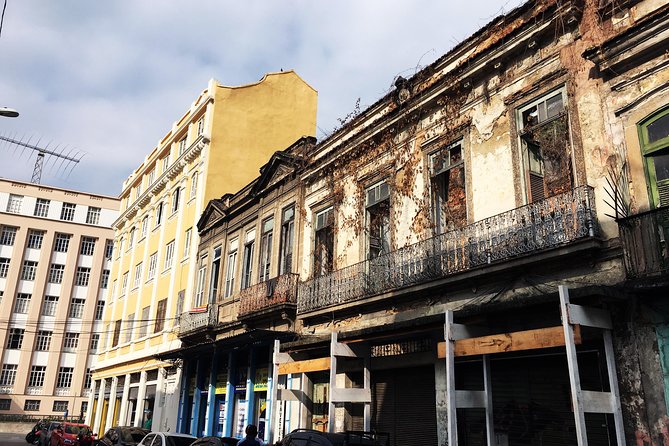
The route continues through famous market streets in central Rio. This is one of the more ordinary parts of the experience, and that is precisely why it matters.
You are not only checking off monuments. You are seeing the commercial side of downtown, where streets and shops give you a sense of how the center functions between the grand churches and official buildings.
The tour also passes Tiradentes Palace from the outside. Do not expect an interior visit here. Treat it as part of the broader city walk, with the guide pointing out its role and location as you continue toward the next landmark.
This is a good place to ask practical questions. Some guides are especially helpful with suggestions for local food, less touristy places to eat, and nearby markets. One useful tip is to ask what is worth returning to after the tour rather than trying to see everything in one afternoon.
The walking pace is generally described as comfortable, but one account praises a guide who moved quickly and covered a great deal of ground. That means the same route can feel relaxed to one person and brisk to another. If you need frequent pauses, say so at the start.
Confeitaria Colombo, Rio’s grand café stop
Confeitaria Colombo is listed as a 20-minute stop. You visit the famous bakery and café, known for its historic setting and old-world atmosphere.
This is a pleasant pause after the churches and squares. The stop gives you time to absorb the afternoon in a more relaxed setting, though food and drinks are not included in the tour price.
You might choose to buy something here, but you do not have to. If you prefer a longer look at downtown streets or another landmark, ask how much flexibility the schedule allows. One downside reported about this route is that too much time at a beautiful café or tea stop can come at the expense of additional walking.
For me, the value of Confeitaria Colombo depends on your interests. If you enjoy historic cafés and interiors, it is a welcome change from formal monuments. If you mainly want churches, museums, and street life, 20 minutes may feel generous.
The Metropolitan Cathedral and Carioca Square
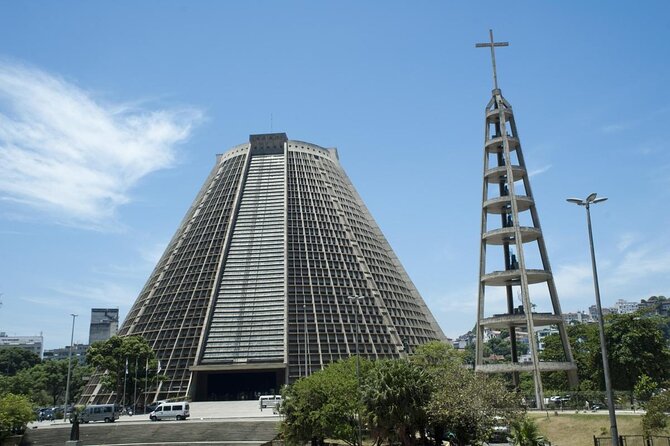
The final listed stop is the Metropolitan Cathedral of Saint Sebastian, a striking modern church with a conical form. Its interior diameter is about 96 meters, the exterior diameter about 106 meters, and the total height about 75 meters.
The scale is the point. After the highly decorated Candelária and São Bento, the cathedral offers a very different religious space. Its vast interior makes you look up and across rather than focus on small carved details.
The tour concludes around the cathedral and Carioca Square. From there, you can continue exploring on your own or take the included ride back to your hotel, depending on the arrangements for your departure.
Some route descriptions place the ending close to, but not directly at, every nearby landmark. If you want to see the Municipal Theatre or spend longer around the cathedral, ask your guide where the official walk ends and plan extra time afterward.
The market area near the cathedral can be useful for browsing and a casual meal. You may also find shorter lines and lower prices away from the most obvious tourist restaurants, though the tour itself does not include lunch.
The guides make the biggest difference
Guide quality is the main variable in this experience. Several guides are named in the feedback, including André, Melanie, and JB, or Juan Bautista.
André is praised for arriving on time, answering questions, and adding places that matched the group’s interests. Melanie is described as friendly and easygoing, with the ability to move between Spanish and English while looking after different people. JB is repeatedly credited with energy, clear English, strong knowledge of Rio, and enthusiasm for the city.
Those qualities matter because downtown Rio rewards explanation. A church, palace, square, or market street can look like just another building if nobody connects it to the city’s political and religious past.
The tour is not uniformly perfect. One poor experience involved a guide who spent too much time on a phone and rushed through the route. Another departure suffered from pickup confusion, with the vehicle going to the wrong hotel and communication passing through several companies.
To reduce that risk, wait inside your hotel reception area if you are meeting at a hotel where you are not staying. One guide specifically advised this because the guide may search the lobby rather than the sidewalk. Confirm your pickup details and arrive early.
Walking effort, group size, and transport
The tour lasts about four hours and begins at 1:00 p.m. Hotel pickup and return are included for most hotels in São Conrado, Leblon, Ipanema, and Copacabana.
The transfer is useful, since getting from the beach districts to downtown can be less simple than the map suggests. It also lets you start the tour without spending part of your afternoon working out public transport or a taxi.
You should have moderate physical fitness. The route includes city walking through streets and squares, with periods of standing inside churches and at exterior sites. It is not described as a hard walk, but it is not a drive-by sightseeing trip either.
The maximum group size is 35. Smaller departures can feel much more personal, especially if the guide adapts the route around places you have already visited. A larger group may mean less time for individual questions.
Wear comfortable shoes and carry water. The supplied details do not specify a dress code, but churches are part of the route, so modest clothing is a sensible choice.
Who should book this Rio walking tour?
I would recommend it to a first-time visitor who wants a clear introduction to downtown Rio without arranging several separate visits. It works especially well if you enjoy architecture, Brazilian history, churches, public squares, and local context.
It is also a good choice for you if you want advice from a local guide. Ask about the market streets, food, museums, and places to return to after the tour. The best guides use the walk as a conversation, not just a checklist.
I would hesitate if your main goal is a long, unhurried museum visit. The Museum of Tomorrow and Rio Art Museum are viewed as part of the route, not treated as full interior visits. I would also think twice if you dislike walking, need a very exact schedule, or want guaranteed individual attention in a group of up to 35.
The cancellation terms are reasonable: cancel at least 24 hours before the start for a full refund. Poor weather or failure to reach the minimum number of participants can lead to a new date, another experience, or a full refund.
Should you book it?
Book this tour if you want to get your bearings in Rio’s historic center and prefer a guide to explain what you are seeing. The mix of São Bento’s ornate chapel, imperial squares, Mauá’s modern museums, Confeitaria Colombo, and the Metropolitan Cathedral gives you a broad afternoon rather than one narrow theme.
At $60.77, it is best value when hotel transfers and local interpretation matter to you. If you are comfortable navigating downtown alone and only want to enter the major sites, you can likely spend less independently.
For most first visits, I would take it early in the stay, confirm the pickup details, wear good shoes, and tell the guide what interests you before the walk begins. That is how you turn a standard city route into a more personal introduction to Rio.
FAQ
How long does the Rio city walking tour last?
The tour lasts approximately four hours.
What time does the tour begin?
The stated start time is 1:00 p.m.
How much does the tour cost?
The listed price is $60.77 per person.
Is hotel pickup included?
Yes. Pickup and return are included from most hotels in São Conrado, Leblon, Ipanema, and Copacabana.
Which main landmarks are included?
The route includes Candelária Church, São Bento Monastery, Mauá Square, the Museum of Tomorrow from the outside, Praça XV de Novembro, Paço Imperial, market streets, Tiradentes Palace from the outside, Confeitaria Colombo, the Metropolitan Cathedral, and Carioca Square.
Are food and drinks included?
No. Food and drinks are not included, although you may have the chance to buy something at Confeitaria Colombo.
How large can the group be?
The tour can have a maximum of 35 participants.
Is the tour suitable for everyone physically?
You should have a moderate level of physical fitness because the experience includes walking through downtown Rio and standing at several sites.
What happens if I need to cancel?
You can cancel at least 24 hours before the start time for a full refund. Cancellations or changes made less than 24 hours before the start are not accepted for a refund. If poor weather or too few participants causes cancellation, you can receive a different date, another experience, or a full refund.
More Walking Tours in Rio de Janeiro
- Rio de Janeiro: Rocinha Favela Walking Tour with Local Guide
★ 4.8 · 3,052 reviews - Rio De Janeiro: Half-Day Rocinha Favela Walking Tour
★ 4.7 · 2,272 reviews - Sunrise and Sunrise Walk Two Brothers with Local Guide
★ 5.0 · 193 reviews - Walking tour of the bohemian neighborhoods of Santa Teresa and Lapa
★ 5.0 · 59 reviews
Just added around Rio de Janeiro
- Rio de Janeiro: Zip Lining and Canopy Tree Tour★ 3.3 · 6 reviews
- Vidigal Favela Tour★ 4.4 · 26 reviews
- Hang gliding flight in Rio de Janeiro★ 5.0 · 6 reviews
- Rio de Janeiro: Attend a Vasco da Gama game with local guide★ 4.8 · 9 reviews
- Unforgettable Boat Party★ 5.0 · 3 reviews
- Rio Highlights: Christ, Sugarloaf, and More in a Private Tour★ 5.0 · 36 reviews
- Tijuca Forest Hike – Waterfalls & Caves, Nature & Wild Life!★ 5.0 · 51 reviews
- Tijuca Forest w/ Chinese View,cascatinha Taunay,horto waterfall and parque laje★ 4.5 · 29 reviews
Walking Tours, compared.


Sunrise and Sunrise Walk Two Brothers with Local Guide
Read our review →

Downtown-Center History Walking Tour – in English
Read our review →
Downtown-Center Walking Tour | 2 Hours – English
Read our review →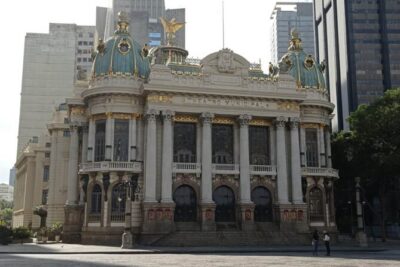
Learn the History of Rio with an Unforgettable City Center Walking Tour
Read our review →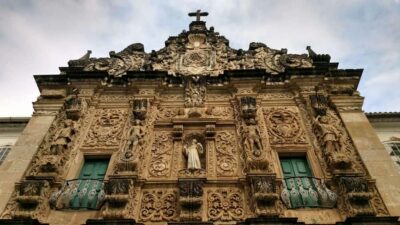
Browse the lists this tour appears in