
Reviewed · AFRO-BRAZILIAN HERITAGE TOURS
Explore Little Africa : Unveiling Afro Heritage in Rio de Janeiro
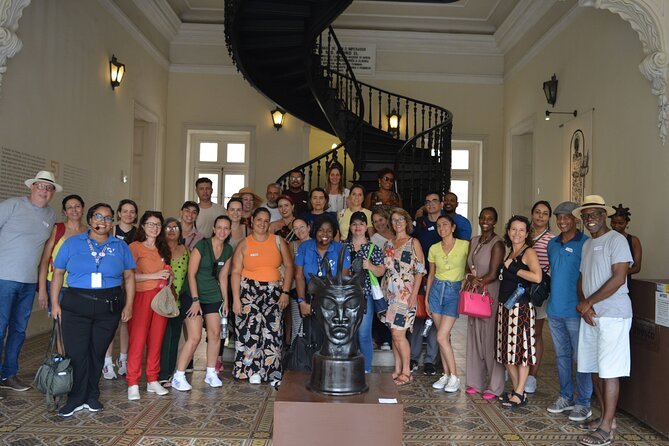
Rio’s Little Africa tells a side of Rio that the usual Christ the Redeemer and Sugarloaf circuit cannot. This 3.5-hour walk connects churches, museums, old port sites, and public squares to the lives of Africans and Afro-Brazilians who shaped the city. The subject is painful at times, but the tour also gives space to faith, music, survival, and community.
I like the clear decolonial approach, which puts Black lives and memory at the center rather than treating them as a footnote. I also like the personal touch of guides such as Carolina, Rafael, Malu, and Raphael, who explain the sites with warmth and answer questions without making you feel out of place.
The main drawback is the amount of walking on uneven city streets, with limited accessibility for people who have difficulty walking. The afternoon start helps with Rio’s heat and hunger, but daylight can fade near the end, so morning light may be better for photographs.
Key points to know before you book
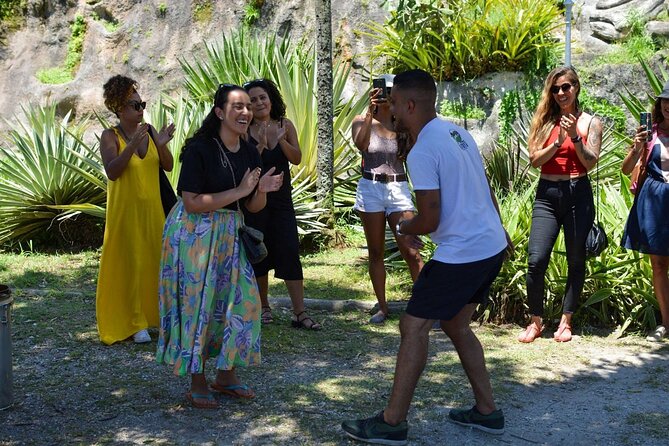
- You visit six important sites, including the Pretos Novos Institute, MUHCAB, Valongo Wharf, Pedra do Sal, and Largo São Francisco da Prainha.
- The history is direct and serious, covering enslavement, African migration, religious life, memory, and the continuing effects of inequality.
- Guides make a major difference, with Carolina, Rafael, Malu, Raphael, and others praised for warmth, clear explanations, and strong command of the subject.
- A short VLT ride is included, adding a useful slice of everyday Rio transport to the route.
- The tour ends at Largo da Prainha, a lively area where you can continue exploring or stop for food after the walk.
- The group can have up to 20 people, and the price is $82.53 per person, including fees and the Pretos Novos Institute ticket.
Why Little Africa belongs on your Rio schedule
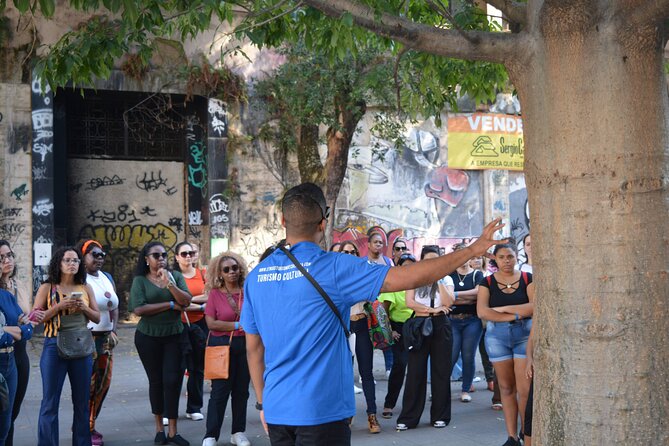
Rio’s port district is easy to cross without understanding what happened there. The streets look ordinary. A church appears to be just another old church. A waterfront plaza may seem like a convenient photo stop. This tour gives those places their human meaning.
The route focuses on the area often called Little Africa, a section of central Rio tied to African arrival, forced labor, Black religious life, music, trade, and resistance. It does not present slavery as a distant subject with no link to modern Brazil. Instead, the guides connect the past to questions of identity and institutional inequality that still affect the country.
That approach requires a guide who can handle difficult material with care. The strongest descriptions of this experience point to guides who are serious without being stiff. Carolina is praised for her patience and warmth. Rafael is noted for mixing history with humor. Malu and Raphael are also described as engaging and well prepared. Guide assignments can change, but the experience clearly depends heavily on the person leading it.
You should arrive ready to listen. This is not a light sightseeing stroll with a few historical facts added along the way. It is a focused look at Brazil’s African heritage, told on the ground where much of that story unfolded.
More Historical Tours in Rio de Janeiro
- Rio de Janeiro: Historic Rio and Santa Teresa Half-Day Tour
★ 4.4 · 228 reviews - Rio de Janeiro: Little Africa Heritage Walking Tour
★ 4.9 · 177 reviews - Learn the History of Rio with an Unforgettable City Center Walking Tour
★ 5.0 · 82 reviews
Santa Rita Church begins the story
The tour starts at the Santuário de Santa Rita, at Largo de Santa Rita in central Rio. The church is visited from the outside, with about 20 minutes devoted to its cultural and heritage meaning.
This opening works well because it places the story in a religious setting. Catholic churches in Brazil cannot be separated neatly from the country’s African and Afro-Brazilian experience. Faith, forced conversion, Black brotherhoods, local customs, and systems of control all meet in this part of Rio’s past.
The guide uses the site to introduce a decolonial reading of the area. That means you hear more than the official version of who built Rio and who mattered. The focus shifts toward the people whose labor and traditions helped form the city, even when their names were ignored or suppressed.
Because this is an exterior visit, do not expect a long indoor church tour. The value is in the explanation and the setting. Look at the building as a starting point for the social world around it, not simply as an architectural stop.
The Pretos Novos Institute brings the past close
The Instituto de Pesquisa e Memória Pretos Novos, or IPN, is the emotional center of the route. You spend about 40 minutes here, and admission is included in the tour price.
The institute is linked to archaeological remains associated with Pretos Novos, the name given to Africans who died soon after arriving in Brazil. The site forces the subject of the slave trade out of the abstract. You are not only hearing about ships, numbers, and laws. You are considering the lives of people who were brought to Rio under brutal conditions and did not survive the journey or its aftermath.
This is a stop that calls for attention and respect. The information can be difficult, especially for families with children or anyone who prefers a lighter cultural outing. At the same time, it is one of the most important reasons to choose this tour. The guide helps place the site within the larger story rather than leaving you to interpret it alone.
The ticket to the institute is included, which adds real value to the $82.53 price. If you visited the neighborhood independently, you might see the outside of the building but miss the context that makes it meaningful.
MUHCAB turns a neighborhood into a museum
The next major stop is MUHCAB, the Museum of Afro-Brazilian History and Culture. You spend around 40 minutes here, with admission listed as free.
MUHCAB is described as a territory museum focused on the Gamboa area. That matters because the museum is not simply presenting Afro-Brazilian culture behind glass. The neighborhood itself forms part of the subject. The streets, port, religious sites, and public spaces around you help complete the story.
Expect the guide to explain both painful and creative parts of Afro-Brazilian life. The tour material includes forced migration and slavery, but it also gives room to culture, memory, faith, and the ways Black communities maintained identity under pressure.
The museum visit also gives you a break from walking. Forty minutes is long enough to absorb material without turning the day into a full museum marathon. Several people who joined with older relatives found that thoughtful pacing made the route manageable, although the full experience still requires a good deal of movement.
More Afro-Brazilian heritage walks in Rio de Janeiro:
- Afro-Brazilian Roots Private City Tour in Salvador
★ 4.7 · 88 reviews - Salvador Historic Walking Tour – Pelourinho
★ 4.8 · 62 reviews - Salvador: Walking Tour Through Pelourinho
★ 5.0 · 49 reviews - Salvador: 4-Hour Candomblé Mysteries Tour
★ 4.3 · 34 reviews
Valongo Wharf confronts Rio’s port history
Cais do Valongo is one of the route’s most important outdoor stops. You spend roughly 30 minutes at the former wharf in Rio’s port district, between present-day Coelho e Castro and Sacadura Cabral streets.
The site carries enormous historical weight because it was connected to the arrival and sale of enslaved Africans. A modern port district can make the past feel invisible, so the guide’s explanation is essential. You need the story to understand why this particular stretch of pavement matters.
This is also where the tour’s larger purpose becomes clear. Little Africa is not a theme invented for sightseeing. It is a real historical territory, shaped by Black presence and by the systems that exploited Black people. The guide gives you the tools to read the area with more care after the tour ends.
There is no admission charge for the outdoor stop. Bring water and comfortable shoes, since the walking between sites is part of the experience and not just a way to move from one attraction to the next.
Pedra do Sal connects memory, faith, and music
Pedra do Sal is visited from the outside for about 25 minutes. It is a historical and religious landmark in the Saúde neighborhood, near Largo da Prainha.
The stone steps and surrounding area are linked to Afro-Brazilian life in Rio. The guide explains the site as more than a scenic corner. It is part of the city’s Black cultural memory and a place where religious and social traditions have left their mark.
This stop helps balance the route. The tour does not end with suffering. It also shows how communities created spaces for gathering, belief, music, and belonging. That balance is important. You leave with a stronger sense of Black agency, not only a list of injustices.
Because this is an exterior visit, the experience depends on the guide’s storytelling and on your willingness to observe the surroundings. Pedra do Sal may not take long, but its meaning grows when placed beside the earlier stops.
Largo São Francisco da Prainha closes the walk
The final stop is Largo São Francisco da Prainha, where the tour ends at R. São Francisco da Prainha, 7. You spend about 20 minutes in the square, once a symbolic part of Little Africa marked by Black presence and the zungus.
The word zungu refers to communal spaces associated with Black residents in Rio. The square therefore gives the tour a social ending. You are looking at a public place that once held a different role in everyday community life, while also seeing how the area has become one of Rio’s more popular places for food and nightlife.
That contrast is useful. Historic neighborhoods do not freeze in time. They change, attract new attention, and sometimes risk losing the memory that made them important. The guide helps you notice both the current character of the square and the older Black history beneath it.
Ending here is practical, too. You are not returned to the starting point. You can continue around Saúde, find something to eat, or use the area as a base for further exploration.
The short VLT ride adds a local touch
The route includes a short ride on Rio’s VLT public transport, with the cost already covered. It is not the main attraction, but it helps connect the sites and gives you a brief look at how people move through the central districts today.
The VLT also keeps the tour from becoming one long march. Even so, the walk remains substantial. Wear shoes you can use comfortably for several hours, and carry water. One useful detail from the tour’s timing is that the afternoon schedule is intentional. Rio can become extremely hot, and an earlier start may leave you tired and hungry before the most demanding explanations are finished.
The tradeoff is light. A late afternoon route may offer more comfortable walking conditions, but the final stops can be darker for photographs. If photos matter more to you than avoiding the strongest heat, ask about a private morning option.
Is $82.53 a fair price?
At $82.53 per person, this is not the cheapest way to walk through central Rio. The price includes all fees, the IPN admission, and the VLT ride. More important, it pays for a specialist-led experience in a part of the city that is easy to misunderstand without context.
The value is strongest if you want history explained carefully. You are visiting six locations in about three and a half hours, with a guide linking them into one story. An independent walk would cost less, but you would need to research the sites, confirm opening hours, and piece together the connections yourself.
The price is less attractive if you only want architecture or quick photographs. Several stops are outdoor visits, and the tour’s purpose is interpretation rather than a long list of attractions. You are paying for access to a difficult history and for the guide’s ability to present it clearly.
The group can include up to 20 people. That keeps the price below a private tour, though a larger group may make it harder to ask questions or hear every comment in a noisy street.
Timing, closures, and practical limits
The tour starts at Santa Rita and ends at Largo da Prainha. Confirmation is provided when you book, and free cancellation is available up to 24 hours before the start time. If bad weather cancels the activity, you are offered another date or a full refund.
Sunday requires special attention because the New Black Institute is closed. The museums are also closed from December 16 through January 5 and during Carnival season. Check those dates before paying, especially if your Rio visit falls around the holidays.
The experience is near public transportation, and service animals are allowed. It is not recommended for people with disabilities, and the walking, outdoor stops, and uneven urban route should be taken seriously. A family member with limited walking ability was accommodated successfully on one occasion, but you should contact the provider before booking rather than assume the same arrangement will be possible.
English interpretation is available, but guide fluency may vary. The strongest experiences described by participants involved guides who communicated clearly in English, while one booking had to be rescheduled because an English interpreter was not available at the original time. If language is important to you, confirm it directly.
Who will get the most from this tour?
I would choose this tour if you want to understand Rio beyond its postcard attractions. It suits solo visitors, couples, and families with older children who can handle serious subject matter and several hours on foot.
It is also a strong choice if you have an interest in the African diaspora, Brazilian society, religious history, or the way cities preserve painful memories. The explanations invite questions, and the guides are described as approachable when visitors need clarification.
I would not choose it as a relaxed afternoon activity or as a substitute for a general Rio city tour. The subject can be emotionally heavy, and the route is not designed for anyone seeking only music, food, or scenic views. Plan to eat beforehand or soon after, since lunch is not included and the tour does not provide a meal stop.
Should you book Little Africa in Rio?
Book it if you want a serious, humane look at the Black history that shaped Rio. The Pretos Novos Institute, Valongo Wharf, and MUHCAB give the tour substance, while Pedra do Sal and Largo da Prainha show how memory, faith, and community continue to shape the area.
Choose a different activity if you have limited mobility, need a very flexible schedule, or prefer a short sightseeing route with little walking. For everyone else, this is one of the better ways to place Rio’s central port district in context. Schedule it after you have settled into the city, wear comfortable shoes, and leave time at the end to explore Largo da Prainha on your own.
FAQ
How long does the Little Africa tour last?
The tour lasts approximately 3 hours and 30 minutes.
How much does the tour cost?
The listed price is $82.53 per person.
Where does the tour begin?
It begins at the Santuário de Santa Rita, at Largo de Santa Rita, in central Rio de Janeiro.
Where does the tour end?
The tour ends at Largo São Francisco da Prainha, at R. São Francisco da Prainha, 7, in Saúde.
Is the VLT ride included?
Yes. The short VLT public transport ride is included in the final price.
Is admission to the Pretos Novos Institute included?
Yes. The ticket for the Instituto de Pesquisa e Memória Pretos Novos is included.
Is the tour available on Sundays?
The New Black Institute is closed on Sundays, so you should confirm availability before booking a Sunday tour.
Can I cancel for a full refund?
Yes. You can cancel at least 24 hours before the start time for a full refund. Changes or cancellations made less than 24 hours in advance are not accepted for a refund.
Just added around Rio de Janeiro
- Rio de Janeiro: Zip Lining and Canopy Tree Tour★ 3.3 · 6 reviews
- Vidigal Favela Tour★ 4.4 · 26 reviews
- Hang gliding flight in Rio de Janeiro★ 5.0 · 6 reviews
- Rio de Janeiro: Attend a Vasco da Gama game with local guide★ 4.8 · 9 reviews
- Unforgettable Boat Party★ 5.0 · 3 reviews
- Rio Highlights: Christ, Sugarloaf, and More in a Private Tour★ 5.0 · 36 reviews
- Tijuca Forest Hike – Waterfalls & Caves, Nature & Wild Life!★ 5.0 · 51 reviews
- Tijuca Forest w/ Chinese View,cascatinha Taunay,horto waterfall and parque laje★ 4.5 · 29 reviews
Afro-Brazilian Heritage Tours, compared.

Afro-Brazilian Roots Private City Tour in Salvador
Read our review →

Browse the lists this tour appears in