
Reviewed · WALKING TOURS
Rio de Janeiro: Afrobrazilian Heritage & Black History Walk
Rio’s Black history comes into sharp focus on this walking tour through the old port district. You’ll visit Valongo Wharf, the UNESCO World Heritage Site tied to the transatlantic slave trade, then follow the story into samba, religious traditions, and daily life in Little Africa. I especially like the direct connection between historical sites and living culture.
I also like that the walk is led by a guide of African descent from Rio, with Kelly and Jaíse named among the guides. Their personal connection adds weight to the subject. The main drawback is that this is a serious history tour, not a light sightseeing stroll, and the 150-minute walk takes place rain or shine.
Key points to know before you book
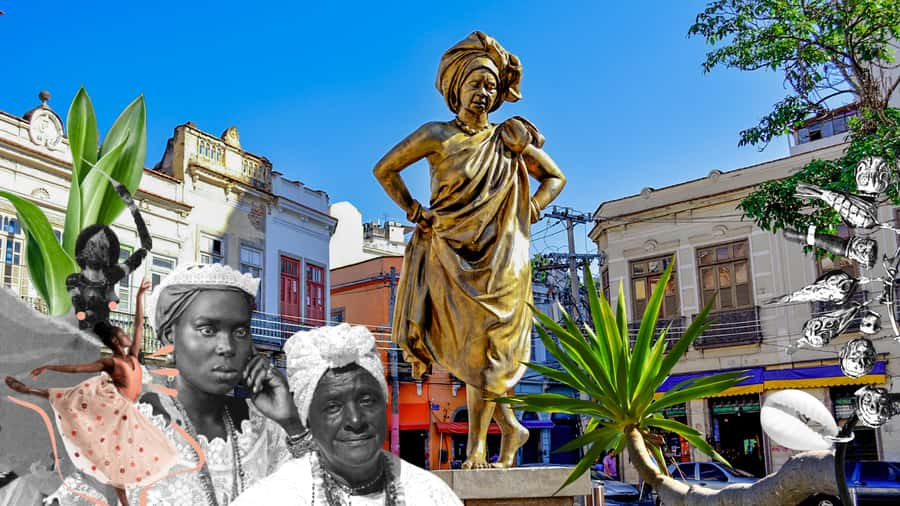
- Valongo Wharf puts Rio’s slave trade at the center of the story: This UNESCO site is not a passing photo stop. It anchors the tour in the forced arrival and sale of enslaved Africans.
- Pedra do Sal connects history with samba: The stone steps and surrounding area are linked to early samba gatherings, Carnival bloco parties, and weekly samba circles.
- The tour explains Candomblé and Umbanda with context: You’ll learn about Orishas, nkisis, voduns, and the ways African religions blended with Christianity.
- The guide’s background matters here: Kelly and Jaíse bring Afro-Brazilian perspective to a subject often reduced to dates and monuments.
- The price reflects the guide and subject, not admission tickets: At $64, the value is strongest if you want interpretation, local context, and suggestions for music, food, museums, and art afterward.
- Plan for walking and weather: Bring water, a hat, comfortable clothes, and rain gear. There is no included food, transport, or museum admission.
Starting at Praça Mauá and entering Little Africa
The usual meeting point is under the trees in front of the Rio Art Museum, known as MAR, at Praça Mauá. This is a useful place to begin because the square sits at the edge of Rio’s old port district, where modern museums, public art, and major historical sites share the same waterfront area.
Some arrangements list the Museu de Arte do Rio address as R. Pedro Ernesto, 32, so check the exact meeting instructions before setting out. The activity has two possible starting arrangements, and the stated meeting point is in front of MAR. A WhatsApp message is recommended for quicker communication with the guide.
From Praça Mauá, the route moves toward Saúde with a guided walk of about 15 minutes before continuing through the historic area. That short transition matters. You are not being taken straight to isolated monuments and handed a few facts. The walk helps connect the port, the streets, the waterfront, and the communities shaped by forced migration.
This part of Rio can feel visually mixed. Contemporary public art sits near places tied to painful events. That contrast is useful, but you should come ready to pay attention. The tour asks you to think about who built the city, who was denied freedom, and how African cultural life survived despite brutal conditions.
More Historical Tours in Rio de Janeiro
- Rio de Janeiro: Historic Rio and Santa Teresa Half-Day Tour
★ 4.4 · 228 reviews - Rio de Janeiro: Little Africa Heritage Walking Tour
★ 4.9 · 177 reviews - Explore Little Africa : Unveiling Afro Heritage in Rio de Janeiro
★ 5.0 · 97 reviews
Valongo Wharf and the scale of the slave trade
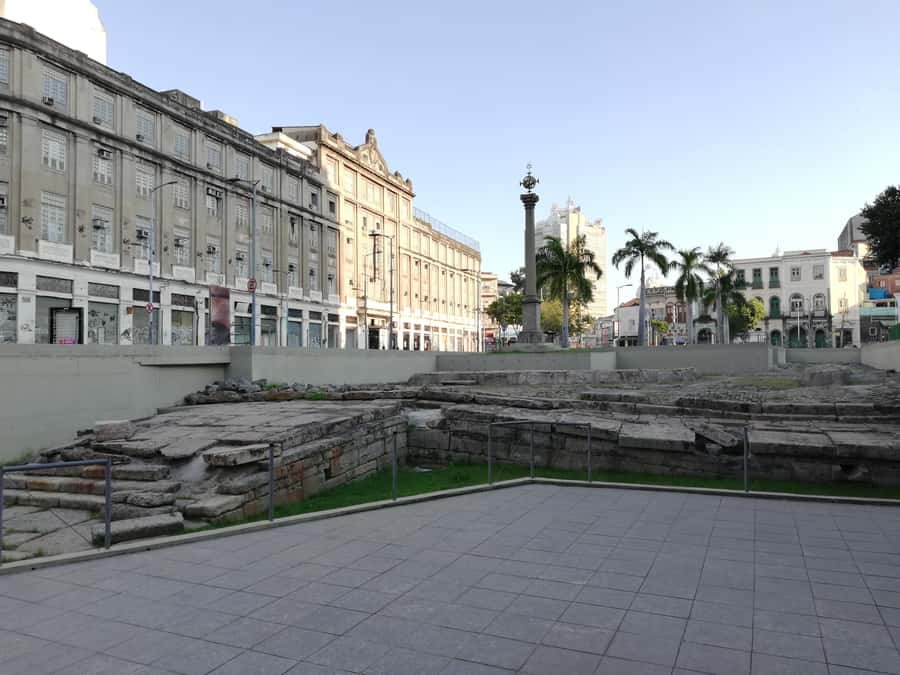
Valongo Wharf is the emotional and historical center of the walk. The site is recognized by UNESCO for its memory of the transatlantic slave trade and the arrival of enslaved Africans in Rio. The tour presents the wharf as part of a much larger system of trafficking carried out by the Portuguese for more than 380 years.
The scale is difficult to grasp from a short visit alone. The guide’s role is to explain how Africans were brought to the city, sold, and forced into lives shaped by violence and exploitation. The story is not treated as a distant chapter disconnected from modern Rio. You’ll also hear about the cultural legacies carried forward by African descendants.
I value this stop because it gives the rest of the walk a clear foundation. Samba, religious practice, food, language, and community traditions did not appear by accident. They developed through the strength and creativity of people whose freedom had been taken from them.
This is also the point where the tour may feel heaviest. The subject involves human trafficking and enslavement, and the experience does not soften that reality for easy sightseeing. If you prefer a purely scenic tour, this may not suit you. If you want to understand Rio beyond beaches and viewpoints, this is essential context.
Saúde, Praça Mauá, and Rio’s port story
The walk through Saúde places the slave trade within the old port district. Rather than treating history as something confined to a museum, the guide uses the streets to show how the city grew around the movement of people and goods.
You’ll hear more about the arrival of enslaved Africans and the lives they were forced to lead in Rio. The route also points toward the wider African presence in the city, helping explain why this area is called Little Africa. The name is not simply a tourism label. It reflects the communities, music, beliefs, and social life that took root here.
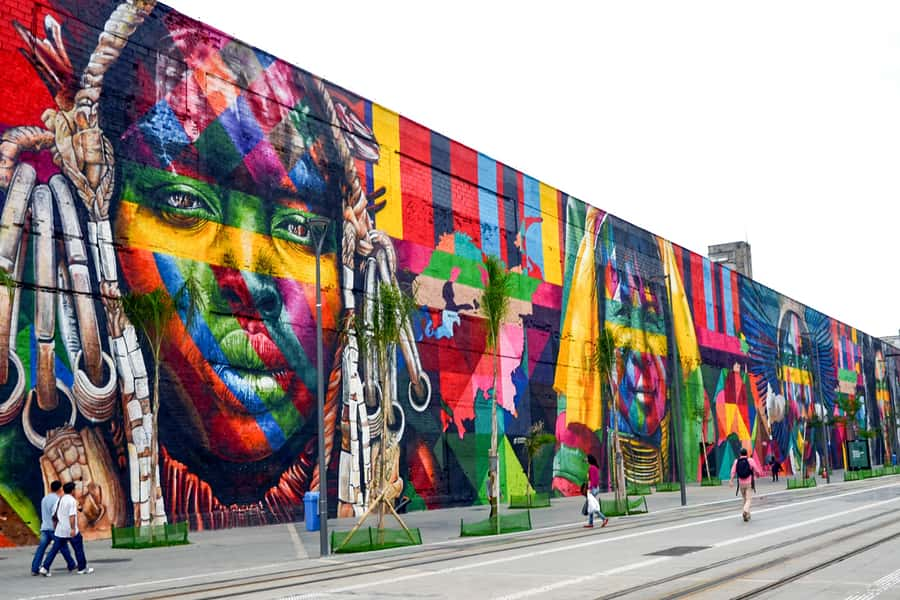
Praça Mauá adds another layer. It is now a major public gathering point with museums and striking murals, but the area also connects to the port’s past. The inclusion of the Etnias mural by Brazilian artist Eduardo Kobra gives you a visual expression of Indigenous peoples from around the world. The mural is not a substitute for the history of Afro-Brazilians, but it adds an important public-art stop to the route.
The Rio Art Museum and Museum of Tomorrow are not included in the tour price. You may pass near them, but entrance tickets must be purchased separately. I would not try to add both museums during this walk. Save them for another time unless you have a very generous schedule.
Pedra do Sal and the roots of samba
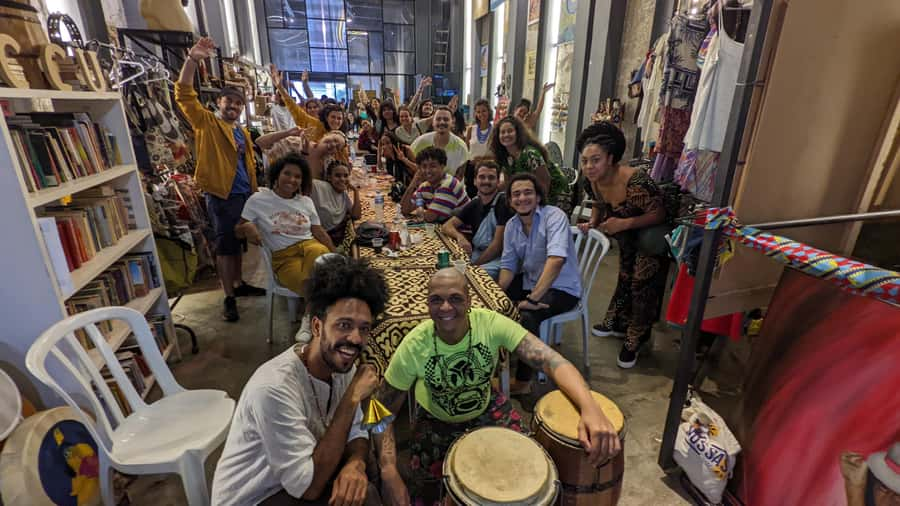
Pedra do Sal is where the tour shifts from historical trauma to cultural survival and celebration. The Rock of Salt is associated with Rio’s Afro-Brazilian communities and is widely regarded as the birthplace of samba. Musicians met here to sing and dance, and the area became a central point in Little Africa.
The site is also linked to early Carnival bloco parties and parades. That connection helps explain samba as more than a stage performance or Carnival soundtrack. It grew through community gatherings, musicians, dance, and shared memory.
Today, weekly samba circles continue around Pedra do Sal. The exact programming can change, so the tour does not guarantee a live performance during your walk. Still, the guide can offer tips on local music and the current scene. One previous tour experience ended with an invitation to an authentic samba jam session in a town square, which shows how the walk can lead naturally into Rio’s evening life.
You may also encounter regional food in this part of the itinerary, but food is not included in the $64 price. Treat that as an opportunity to choose what you want rather than a promised tasting stop. Ask the guide for recommendations if you want to continue with local dishes after the walk.
Pedra do Sal involves walking through an urban area with historic stone surfaces and changing street conditions. Comfortable shoes are a sensible choice. The experience is about place and story, not polished visitor facilities.
More Walking Tours in Rio de Janeiro
- Rio de Janeiro: Rocinha Favela Walking Tour with Local Guide
★ 4.8 · 3,052 reviews - Rio De Janeiro: Half-Day Rocinha Favela Walking Tour
★ 4.7 · 2,272 reviews - Sunrise and Sunrise Walk Two Brothers with Local Guide
★ 5.0 · 193 reviews - Learn the History of Rio with an Unforgettable City Center Walking Tour
★ 5.0 · 82 reviews
Candomblé, Umbanda, and African spiritual traditions
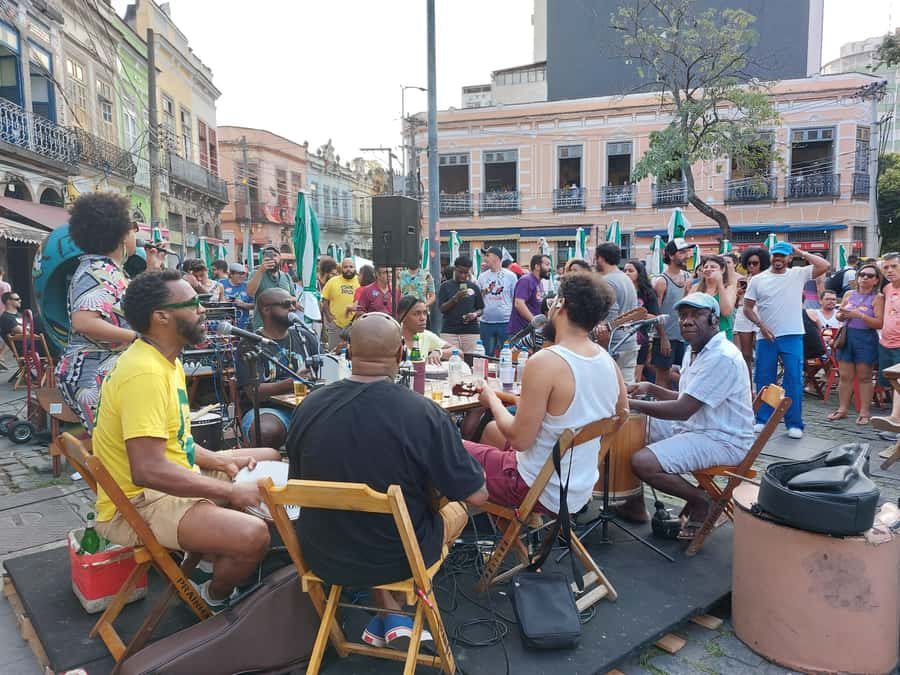
One of the most valuable parts of this tour is its explanation of Afro-Brazilian religions. You’ll learn about the origins of Candomblé and Umbanda, along with their connections to African traditions and Christian beliefs.
The guide introduces the roles of Orishas, nkisis, and voduns, described as ancestral gods and goddesses connected with nature. These traditions are not presented as strange curiosities. They are explained as living systems of belief shaped by African cultures, Brazilian history, and religious syncretism.
That distinction matters. Many visitors know only the surface image of Candomblé from films or Carnival references. A good explanation can show how spiritual practices preserved identity when enslaved people were pressured or forced to adopt Christianity. The blending of traditions also reflects the complex ways Afro-Brazilian communities adapted while protecting older beliefs.
The tour does not advertise a visit to a temple or a religious ceremony. You are learning about the origins, symbols, and cultural legacy of these faiths as part of the walking route. I appreciate that approach because it treats religion with respect instead of turning it into a performance for sightseeing.
What Kelly and Jaíse add to the walk
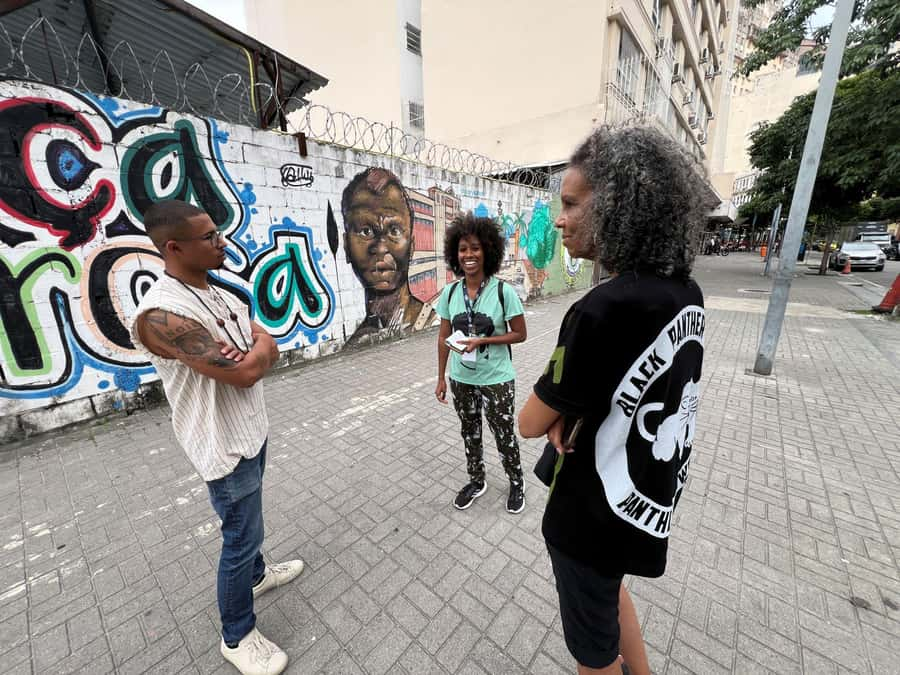
The guide makes a major difference on a subject like this. Kelly and Jaíse are named among the guides, and the experience is led by a guide of African descent from Rio. That personal and cultural connection can give the story a different tone from a standard city tour built mainly around monuments.
Kelly is described as having done extensive research into the subject and as bringing strong personal care to the history. Jaíse is also praised for detailed historical explanations and for making Afro-Brazilian history feel immediate rather than remote. You should not assume both guides lead every departure, but their names indicate the kind of background you can expect from the guiding team.
The tour is available in English, Spanish, and Portuguese. The supplied feedback includes a request for French-language guiding, but French is not listed as an available language. If you need French, confirm before booking instead of assuming the app language means the tour will be conducted in French.
A live guide can also help you connect the history to current Rio programming. Included tips cover music, art, museums, restaurants, and the local scene. That advice may be one of the most useful parts of the experience if you want to keep exploring after the walk.
Is $64 a fair price?
At $64 per person, this is not a bargain walking tour. You are paying for a specialized subject, a live guide, and interpretation of places that can be easy to pass without understanding.
The price does not include food, transfers, or admission to the Rio Art Museum and Museum of Tomorrow. That means the value depends on what you want from the outing. If you only want to see Pedra do Sal and take a few pictures, $64 may feel high. If you want the connections between Valongo Wharf, African religious traditions, samba, Carnival, and modern Rio, the cost is easier to justify.
The duration is 150 minutes, or two and a half hours. That is long enough to cover the main sites without turning the walk into an exhausting full-day program. It also leaves time afterward for a museum, lunch, or samba-related plans.
The group size is not specified, so do not book expecting a private tour unless you arrange one directly. Private groups can be scheduled on another date with about 24 hours’ notice, but transfer fees may apply and depend on vehicle availability.
Practical details that affect your day

This is a walking tour, so wear comfortable clothes and shoes. Carry a reusable water bottle and a hat. Rio’s weather can change, and the tour operates rain or shine, so pack rain gear even if the morning looks clear.
The activity is listed as wheelchair accessible, which is useful information, but the route includes walking through historic urban areas. If you use a wheelchair or have mobility concerns, confirm the exact route and surface conditions with the provider before booking.
There are no pet arrangements, apart from assistance dogs. Food is not included, and transport is not included. The listed drop-off options include Cais do Valongo, the Etnias mural, and Largo São Francisco da Prainha, so you can remain in the area afterward rather than being taken back to your hotel.
Cancellation is free up to 24 hours before the start time, and you can reserve now and pay later. The provider also recommends keeping travel insurance details handy and offers the option to ask about one-day travel insurance for outdoor activities. It is not mandatory, but the suggestion is sensible for a rain-or-shine walking tour.
Who should book this Rio history walk?
I would choose this tour if you want to understand Rio’s African roots, not just photograph its famous sights. It suits visitors interested in Black history, Brazilian culture, samba, religious traditions, public art, and the way difficult history remains part of present-day city life.
It is especially useful early in a Rio visit because the guide can point you toward later music, museum, restaurant, and neighborhood choices. The local tips may help you plan the rest of your stay with more purpose.
I would hesitate if you dislike walking, want a relaxed sightseeing tour, or are looking for guaranteed live samba and included food. The route is serious, and the weather is part of the deal. You should also confirm your preferred language and meeting point before paying.
Should you book it?
Book this walk if you want a thoughtful introduction to Rio’s Black history led by someone with a direct connection to the city’s Afro-Brazilian culture. Valongo Wharf gives the tour moral weight, while Pedra do Sal, samba, Candomblé, Umbanda, and the murals keep it connected to living Rio.
The best reason to book is not the number of stops. It is the way those stops fit together. For $64, you get a focused two-and-a-half-hour lesson in how African descendants shaped Rio’s music, beliefs, neighborhoods, and identity. That is a fair price for a serious cultural tour, provided you arrive ready to walk, listen, and think.
FAQ
Where does the tour meet?
The meeting point is under the trees in front of the Rio Art Museum, or MAR, at Praça Mauá. A listed starting address is Museu de Arte do Rio, R. Pedro Ernesto, 32. Confirm the exact arrangement before the walk.
How long does the tour last?
The tour lasts 150 minutes, or two and a half hours. A 15-minute guided walk through Saúde is included as part of the route.
Which languages are available?
The live tour is available in English, Spanish, and Portuguese. French is not listed as an available tour language.
What places are included?
The route includes Saúde, downtown Rio’s African heritage sites, Valongo Wharf, Praça Mauá, Largo São Francisco da Prainha, Pedra do Sal, and the Etnias mural area.
Is Valongo Wharf a UNESCO World Heritage Site?
Yes. Valongo Wharf is recognized as a UNESCO World Heritage Site connected to the memory of the transatlantic slave trade.
Is food included?
No. Food is not included in the tour price. Regional food is associated with the Pedra do Sal portion, and the guide can provide local programming tips.
Are museum tickets included?
No. Entrance to the Museum of Tomorrow and the Rio Art Museum is not included.
Can I cancel the booking?
Yes. You can cancel up to 24 hours in advance for a full refund. You can also reserve now and pay later.
Just added around Rio De Janeiro
- Rio de Janeiro: Zip Lining and Canopy Tree Tour★ 3.3 · 6 reviews
- Vidigal Favela Tour★ 4.4 · 26 reviews
- Hang gliding flight in Rio de Janeiro★ 5.0 · 6 reviews
- Rio de Janeiro: Attend a Vasco da Gama game with local guide★ 4.8 · 9 reviews
- Unforgettable Boat Party★ 5.0 · 3 reviews
- Rio Highlights: Christ, Sugarloaf, and More in a Private Tour★ 5.0 · 36 reviews
- Tijuca Forest Hike – Waterfalls & Caves, Nature & Wild Life!★ 5.0 · 51 reviews
- Tijuca Forest w/ Chinese View,cascatinha Taunay,horto waterfall and parque laje★ 4.5 · 29 reviews
Walking Tours, compared.


Sunrise and Sunrise Walk Two Brothers with Local Guide
Read our review →
Downtown-Center History Walking Tour – in English
Read our review →
Downtown-Center Walking Tour | 2 Hours – English
Read our review →
Learn the History of Rio with an Unforgettable City Center Walking Tour
Read our review →
Rio’s city walking tour: a glimpse of history and olympic legacy
Read our review →Browse the lists this tour appears in