
Reviewed · WORKSHOPS
Rio de Janeiro: Brazilian Cooking Class with Hotel Pickup
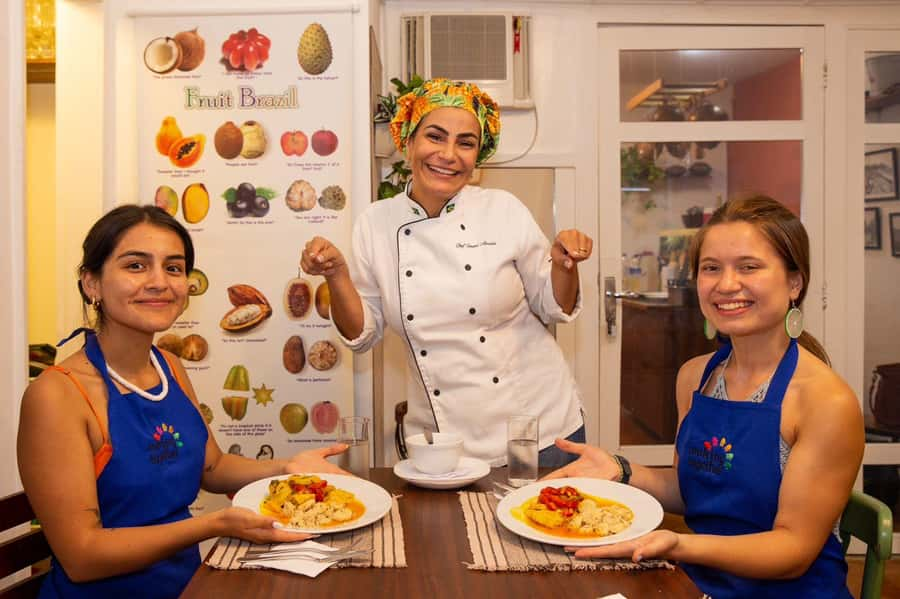
Brazilian cooking gets its full meaning at the stove. In this Copacabana class, you choose between feijoada, the famous black bean and pork stew, and seafood moqueca, then prepare the meal with a local chef who explains the customs behind each dish. You do not just sit down to eat a finished plate.
I like the choice between two very different main courses, and I like the useful extras: coalho cheese with pepper jelly, sausage flambéed with cachaça, brigadeiro, caipirinha, and coconut shake. Chef Carina and Chef Simone have both made a strong impression as patient, engaging teachers. The main thing to consider is traffic. Pickup is included, but Rio can add time to a four-hour plan during high season.
Key points to know before booking
- Choose your main dish: Pick hearty feijoada or coconut-based seafood moqueca before cooking begins.
- Learn from local chefs: Carina and Simone are named instructors associated with warm, patient teaching.
- Make more than dinner: Side dishes, sweets, and two traditional drinks are part of the kitchen work.
- Start with hotel pickup: Transfers cover many hotels in Leblon, Ipanema, Copacabana, Leme, Botafogo, Flamengo, Centro, and the cruise port.
- Expect an afternoon activity: The class lasts about four hours, with traffic sometimes making the outing longer.
- Check the dessert details: Brigadeiro is prepared in the class description, while dessert is also listed as not included, so confirm exactly what your booking covers.
A Brazilian dinner that begins in the kitchen
This is a good choice if you want more than another restaurant meal in Rio. You arrive at a chef’s kitchen in Copacabana, roll up your sleeves, and help prepare a full Brazilian dinner. The focus is practical: ingredients are shown to you, cooking methods are explained, and the meal is served after you have helped make it.
That matters because Brazilian food is tied closely to place, family, and celebration. Feijoada is not simply beans with meat, and moqueca is not simply fish in sauce. The chef explains the cultural meaning of the dishes as you work, giving you context that a menu rarely provides.
The class is conducted in Portuguese, Spanish, and English. That language range makes it easier to ask questions and follow each step, though the exact language used may depend on your group and instructor. Chef Carina and Chef Simone are specifically associated with the experience, and both have been praised for making the class easy to follow, fun, and patient.
You may be in a private class or a shared session. One couple had a private hands-on class, but that should not be taken as a guarantee for every booking. If group size matters to you, ask before paying.
A few more Rio De Janeiro days to weigh up
- Rio de Janeiro: Brazilian Cooking Class in Rio de Janeiro
★ 5.0 · 4 reviews
Pickup across Rio, with a traffic warning
The afternoon begins with pickup from most hotels in Leblon, Ipanema, Copacabana, Leme, Botafogo, Flamengo, or Centro. Pickup is also available at the cruise port. You need to provide your hotel location and confirm the pickup time, so do not leave that detail until the last minute.
The included round-trip transfer is a real part of the value. You do not need to find the kitchen on your own, arrange a taxi after dinner, or work out a late return through an unfamiliar part of the city. One couple found the driver easy to spot and felt safely transported to and from the class.
There is a cost for locations outside the main pickup zone. Barra da Tijuca and Recreio dos Bandeirantes add 10 US dollars or 40 Brazilian reais per person. An adapted vehicle costs an additional 100 US dollars or 500 Brazilian reais. If you use a wheelchair or have reduced mobility, notify the operator in advance so arrangements can be discussed.
Allow extra time in high season. Rio traffic and the volume of people in the city can stretch the outing beyond the stated four hours. I would avoid scheduling a tight evening reservation, airport transfer, or show immediately afterward.
Choosing between feijoada and seafood moqueca
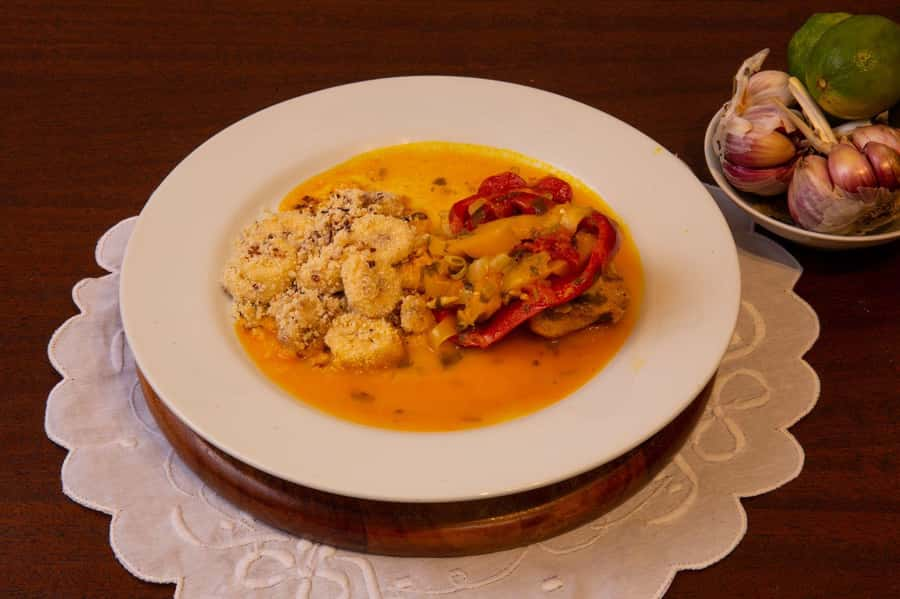
The main decision comes before the cooking starts. Feijoada is the heavier option, a black bean stew made with pork. It is the dish to choose if you want a filling meal with a strong connection to Brazilian food culture and traditional home cooking.
Moqueca offers a different experience. It is a seafood stew with fish, coconut milk, and a lighter, more coastal character. Choose it if you prefer seafood, enjoy coconut-based sauces, or want a meal that feels less heavy than feijoada.
The class presents the fresh ingredients and gives you advice on choosing produce. This is one of the most useful parts for anyone who cooks at home. You are not just copying a recipe. You are learning what to look for before the pan goes on the heat.
Ask about the main dish selection when you book or before the class begins. The supplied information says you can choose between feijoada and seafood moqueca, but it does not explain how far in advance the choice must be made. That small question can help the chef prepare the right ingredients.
Side dishes that make the class worthwhile
The class is not built around one pot of stew. You also prepare several smaller dishes, which keeps your hands busy and gives you a better sense of Brazilian flavors.
Coalho cheese with pepper jelly combines salty, firm cheese with a sweet and spicy topping. It is a compact lesson in contrast, and it works well as a starter or snack. You also prepare sausage with onion flambéed in cachaça, the sugarcane spirit used in Brazil. Flambéing adds theater to the kitchen, but it also gives the chef a chance to explain how cachaça fits into Brazilian cooking and drinking.
Brigadeiro provides the sweet finish. This classic Brazilian treat is closely linked with home celebrations and is usually simple in its basic ingredients, though the technique still matters. The activity information includes brigadeiro as one of the prepared dishes, but the booking details also say dessert is not included. I would clarify this apparent inconsistency before booking, especially if the sweet course is important to you.
Because the ingredients for the dishes are included, you do not need to shop before arriving. The only food-related uncertainty is the dessert wording. Ask if the brigadeiro is part of the included tasting or if it is demonstrated separately.
Same city, a completely different kind of day:
- Rio de Janeiro: 6-Stop Highlights of Rio with Lunch
★ 4.4 · 5,157 reviews - Christ the Redeemer Entry Ticket by Corcovado Train
★ 4.4 · 4,476 reviews - Rio de Janeiro: Rocinha Favela Walking Tour with Local Guide
★ 4.8 · 3,052 reviews - Rio de Janeiro: Sugarloaf Cable Car Official Ticket
★ 4.6 · 2,873 reviews
Mixing caipirinha and a coconut shake
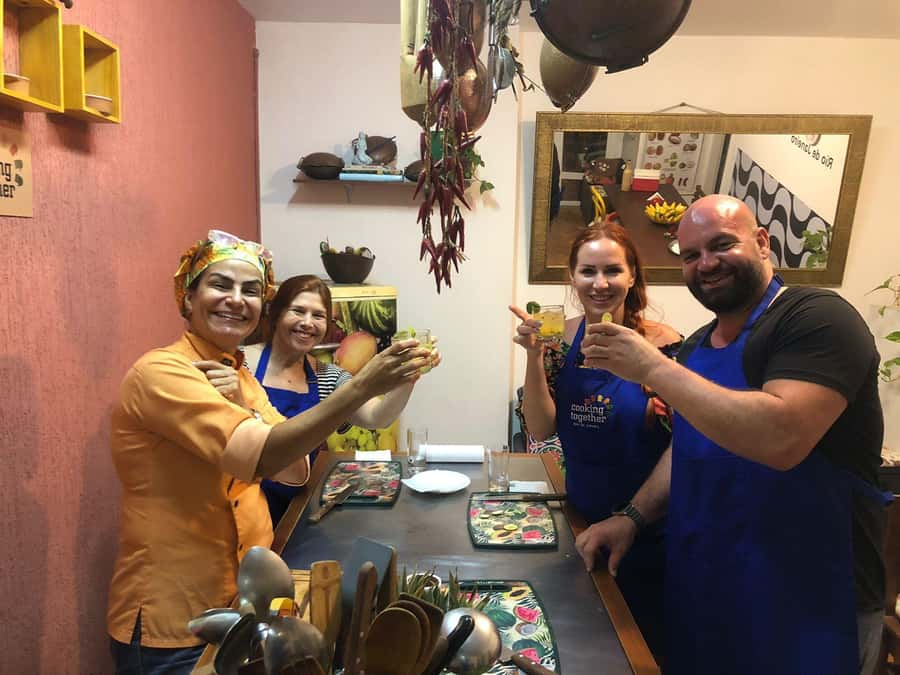
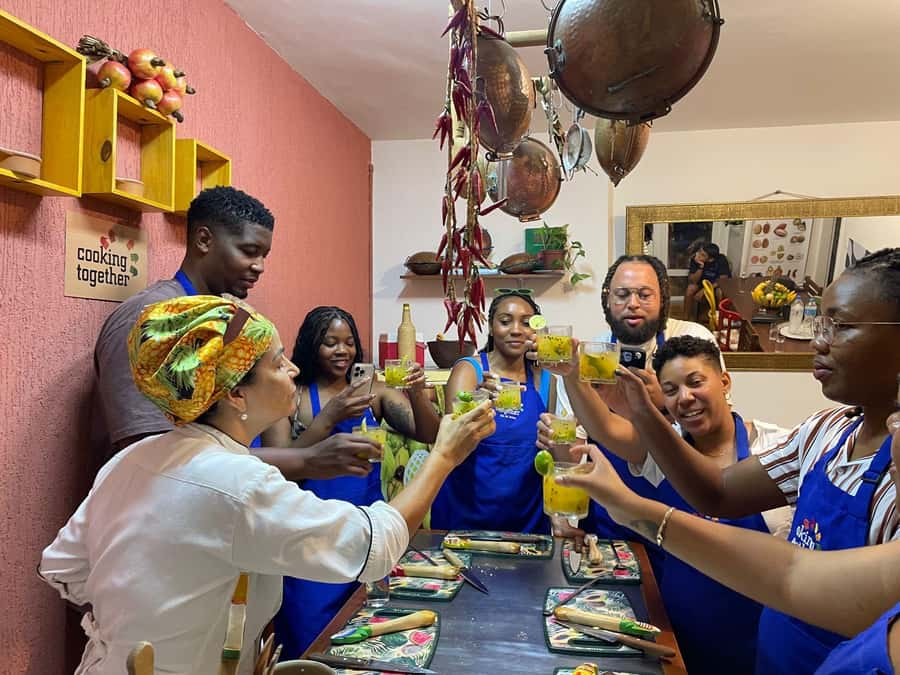
Drinks are part of the hands-on work, not just something placed beside your plate. You mix a traditional caipirinha and a coconut shake, giving the class a second way to explore Brazilian taste.
The caipirinha brings cachaça into the lesson in a familiar form. Making it yourself also lets you see how the drink comes together rather than treating it as a generic cocktail. The coconut shake offers a softer, cooler contrast and suits the seafood moqueca especially well.
The listed price includes the class and ingredients for all dishes, but additional drinks are not included. The caipirinha and coconut shake are specifically named as part of the activity, so ask what is supplied and what counts as an extra order. This is a small point, but it keeps the final cost clear.
If you do not drink alcohol, confirm how the beverage portion can be handled. The activity information names the caipirinha but does not state whether a nonalcoholic version is available.
Sitting down to eat what you made
After the cooking, you sit down and share the meal in a social setting. This final stage is more than a reward for chopping and stirring. It gives you time to compare the two main styles of Brazilian food, talk with the chef, and trade impressions with the other people in the kitchen.
The pace should suit people who enjoy participation. You are not racing through a list of sights. You are spending an afternoon on one meal, with the cooking itself serving as the main attraction. That makes this a useful change of rhythm after Rio’s beaches, viewpoints, museums, and city streets.
I especially like this format for someone returning to Rio. One couple who had already visited the city chose the class because they wanted a different kind of afternoon, and the experience gave them a way to see Brazil through food rather than through another landmark.
The class can also work well for a mixed group. You do not need to be a home cook. A confident cook can ask for technique tips, while a beginner can follow the chef’s instructions and still take part in the full meal.
What the 117 dollar price includes
At 117 dollars per person, this is not a bargain meal in the usual Rio sense. You can eat Brazilian food for less at a local restaurant. The price needs to be judged as a package that includes round-trip transportation, instruction, ingredients, cultural explanation, and the meal you help prepare.
The transfer is most valuable if you are staying outside central Copacabana or do not want to manage taxis. The instruction adds value for anyone who hopes to recreate feijoada, moqueca, brigadeiro, or the drinks at home. The experience is less compelling if you only want to eat and would rather spend four hours moving around the city.
The class also gives you several tasting points instead of one main dish. Cheese with pepper jelly, sausage with cachaça, the chosen stew, brigadeiro, caipirinha, and coconut shake create a full progression. That variety helps justify the price for food-focused visitors.
Still, check the details before booking. Additional drinks are excluded, dessert is listed as excluded even though brigadeiro is included in the cooking description, and some pickup areas carry a supplement. The cancellation policy is flexible: you can cancel up to 24 hours before the activity for a full refund, and you can reserve now and pay later.
Who will get the most from this class
I would recommend this to you if food is one of the main reasons you travel. It gives you a meal, a lesson, a local setting, and a chance to ask questions in one afternoon.
It is also a strong option for couples. The hands-on format gives you something to do together, and one booking was arranged as a private class for a husband and wife. Again, private treatment is not guaranteed, so confirm that point if it is essential.
Families and groups can enjoy it too, provided everyone is comfortable with an activity that lasts four hours and requires attention in a kitchen. The language options make the class accessible to English, Spanish, and Portuguese speakers.
I would be more cautious if you have a strict schedule or dislike cooking. Traffic can extend the outing, and the point is participation. You will be preparing food, not simply watching a chef perform.
Bring your own knives if you prefer working with familiar tools. The activity allows this, though it is optional. If you have reduced mobility or use a wheelchair, contact the operator early because an adapted vehicle costs extra and must be arranged in advance.
How the teaching shapes the experience
The chef is the key to this activity. The strongest descriptions of the class focus on teaching style: Carina is described as a fantastic chef and teacher, while Simone is noted for explaining cultural meaning before starting the cooking. Both details point to the experience’s best feature, which is the human exchange at the counter.
You should expect the chef to explain ingredients, cooking steps, and the background of the dishes. You can also expect a relaxed tone rather than a formal culinary-school lesson. The class is designed for ordinary people who want to understand Brazilian food and make it themselves.
That makes patience important. You may spend time on basic preparation, ingredient selection, or drink mixing. Those steps can feel slow if you are looking for a quick demonstration, but they are exactly what makes the class useful when you return home.
The teaching also gives the meal a sense of place. You are not simply following an international recipe translated into English. You are learning why these dishes matter in Brazil and how they fit together at the table.
Should you book the Copacabana cooking class?
Book it if you want a personal, food-centered afternoon and value the convenience of hotel pickup. The class is especially well suited to couples, curious home cooks, first-time visitors who want cultural context, and repeat visitors seeking something beyond Rio’s usual sights.
The strongest reasons to go are the choice of feijoada or moqueca, the broad menu of side dishes and drinks, and the patient instruction associated with Carina and Simone. The main cautions are the 117 dollar price, possible traffic delays, extra charges for some pickup areas, and the unclear dessert wording.
Before paying, confirm your pickup time, main dish choice, group size, beverage inclusions, and whether brigadeiro is part of the final meal. If those details suit your plans, this is a thoughtful way to spend four hours learning how Brazilian food reaches the table.
FAQ
How long does the Brazilian cooking class last?
The activity lasts four hours. In high season, traffic and the large number of people in Rio can make the outing take longer.
Is hotel pickup included?
Yes. Round-trip transfer is included from most hotels in Leblon, Ipanema, Copacabana, Leme, Botafogo, Flamengo, and Centro. Pickup is also available at the cruise port. You need to provide your hotel location and confirm the pickup time.
Can I choose what I cook?
Yes. You can choose between feijoada, a black bean and pork stew, and seafood moqueca, a fish stew made with coconut milk.
What languages are available during the class?
Instruction is available in Portuguese, Spanish, and English.
Are ingredients included?
Yes. Ingredients for all the listed dishes are included. Additional drinks are not included. The activity names brigadeiro as a prepared dish, while the booking information also lists dessert as not included, so confirm how this applies to your reservation.
Can I cancel or pay later?
You can cancel up to 24 hours in advance for a full refund. The reserve now and pay later option lets you book without paying immediately.
Just added around Rio De Janeiro
- Rio de Janeiro: Zip Lining and Canopy Tree Tour★ 3.3 · 6 reviews
- Vidigal Favela Tour★ 4.4 · 26 reviews
- Hang gliding flight in Rio de Janeiro★ 5.0 · 6 reviews
- Rio de Janeiro: Attend a Vasco da Gama game with local guide★ 4.8 · 9 reviews
- Unforgettable Boat Party★ 5.0 · 3 reviews
- Rio Highlights: Christ, Sugarloaf, and More in a Private Tour★ 5.0 · 36 reviews
- Tijuca Forest Hike – Waterfalls & Caves, Nature & Wild Life!★ 5.0 · 51 reviews
- Tijuca Forest w/ Chinese View,cascatinha Taunay,horto waterfall and parque laje★ 4.5 · 29 reviews
Workshops, compared.






Capoeira Class at Mestre Bimba’s 1st Ever School.
Read our review →
Surf lessons with local instructors in Copacabana/ipanema!
Read our review →Browse the lists this tour appears in