
Reviewed · WORKSHOPS
Salvador: Capoeira Class at Mestre Bimba’s 1st Ever School.
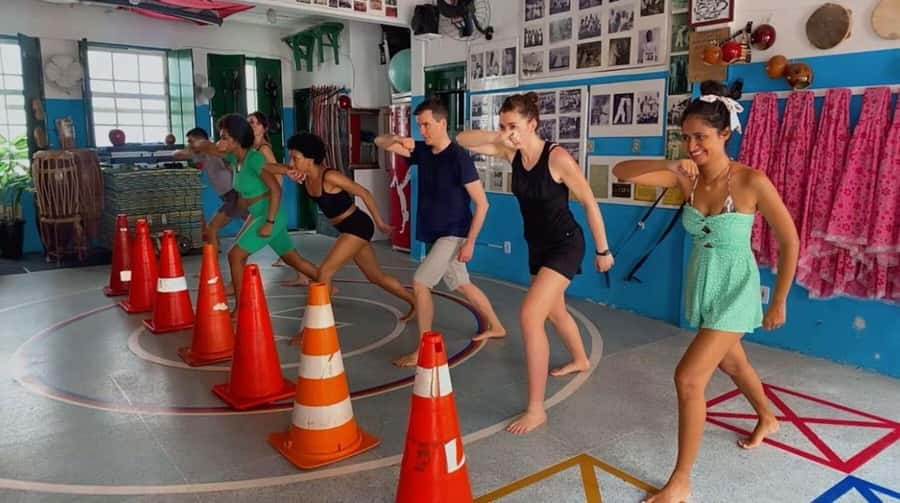
Capoeira is more than a workout. At Mestre Bimba’s first capoeira school, founded in 1937, you learn a Brazilian martial art shaped by fight, dance, music, acrobatics, and Afro-Brazilian identity. The one-hour class is made for complete beginners, so you do not need prior training or special skill.
I especially like two things here: the setting has real historical weight, and Yasmin teaches with patience and clear demonstrations. You also get a hands-on way to understand Salvador, rather than simply hearing about its culture from a distance. The drawback is the short class length. One hour gives you the basics, but not enough time for a full capoeira education.
Key points to know before booking
- Train at the school founded by Mestre Bimba in 1937, a major name in the development of modern capoeira.
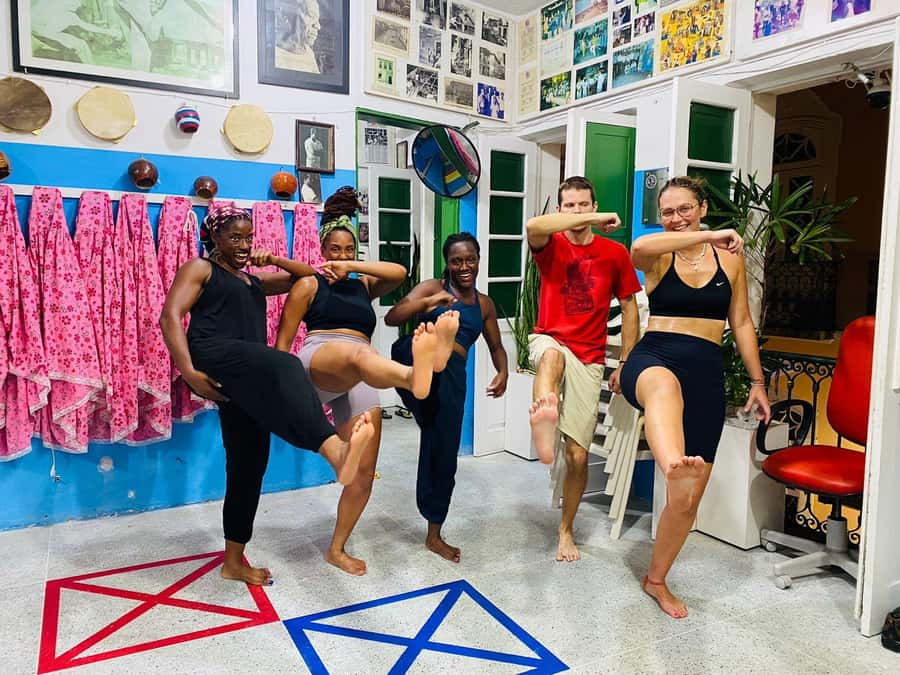
- Designed for first-time students, with basic attacks, defenses, and flowing movements.
- Learn the cultural background, not just the physical techniques.
- Expect a proper workout, especially in your legs, even though the class lasts only one hour.
- Meet at Associação de Capoeira Mestre Bimba in Largo do Terreiro de Jesus, with no pickup service.
- Pay $43 per person, with bottled water included and free cancellation up to 24 hours before the class.
Why this Salvador class is different from a standard workout
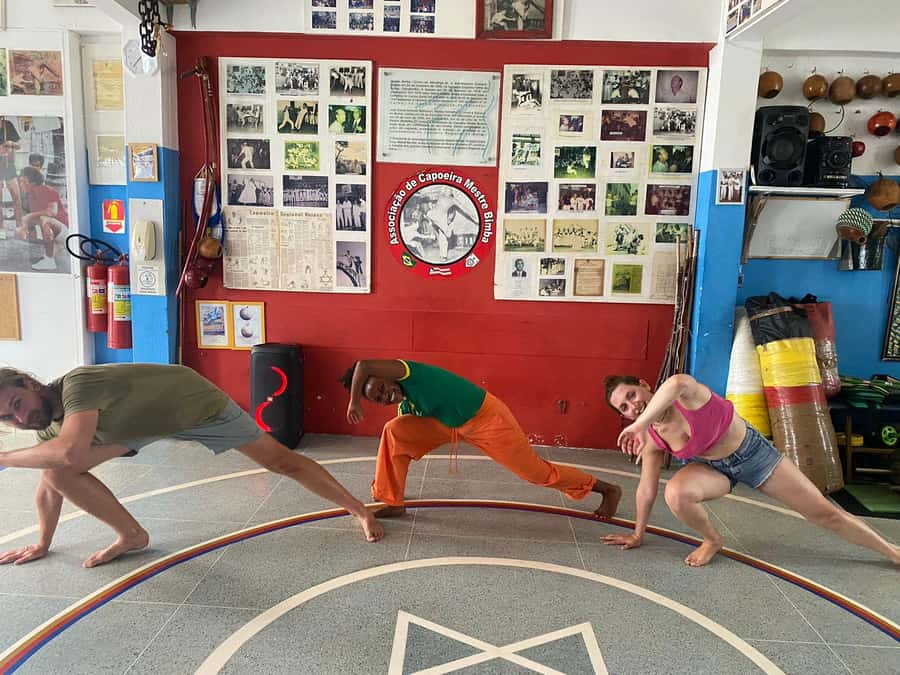
The most important feature is the address. This is not a generic fitness studio offering a capoeira-themed class for tourists. Associação de Capoeira Mestre Bimba identifies itself as the first capoeira school in Brazil, founded by Mestre Bimba in 1937.
That matters because capoeira is tied closely to Salvador’s African heritage and social history. You are not simply copying kicks and crouches. You are learning a physical practice that carries music, rhythm, self-defense, discipline, and cultural memory in the same package.
The class is aimed at people who have never trained capoeira. That makes it a good fit if you are curious but slightly nervous about looking clumsy. You will not be expected to arrive knowing the names of movements or how to move with the rhythm. The instruction begins with the basics and builds from there.
I would think of the session as a short introduction rather than a full martial arts course. You can learn the main idea of capoeira, try basic movements, and get a sense of how the pieces connect. If you already train in martial arts or dance, you may want more time and more technical detail.
More capoeira sessions in Salvador:
- Salvador: Cultural Night of Capoeira, Samba, and Drumming
★ 4.9 · 17 reviews - Salvador: CAPOEIRA CLASS – CULTURAL
★ 4.6 · 13 reviews - Rio de Janeiro: Favela Jeep Tour to Rocinha and Capoeira
★ 3.9 · 5 reviews
Meeting at Largo do Terreiro de Jesus
You make your own way to Associação de Capoeira Mestre Bimba. There is no pickup service, so allow time to reach the school before the start of the class.
The meeting point is in Largo do Terreiro de Jesus, a useful part of Salvador’s historic center for orientation. Two nearby landmarks are Ó Paí Ó Restaurante and São Domingos Gusmão Church. Having those names ready can make the final part of your route easier, especially if you are asking for directions.
This location also helps place the class in context. You are not being taken out to an isolated gym far from the city’s cultural center. You meet in an area connected with Salvador’s old streets, churches, and Afro-Brazilian traditions, then spend an hour learning one of the city’s most recognizable cultural practices.
The practical point is simple: check the meeting point carefully when you book. Since transport is not included, this activity works best when you are already planning time in or near the historic center.
Starting gently, even if you have never trained
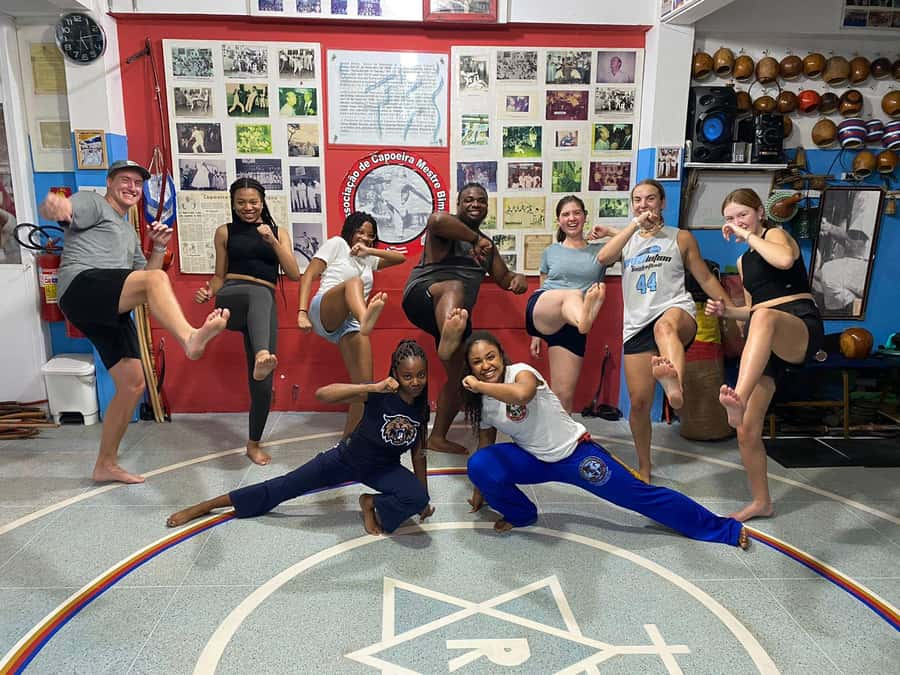
The class is built for beginners. That means you can arrive with no martial arts background, no dance experience, and no knowledge of capoeira. The instructor introduces the movements in a way that lets you watch, copy, and repeat.
Yasmin is repeatedly praised for being patient, encouraging, warm, and clear in her demonstrations. That is important in a class where balance and timing may feel unfamiliar at first. You need an instructor who lets you find your feet without turning the session into a test.
The basic lesson includes attacks, defenses, and flow movements. These are not presented as separate gym drills only. Capoeira asks you to move between actions with control, keeping the body ready to respond rather than stopping after every single technique.
You should expect to bend, shift your weight, move your legs, and use your arms for balance and defense. One first-time student described the class as an intense workout, with tired legs lasting for days. That is useful warning: beginner-friendly does not mean effortless.
The physical side: capoeira is work
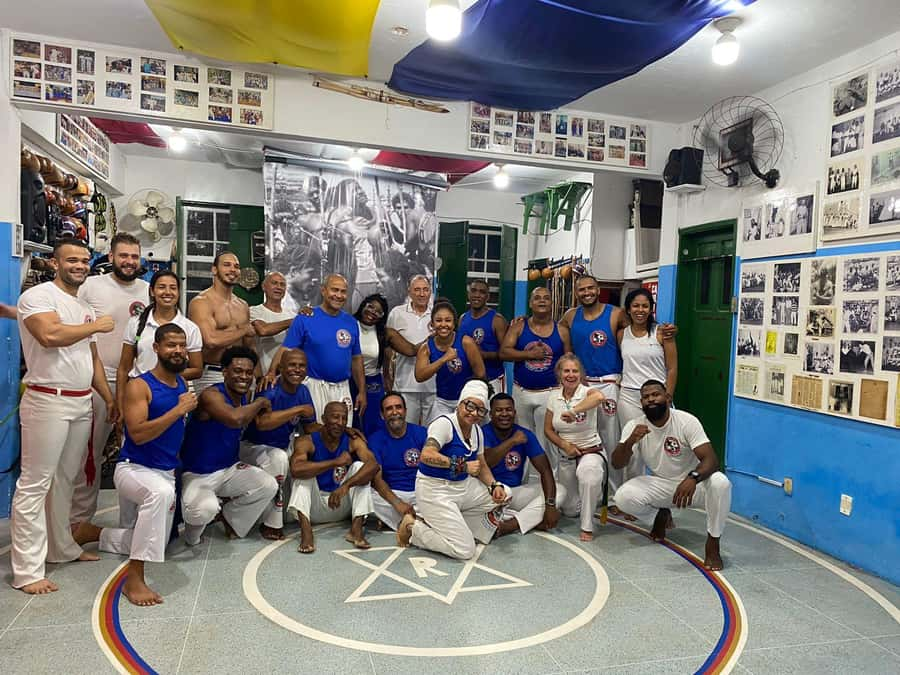
You do not need to be highly fit to book this class, but you should be ready to move. The experience combines martial arts positions with dance-like rhythm and body control, so it can feel more demanding than a casual cultural demonstration.
Several practical details will improve your experience:
- Wear comfortable sports clothing.
- Bring a water bottle, even though bottled water is included.
- Expect to sweat.
- Tell yourself that balance and coordination may take time.
- Do not compare your first class with students who already train there.
The hour passes quickly because you are learning several kinds of movement at once. You are not just repeating a kick. You are also learning how to guard yourself, shift position, and keep the movement flowing.
That combination is one reason capoeira feels different from a standard martial arts lesson. It has a social and rhythmic side, not only a competitive one. The aim of this introductory session is to help you understand the basic movement language, not to turn you into an expert in sixty minutes.
A few more Salvador days to weigh up
- Salvador: Traditional Drumming and Percussion Workshop
★ 4.4 · 10 reviews - Salvador: 3-Hour Percussion Class
★ 4.9 · 10 reviews - BOXE CLASS – EX BAHIAN CHAMPION (SALVADOR-BA)
★ 5.0 · 7 reviews - Rio de Janeiro: Beginner Samba Lesson in Ipanema
★ 4.9 · 1,071 reviews
The cultural lesson behind the movements
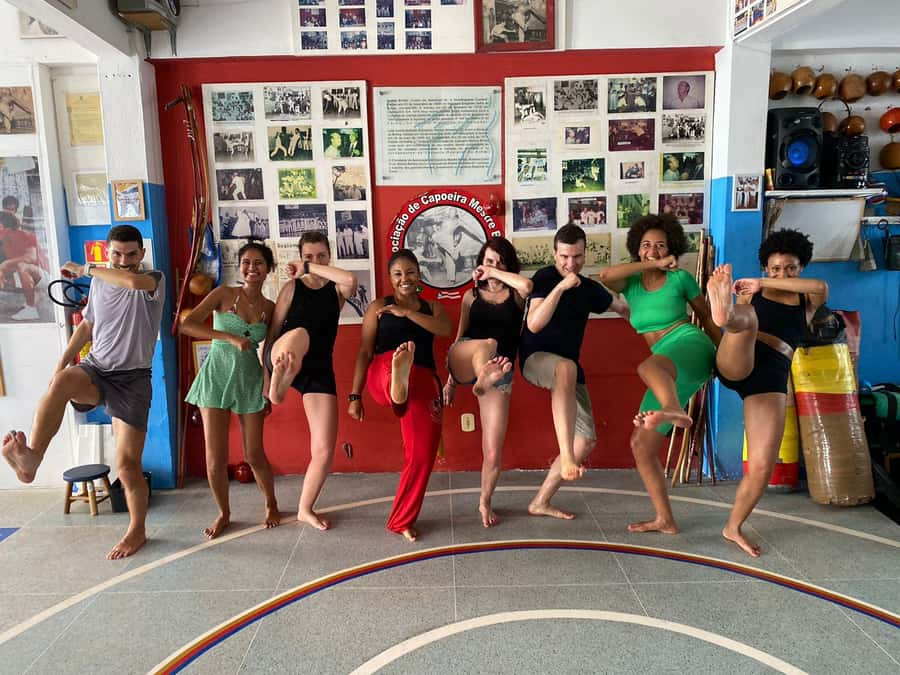
A strong part of the experience is the explanation of capoeira’s cultural and historical importance. Yasmin does not treat the background as a quick speech before the exercise begins. The history helps explain why capoeira includes music, dance, fighting, and group interaction.
Capoeira is an Afro-Brazilian martial art. Its connection to Afro-Brazilian ancestry is central, not an extra detail added for tourists. Learning that context changes how you see the movements. A low position can be part of defense. A flowing step can create a response. Rhythm can shape the way the game unfolds.
That cultural layer is especially useful in Salvador, where many experiences are best understood through the city’s African roots. You leave with more than a collection of exercises. You have a physical reference point for something you may see again in performances, neighborhoods, or cultural events during your stay.
The historical setting also gives the lesson more meaning. Mestre Bimba is not simply part of the school’s name. The school connects the class to a long teaching tradition that began in 1937.
Learning with Yasmin in English or Portuguese
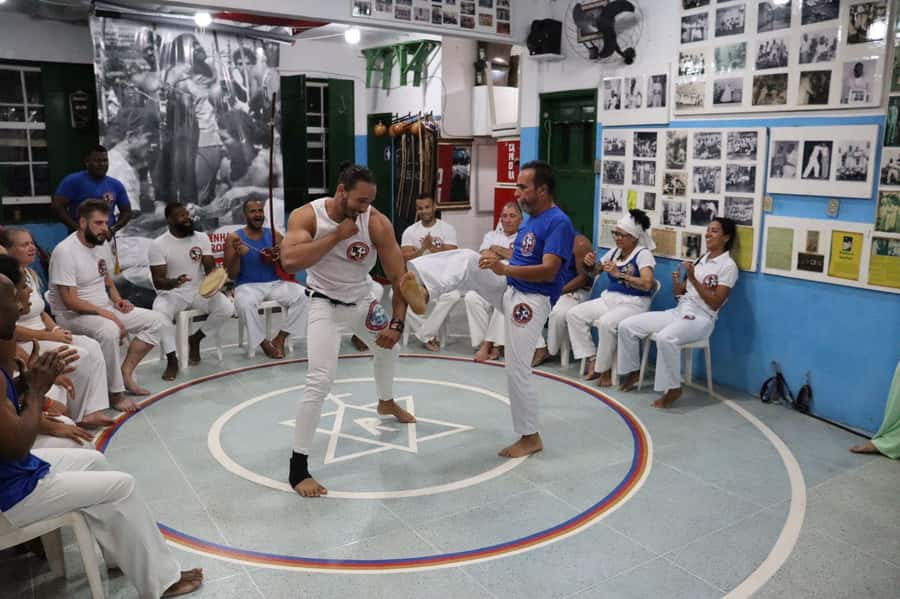
The class is taught in English and Portuguese. That makes it approachable for international visitors who want instruction they can follow rather than a demonstration they merely watch.
Yasmin’s teaching style is a major part of the experience. She demonstrates movements, checks that students understand, and allows beginners to progress at a sensible pace. A mother and daughter with no previous experience found the class inclusive, while a returning student enjoyed it enough to take a second class.
You should still expect a real class, not a polished stage show. You may make mistakes. Your timing may be off. Some movements may feel awkward until your body understands them. That is normal, and the instructor’s patience matters more than getting every step right on the first try.
The school also teaches samba and other dance styles, according to the activity information. If those interest you, you can ask about them, but this booking is for the capoeira class.
What fits into one hour
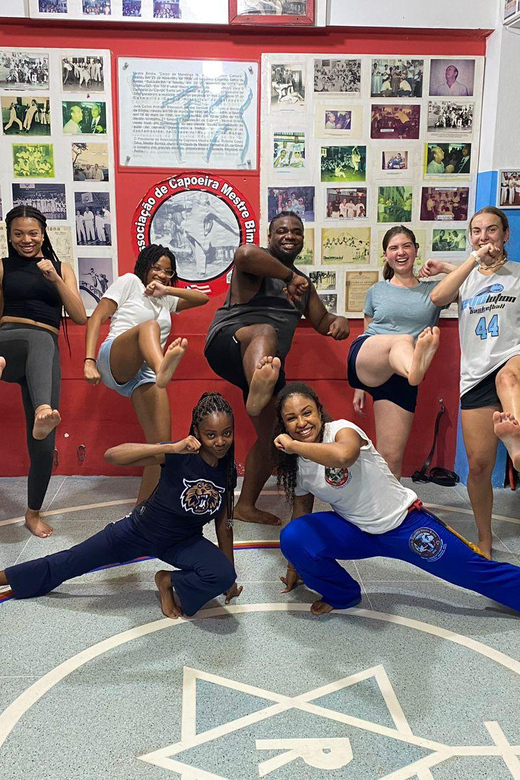
The exact order can vary, but you can expect the session to cover four main parts:
- An introduction to capoeira and its background. You learn why the art combines combat, dance, music, culture, and acrobatics.
- Basic movement practice. The instructor shows you how to position and move your body.
- Attacks and defenses. You work through beginner-level techniques without needing previous training.
- Flow movements. You begin linking actions rather than treating each one as an isolated exercise.
This is a sensible structure for a short class. The history gives context, the basic movements establish control, and the attacks and defenses show the martial side. The flow work helps you understand that capoeira is not simply a list of kicks and blocks.
The limitation is time. If you want detailed work on acrobatics, music, or advanced technique, one hour will feel brief. The class gives you a strong first taste, not mastery. I would book it as one meaningful activity within a Salvador itinerary, not as a replacement for a longer training course.
How the $43 price measures up
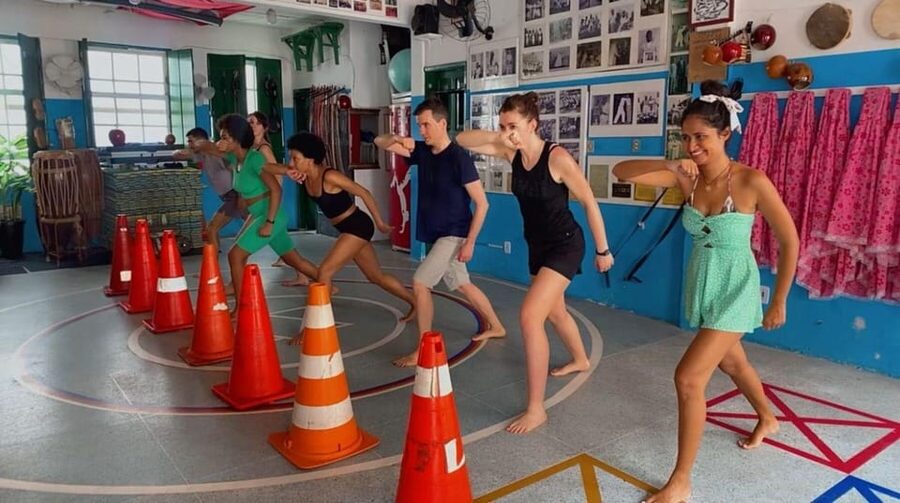
At $43 per person, the class costs more than a basic workout, but the value comes from the setting and the teaching as much as the exercise. You are paying for a one-hour lesson at a school with a claimed founding date of 1937, instruction in English or Portuguese, cultural explanation, and bottled water.
The price makes the most sense if you care about the story behind the activity. If you only want a low-cost way to burn calories, a gym session would be cheaper. If you want a local activity that connects physical movement with Salvador’s Afro-Brazilian culture, this has a stronger case.
The class also works well for people with limited time. One hour is short enough to fit around sightseeing, while still giving you a real introduction. The tradeoff is that the experience does not include hotel pickup or a longer cultural program, so you must organize your own route and accept the compact format.
You can reserve now and pay later, which helps if your Salvador schedule is still changing. Free cancellation is available up to 24 hours before the start time, allowing some flexibility.
Who should book this capoeira experience
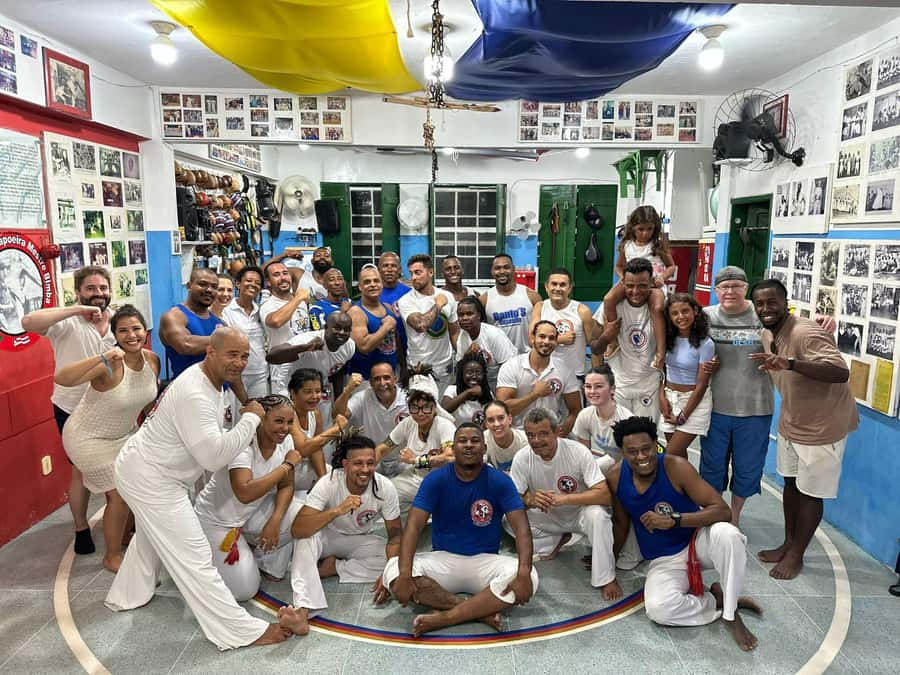
I would recommend it most strongly to:
- First-time capoeira students.
- People interested in Afro-Brazilian culture.
- Visitors who want an active Salvador experience.
- Couples, parents with older children, and friends who want to learn together.
- Anyone who enjoys cultural activities with a physical element.
- Visitors staying near or already visiting Largo do Terreiro de Jesus.
It is also a good choice if you are unsure about your fitness. The class is beginner-focused, and the teaching is described as inclusive and encouraging. Still, do not mistake the gentle instruction for a gentle workout. You may feel the effort in your legs afterward.
I would be more cautious if you want a long, technical martial arts session or a full performance. The class is not presented as an advanced course, and the one-hour duration limits how far the instruction can go.
Small details that make the class work
The best practical advice is to dress for movement and arrive ready to participate. Comfortable sports clothes are more useful than anything stylish, and you should expect to sweat.
Bring water even though bottled water is included. One student specifically advised carrying a bottle, and that is sensible in Salvador’s warm climate and during an active lesson.
Try not to worry about being the least experienced person in the room. The class is built for beginners, and the teaching approach focuses on helping everyone understand before moving on. If other students have trained more than you, that does not change the purpose of your booking.
If you enjoy the class, ask about other offerings at the school, including samba and other dance styles. Do not assume those are part of this booking, but they may be useful if you want to continue exploring Salvador through movement.
Should you book this class?
Book it if you want a direct, active connection with Salvador’s culture and you are happy to learn through your own body. The historic school, beginner-friendly instruction, and cultural explanation give the class more substance than a quick tourist performance.
Skip it if you want a passive activity, dislike exercise, or need a long and technical martial arts lesson. For most curious first-timers, though, $43 is reasonable for a one-hour introduction at a school founded by Mestre Bimba, especially when the alternative is seeing capoeira without understanding how it works.
FAQ
Is this capoeira class suitable for complete beginners?
Yes. The class is directed at students who have never trained capoeira, and no previous experience is required.
How long does the class last?
The class lasts one hour.
Who teaches the class?
The instructor is Yasmin, also spelled Yasmine in some information about the experience. Instruction is available in English and Portuguese.
Where does the class meet?
You meet at Associação de Capoeira Mestre Bimba in Largo do Terreiro de Jesus.
Is hotel pickup included?
No. The school does not offer pickup service. Ó Paí Ó Restaurante and São Domingos Gusmão Church are listed as nearby landmarks.
What does capoeira include?
Capoeira combines martial arts, dance, music, culture, and acrobatics. The class covers beginner attacks, defenses, and flow movements.
What should I wear?
Wear comfortable sports clothing suitable for exercise. You should expect to sweat.
Is water included?
Yes. Bottled water is included, though bringing your own water bottle is also recommended.
Can I cancel the booking?
Yes. You can cancel up to 24 hours in advance for a full refund. You can also reserve now and pay later.
Just added around Salvador
- Salvador: Schooner Cruise with Pickup and Itaparica Stop★ 3.8 · 5 reviews
- Salvador: Traditional Drumming and Percussion Workshop★ 4.4 · 10 reviews
- Salvador: Cultural Treasure – Samba de Roda.★ 4.9 · 51 reviews
- Salvador by Night: Cultural Show and Dinner.★ 4.4 · 17 reviews
- Salvador: 3-Hour Percussion Class★ 4.9 · 10 reviews
- Salvador by Night: Cultural Dinner and Show★ 4.7 · 27 reviews
- Salvador: Caipirinha Masterclass with Unlimited Drinks★ 4.2 · 4 reviews
- Salvador: 4-Hour Candomblé Mysteries Tour★ 4.3 · 34 reviews
Workshops, compared.

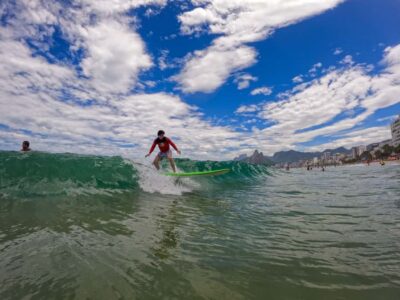
Surf lessons with local instructors in Copacabana/ipanema!
Read our review →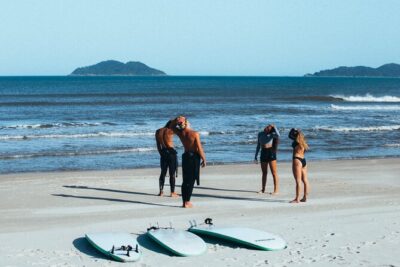
Surf Lesson with Qualified Instructor in Florianópolis
Read our review →Browse the lists this tour appears in