
Reviewed · WALKING TOURS
Rio de Janeiro: Little Africa Heritage Walking Tour
Rio’s Little Africa Heritage Walking Tour brings you to a part of Rio that many general city tours pass over. In roughly two and a half hours, you walk through the port district where freed Africans and their descendants built communities, shaped Brazilian food and music, and kept cultural traditions alive after the slave trade ended.
I like the clear historical focus and the way the walk connects slavery, present-day race relations, samba, food, dance, and public art. I also like the personal touch many guides bring. Luana, Nathalia, Larissa, Eddie, Marina, Ryane, and Raquel are among the guides praised for their warmth and ability to handle serious questions with care.
The main drawback is simple: this is an outdoor walk in Rio’s heat, and it continues in rain. The 150 minutes can feel demanding without water, sunscreen, and good shoes. It is also a serious history tour, not a light sightseeing stroll.
Key points to know before you book
- Mauá Square from above: The tour begins at the Rio Art Museum, with a rooftop view toward Mauá Square and Guanabara Bay.
- Little Africa’s living story: You learn how formerly enslaved people and their descendants shaped the port district after abolition.
- Pedra do Sal and samba: The walk stops at the place widely regarded as the birthplace of samba.
- Food, dance, and public memory: Largo da Prainha, the Mercedes Baptista statue, murals, and Valongo add cultural depth.
- A guide-led experience: The quality depends on your guide, but names such as Nathalia, Larissa, Luana, Eddie, and Ryane appear often in praise for strong storytelling.
- A hot, rain-or-shine walk: Bring water, sunscreen, comfortable clothes, and shoes. Children under five are not accepted.
Why Little Africa belongs on your Rio itinerary
Rio is often presented through beaches, viewpoints, carnival, and colonial churches. Those places matter, but they do not explain the city on their own. The port district gives you another key to Rio: the African presence that shaped its music, cooking, religion, dance, neighborhoods, and social life.
This tour is useful because it links places that might otherwise look like ordinary squares, hills, statues, and stone paths. The guide explains what happened there and why the area matters now. You are not just collecting photos. You are learning how Brazil’s colonial period, slavery, abolition, and modern racial dynamics still connect.
The subject can be painful. The history of slavery in Brazil is not treated as a distant footnote, and the tour also addresses structural racism and the lives of Afro-Brazilians today. Guides are expected to explain difficult material in English, answer questions, and keep the discussion respectful. Nathalia, in particular, has been praised for handling sensitive questions with both humor and care, while Larissa has been noted for connecting the past to present-day racial issues.
I would schedule this walk near the start of your Rio visit. It can change the way you look at samba, street art, food, and the city’s public spaces for the rest of your stay.
More Historical Tours in Rio de Janeiro
- Rio de Janeiro: Historic Rio and Santa Teresa Half-Day Tour
★ 4.4 · 228 reviews - Explore Little Africa : Unveiling Afro Heritage in Rio de Janeiro
★ 5.0 · 97 reviews - Learn the History of Rio with an Unforgettable City Center Walking Tour
★ 5.0 · 82 reviews
Starting at the Rio Art Museum and Mauá Square
Meet your guide in front of the Rio Art Museum, or Museu de Arte do Rio, five minutes before the start. The group begins with an introduction to Brazil during the colonial period. This opening matters because the later stops make more sense once you understand how Portuguese colonization and slavery shaped the country.
You also get a short break at the museum, listed as about 10 minutes, along with a rooftop view of Mauá Square and Guanabara Bay. This is a good first pause. It gives you a broad sense of the port area before you begin walking through its smaller streets and historic sites.
The museum is a practical meeting point, but remember that hotel pickup and drop-off are not included. Plan your own way to the starting point and allow enough time to find the guide. The guide can wait only 15 minutes for late arrivals, which is not much if your car is delayed.
Morro da Conceição and the making of Little Africa
From the museum, the walk continues toward Morro da Conceição, with about 20 minutes set aside for the guided walk. This hill is part of the port district often called Little Africa from the turn of the 20th century.
The name is not just a catchy label. After Brazil ended the slave trade, many freed people stayed in the port area for work and community. The district became a center of Afro-Brazilian life, and the tour uses its streets to explain how those communities survived and influenced the city.
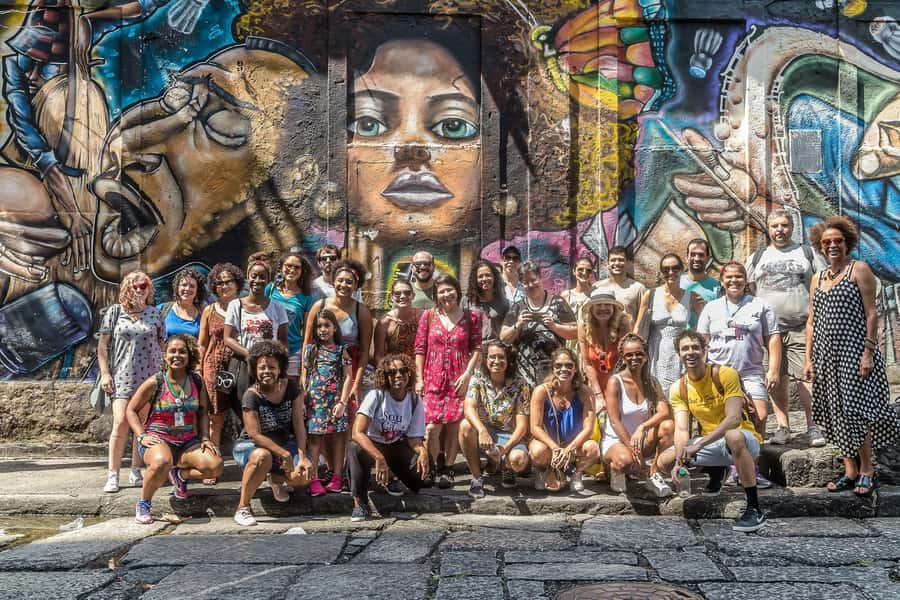
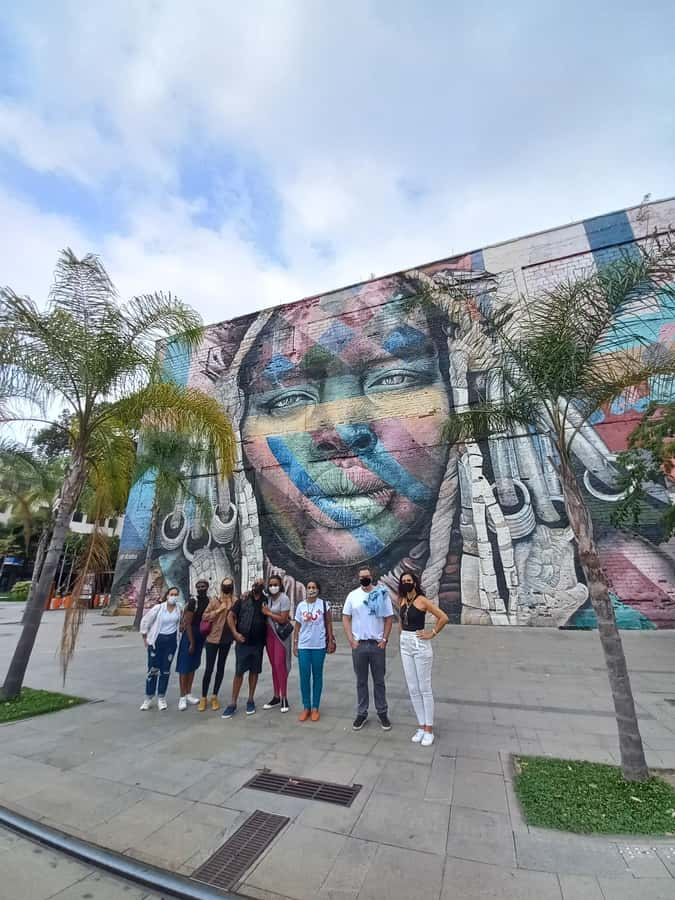
You will spend much of this section listening rather than entering major buildings. That is worth knowing. The value lies in the guide’s explanation of what you are seeing, not in a long list of formal attractions. Murals and street details can add another layer, and one guide was particularly praised for using public art to show cultural figures from the past and present.
The pacing is designed for a manageable walk, but the terrain and Rio weather still matter. Comfortable shoes are essential. If you prefer air-conditioned museums and short transfers, this may feel too exposed. If you want context tied to real streets, it is one of the tour’s strongest sections.
Largo de São Francisco da Prainha and Afro-Brazilian food
The next major stop is Largo de São Francisco da Prainha, where the guide discusses African influence on Brazilian gastronomy. This is a useful change of focus. The story of slavery is often told through labor and politics, but food shows how culture continues in daily life.
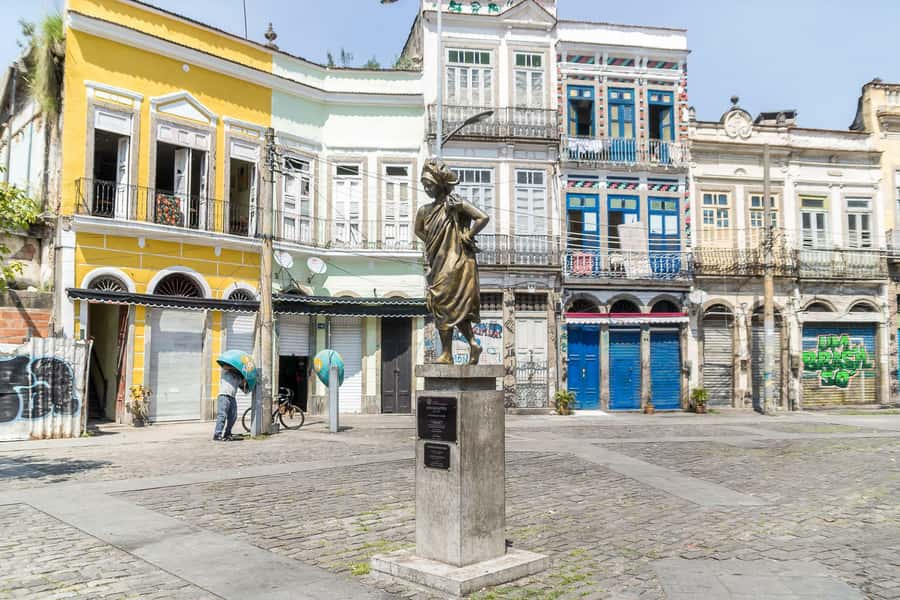
The square also helps connect history with the present. It is a place where you can see how restaurants, public space, and cultural memory meet. One guide pointed out a statue honoring Mercedes Baptista, an important figure in Brazilian dance and the first Black dancer at Rio’s Municipal Theater.
Mercedes Baptista is a particularly meaningful stop because it broadens the tour beyond samba. Her story shows the barriers Black artists faced in major Brazilian institutions, as well as the work done to build Afro-Brazilian dance into a recognized art form.
The tour does not include a meal, so do not arrive expecting lunch to be part of the $40 price. Still, the food discussion may make you want to stay in the area afterward. Some guides have offered restaurant suggestions, and several people extended their time in the neighborhood for lunch. Bobó de camarão, a shrimp stew, was one dish enjoyed by a group after the walk, but your meal is separate and not guaranteed as part of the activity.
More Walking Tours in Rio de Janeiro
- Rio de Janeiro: Rocinha Favela Walking Tour with Local Guide
★ 4.8 · 3,052 reviews - Rio De Janeiro: Half-Day Rocinha Favela Walking Tour
★ 4.7 · 2,272 reviews - Sunrise and Sunrise Walk Two Brothers with Local Guide
★ 5.0 · 193 reviews - Rio’s city walking tour: a glimpse of history and olympic legacy
★ 4.5 · 78 reviews
Pedra do Sal, where samba took shape
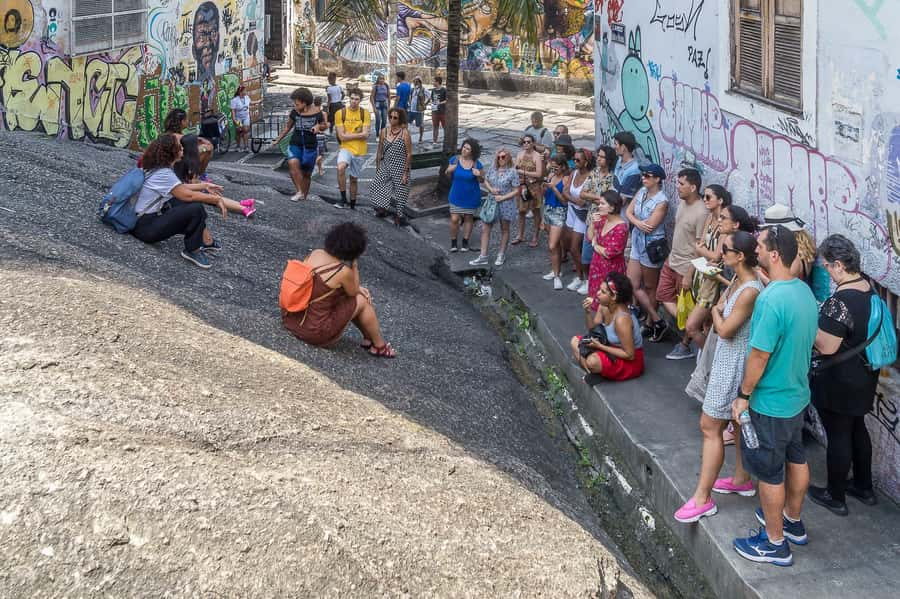
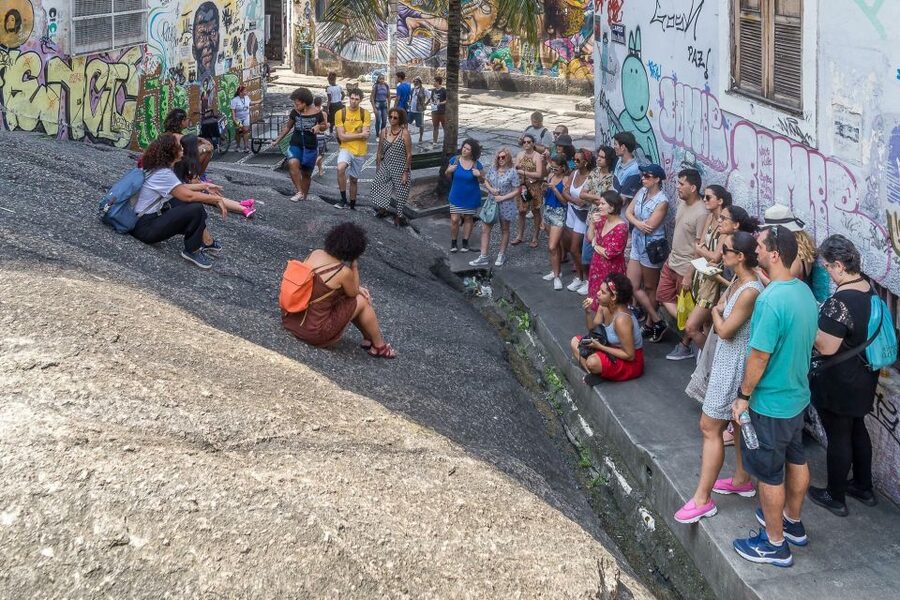
Pedra do Sal is likely the stop most closely tied to Rio’s musical identity. It is considered the birthplace of samba, and the tour pauses here for about 20 minutes.
The site is also described as the oldest continuously inhabited Black neighborhood in Brazil. That gives Pedra do Sal two kinds of importance. It is connected to a music tradition known around the world, but it is also a living place shaped by generations of Black residents.
A guide can help you avoid reducing samba to carnival costumes and parade images. At Pedra do Sal, the subject becomes community, memory, gathering, and cultural survival. You hear how African influence moved through Rio’s music and social life rather than treating samba as something that appeared fully formed.
This is also where the tour’s human side often comes through. Eddie has been praised for tying the area to his family and community, while Ryane has been noted for speaking with strong personal feeling about African heritage. Guides vary, but the supplied guide roster includes several people who clearly bring more than a memorized script.
The stop itself is not a long performance or concert. You are there to listen and look. If you want live samba, you will need a separate evening plan.
Hanging Garden of Valongo and the Valongo Wharf
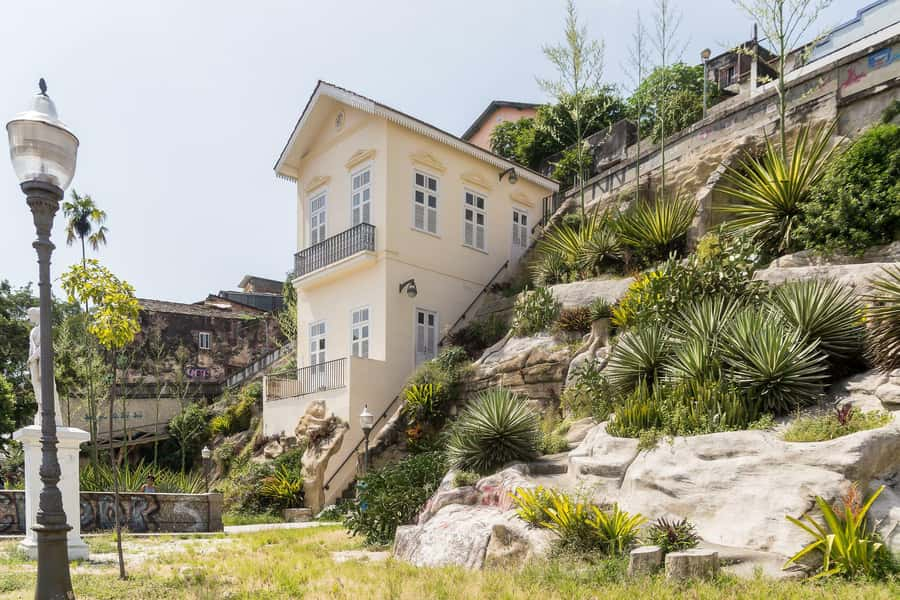
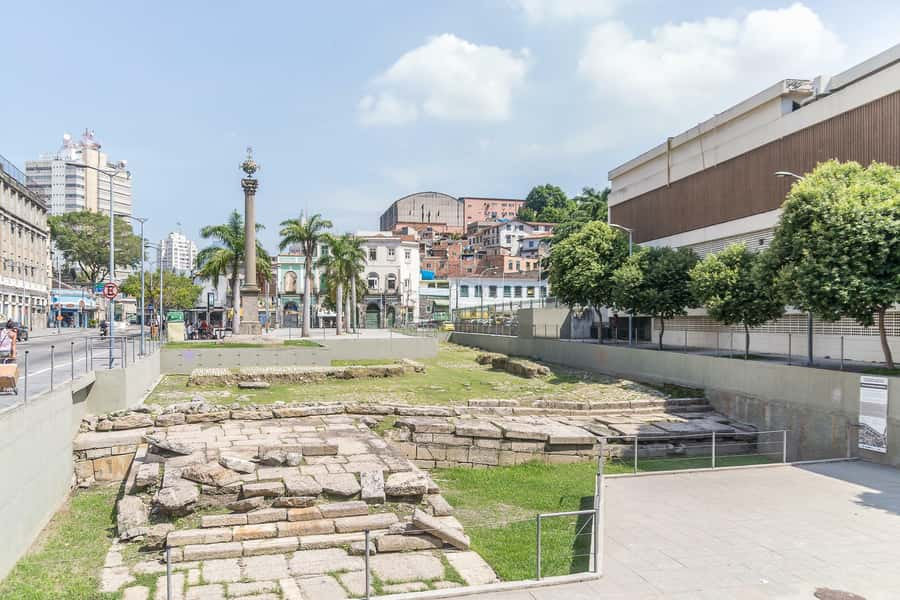
The final stretch leads to the Hanging Garden of Valongo, or Jardim Suspenso do Valongo, before ending at Cais do Valongo, known in English as Valongo Wharf. These sites bring the tour back to the darker core of the story.
Valongo is tied to the history of the transatlantic slave trade in Rio. Standing in this area after learning about the people and communities connected to it gives the earlier discussion a sharper meaning. The tour does not let the port remain an abstract setting. It places the history on the ground beneath your feet.
The Hanging Garden offers a different physical setting from the port streets and open squares. The final stop at Valongo gives the walk a serious ending rather than a tidy sightseeing finish. You return to the Rio Art Museum afterward, completing a loop through the district.
Do not expect every stop to be preserved like a museum exhibit. Much of the experience depends on interpretation, and the guide’s storytelling is central. That is one reason guide quality matters so much here.
The guides make the difference
The experience is sold with a live English-speaking guide, and the names attached to past departures include Luana, Nathalia, Larissa, Eddie, Marina, Ryane, Raquel, Natalia, Mariana, and others. The booking information also mentions Portuguese, but the specific tour details say the activity is offered only in English. If language is important to you, confirm this before paying.
The strongest guide qualities are easy to identify. You want someone who can explain colonial Brazil clearly, connect the past to current racial questions, and answer sensitive questions without turning the walk into a lecture. The best guides also make room for conversation.
Luana has been praised for her kindness and enthusiasm, including helping a participant arrange a ride after the tour. Nathalia has been described as well prepared, funny, and able to answer difficult questions thoughtfully. Larissa has been praised for making the walk feel like a conversation with a friend, while Marina brings academic training and personal connection as a Carioca.
Eddie has received special praise for his passion and global perspective. Ryane has been described as energetic and deeply committed to telling the story of her community. These details matter because this is not a tour where the sights can carry the whole experience by themselves.
Is $40 a fair price?
At $40 per person, the tour is fairly priced if you want a focused history walk with a live guide. The price covers 150 minutes and the guide, but not food, transportation, museum admission beyond the described visit, or hotel pickup and drop-off.
I would compare it with the cost of a general city tour. A broad Rio tour may show you more places, but it may spend little time on Afro-Brazilian history. Here, the money pays for focus and interpretation rather than a large number of stops.
Value depends on your interests. If you already plan to explore the port district alone, you can see several of these locations without paying. But the connections between them are much harder to build without a guide, especially if you want to understand how slavery, abolition, food, dance, samba, and modern race relations fit together.
The reservation terms are useful for uncertain schedules. You can reserve and pay later, and cancellation is free up to 24 hours before the activity for a full refund. Those policies do not improve the tour itself, but they reduce the risk of fitting it into a changing Rio itinerary.
Heat, rain, pacing, and what to bring
Treat this as a real outdoor walk. The tour operates rain or shine, and one account describes the guide continuing during heavy rain. That is admirable, but you should decide if you are prepared to do the same.
Bring:
- Comfortable walking shoes
- Water
- Sunscreen
- Comfortable clothing
Rio’s heat can make 150 minutes feel longer, especially when you are standing still for explanations. Drink before the tour begins and carry enough water. A hat or rain layer may also be sensible, though only the listed items are specifically required.
The tour is not suitable for children under five. Older children may still find the subject matter serious, so think about your family’s interests and attention span rather than looking only at the age restriction.
Who should book this walk?
I recommend it most for first-time visitors who want a stronger understanding of Rio beyond beaches and famous viewpoints. It also suits anyone interested in African diaspora history, samba, Brazilian food, dance, public art, or the social forces that shaped modern Brazil.
It is especially useful for visitors going on to Bahia, since the tour can give you a starting point for understanding Afro-Brazilian culture in other parts of the country. It also works well for repeat visitors who have already seen the major sights and want a more focused neighborhood experience.
I would skip it if you want a relaxed sightseeing walk with little serious discussion, or if you dislike walking outdoors in uncertain weather. The tour is educational and sometimes emotionally heavy. That is part of its value, but it should match your mood and interests.
Should you book the Little Africa Heritage Walking Tour?
Book it if you want the history behind Rio’s music, food, dance, and port district, and if you are willing to spend two and a half hours walking and listening. The rooftop view, Pedra do Sal, Mercedes Baptista statue, Hanging Garden of Valongo, and Valongo Wharf create a well-shaped route, but the guide is the real key.
Arrive early, wear good shoes, carry water, and leave time for lunch afterward if you want to explore the area’s food. At $40, this is a sensible choice for a focused cultural tour, especially near the beginning of your stay when the lessons can shape how you see the rest of Rio.
FAQ
Where does the Little Africa Heritage Walking Tour begin?
It begins in front of the Rio Art Museum, or Museu de Arte do Rio.
How long does the tour last?
The tour lasts 150 minutes, or about two and a half hours.
What language is the tour offered in?
The specific activity information says the tour is offered in English only. Other details mention English or Portuguese, so confirm the language when booking if this matters to you.
Is hotel pickup included?
No. You must make your own way to the Rio Art Museum, since hotel pickup and drop-off are not included.
What should I bring?
Bring comfortable shoes, sunscreen, water, and comfortable clothes.
Does the tour run if it rains?
Yes. The tour takes place rain or shine.
Can children under five join?
No. The activity is not suitable for children under five.
Just added around Rio De Janeiro
- Rio de Janeiro: Zip Lining and Canopy Tree Tour★ 3.3 · 6 reviews
- Vidigal Favela Tour★ 4.4 · 26 reviews
- Hang gliding flight in Rio de Janeiro★ 5.0 · 6 reviews
- Rio de Janeiro: Attend a Vasco da Gama game with local guide★ 4.8 · 9 reviews
- Unforgettable Boat Party★ 5.0 · 3 reviews
- Rio Highlights: Christ, Sugarloaf, and More in a Private Tour★ 5.0 · 36 reviews
- Tijuca Forest Hike – Waterfalls & Caves, Nature & Wild Life!★ 5.0 · 51 reviews
- Tijuca Forest w/ Chinese View,cascatinha Taunay,horto waterfall and parque laje★ 4.5 · 29 reviews
Walking Tours, compared.


Sunrise and Sunrise Walk Two Brothers with Local Guide
Read our review →
Downtown-Center History Walking Tour – in English
Read our review →
Downtown-Center Walking Tour | 2 Hours – English
Read our review →
Learn the History of Rio with an Unforgettable City Center Walking Tour
Read our review →
Rio’s city walking tour: a glimpse of history and olympic legacy
Read our review →
Browse the lists this tour appears in