
Reviewed · HISTORICAL TOURS
African Heritage: Gastronomy and Musicality Experience
Rio’s African heritage is not tucked away in a museum. It appears in the streets, food, drums, murals, and community spaces of the port district. This five-hour private tour brings those pieces together, moving from the Morrinho Project and Kobra’s monumental street art to the archaeological site of Pretos Novos, Valongo Wharf, Pedra do Sal, and a generous session of Afro-Brazilian food and percussion.
I like the way the tour connects difficult history with living culture. I also like the private format, which gives guides such as Isabella or Jaíse room to explain Brazil’s past in clear, personal terms. The main consideration is food: the experience is not suitable for people with food restrictions, and drinks are not included.
Key points at a glance
- Morrinho changes the favela conversation: A detailed model shows daily life, community, and creativity rather than relying on familiar stereotypes.
- Pretos Novos brings history into focus: The archaeological site and displayed remains create a serious, emotional stop.
- Little Africa is the tour’s historical core: Valongo Wharf and Pedra do Sal show how forced migration shaped Rio’s culture.
- Food is part of the lesson: You taste dishes linked to Afro-Brazilian and Yoruba religious traditions.
- The percussion workshop gets you involved: An African drummer and instructor turn musical history into a hands-on activity.
- The tour is private: Your group alone participates, making it easier to ask questions and shape the conversation.
Why this five-hour route matters in Rio
Many Rio tours concentrate on beaches, viewpoints, and postcard scenery. This one takes a different road through Centro and the port district, where Brazil’s African past is visible in monuments, archaeology, music, and food.
The subject is serious. Brazil received millions of enslaved Africans, and the tour addresses the violence of that system without treating Afro-Brazilian culture as a footnote. It also gives equal attention to survival, creativity, faith, and community.
I especially value that balance. You are not simply shown a series of memorials. You are guided toward the ways African traditions continue in Rio today, from samba and percussion to cooking and neighborhood celebrations.
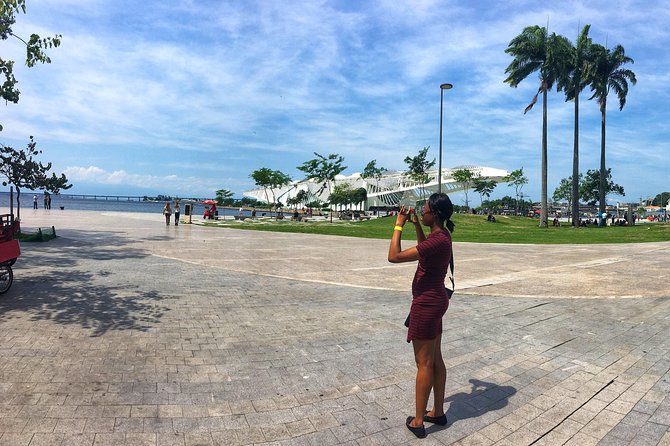
The activity lasts about five hours and begins at 10 a.m. at Museu do Amanhã in Praça Mauá. It ends at Largo de São Francisco da Prainha, so you finish in an area with outdoor seating, bars, snacks, and music. The route is best understood as a connected walk through the port district rather than a collection of unrelated sights.
More Historical Tours in Rio de Janeiro
- Rio de Janeiro: Historic Rio and Santa Teresa Half-Day Tour
★ 4.4 · 228 reviews - Rio de Janeiro: Little Africa Heritage Walking Tour
★ 4.9 · 177 reviews - Explore Little Africa : Unveiling Afro Heritage in Rio de Janeiro
★ 5.0 · 97 reviews
The Morrinho Project at Museu de Arte do Rio
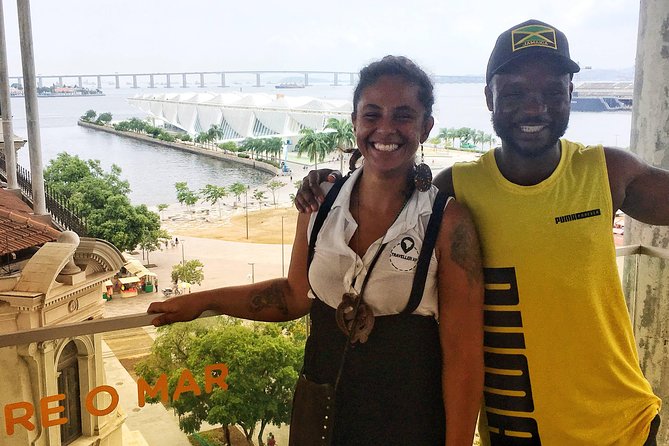
The first major stop is the Morrinho Project, on permanent display at the Museu de Arte do Rio, or MAR. This large model recreates the Pereira da Silva favela with streets, homes, residents, and scenes from everyday life.
The value here is its change of scale. Instead of looking at a favela from a distant viewpoint or hearing it reduced to a few headlines, you examine a community built from many small details. The model highlights daily routines, social life, and local creativity.
This stop also challenges the lazy idea that a favela can be understood only through crime or poverty. The installation presents it as a lived place with social ties and its own visual language. That makes it a useful opening for the rest of the tour.
You spend about 25 minutes here, with admission included at no extra charge. It is a short stop, so do not expect a full museum visit. The focus is the Morrinho installation and the discussion around it.
Kobra’s mural and the city’s public art
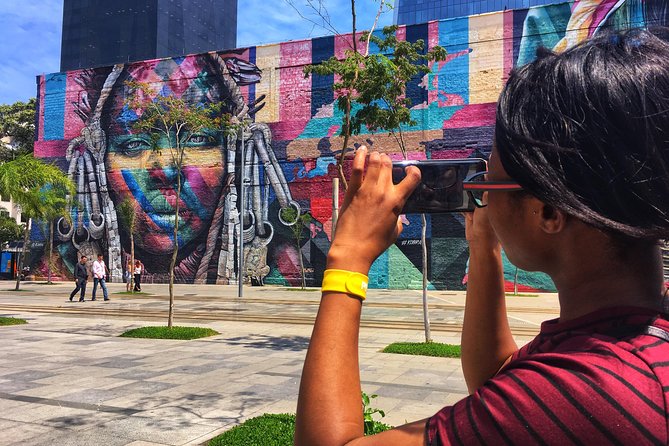
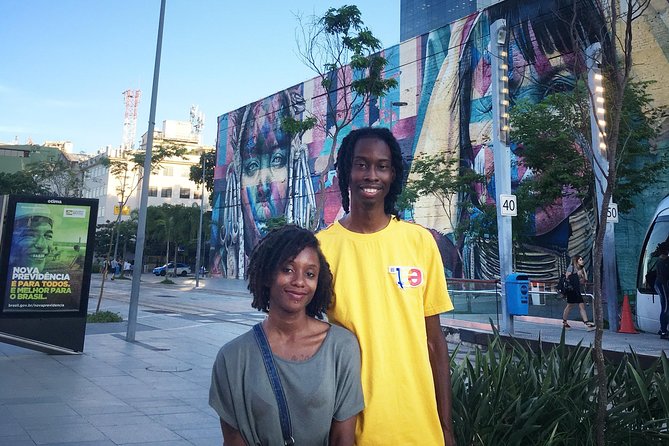
The route also includes Eduardo Kobra’s enormous graffiti mural, which presents faces and symbols connected with ancestral ethnic groups and old cultures that form part of Brazil’s story.
Public art works well on this tour because it makes historical ideas visible on a city-sized scale. You are not confined to a classroom or a glass case. The mural gives the guide a chance to discuss how Brazil remembers, represents, and sometimes overlooks the peoples who shaped it.
The exact length of this stop is not specified, so expect it to fit into the walking route rather than function as a separate museum visit. Comfortable shoes will help, since the experience links several sites around the port area.
Pretos Novos and the weight of the archaeological site
At the Instituto de Pesquisa e Memória Pretos Novos, known as IPN, the mood becomes more solemn. The institute includes an archaeological site and a permanent exhibition displaying bones of Africans found at the location.
This is one of the tour’s most important stops because it makes the slave trade concrete. The history is no longer only about dates, laws, and shipping routes. Human remains force attention onto the people who suffered under the system.
You spend around 40 minutes here. Admission is included, and the visit is likely to be emotionally demanding. I would not treat this as a casual sightseeing stop. Give yourself time to listen, ask questions, and process what you are seeing.
The tour’s strength is its willingness to place this difficult site beside food, music, and community. That arrangement does not soften the past. It helps explain how people preserved identity and built culture in conditions designed to strip both away.
More old-town walks in Rio de Janeiro:
- Learn the History of Rio with an Unforgettable City Center Walking Tour
★ 5.0 · 82 reviews - Rio’s city walking tour: a glimpse of history and olympic legacy
★ 4.5 · 78 reviews - Olympic Boulevard, Museum of Tomorrow & Historical Rio
★ 4.5 · 66 reviews - Rio: Olympic Boulevard, Museum of Tomorrow & History Tour
★ 4.1 · 47 reviews
Valongo Wharf and Rio’s Little Africa
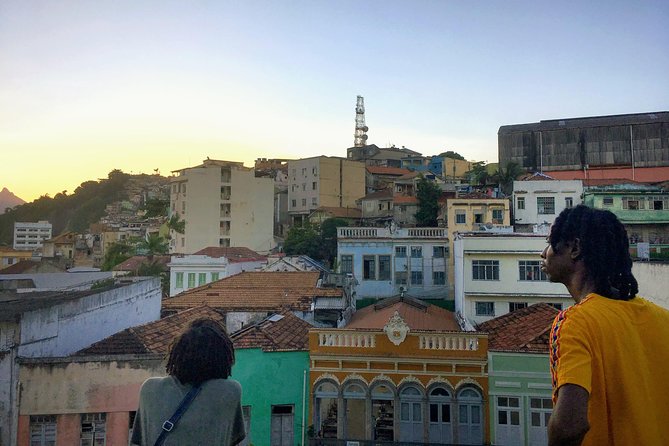
The next stop is Cais do Valongo, the historic Valongo Wharf. The site sits in the area known as Little Africa, a district central to the story of African life in Rio.
You spend about 15 minutes at the wharf, but its importance is much larger than the clock suggests. This was a major point connected with the arrival of enslaved Africans, and the site helps anchor the wider story in a real place.
A short stop can work here because the surrounding neighborhood continues the discussion. The tour is not asking you to view Valongo Wharf as an isolated monument. It links the wharf to the homes, religious practices, music, food, and resistance that developed in the district.
This is also where a private guide adds real value. Names such as Isabella and Jaíse appear in the tour’s guiding history, and the experience depends heavily on how well the guide explains the links between sites. You should feel free to ask about the relationship between Little Africa, samba, the port, and present-day Rio.
Pedra do Sal, food, and Afro-Brazilian traditions
Pedra do Sal is the longest section of the experience, at about three hours. That length matters. Instead of rushing through a quick tasting and a photo stop, you have time for food, conversation, and music.
The area is associated with the remaining community of Quilombo Pedra do Sal, a place of cultural resistance and Afro-descendant heritage. Weekly outdoor samba sessions are part of its identity, though the timing of the tour does not guarantee a live samba event during your visit.
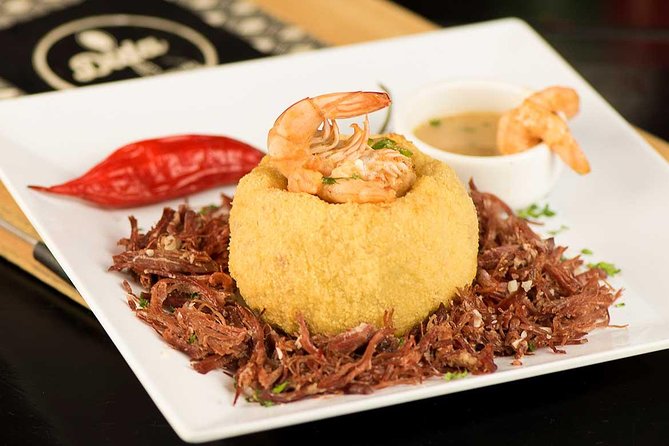
The food tasting includes typical dishes from Afro-Brazilian and Yoruba cuisine. These foods are tied to everyday life and to religious practices of African origin. In this setting, the meal is not just a pause between sights. It helps show how memory and belief survive through cooking.
The tasting is included in the price, but drinks are not. Bring money for beverages, and remember that the activity is specifically described as unsuitable for people with food restrictions. If you have allergies, follow a strict diet, or need to control ingredients, this may not be the right tour for you.
I also appreciate that the food is paired with explanation. You can ask about ingredients, cultural use, and the connection between cuisine and religious tradition. The information provided does not specify a fixed menu, so expect the dishes to reflect what the provider serves rather than a guaranteed list of items.
The percussion workshop with an African drummer
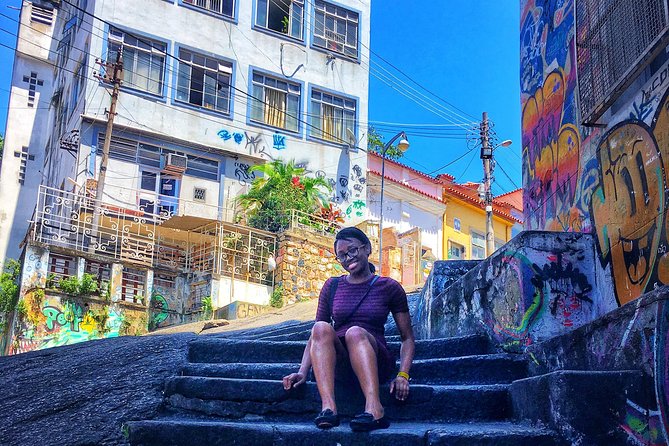
The musical section gives the tour an active finish at Pedra do Sal. An instructor and drummer from the African continent lead a percussion workshop, focusing on traditions that continue to influence Brazilian culture.
This is a useful contrast to the museum and memorial stops. You have already listened to stories about displacement and survival. Now you take part in a form of expression shaped by those same historical forces.
Do not think of the workshop as a polished concert. Its purpose is participation and context. You learn through rhythm, repetition, and explanation. The format may suit you especially well if you prefer an activity that gets you involved instead of asking you to stand quietly in front of another display.
The workshop is included within the three-hour Pedra do Sal portion. The information does not promise a particular instrument, song, or performance length, so keep your expectations open. The main point is to connect African musical traditions with the sounds of Brazil today.
Ending at Largo de São Francisco da Prainha

The final stop is Largo de São Francisco da Prainha, a square near Morro da Conceição. The formal visit lasts about 15 minutes, but the setting gives you a pleasant place to continue your evening after the tour.
At sunset and afterward, the square may feature samba, funk, jazz, or chorinho. Outdoor tables, cold beers, snacks, and old Portuguese-style buildings create a relaxed urban setting. Since the tour ends here, you can stay on for food or music if the mood and schedule suit you.
The stop is a smart ending because it returns the subject to everyday city life. Afro-Brazilian culture is not presented as something sealed in the past. Music and neighborhood life continue around you.
The tour does not include drinks, so budget separately if you plan to remain at the square. Also note that the tour ends here rather than returning you to the starting point at Museu do Amanhã.
What the private format adds
Only your group participates, which changes the pace and tone. You can spend more time on a question that interests you, move past a topic you already understand, or ask for more context at the archaeological site.
The private setup also works well for this subject. Discussions about slavery, race, religion, and identity can be personal. A smaller setting gives you more room to listen carefully and speak without trying to compete with a large group.
Past guiding feedback highlights Isabella in particular for making complex subjects easy to follow and connecting major landmarks with daily life in Rio. Jaíse is also associated with the experience. Guide assignments can change, so confirm the name when booking if that matters to you.
The tour is suited to solo visitors, couples, families, and small groups. It has received a five-star rating from all 39 supplied evaluations, but the more useful point is the pattern behind that score: the guide’s passion, the historical explanations, the food, and the personal attention are the parts most likely to shape your day.
Is $110 a fair price?
At $110 per person, this is not the cheapest way to spend five hours in Rio. The value depends on how much you want from the day.
You are paying for a private activity, a guide, admission to IPN, an Afro-Brazilian food tasting, and a percussion workshop. Several locations are free to enter, but the real cost is the guide’s time and the combination of interpretation, food, and instruction.
I consider the price reasonable if you want a focused cultural experience rather than a standard sightseeing loop. It is less attractive if you mainly want famous views, a quick introduction, or a self-guided walk through the port district.
The tour is booked an average of 69 days ahead, so it is sensible to reserve early if your dates are fixed. Confirmation is provided when you book. The experience requires good weather and a minimum number of participants, even though your confirmed activity is private. If it is canceled for weather or because the minimum is not met, you can choose another date or receive a full refund.
You can cancel for a full refund up to 24 hours before the start time. Changes or cancellations inside that window are not accepted for a refund.
Who should book this experience?
Book it if you want to understand Rio through Black Brazilian history, community life, food, and music. It is especially useful if you have heard simplified stories about favelas or Brazil’s slave-trade past and want a fuller explanation.
It also suits visitors who prefer substance to a checklist of landmarks. You will spend time at memorial sites, listen to historical context, taste traditional food, and make music. That mix gives the day variety, but the central subject remains serious.
I would hesitate to recommend it to anyone with significant food restrictions, since the experience is explicitly not suitable for those needs. I would also choose another activity if you want a relaxed beach day or a scenic tour with little walking and little historical discussion.
Should you book it?
Book this tour if Rio’s African heritage is one of your main interests and you want the subject explained through real places, local food, and music. The strongest elements are the Pretos Novos site, Valongo Wharf, the extended Pedra do Sal visit, and the chance to ask questions in a private group.
The right mindset matters. This is not a light entertainment package. Some stops are painful, and the food and percussion carry cultural meaning that deserves attention. If you are ready for that balance, $110 buys a focused and unusually personal look at the forces that helped shape Rio.
FAQ
How long does the African Heritage: Gastronomy and Musicality Experience last?
The experience lasts approximately five hours.
Where does the tour begin?
It begins at 10 a.m. at Museu do Amanhã, Praça Mauá, 1, Centro, Rio de Janeiro.
Where does the tour end?
The tour ends at Largo de São Francisco da Prainha in the Saúde area of Rio de Janeiro.
Is the tour private?
Yes. Only your group participates in the private activity.
Is food included?
Yes. An Afro-Brazilian gastronomy tasting is included, featuring dishes connected with Afro-Brazilian and Yoruba cuisine.
Are drinks included?
No. Drinks are not included in the price.
Is admission to IPN included?
Yes. IPN tickets are included.
Can I cancel for a full refund?
Yes. You can cancel at least 24 hours before the experience start time for a full refund. Cancellations or changes made less than 24 hours in advance are not accepted for a refund.
Just added around Rio de Janeiro
- Rio de Janeiro: Zip Lining and Canopy Tree Tour★ 3.3 · 6 reviews
- Vidigal Favela Tour★ 4.4 · 26 reviews
- Hang gliding flight in Rio de Janeiro★ 5.0 · 6 reviews
- Rio de Janeiro: Attend a Vasco da Gama game with local guide★ 4.8 · 9 reviews
- Unforgettable Boat Party★ 5.0 · 3 reviews
- Rio Highlights: Christ, Sugarloaf, and More in a Private Tour★ 5.0 · 36 reviews
- Tijuca Forest Hike – Waterfalls & Caves, Nature & Wild Life!★ 5.0 · 51 reviews
- Tijuca Forest w/ Chinese View,cascatinha Taunay,horto waterfall and parque laje★ 4.5 · 29 reviews
Historical Tours, compared.
Scenic Train ride to historical cities of Morretes and Antonina
Read our review →
Explore Little Africa : Unveiling Afro Heritage in Rio de Janeiro
Read our review →
Downtown-Center History Walking Tour – in English
Read our review →Browse the lists this tour appears in