Reviewed · TOURS
Alter do Chão FLONA Jamaraquá Tour
The best part of this Jamaraquá tour is that the forest is only one piece of the day. You travel through the Tapajos River region by boat, stop at quiet beaches and old riverside communities, then reach Jamaraqua for a forest walk, local food, and a canoe ride. I especially like the varied route and the chance to see the Amazon through local communities, waterways, and forest trails rather than from one fixed stop.
I also like the choice between a 3-kilometer short walk and the more demanding 9.1-kilometer trail, plus the option to camp overnight. The main drawback is time: the long route can make the return late, and the boat ride from Alter do Chão may take about two and a half hours each way. Check exactly what your booking includes, since the general description promises lunch while the inclusions list says lunch is not included.
Key points to know before booking
- A full Tapajos River day: The route includes Jacunda Lake, Mureta Lake, Pindobal Beach, Cajutuba, Aramanai, Santo Domingo, Maguari, and Jamaraqua.
- Two forest walks: Choose the 3-kilometer trail, about 1.5 hours, or the 9.1-kilometer route, which takes about three to four hours.
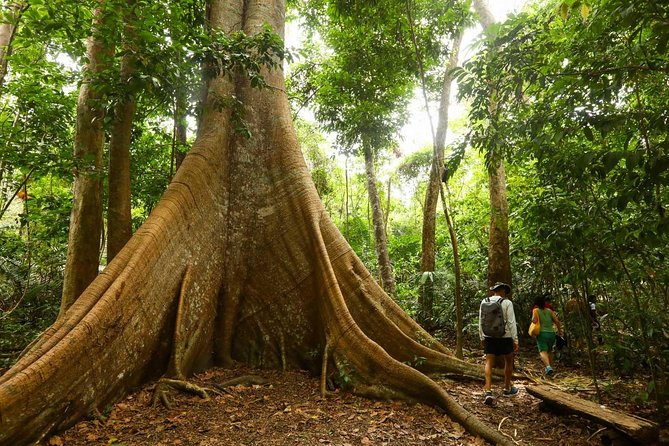
- A giant samauma tree: The long walk includes this famous Amazonian tree and a viewpoint toward the Tapajos River.
- Local food and crafts: Jamaraqua offers a native meal, fruit, and a small shop selling rubber items made by local residents.
- Boat choice matters: Fast boats carry up to 11 people. The larger wooden vessel holds up to 70 and has several indoor and outdoor areas.
- Overnight camping is possible: You can spend the night in the forest, on a beach, on the boat, or in riverside accommodation, depending on the arrangement.
Why this Jamaraqua route is more than a forest visit
Many Amazon outings take you straight from a port to a single forest site. This one treats the journey as part of the day. From Alter do Chão, you follow the Tapajos River south, passing lakes, sand beaches, coves, dunes, and communities before reaching the forest at Jamaraqua.
That wider route gives you a better sense of the Santarem area. The Tapajos is not just a transport corridor here. It shapes daily life, creates seasonal beaches, and links communities that have long depended on fishing, forest products, and river travel.
I like this approach because the day keeps changing. You may begin with open water and bright sand, stop at a place connected to the rubber trade, swim at Cajutuba or Aramanai, then finish among trees and narrow waterways. The tradeoff is a long day with plenty of time spent aboard the boat.
The standard schedule begins around 9:00 or 10:00 in Alter do Chão and returns at about 19:00. Water levels can change the order of stops or make some locations unavailable. The operator says the quality of the day will be maintained, but you should expect the exact route to remain flexible.
Other Brazil days people book alongside this one:
- Rio de Janeiro: 6-Stop Highlights of Rio with Lunch
★ 4.4 · 5,157 reviews - Christ the Redeemer Entry Ticket by Corcovado Train
★ 4.4 · 4,476 reviews - Rio de Janeiro: Rocinha Favela Walking Tour with Local Guide
★ 4.8 · 3,052 reviews
From Alter do Chão to the first river beaches
The meeting point is the tourist information center at the CAT in Alter do Chão. From there, the boat heads south along the Tapajos River.
The first section includes Jacunda Lake and Mureta Lake and Beach. These early stops are useful for photographs and for seeing how clear the Tapajos water can look near its beaches. The scenery is open here, with sand and river views rather than dense forest on every side.
Cajutuba and Aramanai provide the first planned chance for a swim. This is a simple but welcome part of the route. After sitting on the boat, you can cool off in the river and take photographs from a quieter beach.
You may also pass through the Santo Domingo coves and the dunes of Maguari. These stops help explain why the Santarem region is known for beaches as much as for forest. The river level changes the shape and size of these sandy places, so do not expect the same view in every season.
Bring clothing that dries quickly, but remember that the day also includes a forest walk. You will want comfortable footwear that can handle uneven ground, along with a way to protect your camera and phone from water.
Pindobal and the Amazon rubber era
Pindobal Beach adds a useful historical layer to the day. Here, the guide explains the rubber economy and points out remains connected with that period in Brazil.
This stop matters because the Amazon is not an untouched wilderness separated from human life. Forest communities have worked, traded, traveled, and adapted here for generations. The rubber era left a mark on settlements and family histories across the region.
The amount of time at Pindobal can vary with the rest of the schedule. If you care about this subject, ask the guide to explain how the local remains connect to the wider rubber trade. The information is one of the features that gives the boat route more meaning than a simple beach-hopping trip.
Arriving at Jamaraqua Creek
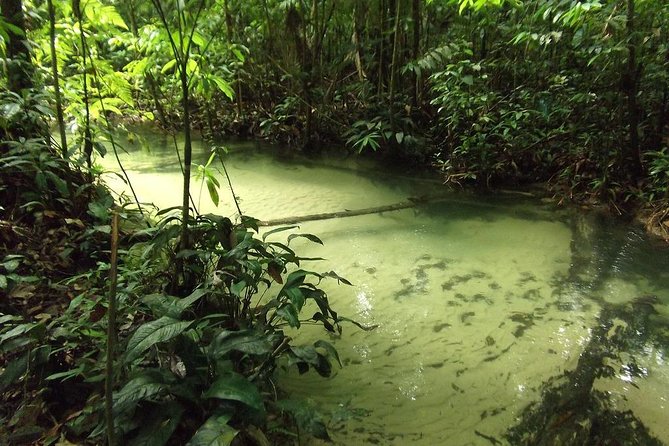
At Jamaraqua, the focus shifts from broad river views to a smaller waterway. The clear creek has fish and calm forest scenery, making it a good place to slow down after the boat journey.
A fruit picnic is part of the planned stop, with items such as watermelon, pineapple, banana, passion fruit, orange, apple, and coconut. Water and ice are also listed among the included refreshments, along with beer and soft drinks in the general tour information.
There is some uncertainty about meals. The itinerary describes a native lunch with fish, wild chicken, and other local dishes, but the separate inclusions section says lunch and food are not included. I would confirm this before paying, especially if the price is important to your decision.
Jamaraqua also has a local craft shop selling rubber products made by residents. This is a good place to buy something connected to the area rather than a generic souvenir. Prices are described as affordable, though no fixed amounts are given.
Same city, a completely different kind of day:
- Rio de Janeiro: Sugarloaf Cable Car Official Ticket
★ 4.6 · 2,873 reviews - Rio: Christ the Redeemer, Sugarloaf, Selaron & BBQ Lunch
★ 4.5 · 2,428 reviews - Rio De Janeiro: Half-Day Rocinha Favela Walking Tour
★ 4.7 · 2,272 reviews - Rio de Janeiro: Angra dos Reis and Ilha Grande Full-Day Tour
★ 4.6 · 1,673 reviews
Choosing between the two forest trails
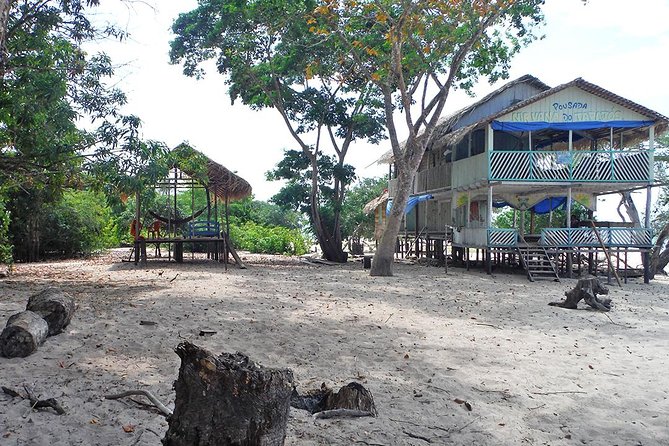
The short trail is about 3 kilometers and takes roughly 1.5 hours. It is the sensible choice if you want forest scenery without making the entire day physically demanding.
The longer Jamaraqua Trail covers 9.1 kilometers and takes about three to four hours. It includes the large samauma tree and a Tapajos River viewpoint, with a guide explaining local plants and animals along the way.
I would choose the long route if the forest is your main reason for booking and you are comfortable walking for several hours. You will get more time among the trees and a fuller look at the area. The short route works better if you want a balanced day with lunch, crafts, creek time, and the canoe ride.
The long walk can affect the schedule. One account describes waiting for the slower walkers before returning to Alter do Chão, with the group arriving late and tired. Another notes that the long trail may be rushed or shortened if not everyone wants to take it. Ask before departure how the group will handle different walking speeds.
The trail is led with local guides, which is important in a forest setting. Still, the supplied information does not specify trail conditions, elevation, or restroom facilities, so ask those questions if you need them for comfort or planning.
Local food, creek canoeing, and sunset
After the forest walk, the day returns to the water. The planned native meal includes fish, wild chicken, and other local dishes. The wording suggests home-style cooking rather than a restaurant menu, which is one of the more appealing parts of the visit.
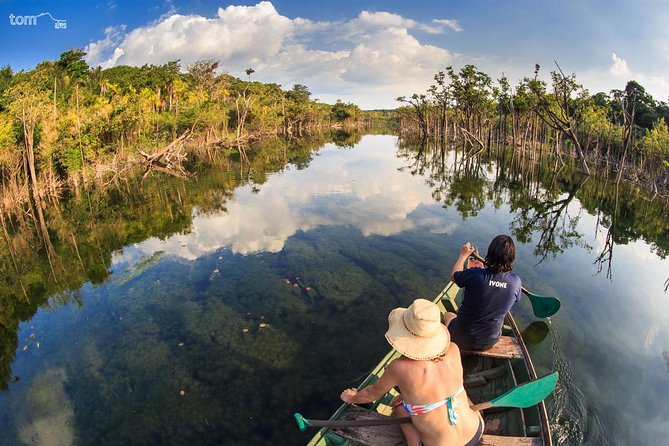
The final Jamaraqua activity is a quiet canoe ride through the creek, timed around sunset. This is a different experience from the open river crossing. The canoe lets you move through narrower water and focus on reflections, trees, and the sounds around the creek.
The schedule then calls for a return to Alter do Chão beneath the night sky. On a clear evening, the boat ride can be a memorable end to a long day. The larger vessel has a bar and several areas for sitting or resting, while the fast boat offers leather seats, sun covers, and safety equipment.
The operator lists guides, boat crew, water, ice, fruit, and refreshments as part of the service. Beer and sodas are associated with the fast boats, while caipirinhas and a full hot and cold drinks bar are described for the larger regional ship. Confirm the setup for your specific departure, since the boat type changes what is available.
Fast boat or large wooden vessel?
The fast boats carry up to 11 people. They are described as newer vessels with powerful engines, covered areas, leather seats, and safety equipment. A smaller boat may suit you if you prefer a more compact group and a quicker ride.
The larger wooden boat holds up to 70 people. It has four areas, two executive suites, a lounge, a stand-up board, kayak, barbecue area, music equipment, and a full bar. This is a more social option, and it provides more room to move around during the long river sections.
The large boat is not automatically the better choice. Its capacity means the group can be much bigger, and long walks may be harder to coordinate. The smaller boat may feel more personal, but it has less room and may offer a different drinks service.
The tour has a minimum booking requirement of five people and a maximum capacity of 70. Since the operator describes the departures as limited and exclusive, reserve ahead if you have a fixed date. Confirmation is provided at booking.
What the $98.01 price is worth
At $98.01 per person, the value depends on what you want from an Amazon day. This is not only transport to a trail. The price is tied to a long boat route, several beach and river stops, forest access, local guiding, a craft visit, and a sunset canoe ride.
The price looks stronger if your package includes lunch, because the native meal is one of the central parts of the Jamaraqua visit. It is less straightforward if lunch must be purchased separately. Ask for a written list of inclusions before booking.
The included water, ice, fruit, and some drinks reduce the need to carry supplies. The operator also says fishing equipment, hammocks, and camping tents can be provided on longer trips. Souvenir photographs cost extra.
The biggest value question is time. You spend much of the day on the river, and that is either a major attraction or a drawback. If you want a quick forest walk, this tour may feel too slow. If you want to see how beaches, communities, waterways, and forest fit together, the long route makes better sense.
The two-day camping option
The overnight version adds a campfire and the sounds of nocturnal animals. You may camp in the forest or on a beach, sleep aboard the boat, stay with a riverside family, or use the straw house called Nirvana do Tapajos.
A beach camp can include piracaia, fish roasted outdoors, with the evening spent under the stars. The next day includes a native lunch and a visit to Pindobal Beach before returning to Alter do Chão.
This option suits you if the main appeal is time and atmosphere rather than checking off every stop. The one-day tour gives you a broad sample. Two days allow a slower pace and more time around Jamaraqua.
Ask which sleeping arrangement is available, what equipment is supplied, and whether meals are included in your chosen package. The general information refers to tents and hammocks for long trips, but the exact setup is not specified.
Who will enjoy this tour most?
I would recommend it to you if you want a broad introduction to the Tapajos area and do not mind a long day on the water. It works especially well for people who enjoy combining nature, local food, river beaches, community visits, and light cultural history.
The short trail makes the day more accessible to people who do not want several hours of walking. The long trail is better for anyone whose priority is forest time and the samauma tree.
Families and mixed-age groups should agree in advance on the short or long trail. The group may need to wait for slower walkers, and the return can run late. Anyone sensitive to long boat rides should also think carefully before choosing the full-day route.
The tour is offered in Portuguese, English, Russian, and Spanish. The boat crew has received strong praise for being helpful, punctual, and organized, and Karlos is identified as a main contact who welcomes visitors and helps coordinate the experience.
Should you book the Jamaraquá tour?
Book it if you want the day to feel like a small Amazon expedition rather than a direct transfer to one trail. The mix of Tapajos beaches, Pindobal, Jamaraqua Creek, forest walking, local food, crafts, and sunset canoeing gives you a fuller picture of the area.
Choose the short trail if you want a relaxed balance. Choose the 9.1-kilometer route only if you are ready for a long walk and a possible late return. Before paying, confirm the boat type, meal arrangements, departure time, and overnight details if applicable.
The tour is non-refundable and cannot be changed after booking, so make those checks first. For the right kind of visitor, the $98.01 price buys a full day with real variety. For someone wanting a short, simple forest outing, it may be more boat time and group coordination than necessary.
FAQ
Where does the tour begin?
The tour begins at Selvagem Tours CAT, the tourist information center at the beach in Alter do Chão, Santarem, Pará.
What time does the tour start and end?
The stated start time is around 9:00 or 10:00 in the morning, with the one-day tour generally returning around 19:00.
How long is the one-day tour?
The advertised one-day experience lasts about eight hours, although the full route can vary with water levels, walking speeds, and the chosen boat.
How long is the Jamaraqua forest trail?
The long trail is 9.1 kilometers and takes about three to four hours. A shorter 3-kilometer trail takes about 1.5 hours.
Is lunch included?
The tour description includes a native lunch with fish, wild chicken, and other local dishes, but the inclusions section says lunch is not included. Confirm this detail with Selvagem Tours before booking.
What refreshments are provided?
The tour information lists water, ice, fruit, beer, sodas, and light refreshments. The exact drinks service depends on the boat used.
Can I take the tour overnight?
Yes. The two-day option can include camping in the forest or on a beach, sleeping on the boat, staying with a riverside host, or using the straw house Nirvana do Tapajos.
How many people can join the tour?
The minimum booking requirement is five people, and the maximum capacity is 70. Fast boats carry up to 11 people, while the large wooden vessel can carry up to 70.
Just added around Brazil
- Paraty Historical City Walking Tour★ 4.1 · 8 reviews
- Walking Tour of São Luís do Maranhão★ 4.4 · 14 reviews
- Rio de Janeiro: Zip Lining and Canopy Tree Tour★ 3.3 · 6 reviews
- Vidigal Favela Tour★ 4.4 · 26 reviews
- Hang gliding flight in Rio de Janeiro★ 5.0 · 6 reviews
- Rio de Janeiro: Attend a Vasco da Gama game with local guide★ 4.8 · 9 reviews
- Unforgettable Boat Party★ 5.0 · 3 reviews
- Buzios: City Tour by Trolley with 12 Beaches and Pickup★ 4.5 · 4 reviews
Tours, compared.