
Reviewed · AFRO-BRAZILIAN HERITAGE TOURS
Afro-Brazilian Roots Private City Tour in Salvador
Salvador’s African heritage is not tucked away in a museum. It shapes the city’s food, faith, music, neighborhoods, and daily life. This six-hour private tour takes you from the waterfront shrine to Yemayá, the African monuments at Tororó Dike, São Joaquim Fair, a Candomblé temple, and a seaside community that most visitors would not reach on their own. I especially like the small-group format, which lets you ask serious questions, and the chance to eat acarajé and local food in places chosen for their connection to Bahian life.
I also like that the tour treats Candomblé as a living faith rather than a colorful side note. Guides such as Wilson, Mônia, Vagner, and Ronaldo have been praised for linking religion, food, ancestry, and colonial history with care. The main consideration is that this is an educational, off-route experience, not a light sightseeing loop. Photography is not allowed in some favela communities, and the tour is not suitable for wheelchair users.
Key points to know before booking
- Yemayá by the sea: Begin in Rio Vermelho at a sacred altar maintained by local fishermen.
- São Joaquim Fair: Browse one of Salvador’s key food markets, with African-influenced ingredients and Bahian dishes.
- Acarajé tasting: Try this famous fried bean dish as part of the tour, not as an afterthought.
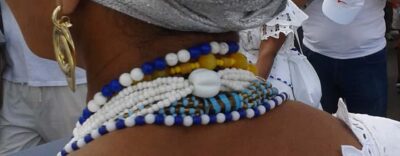
- Candomblé in context: Visit a temple connected with the Ewe Fon tradition and learn about its beliefs and practices.
- Private transport: A private car makes the six-hour route easier, especially in Salvador’s traffic and heat.
- Lunch by the water: Finish at a seaside community with free time, a meal, and broad ocean views.
Why this tour reveals more than Salvador’s postcard sights
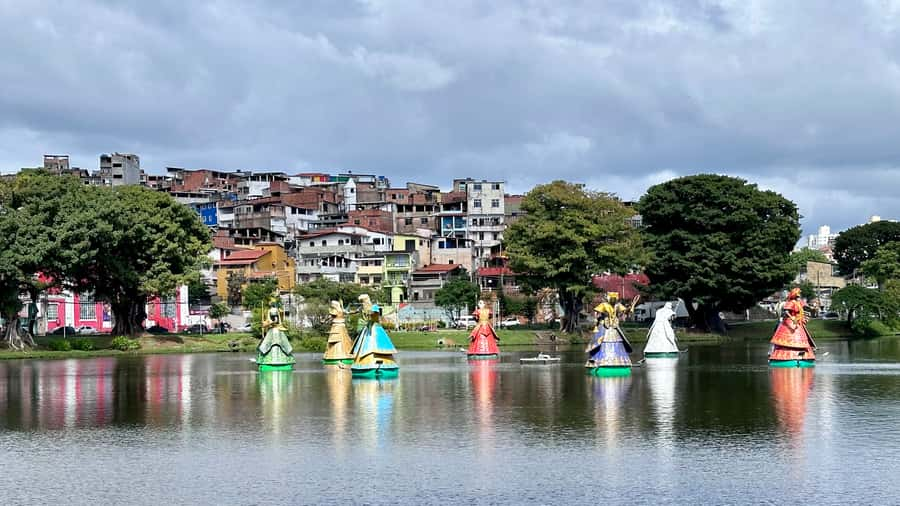
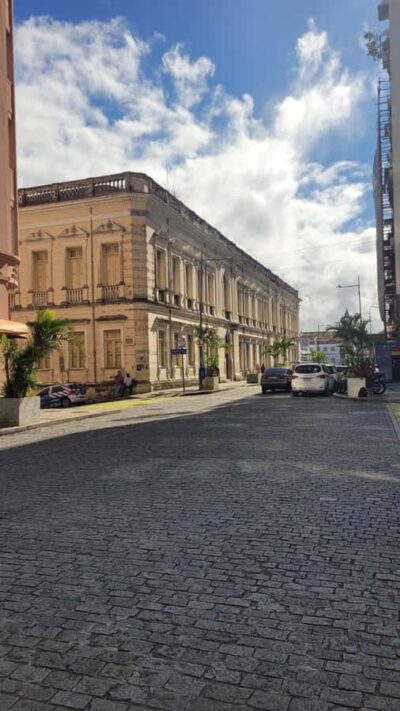
Salvador is often introduced through Pelourinho’s colorful streets, colonial churches, and oceanfront views. Those places matter, but they only tell part of the city’s story. The Afro-Brazilian Roots Private City Tour shifts attention toward the people, religious traditions, foodways, and neighborhoods that give Salvador its character.
The route is especially useful if you want to understand how African identity survived and changed in Brazil. Guides explain connections between African beliefs, Indigenous presence, Portuguese colonization, slavery, and modern Bahian life. That larger frame is what gives the stops meaning. A market becomes more than a place to take pictures. A shrine becomes more than a decoration. A dish becomes a clue to migration, memory, and faith.
You have a private group and a live guide in Portuguese, Spanish, English, or French. That matters here because the subject can be layered. You may want to ask about Yoruba traditions, Candomblé ceremonies, the meaning of an orixá, or how food and religion overlap. The private setting gives you room to do that without holding up a large bus group.
The experience has earned a 4.7 rating from 88 reviews, with particularly strong praise for the guides’ command of history and their ability to explain Salvador from an Afro-Brazilian point of view. The most useful pattern is clear: this tour works best when you want to learn, not simply collect sights.
More Afro-Brazilian heritage walks in Salvador:
- Salvador Historic Walking Tour – Pelourinho
★ 4.8 · 62 reviews - Salvador: Walking Tour Through Pelourinho
★ 5.0 · 49 reviews - Salvador: 4-Hour Candomblé Mysteries Tour
★ 4.3 · 34 reviews
Rio Vermelho and the shrine to Yemayá
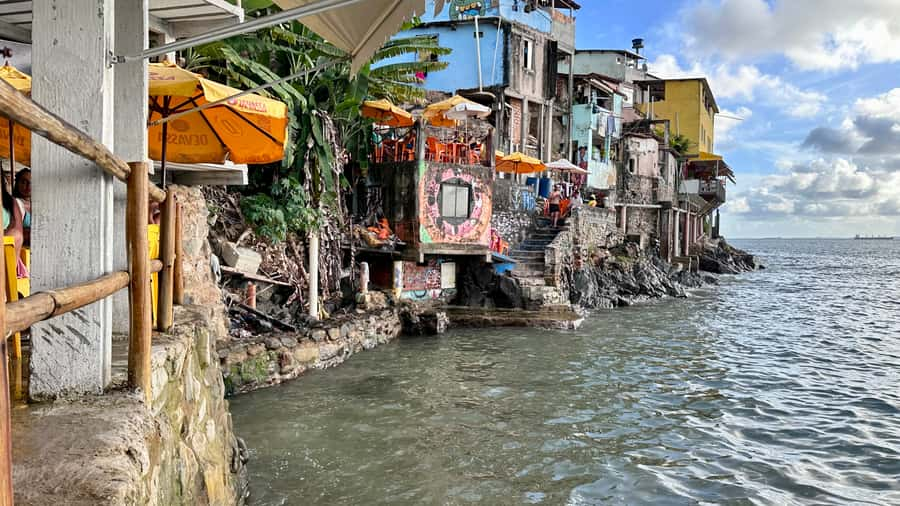
The day begins with pickup in Salvador, usually from your accommodation. Wait in the hotel lobby about 10 minutes before the scheduled time. Your guide and driver then take you to Rio Vermelho, a seaside district known here for its connection to Yemayá.
Yemayá is an African deity associated with the sea. The local altar is cared for by fishermen, which gives the stop a direct link to everyday life. You are not simply looking at a religious object. You are seeing how the sea, work, community, and belief meet in one place.
This first stop sets the tone. The guide can explain the role of African religious traditions in Bahia and how these beliefs have continued despite long periods of pressure and discrimination. You will have time for a visit, explanation, and photographs, with about 30 minutes assigned to the stop.
The shrine is also a good reminder to behave respectfully. Ask before photographing people or religious objects, and follow your guide’s instructions. The point is not to treat the altar as a stage set. It remains part of a living local tradition.
Tororó Dike and African figures in the city
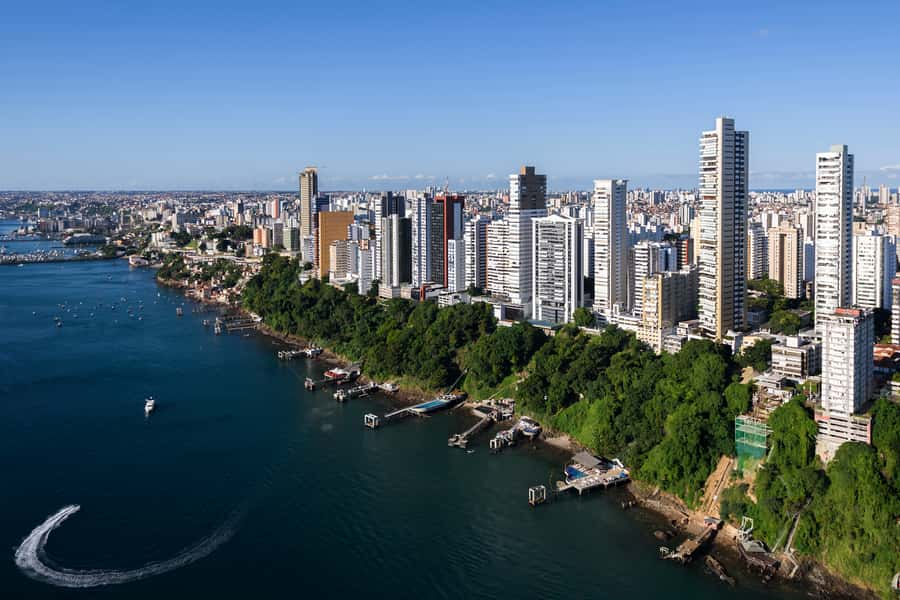
Next comes Dique do Tororó, a lagoon and public space with large African-inspired monuments. This is another roughly 30-minute stop, with time to look, hear the story behind the figures, and take pictures.
The monuments give the guide a visual way to discuss African religious imagery and Salvador’s public identity. You can connect what you saw at the Yemayá altar with the symbols here, while also seeing how Afro-Brazilian culture appears in shared civic spaces.
This stop is shorter and more visual than the temple visit later in the day. If you enjoy photography, it gives you a chance to frame the figures against the water. If you prefer detailed historical discussion, use the time to ask questions, since the guide’s explanations are a major part of the value.
Salvador can be hot, and some travelers appreciated guides who adjusted the order or pace to keep the group cooler. Comfortable shoes are important throughout the day. You will move in and out of the car and spend time walking at markets and community stops.
São Joaquim Fair, where food tells the story
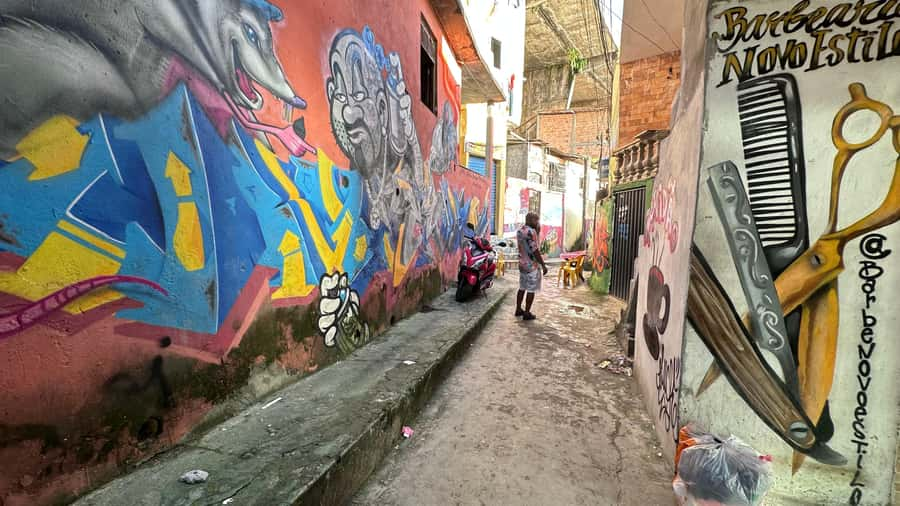
São Joaquim Fair is one of the tour’s strongest stops. The market is described as an intangible part of Salvador’s heritage, and it gives you a direct look at ingredients, cooking, commerce, and religious practice.
Expect stalls with fruits, vegetables, and typical dishes, along with strong aromas and plenty to look at. The market’s importance is not only culinary. It is a place where African influences can be seen in ingredients and preparation, and where local food traditions remain part of daily life.
Your guide can help you read the market rather than simply walk through it. You may learn how particular foods connect to Bahian cooking, African traditions, and religious offerings. This is the kind of stop that benefits from a local guide because you might otherwise see a crowded produce market without grasping its cultural importance.
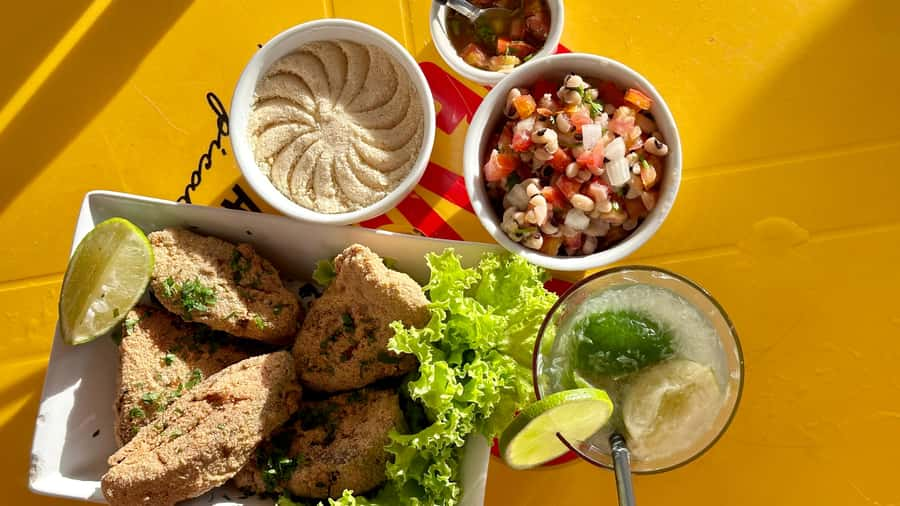
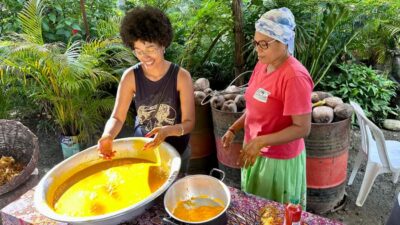
The fair is also where the tour includes an acarajé tasting. Acarajé is made from black-eyed peas, shaped and fried, then served as a well-known Bahian street food. It has links to Afro-Brazilian religious traditions as well as everyday eating, so the tasting carries more meaning than a quick snack break.
The listing includes the tasting, while drinks are not included. Bring money for beverages and expect to pay for any extra food you choose to buy. You may also want to keep your belongings secure in a busy market and ask before taking close-up photos of vendors.
A few more Salvador days to weigh up
- From Salvador: Schooner Tour to Frades Islands and Itaparica
★ 3.9 · 98 reviews - Salvador de Bahia African Culture Tour
★ 4.5 · 60 reviews - Salvador: Praia Do Forte and Guarajuba Beach Day Trip
★ 4.1 · 56 reviews - Salvador: Cultural Treasure – Samba de Roda.
★ 4.9 · 51 reviews
A Candomblé temple and a living religious tradition
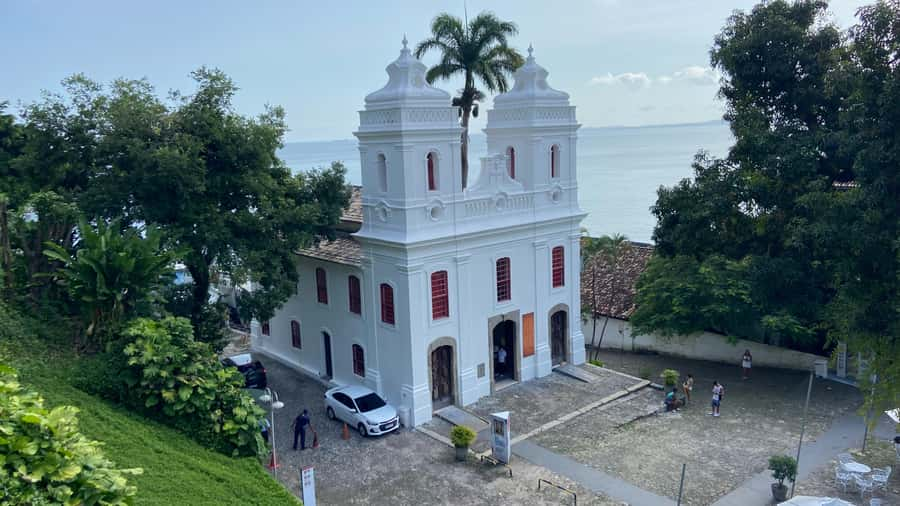
The visit to a Candomblé temple is likely to be the most significant part of the day for readers interested in religion, ancestry, and cultural survival. The tour visits a sacred temple connected with the Ewe Fon tradition, and the guide explains the beliefs and customs that shape Candomblé.
Some groups have been welcomed into a Candomblé house by a member of the family connected with the site. That kind of introduction can make the stop feel personal, but access and conversation may depend on the community’s wishes that day. Treat the temple as a sacred place, not a tourist attraction.
This is also the point where a good guide makes a major difference. Wilson has been praised for explaining Candomblé and Yoruba traditions in detail. Mônia has been praised for tying religious ideas to Bahian customs and social life. Vagner has guided groups through the subject in clear English, including the difficult ways African practices adapted under colonial rule.
You do not need prior knowledge to follow the visit. Still, you should come ready to listen. Candomblé includes its own religious vocabulary, histories, and forms of respect. This is not a performance arranged for your camera. Photography restrictions apply in some communities, and your guide will explain what is acceptable.
The experience may be especially meaningful if you have African ancestry or a personal interest in the African diaspora. One guide has helped a guest connect Salvador’s traditions with family heritage, while another group found the Yoruba connections especially valuable. You do not need that background to appreciate the visit, but curiosity and patience will improve it.
A seaside community and lunch with a view
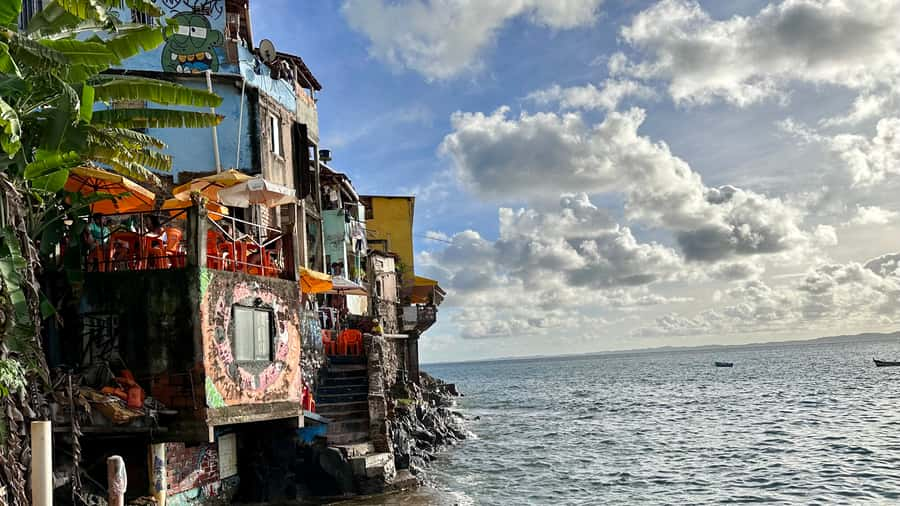
The final major stop takes you to a seaside favela community. The word can carry heavy stereotypes, so it is worth approaching this part of the tour with care. You are visiting a real neighborhood, not a display of hardship.
The stated plan includes a photo stop, guided time, lunch, and free time for about two hours. The setting offers views across the sea, and the meal is meant to be a relaxed finish after the day’s discussions. Some groups have eaten at Zanzibar restaurant, while other lunch arrangements may depend on the tour’s current operation.
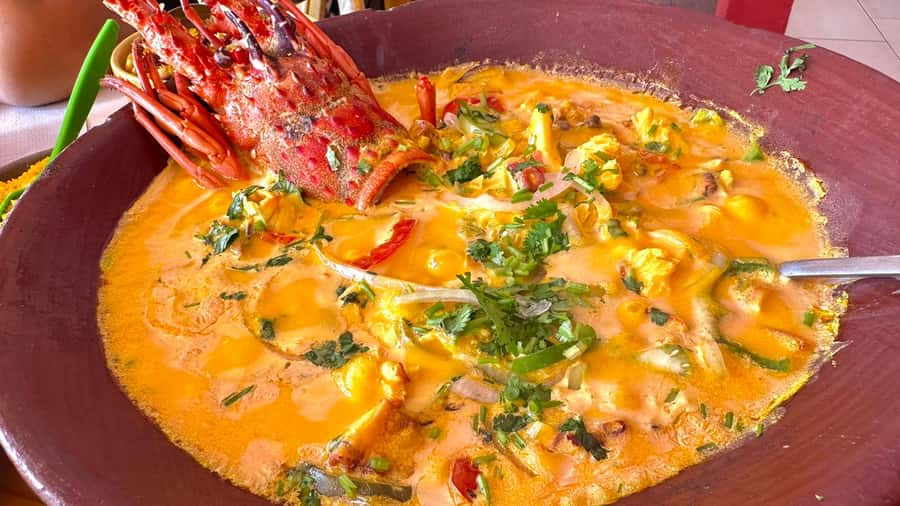
The food is one of the tour’s strongest practical pleasures. Earlier, you taste acarajé. At lunch, you can expect local food to continue the focus on Bahian cooking, though the exact dishes and drinks are not specified. Drinks in general are not included, so budget separately for them.
Photography is not authorized in the favela communities visited on this route. This is an important rule, not a minor inconvenience. You should be prepared to put the camera away, avoid photographing residents, and follow the guide’s directions. If taking pictures is central to your idea of a city tour, this limitation may frustrate you. If you want a more respectful encounter with ordinary neighborhoods, it is a useful boundary.
The long final stop also keeps the day from feeling rushed. You have time to eat, take in the sea views, and rest before returning to Salvador. The private car then brings you back to your accommodation.
The guides and private car make the difference
The guide is the main reason to choose this tour over a standard city drive. Past groups have worked with Wilson, Mônia, Vagner, Ronaldo, Fernando, Leandro, Monia, and other guides from the same operation. The strongest descriptions focus on clear English, strong historical knowledge, warmth, and a willingness to answer questions beyond Salvador itself.
That last point matters. The tour is not limited to memorized facts about each stop. You can ask how African beliefs changed in Brazil, how communities maintained identity, or how food, music, dress, and faith connect. One guide was described as a PhD historian, while others were praised for explaining social issues as well as dates and places.
A private car is another useful feature. Salvador traffic can be demanding, and air-conditioned private transport gives you a break between stops. It also avoids the fixed pace of a large coach. Guides have adjusted routes to help groups stay comfortable in the heat, and drivers have been praised for calm, careful driving.
The private format does not mean the day is physically effortless. You still need comfortable shoes, and the route includes walking through a market and community areas. Wheelchair users should not book this experience because it is listed as unsuitable for wheelchairs.
Is $150 per person a fair price?
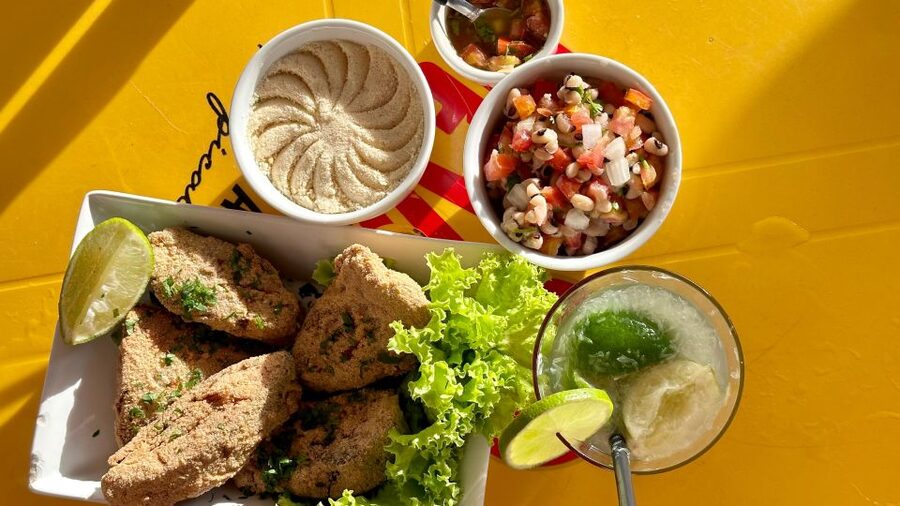
At $150 per person, this is not the cheapest way to see Salvador. It is also more than a basic half-day city transfer or a simple food walk. The price includes a private car, guide, lunch, acarajé tasting, and a donation connected with the experience.
For a solo visitor, the price may feel high. For two or more people sharing a private group, the value improves because you are paying for a specialized route, transportation, and six hours of guiding rather than a string of short photo stops.
I would judge the cost by the guide’s subject expertise. If you want colonial architecture and general sightseeing, a cheaper city tour may suit you better. If you want a focused explanation of Afro-Brazilian religion, food, ancestry, and community life, the private format helps justify the price.
The included lunch and tasting also reduce extra costs, though you still need to pay for drinks. The cancellation policy adds flexibility: you can cancel up to 24 hours ahead for a full refund, and you can reserve now and pay later.
Who should book this experience?
I would recommend this tour to readers who:
- Want Salvador explained through African-descended communities and traditions
- Prefer private guiding to a large group
- Enjoy history, religion, food, and social context
- Want to visit places outside the usual tourist center
- Are comfortable following photography restrictions
- Can walk in comfortable shoes and do not need wheelchair access
It is a particularly good choice for visitors with African or Afro-Brazilian family interests, though no personal connection is required. It also suits solo visitors who want private transport and a guide who can help them feel oriented in unfamiliar parts of the city.
I would hesitate if you want a fast, playful sightseeing day with constant photo opportunities. The tour can be serious and discussion-heavy. One useful description called it more intellectual than fun and playful, which is fair. Food, sea views, and local neighborhoods keep it varied, but the main reward is understanding.
FAQ
How long does the Afro-Brazilian Roots Private City Tour last?
The tour lasts six hours, including pickup, the visits, lunch, free time, and the return to Salvador.
Where does the tour begin?
Pickup is included in Salvador, and you should wait in your hotel lobby 10 minutes before the scheduled pickup time.
Which languages are available?
Live guiding is available in Portuguese, Spanish, English, and French.
Is this a private tour?
Yes. The experience is operated for a private group rather than a large shared group.
What food is included?
The tour includes an acarajé tasting and lunch. Drinks are not included.
What places are visited?
The route includes Rio Vermelho and the Yemayá altar, Dique do Tororó, São Joaquim Fair, a Candomblé temple connected with the Ewe Fon tradition, and a seaside favela community.
Can I take photographs throughout the tour?
No. Photography is not authorized in the favela communities visited. Ask your guide about photography at religious sites and other stops.
Is the tour accessible to wheelchair users?
No. The experience is listed as unsuitable for wheelchair users.
Should you book the Afro-Brazilian Roots tour?
Book it if you want Salvador explained from the perspective of its African-descended communities, with time for real questions and food along the way. The strongest parts are the market, the Candomblé visit, and the chance to reach neighborhoods beyond the standard tourist route.
Skip it if you mainly want famous monuments, unrestricted photography, or a breezy overview. For curious visitors who value context, careful guiding, and a private day in Salvador, the $150 price is reasonable, especially when shared with companions.
Just added around Salvador
- Salvador: Schooner Cruise with Pickup and Itaparica Stop★ 3.8 · 5 reviews
- Salvador: Traditional Drumming and Percussion Workshop★ 4.4 · 10 reviews
- Salvador: Cultural Treasure – Samba de Roda.★ 4.9 · 51 reviews
- Salvador by Night: Cultural Show and Dinner.★ 4.4 · 17 reviews
- Salvador: 3-Hour Percussion Class★ 4.9 · 10 reviews
- Salvador by Night: Cultural Dinner and Show★ 4.7 · 27 reviews
- Salvador: Caipirinha Masterclass with Unlimited Drinks★ 4.2 · 4 reviews
- Salvador: 4-Hour Candomblé Mysteries Tour★ 4.3 · 34 reviews
Afro-Brazilian Heritage Tours, compared.
Explore Little Africa : Unveiling Afro Heritage in Rio de Janeiro
Read our review →
Browse the lists this tour appears in