

Reviewed · FAVELA TOURS
Favela Tour The Original, Rocinha & Vila Canoas since 1992
Rio’s Favela Tour is less about sightseeing than about changing the way you read the city. In Rocinha, Brazil’s largest favela, and smaller Vila Canoas, you walk through homes, shops, alleyways, and community projects while learning how these hillside neighborhoods fit into Rio’s social structure. The views back toward the city and coast are a fine bonus.
I like two things here. First, the guides explain both the difficulties and the strengths of favela life instead of reducing these communities to poverty. Second, your visit supports local education projects, including a community school financed by Favela Tour. The main caution is that language arrangements can change, and one recent Italian-language booking did not enter Rocinha, so confirm the exact plan before you go.
Key points to know
- Two very different communities: Visit Rocinha, the largest favela in Brazil, and Vila Canoas in one three-hour outing.
- The walk begins with the ride: The guide starts explaining Rio and favela life as soon as you board the vehicle.
- A school visit gives the tour purpose: Part of the money supports a community school and other local projects.
- Great hilltop views: Expect broad views over Rio from the route and hillside paths.
- A social, not voyeuristic approach: You walk through commercial and residential areas with a guide who helps you meet the place on human terms.
- Pickup is practical: Collection and return are offered around Leme, Copacabana, Ipanema, Leblon, and São Conrado.
Why Rocinha changes your view of Rio
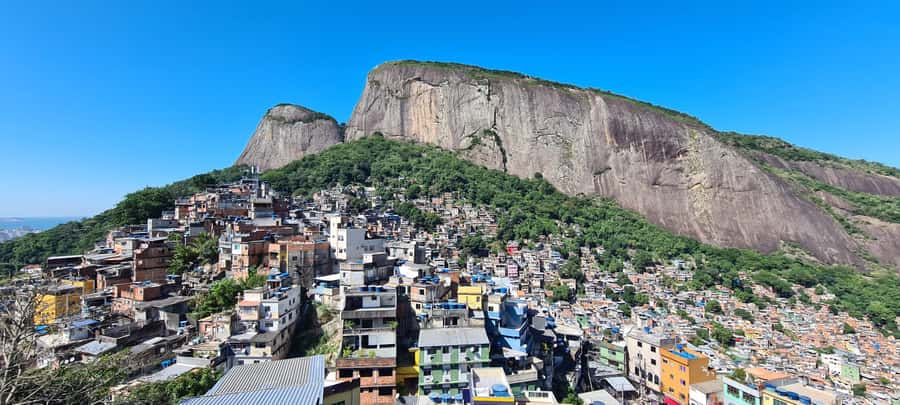
From a distance, Rocinha can look like a dense patchwork spread across the hills. Close up, it is more complicated. Buildings rise beside one another, lanes twist through the slope, and homes sit alongside small businesses, services, and everyday meeting places.
That change in scale is the point of the visit. A short view from a road tells you almost nothing about how the community works. On foot, you begin to see that a favela is not simply a poor district or a dangerous zone. It is also a place where people live, trade, study, raise families, and build local projects.
Your guide supplies the context. Rio has close to 1,000 favelas, and about 20 percent of the city’s population lives in them. Many began on former public land along the hillsides. That background helps explain why these neighborhoods can appear tightly packed, why public services have developed unevenly, and why favelas remain unfamiliar to many people who live elsewhere in Rio.
The tour takes a firm position against the usual outsider’s view. You are not there to stare at hardship from a vehicle window. You are there to walk, listen, ask sensible questions, and understand how Brazil’s contrasts and social divisions show up in one city.
More favela tours with local guides:
- Rio de Janeiro: Rocinha Favela Walking Tour with Local Guide
★ 4.8 · 3,052 reviews - Rio De Janeiro: Half-Day Rocinha Favela Walking Tour
★ 4.7 · 2,272 reviews - Rio de Janeiro: Favela Santa Marta Top Tour with Local Guide
★ 4.9 · 488 reviews
The ride from Rio’s South Zone starts the lesson

Pickup is available from hotels in the South Zone, especially around Leme, Copacabana, Ipanema, Leblon, and São Conrado. Some collection points are more likely to be at the beachfront, and depending on where you stay, you may be asked to meet at a nearby regular pickup hotel.
That small bit of planning matters. Do not assume the vehicle will stop at every hotel door. Confirm the meeting point by phone, email, or WhatsApp once you are in Rio, and avoid using a hotel employee or an unrelated middleman to confirm the booking. The provider specifically warns that this can lead to confusion or extra charges.
The transport is part of the tour, not just a way to reach Rocinha. The guide begins explaining the city and the communities as soon as you board. That is useful because three hours passes quickly, and the walking portion alone cannot cover the full social and historical picture.
Tours operate in English, French, Spanish, Italian, and Portuguese. English-language arrangements appear to be the safest choice if you want the most straightforward scheduling. Other languages may need to fit wider demand, so confirm that your requested language is actually available on your chosen day.
Walking through Rocinha’s residential and commercial lanes
Expect a mostly walking-based visit once you arrive. The route moves through both residential and commercial areas, giving you a closer look at how the neighborhood functions rather than keeping you on an outside road.
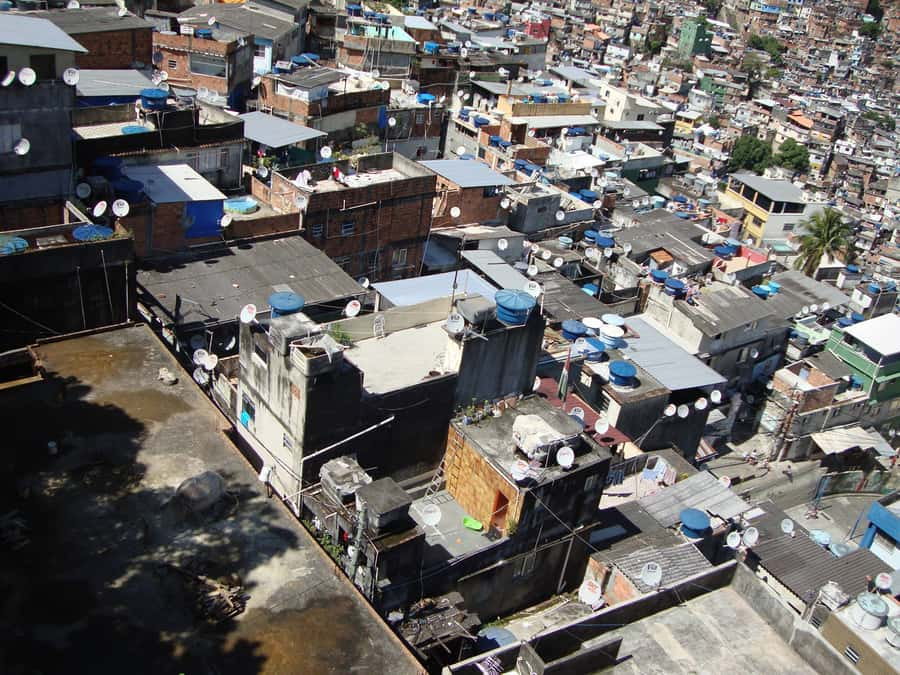
You may see local shops, homes, handcraft work, and the constant movement that comes with a large urban community. The architecture is one of the clearest parts of the experience. Buildings and lanes follow the hill in ways that can feel confusing at first, but the guide helps you read the layout and understand how the community grew.
Come ready to walk. The tour description does not promise a gentle, flat route, and favelas are built on hillsides. It is wise to wear shoes you can use comfortably for three hours and to bring water. Those are practical choices for any walking tour in Rio, especially one that takes you through narrow uphill and downhill passages.
The guide’s role is important here. Without context, you might notice only the density, exposed construction, or maze-like lanes. With explanation, you can connect what you see to housing, income, land use, local commerce, and the long-running gap between formal city planning and the way residents have built their own neighborhoods.
That does not mean the tour ignores problems. A useful visit should leave room for questions about poverty, public services, safety, discrimination, and the unequal opportunities faced by residents. The strongest part of this experience is its effort to show the problems without pretending they are the whole story.
Vila Canoas adds a smaller-scale comparison
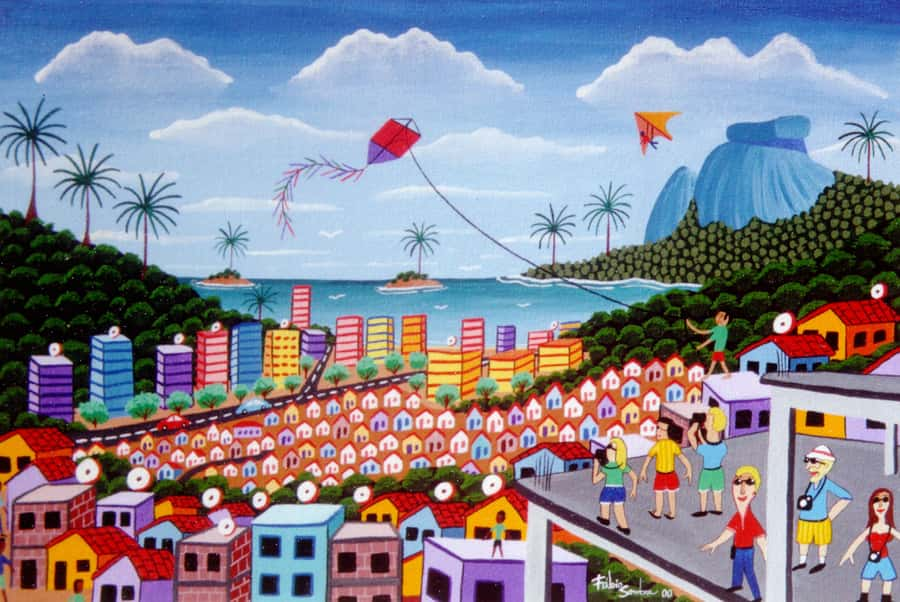
Rocinha is the larger and more famous stop. Vila Canoas gives you a second point of comparison. Seeing both communities helps you avoid treating every favela as the same.
The two areas have different sizes and layouts, and the tour uses that contrast to explain why a single label can hide a lot of variation. One community may feel more commercially active or crowded, while another can offer a different sense of scale. The exact flow depends on the day and the guide, but the purpose is clear: you are seeing more than one local pattern.
This is one reason I find the two-favela format more useful than a brief drive past one neighborhood. You get a wider picture of Rio’s social structure and a reminder that favelas are not a single type of place.
The walking also makes the experience more personal. You are not locked into a bus looking down at the streets. You move through the setting at ground level, where ordinary details become easier to notice. The provider presents the visit as a welcome from local residents, and the tour’s community focus is intended to keep that contact respectful rather than intrusive.
Still, use good judgment. Ask before photographing people, homes, or private activities. The goal is to meet a community, not collect dramatic pictures.
A few more Rio De Janeiro days to weigh up
- Rio de Janeiro: 6-Stop Highlights of Rio with Lunch
★ 4.4 · 5,157 reviews - Christ the Redeemer Entry Ticket by Corcovado Train
★ 4.4 · 4,476 reviews - Rio de Janeiro: Sugarloaf Cable Car Official Ticket
★ 4.6 · 2,873 reviews - Rio: Christ the Redeemer, Sugarloaf, Selaron & BBQ Lunch
★ 4.5 · 2,428 reviews
The school and local projects give the tour a purpose
The community school is likely to be one of the most meaningful stops. Favela Tour helps finance it, so the visit connects your ticket with a concrete local project rather than leaving the benefit at the guide’s commentary.
You should not expect a full education program or a long institutional visit. The tour lasts three hours and also includes transport, walking, both communities, and other stops. But even a short look can help you understand how residents and local organizations respond to gaps in public provision.
A handcraft center adds another useful piece. If you are interested in buying something, bring extra money for local crafts. This is a better souvenir choice than buying a generic item in a tourist shop because it keeps part of your spending within the community.
The visit also includes a local bar. That may sound like a small stop, but it fits the tour’s broader aim. A neighborhood is not only its social problems or its views. It is also where people meet, eat, work, and spend ordinary time.
Drinks, snacks, and craft purchases are not included, so carry some extra cash. The supplied information does not promise a particular menu or a set amount of time at the bar, so think of it as a local stop rather than a scheduled meal.
Safety, respect, and the question of voyeurism
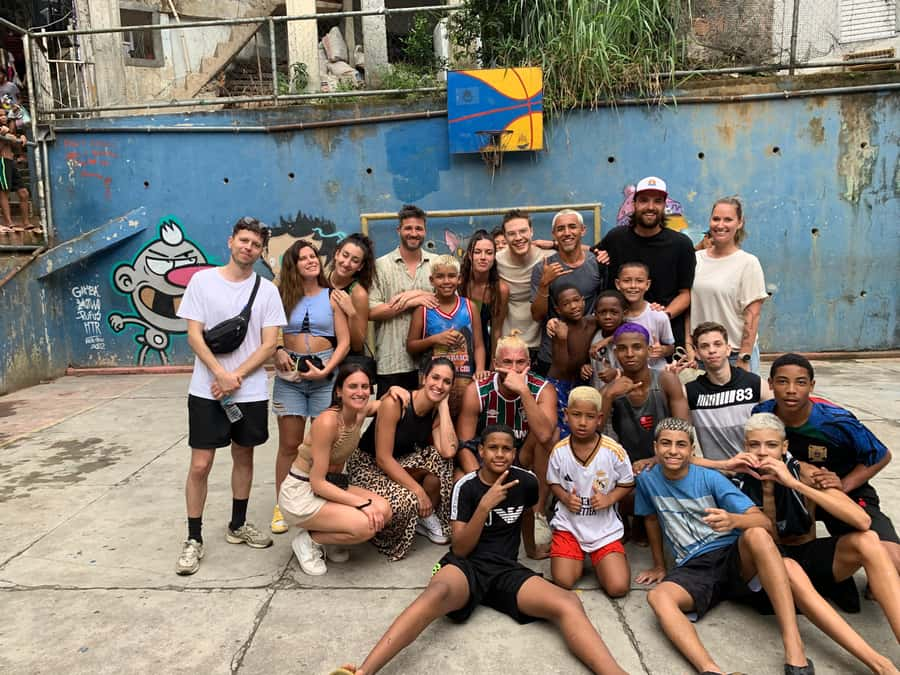
The tour presents favelas as safer than many outsiders assume, but it also gives sensible advice: if you want to visit, use an organized tour. That is the right approach for a first visit because a local guide can handle the route, explain local expectations, and help you avoid wandering into places where you do not understand the situation.
Safety is not the only reason to use a guide. Without one, you could easily mistake what you see or turn a residential neighborhood into a backdrop for uninformed sightseeing. A guide gives residents a voice and places the physical setting inside a wider Brazilian context.
The tone is meant to be friendly and socially inclusive. You are told that local people support the visit and that you should not feel like an intruder. Even so, respect has to come from you as well. Keep your voice down in residential areas, ask before taking photos, and listen when the guide explains local customs.
The best version of this experience is curious but not theatrical. You should arrive ready to learn, not expecting danger, shock, or staged hardship. If you want a tour built around dramatic photographs, this may not be the right choice. If you want a guided look at a part of Rio that many visitors never understand, it has a clear purpose.
What the guide quality means for your day
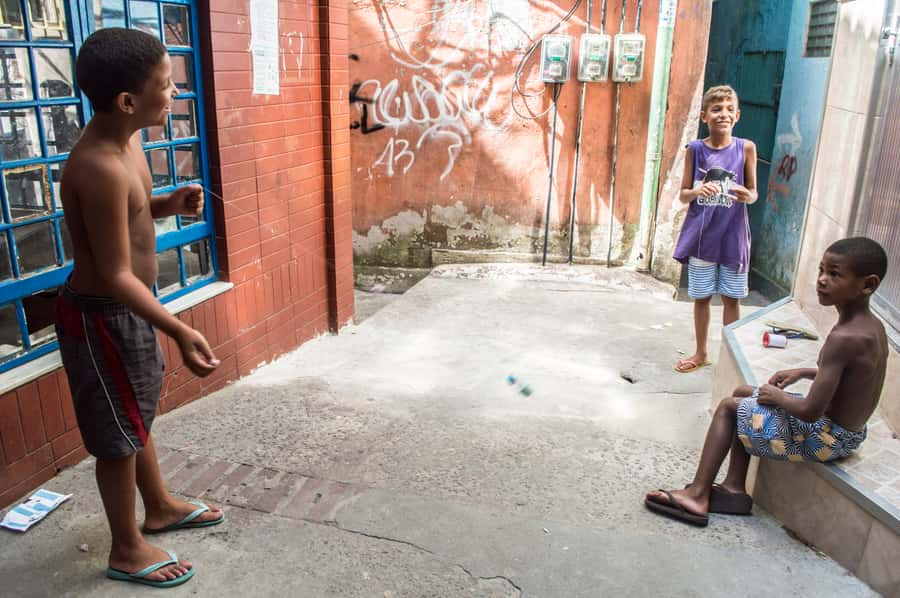
The guide can make or break a tour like this. Recent feedback names Francesco and Mateo as especially strong at explaining favela history, Brazilian culture, and daily life. The most useful guide is not simply someone who knows the route. You want someone who can answer difficult questions plainly and translate between the community you are visiting and the assumptions you brought with you.
Multilingual groups can affect the pace. One English-language account praised the guide’s command of the language and the amount of insight provided. Another visitor noted that the guide had to translate into several languages, leaving less time for extra information about the favelas.
That tradeoff is worth considering. A mixed-language group may let you meet people from different countries, but explanations can take longer and become shorter. If detailed commentary in one language matters to you, confirm how the group will be handled.
There is also a specific warning for Italian speakers. One booking had to be moved because the Italian departure was not available, and the eventual group did not enter Rocinha because of a disagreement over a local fee. That appears to be an exception rather than the normal plan, but it shows why you should confirm both the language and the intended route before paying or before setting out.
Is $33 a fair price for three hours?
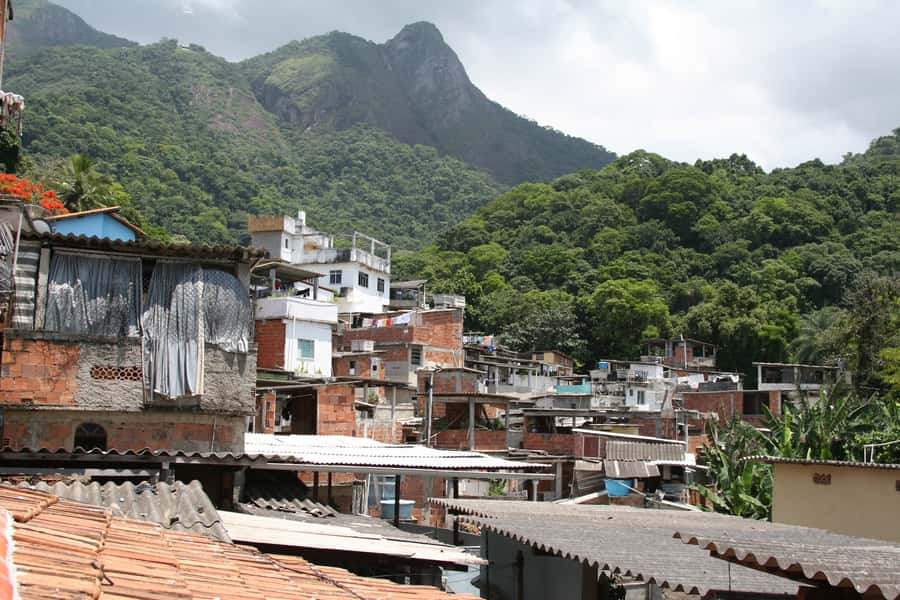
At $33 per person, the tour is reasonably priced if you value the guide’s interpretation and the community connection. The fee covers a three-hour experience, transport from and back to much of Rio’s South Zone, a visit to two favelas, and commentary in several possible languages.
You are not paying for a polished attraction with a fixed show. You are paying for access, local explanation, organized movement through unfamiliar areas, and a contribution to educational projects. That makes the value less about the number of stops and more about what you learn from them.
The price does not include drinks, snacks, or handcrafts. Bring extra money if you want to support local sellers or stop for refreshments. You should also allow time for hotel pickup and return, since the advertised three hours refers to the tour itself and the route may involve several collection points.
Free cancellation is available up to 24 hours before the tour, and you can reserve now and pay later. Those terms are helpful if your Rio schedule is still shifting, but the more important booking detail is confirming the exact pickup place, language, and route.
Who should book this Rio favela tour?
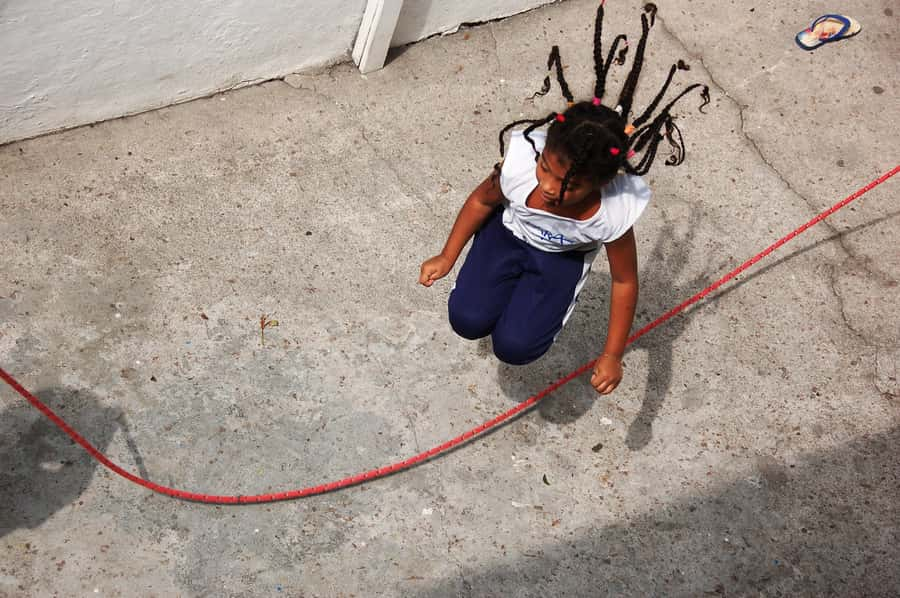
I would recommend it to you if you want social context, direct contact with local neighborhoods, and a better understanding of how Rio’s inequality is shaped by geography and public policy. It suits visitors who are willing to walk, listen, and accept that the experience may raise difficult questions rather than provide a simple feel-good story.
It is also a good fit if you have already seen Rio’s famous sights and want to understand the city beyond beaches, viewpoints, and historic streets. The panoramic views are memorable, but the real value is the shift in perspective from distant hillside scenery to lived-in communities.
You may want to skip it if you dislike walking, want a tightly scripted attraction, or are mainly looking for a photo stop. The route includes residential areas, and respectful behavior is essential. You should also take care with language selection, especially if booking an Italian departure.
Should you book Favela Tour The Original?
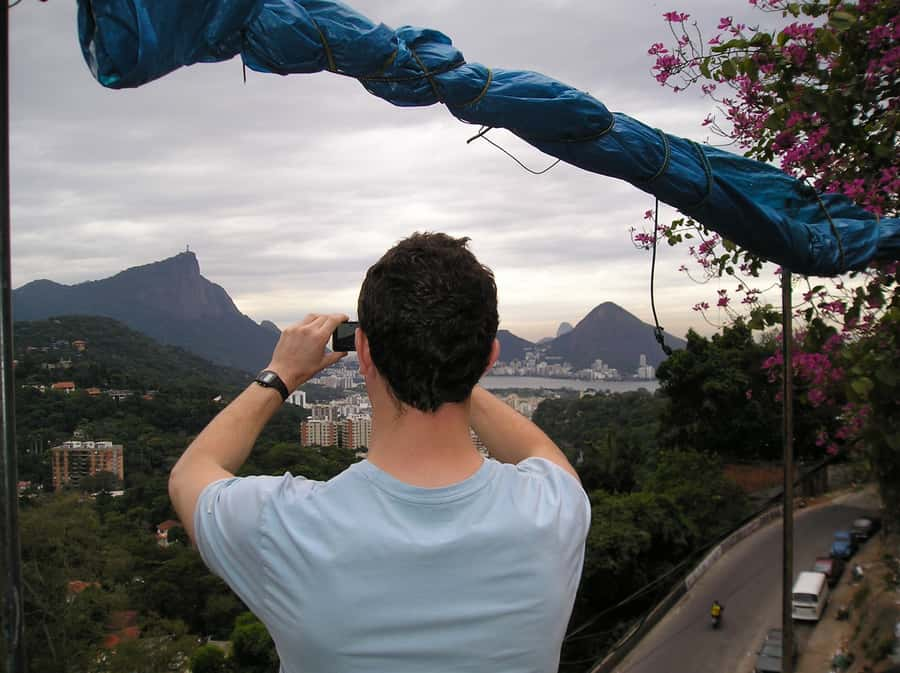
Yes, if you want a guided and socially aware introduction to Rocinha and Vila Canoas. The combination of local projects, school support, hillside views, and clear explanations gives the tour more substance than a quick drive past a favela.
Book with two checks in mind: confirm your language and confirm that the planned route includes both Rocinha and Vila Canoas. If those details are settled, $33 buys a useful three-hour window into a side of Rio that is easy to misunderstand from afar.
FAQ
How long is the Favela Tour?
The tour lasts three hours, including transportation, guided walking, scenic views, and visits to Rocinha and Vila Canoas.
Which favelas does the tour visit?
The planned route visits Rocinha, described as the largest favela in Brazil, and Vila Canoas.
Where does pickup take place?
Pickup is offered in much of Rio’s South Zone, including Leme, Copacabana, Ipanema, Leblon, and São Conrado. The meeting point is often at a hotel near the beachfront, and you may be asked to go to a specific regular pickup hotel.
Is transportation included?
Yes. Transportation from and back to many hotels in the South Zone is included.
What languages are available?
The tour is offered in English, French, Spanish, Italian, and Portuguese. Languages other than English may depend on wider demand, so confirm your requested language before the tour.
Does the tour include a school visit?
The route includes a community school financed by Favela Tour, along with a handcraft center, a local bar, and other local projects.
Should I bring money?
Yes. Drinks, snacks, and local handcrafts are not included, so bring extra money if you plan to buy refreshments or crafts.
Can I cancel the booking?
You can cancel up to 24 hours in advance for a full refund. You can also reserve now and pay later.
Just added around Rio De Janeiro
- Rio de Janeiro: Zip Lining and Canopy Tree Tour★ 3.3 · 6 reviews
- Vidigal Favela Tour★ 4.4 · 26 reviews
- Hang gliding flight in Rio de Janeiro★ 5.0 · 6 reviews
- Rio de Janeiro: Attend a Vasco da Gama game with local guide★ 4.8 · 9 reviews
- Unforgettable Boat Party★ 5.0 · 3 reviews
- Rio Highlights: Christ, Sugarloaf, and More in a Private Tour★ 5.0 · 36 reviews
- Tijuca Forest Hike – Waterfalls & Caves, Nature & Wild Life!★ 5.0 · 51 reviews
- Tijuca Forest w/ Chinese View,cascatinha Taunay,horto waterfall and parque laje★ 4.5 · 29 reviews
Favela Tours, compared.



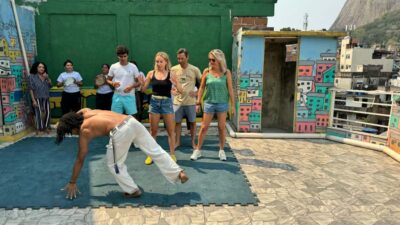
Favela Rocinha Tour with Local Guide & Secret Spots
Read our review →

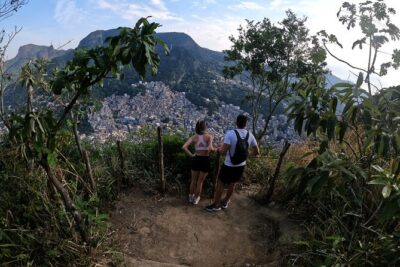
Sunrise at Morro 2 Irmãos – Vidigal – Rio de Janeiro
Read our review →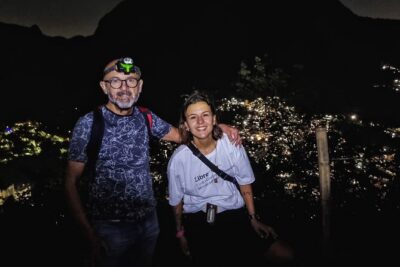
Half Day Hiking Tour Morro Dois Irmaos and Favela Vidigal
Read our review →Browse the lists this tour appears in