
Reviewed · HISTORICAL TOURS
São Paulo Highlights: Culture, History, and Vibrance by Bike
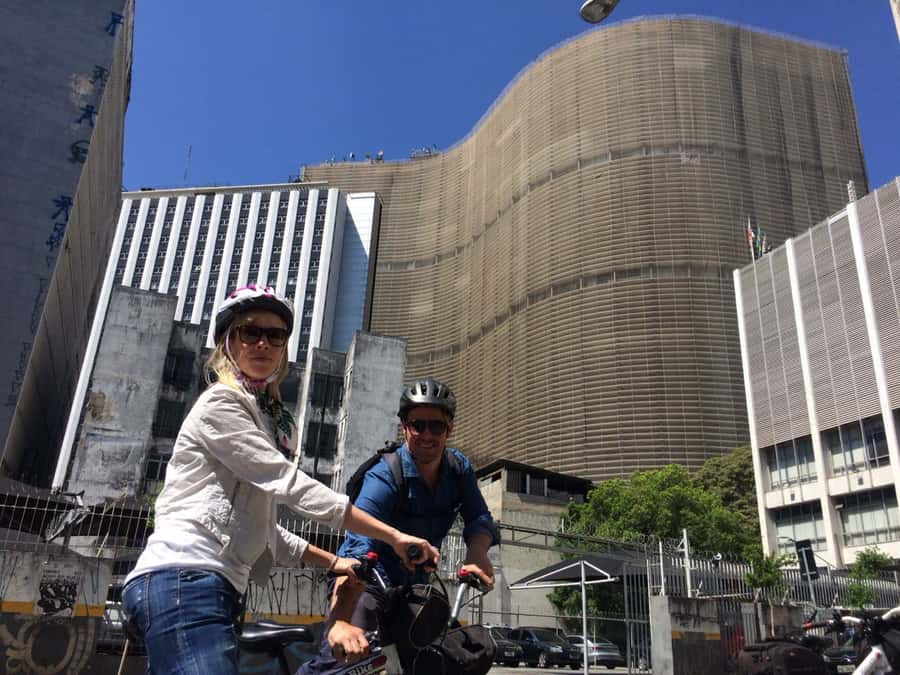
São Paulo makes the most sense from a bike seat. In 210 minutes, you move from the polished towers of Avenida Paulista to old downtown squares, Jesuit-era landmarks, Japanese-Brazilian culture, and possibly the museums around Luz. I like the route’s sharp change of scenery, and I like having a private guide who can explain the politics, architecture, and local life instead of simply pointing at buildings. The main consideration is that this is a long urban ride, not a slow museum tour, and hotel pickup is not included.
I also like the practical touches: a helmet, water, raincoat, bike lights when needed, and time for photos. Guides have included Lucas, Renato, and Pedro, with especially strong English reported for Lucas and Renato. If rain, traffic, or evening darkness affects the pace, you may see fewer stops than planned, so treat the route as a flexible city overview rather than a fixed checklist.
Key points to know before you pedal
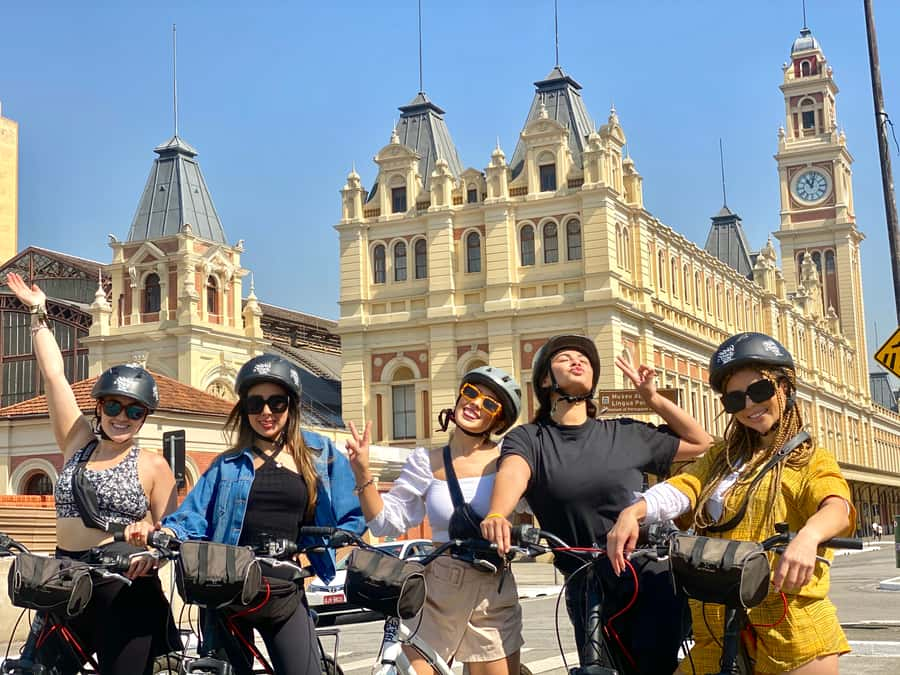
- A private 210-minute route: You ride with your own group and a licensed guide, making it easier to ask questions or adjust the pace.
- Paulista Avenue with real cultural stops: Casa das Rosas, MASP, Parque Trianon, and Conjunto Nacional show several sides of São Paulo’s best-known avenue.
- Downtown is part of the main story: Praça Roosevelt, Parque Augusta, Republic Square, Theatro Municipal, and Vale do Anhangabaú fill out the city’s historic center.
- Liberdade adds a different cultural layer: São Paulo’s Japanese district closes the route with food, signs, and a long multicultural story.
- Good support for changing weather: The booking includes a helmet, water, raincoat, bike, and souvenir, with bike lights available when needed.
- The Luz extension may appeal to art lovers: The route can continue toward Luz Station, its park, and Pinacoteca, depending on the plan for your ride.
Why a bicycle works so well in São Paulo
São Paulo is too large to understand from one neighborhood or one lookout. Its identity changes block by block, and this route links those changes in a useful order. You begin near Vila Mariana, climb toward Avenida Paulista, roll down through central districts, then return through Liberdade and Centro Cultural São Paulo.
That movement gives you context. Modern towers make more sense after you have seen the mansions and cultural buildings that came before them. Downtown’s public squares feel less random once your guide explains the old center and the founding of the city. Liberdade then shows how São Paulo’s story continued through migration and cultural exchange.
A private format matters here. You are not trying to keep up with a large group, and you can ask why a building matters, where to find a good viewpoint, or what to visit later. Lucas has guided in excellent English, while Renato has also provided clear English explanations. Pedro is another named guide associated with the experience. Guide assignments can change, but Portuguese, English, and Spanish are available.
At $120 per person, the price is not a bargain-priced bike rental. You are paying for a 3.5-hour private experience, a bilingual guide, equipment, water, weather protection, and a planned route through several major districts. For a couple or small group that wants a city orientation on the first day, the cost can be sensible. For someone mainly seeking independent exercise, renting a bike would likely be cheaper, though it would not include the interpretation or route planning.
More Historical Tours in São Paulo
- São Paulo: Downtown Historical Bike Tour
★ 4.9 · 191 reviews - Sao Paulo: Downtown-Center History Walking Tour – in English
★ 5.0 · 91 reviews - Gastronomic Tour São Paulo – Culture & History Through The Art Of Food – Private
★ 5.0 · 50 reviews
Starting at França Pinto Bike Lane in Vila Mariana
The meeting point is Portinha 183, at Rua França Pinto, 183, in Vila Mariana. Ana Rosa metro station, served by Line 1, is about 600 meters away, or roughly an eight-minute walk. Plan to arrive 15 minutes before departure so you can meet the guide, receive your bicycle and helmet, and get ready without rushing.
This starting point puts you away from the most crowded central streets. From here, the ride heads toward Avenida Paulista, giving the tour a clear progression from a local neighborhood to São Paulo’s grand cultural corridor.
You receive a bicycle, helmet, and bottle of water. A raincoat is included, which is more than a small comfort in a city where weather can change your plans quickly. One evening ride also included lights on the bikes, and a raincoat was provided when rain was expected. Those details make the outing easier to manage, especially if your ride begins late in the day.
The tour does not include hotel pickup or drop-off. You need to make your own way to Vila Mariana and return from the final stop near the Catedral Metropolitana Ortodoxa. Since the meeting point is close to the metro, arriving by public transportation is straightforward based on the stated walking distance.
Avenida Paulista, from mansion gardens to MASP
Avenida Paulista is the tour’s first major chapter. It is often treated as São Paulo’s cultural heart, but its appeal comes from contrast: glass towers and busy sidewalks sit beside older buildings and formal gardens. Seeing it by bike lets you cover more ground than a walking tour while still stopping for the important sights.
Casa das Rosas is an early highlight. This preserved mansion, surrounded by gardens, offers a glimpse of the avenue before it became lined with tall commercial buildings. I like this stop because it gives the ride a human scale. It is easier to understand how much the city changed when you can compare one elegant old residence with the modern skyline nearby.
Then comes MASP, the Museu de Arte de São Paulo. Its bold architecture is one of the city’s best-known visual markers, and the museum’s art collection gives the stop weight beyond the building itself. The tour does not state that admission is included, so you should think of this as an exterior stop unless your guide confirms a museum visit as part of your plan.
Parque Trianon provides a green pause in the middle of the avenue. You are still in one of Brazil’s busiest urban areas, but the park offers a change in pace. Do not expect a long rest period, since the tour covers a substantial route, but it is a useful moment to catch your breath and look back at Paulista’s mix of trees, towers, and cultural buildings.
The ride continues to Conjunto Nacional, a major building used for cultural and community events. This stop reinforces the idea that Paulista is more than offices and shopping. It is also a public stage for exhibitions, gatherings, and everyday city life.
Rolling downhill through central São Paulo
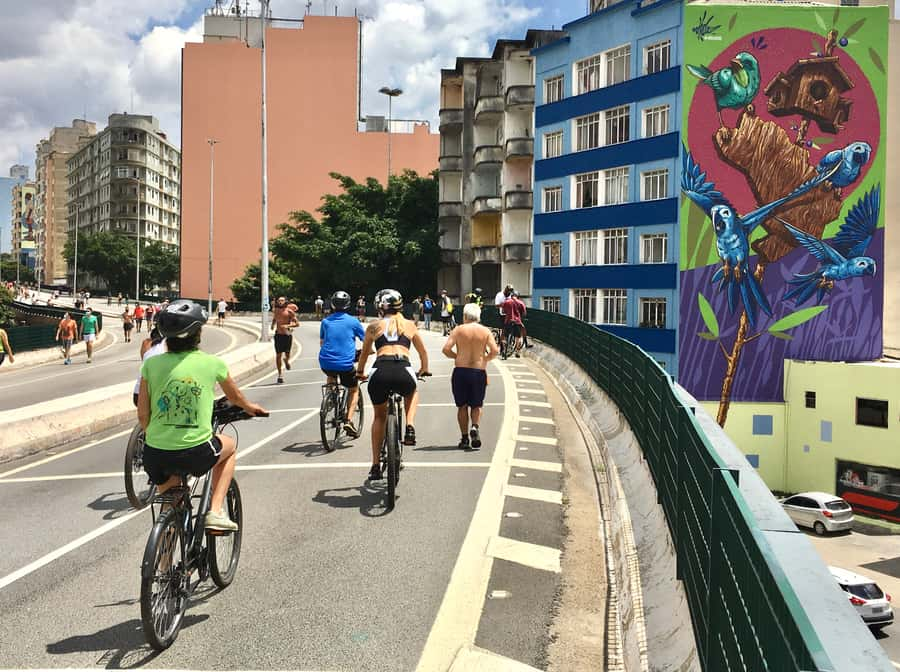
From Conjunto Nacional, the route descends by the Consolação Bike Lane toward downtown. That change in elevation helps mark a change in mood. The polished avenue gives way to older buildings, open public spaces, and the visual clutter that comes with a large historic center.
Praça Roosevelt and Parque Augusta add two different public-space stories. Praça Roosevelt is an urban square with a strong cultural role, while Parque Augusta offers another pocket of greenery amid the city. The precise time at each stop can vary, so I would treat them as orientation points rather than assuming long visits.
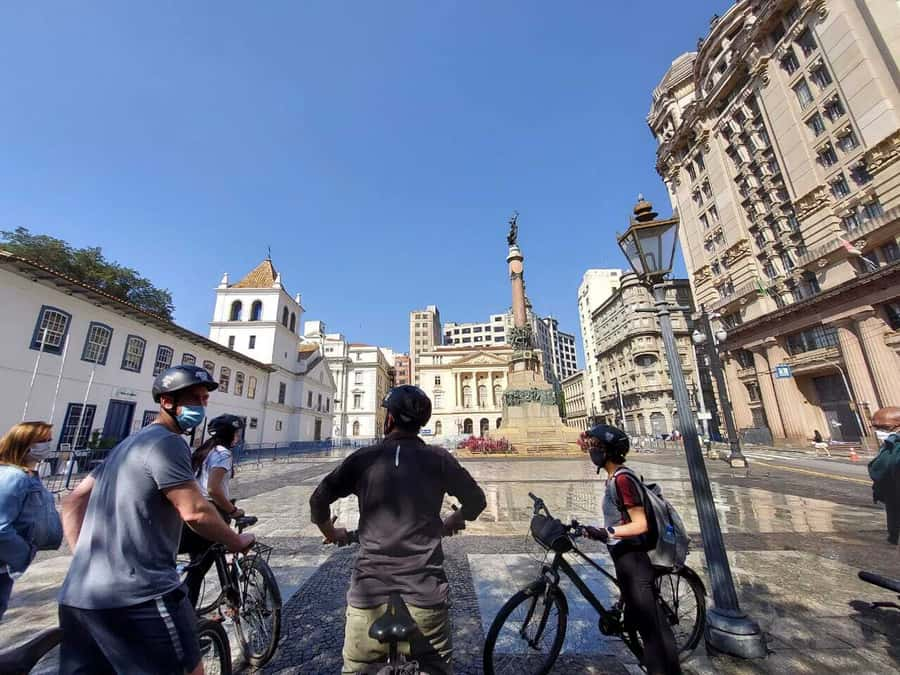
Republic Square brings you closer to the grander civic center. It is a useful place to see how São Paulo combines public gathering spaces with older architecture and the constant movement of a major downtown. Your guide’s explanation matters here because the city’s buildings can otherwise blur together during a fast ride.
Theatro Municipal is one of the route’s major architectural moments. Its formal design and cultural importance make it a natural pause before the tour continues through Vale do Anhangabaú. This broad central area helps you see the scale of São Paulo’s urban planning and the way roads, squares, and major buildings meet in the center.
I would particularly value this section if you are new to São Paulo. Lucas has explained local politics and architecture along with basic history, which is exactly the kind of context that turns a sightseeing ride into a useful introduction. You can also ask for suggestions for places to visit after the tour.
More bike days around Sao Paulo:
- Street Art and Park Bike Tour
★ 5.0 · 56 reviews - Sao Paulo: The Coolest Urban Scenes Bike Tour
★ 5.0 · 22 reviews - São Paulo: Street Art Bike Tour
★ 5.0 · 19 reviews - Rio de Janeiro: Guided Bike Tours in Small Groups
★ 4.5 · 133 reviews
The Historic Triangle and São Paulo’s beginnings
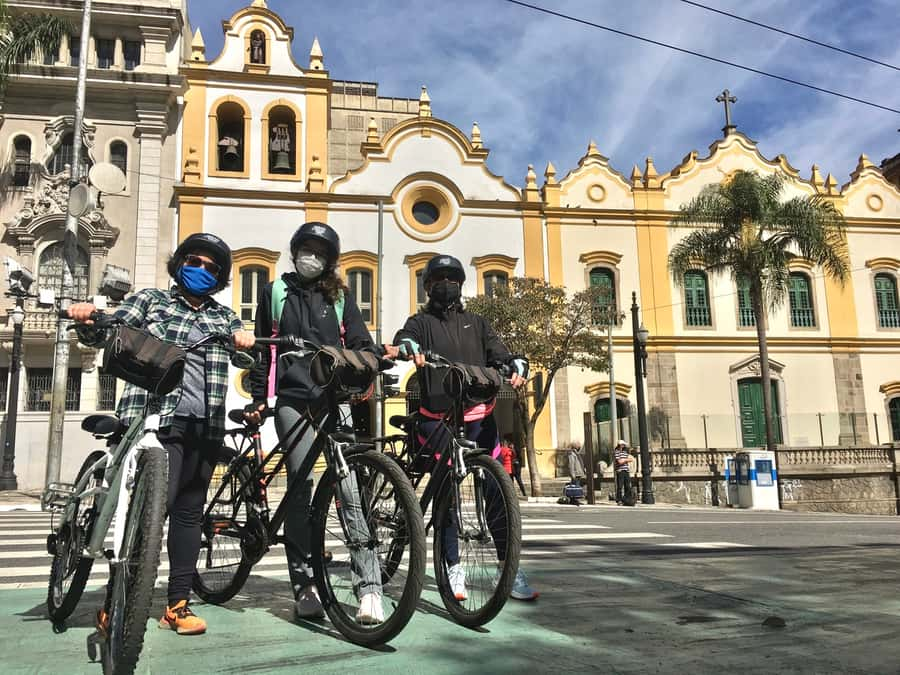
The ride enters the Historic Triangle, the area connected with São Paulo’s founding by Jesuit missionaries. This is where the tour shifts from seeing impressive buildings to understanding the city’s beginnings.
The historic center is not presented as a single preserved old town. São Paulo grew from a small settlement into a huge metropolis, and the area shows layers of that change. Your guide can connect monuments and buildings to the city’s development, helping you see why this part of downtown matters even when individual façades are unfamiliar.
This is also where a private tour earns its keep. You can stop to ask how the center changed, why a certain building is important, or how the city’s early foundation relates to its modern size. The route gives you the framework, while your questions can determine how much detail you receive.
Do keep expectations realistic. Three and a half hours is enough for a strong overview, not enough to enter every landmark or spend long periods inside museums. If you want detailed interiors, plan a separate day for downtown or return to the places that catch your attention.
The optional ride toward Luz and Pinacoteca
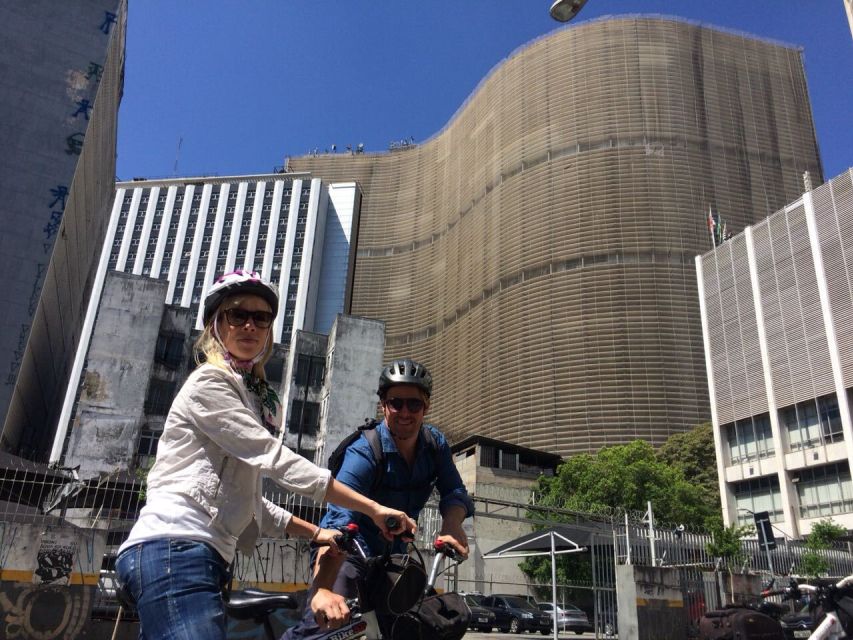
For those interested in extending the outing, the route can continue toward Luz Station, the neighboring park, and Pinacoteca. This is an appealing addition if art, railway architecture, and central São Paulo are high on your list.
Luz Station brings another grand civic building into the ride. Pinacoteca is a major art institution, so this extension gives the tour extra value for anyone who wants more than street views. Still, the supplied plan describes this as an option, not a guaranteed museum visit with included admission. Confirm the exact route, timing, and entry arrangements with the guide before setting your expectations.
The extension may also make the ride feel more demanding. You are already covering Paulista, downtown, the Historic Triangle, Liberdade, and Centro Cultural São Paulo within the main experience. If you prefer a shorter, more relaxed outing, the core route may be enough.
Liberdade, where the city’s cultures meet
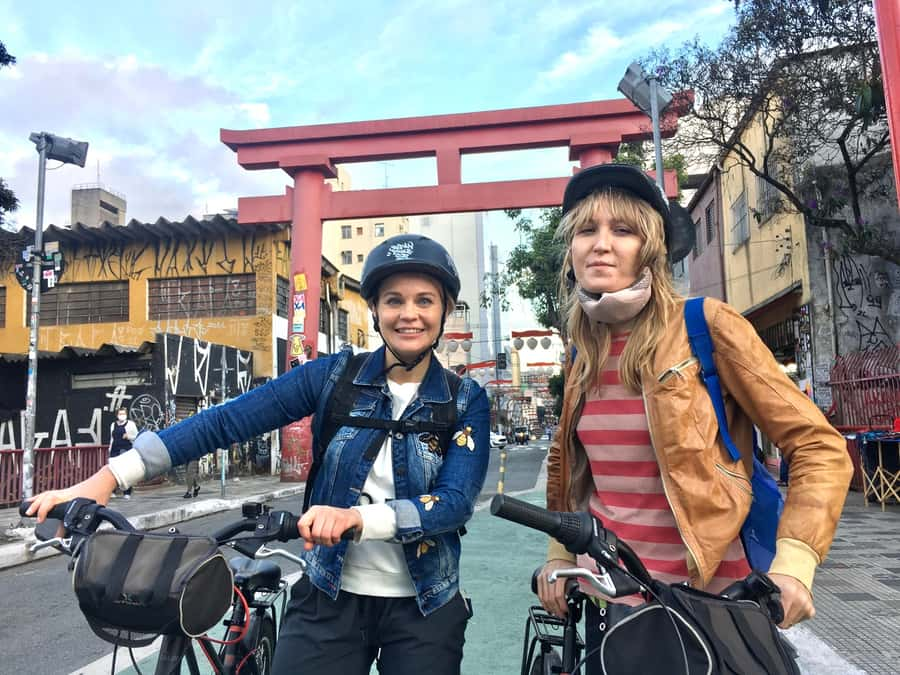
On the return, the ride passes through Liberdade, São Paulo’s famous Japanese district. This is one of the route’s most distinctive stops because it adds a cultural story that is different from the city’s colonial beginnings or grand civic architecture.
Liberdade is known for its Japanese identity and multicultural past. The streets, signs, and atmosphere provide a strong visual change after the old center. Your guide can help connect the district to São Paulo’s wider history of migration and cultural mixing without reducing the neighborhood to a quick photo stop.
I would save a little energy for this part of the route. It is easy to rush through Liberdade while chasing the next landmark, but the district rewards a slower look. If your schedule allows, ask the guide which places deserve a return visit after the ride. The tour includes some food tasting according to the experience details, though the exact items are not specified, so do not book it expecting a full meal.
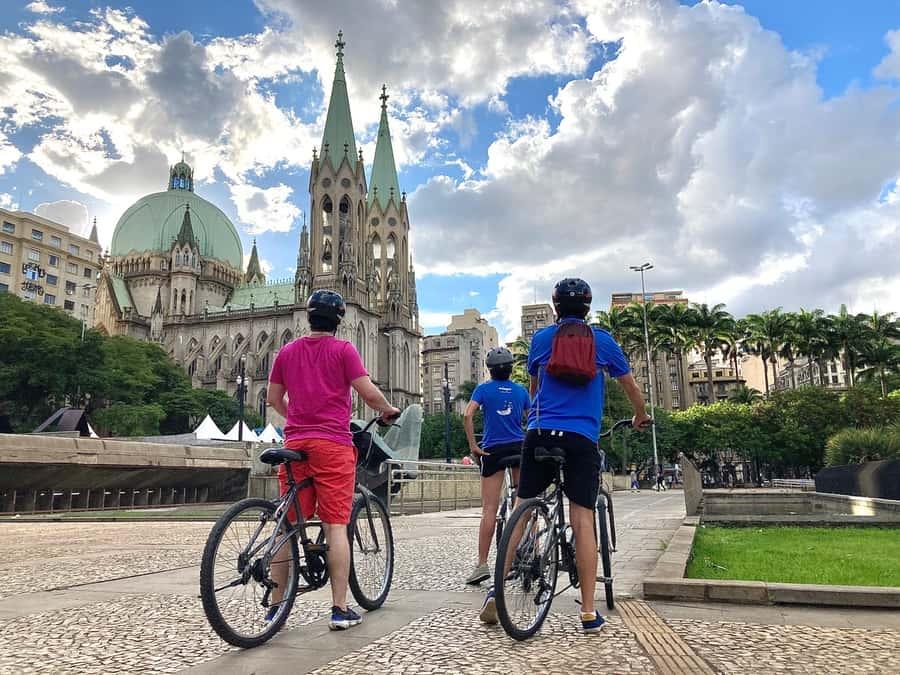
The route also includes Centro Cultural São Paulo before ending at the Catedral Metropolitana Ortodoxa. Those final stops keep the focus on culture rather than turning the ride into a simple return trip. The cathedral provides a visually distinctive finish to a day built around São Paulo’s varied communities and architectural styles.
Guides, pace, weather, and practical comfort
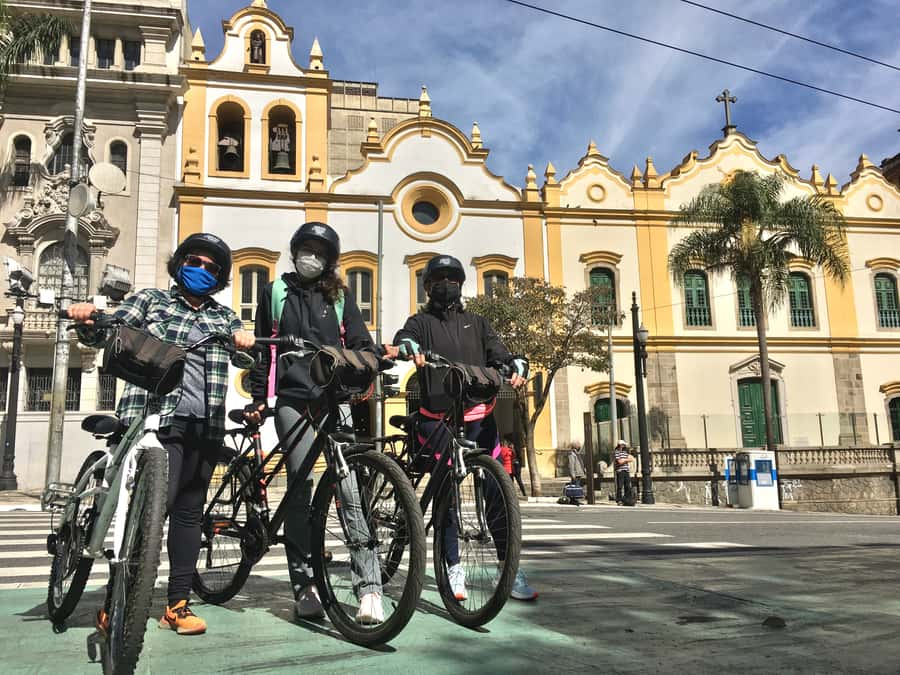
The strongest feature of this experience is the guide-led interpretation. Lucas has offered clear English and useful information about history, architecture, and politics. Renato has also guided in clear English and helped riders feel safe, took photos, and provided a raincoat when rain was forecast. Pedro is described as helpful and attentive.
Those details matter because a bike tour depends on more than the route. You need someone who can explain a complicated city in plain terms, keep the outing moving, and notice practical needs such as water, rain, or photos. The private format should make it easier to speak up if you need a pause or want more time at a particular area.
The ride can take place after sunset, since one reported outing saw illuminated streets and buildings. That can give downtown a handsome new look, but darkness may also limit how much architectural detail you can see. Weather can have a similar effect. A raincoat is supplied, but rain can still alter the pace and the number of stops.
Because the tour covers several districts, you should be comfortable spending a substantial part of the experience on a bicycle. It suits people who want an active introduction to São Paulo and who are happy to see many places from outside. It is less suitable if you want a slow indoor museum day or a tightly fixed schedule with long visits at each landmark.
Is the $120 price fair?
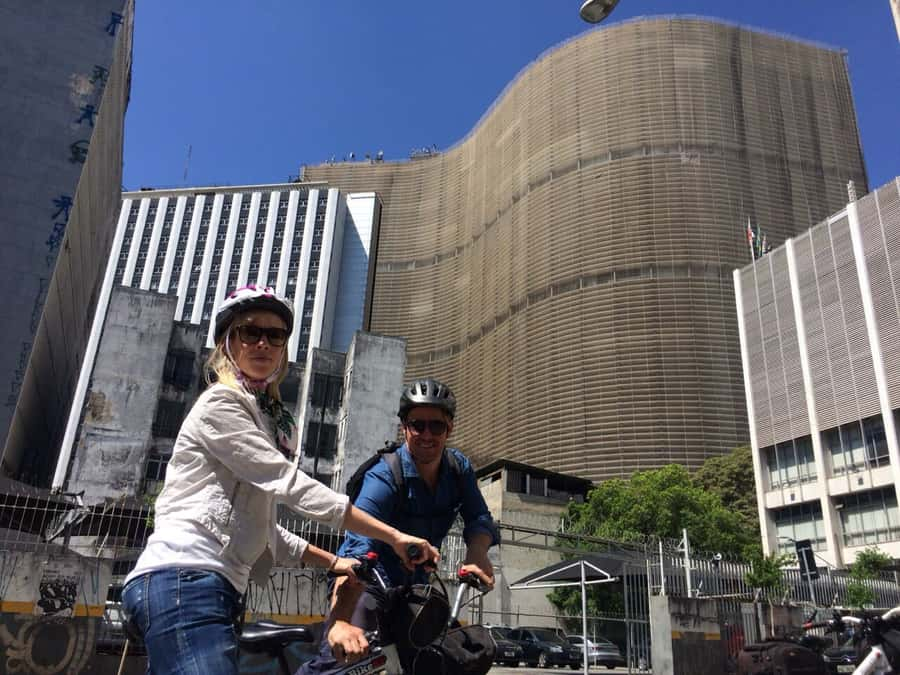
For a private group, $120 per person is easiest to justify when you value orientation and conversation. The price includes the bicycle, helmet, water, raincoat, licensed bilingual guide, and souvenir. It also packages together Paulista, downtown, the Historic Triangle, Liberdade, and possibly the Luz area, which would take planning and confidence to connect independently.
The main value is not the equipment. A bike, helmet, and bottle of water are useful, but they do not explain São Paulo. The guide’s ability to link architecture, politics, local culture, and city growth is what makes the cost more reasonable.
I would book it early in a São Paulo visit if you want ideas for the rest of your stay. The tour can point you toward museums, neighborhoods, and buildings worth revisiting. If you have only a short time in the city, it gives you broad coverage quickly, though you will need to accept that some sights receive only a brief stop.
Free cancellation is available up to 24 hours before departure, and you can reserve while paying later. Those terms help if your schedule is still moving, but the key practical point remains simple: get yourself to Portinha 183 in Vila Mariana, since hotel transport is not part of the price.
Who should book this São Paulo bike tour?
You should consider it if you want:
- A private introduction to São Paulo with a guide in Portuguese, English, or Spanish
- A mix of architecture, public spaces, art, and neighborhood culture
- A route that covers more ground than a walking tour
- Local explanations about history, politics, and city growth
- The flexibility to ask questions and request photo stops
- A first-day activity that helps you plan the rest of your visit
You may want something else if your priority is spending a long time inside MASP or Pinacoteca, since the listed experience centers on cycling and exterior sightseeing. It may also be a poor fit if you want hotel pickup, since you must reach the Vila Mariana meeting point yourself.
FAQ
Where does the bike tour begin?
The meeting point is Portinha 183 at Rua França Pinto, 183, in Vila Mariana, São Paulo. Ana Rosa Station on Line 1, the Blue Line, is about 600 meters away, or an eight-minute walk.
How long does the experience last?
The tour lasts 210 minutes, or three and a half hours. Starting times depend on availability.
Which languages are available?
The live guide service is available in Portuguese, English, and Spanish.
Is this a private tour?
Yes. The experience is offered for a private group.
What is included in the price?
The package includes bicycle use, a helmet, bottled water, a raincoat, a professional licensed bilingual guide, and a souvenir. Hotel pickup and drop-off are not included.
Can I cancel the booking?
You can cancel up to 24 hours before the activity for a full refund. You can also reserve now and pay later.
Should you book it?
I would book this tour if you want São Paulo to make sense quickly, especially at the start of your stay. The route gives you modern Paulista, historic downtown, the city’s founding area, Liberdade, and a possible Luz extension in one well-planned ride.
The best reason to choose it is the private guide format. With guides such as Lucas, Renato, or Pedro, you get more than a list of landmarks. You get a moving explanation of how São Paulo became the huge, culturally varied city you are seeing. Just arrive at the Vila Mariana meeting point, allow for a full three and a half hours on the bike, and keep your schedule flexible enough for weather and changing stop times.
Just added around Sao Paulo
- REIKI – Crystal Therapy – by Venus’ Secret Spa – San Francisco★ 5.0 · 41 reviews
- Art Of Wine – Travel Through The So-Called Wine Route Visiting Various Wineries★ 5.0 · 40 reviews
- Private Half-Day Guided Tour to São Paulo★ 5.0 · 50 reviews
- Terraço Italia Restaurant experience★ 4.5 · 43 reviews
- Private Tour: São Paulo’s Top Attractions–6 Hours, Hotel/Airport★ 5.0 · 50 reviews
- Full Day Private Beach Tour Santos & Guarujá – Combine Culture, History & Beach★ 5.0 · 37 reviews
- Private Street Art Tour of São Paulo with Batman´s Alley Visit★ 5.0 · 30 reviews
- Downtown Photo Tour★ 5.0 · 45 reviews
Historical Tours, compared.
Scenic Train ride to historical cities of Morretes and Antonina
Read our review →
Explore Little Africa : Unveiling Afro Heritage in Rio de Janeiro
Read our review →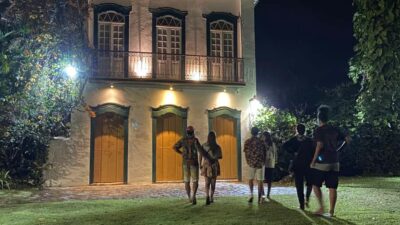
Downtown-Center History Walking Tour – in English
Read our review →Browse the lists this tour appears in