
Reviewed · SALVADOR TOURS
Salvador de Bahia African Culture Tour
Salvador’s African heritage is not tucked away in a museum. It is present in the music, dance, faith, food, and public life of the old center. This walking tour connects those threads at Terreiro de Jesus, the Cross of São Francisco, and Escola do Olodum, making it a useful introduction to the city’s Afro-Brazilian identity.
I like the private-group format, since guides such as Sayuri, Adilson, Eduardo, and Aldison have been able to shape the walk around questions and interests. I also like the serious treatment of slavery, liberation, capoeira, samba, and Carnival. The main caution is value: one two-hour experience was reported despite the advertised three-hour length, so confirm the schedule and price before booking.
Key points to know
- Meet at 2 pm by Salvador Cathedral: The tour begins in the historic center, at the Cathedral Basilica of San Salvador.
- Follow Salvador’s African story on foot: The route links colonial power, Black resistance, music, dance, education, and Carnival.
- Expect a private group: You can ask questions and request more attention to topics that matter to you.
- Visit Escola do Olodum: The cultural and educational center provides context for Olodum and Carnival in Salvador.
- Guides speak three languages: English, Portuguese, and Spanish are available.
- Check the final timing: The advertised duration is three hours, but one report described an ending after two hours.
Why this Salvador walking tour matters
Salvador is one of the best places in Brazil to understand how African culture shaped a city, not just a performance. That story includes creativity and celebration, but also forced labor, colonial rule, prejudice, and long struggles for freedom. A useful tour needs to hold all of those subjects together.
This experience does that through a compact walk in the historic center. You are not simply shown attractive squares and old churches. You are asked to read the city through the people who built it, resisted its systems, protected their communities, and created traditions that remain central to Salvador today.
The route is especially useful early in your stay. It gives you a base for understanding later encounters with Bahian food, music, Carnival groups, capoeira, and religious practices. You may also find it more meaningful than a general city walk if your main interest is the African and Afro-Brazilian experience.
The format is private, with guides available in English, Portuguese, or Spanish. That matters here because the subjects can be complex. You can stop to ask what a term means, request more detail on slavery or Carnival, or shift the focus toward music, religion, architecture, or Black political history.
A few more Salvador days to weigh up
- From Salvador: Schooner Tour to Frades Islands and Itaparica
★ 3.9 · 98 reviews - Afro-Brazilian Roots Private City Tour in Salvador
★ 4.7 · 88 reviews - Salvador Historic Walking Tour – Pelourinho
★ 4.8 · 62 reviews
Meeting at Salvador Cathedral and entering Terreiro de Jesus
The tour begins at 2 pm in front of the Cathedral Basilica of San Salvador. The meeting point is at approximately -12.9728546, -38.5097046, in the center of Salvador’s historic district.
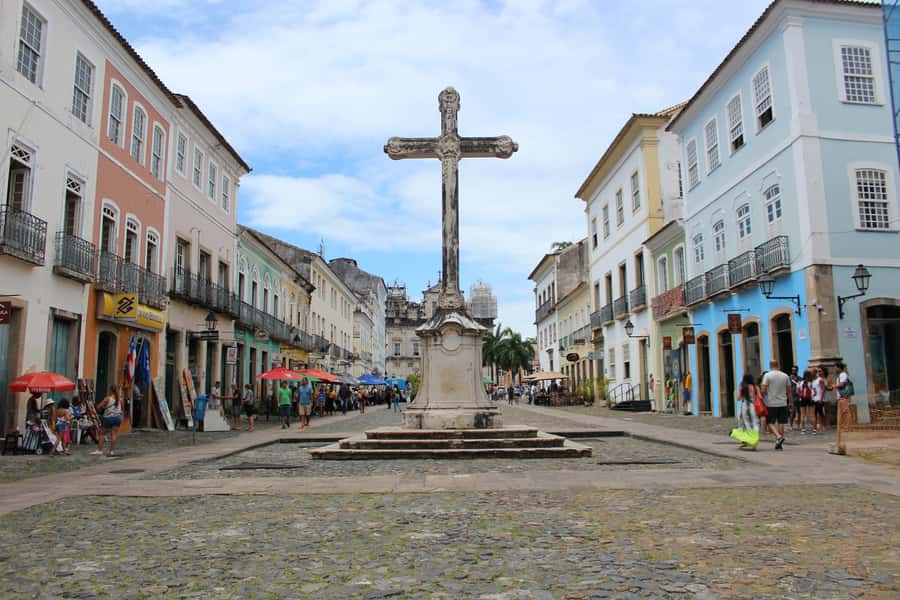
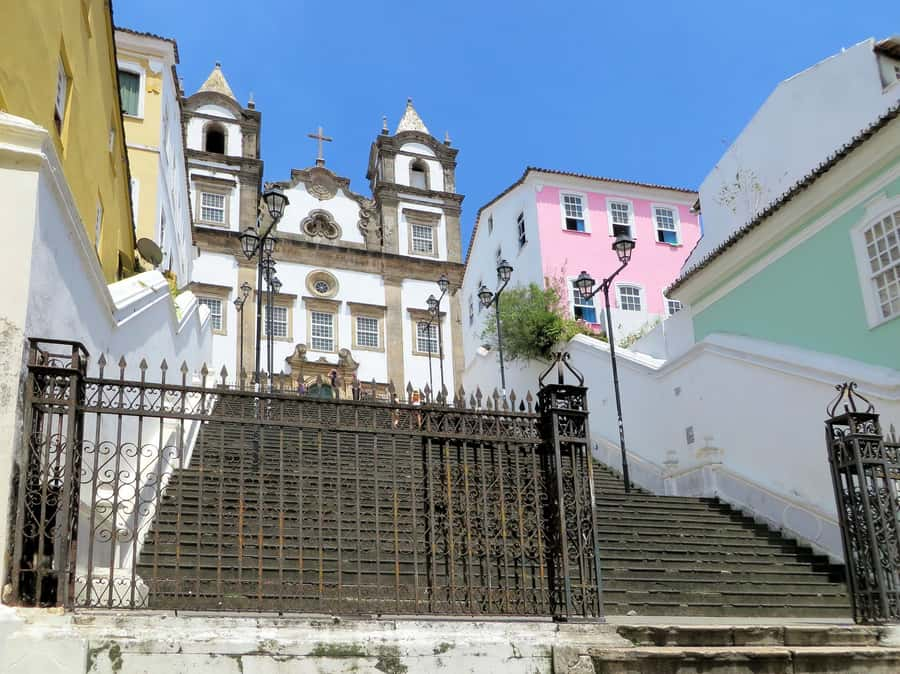
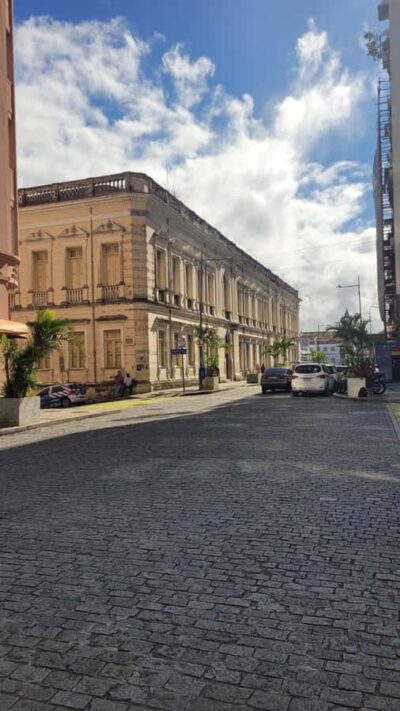
From there, you walk to Terreiro de Jesus. This square is a strong starting point because it brings several layers of Salvador together: Portuguese colonization, Jesuit missions, Catholic power, and the city’s changing social life. Your guide explains how the area developed and how the actions of the Jesuits fit into the wider colonial project.
This is where the tour moves beyond a simple church-and-square explanation. The story of Salvador is not only about buildings left by Portugal. It is also about the African people whose labor, beliefs, skills, and communities shaped the city under an unequal system.
The guide may also introduce African celebrities and important figures connected with Salvador. The available description does not name those figures in advance, so you should ask for names and details if this part interests you. A private walk gives you room to do that rather than simply following a fixed speech.
Terreiro de Jesus is also a good place to notice how public spaces can carry conflicting meanings. A square may look grand and orderly today, but its history includes the power structures of colonization and the lives of people who had little control over those structures. That contrast is one of the most useful lessons of the tour.
The Cross of São Francisco and Black community life
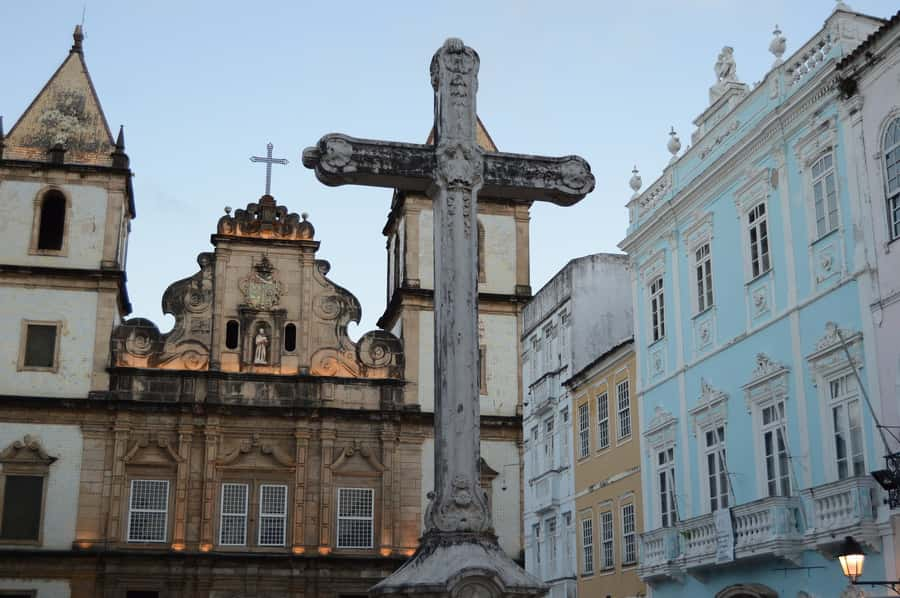
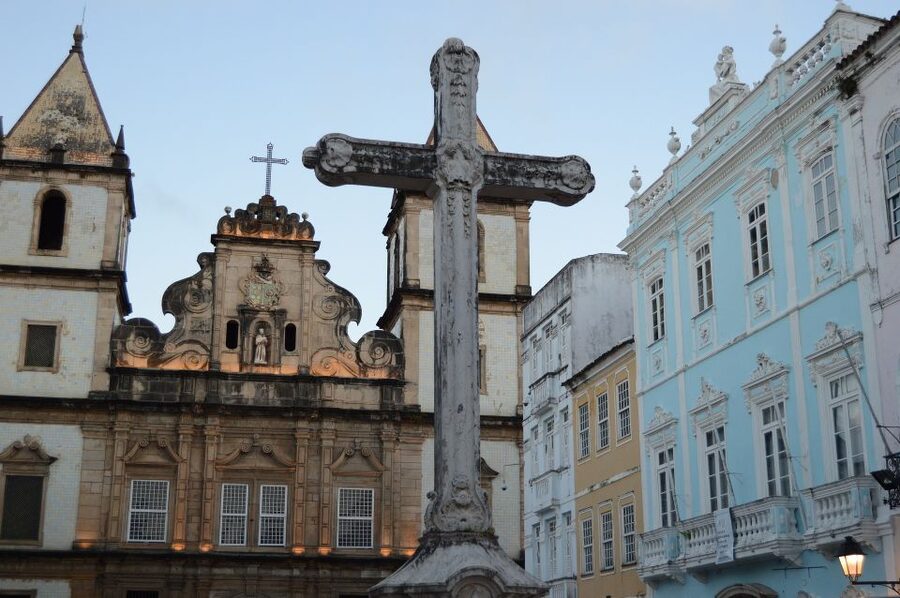
The walk continues through the center to the Cross of São Francisco. Here the discussion turns toward a 19th-century men’s organization created to help Salvador’s Black community in its struggle for liberation.
This section gives the tour a needed focus on organized action. African heritage in Salvador is not only a matter of inherited customs or festive music. It also includes mutual aid, community protection, and determined efforts to improve the lives of Black residents.
Ask your guide to explain how this organization worked and what liberation meant in its time. The supplied information does not provide the organization’s name or a detailed account of its work, so the quality of this stop depends heavily on the guide’s explanation. That is not necessarily a weakness. It means you should use the opportunity to ask questions rather than treating the stop as a quick photo break.
The Cross of São Francisco is also where the tour introduces samba and capoeira. These are not presented as decorative entertainment. They are part of a larger story about African influence, expression, identity, and survival in Brazil.
You may hear about the rhythm and movement behind these traditions, and the guide may demonstrate or explain how they connect to Salvador’s public culture. The information provided does not promise a live capoeira or samba performance, so book this as a cultural explanation rather than a show.
That distinction helps set the right expectation. If you want a dedicated evening of capoeira, drumming, or samba, a separate performance-focused activity may suit you better. If you want to understand why these forms matter while walking through the historic center, this stop fits well.
Escola do Olodum and the meaning of Carnival
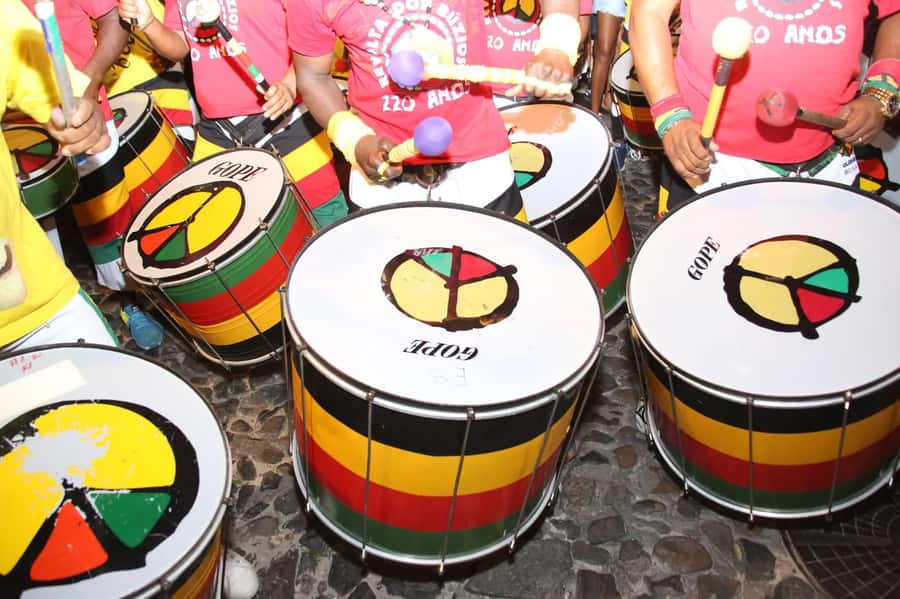
The final major stop is Escola do Olodum, a cultural and educational center connected with Afro-Brazilian culture. The visit focuses on the importance of Carnival in Salvador.
Olodum is a natural subject for this tour because Salvador’s Carnival is not simply a parade for visitors. It is a major expression of music, Black identity, neighborhood life, and public space. At Escola do Olodum, you can connect the rhythms discussed earlier with an institution that teaches and promotes cultural work.
The word escola means school, and the description identifies this as a cultural and educational center. That makes the stop different from a quick look at a band or a Carnival costume. Your guide explains why Carnival matters to the city and how Afro-Brazilian culture has shaped the event.
One useful feature is the chance to connect history with something living. At Terreiro de Jesus, you hear about colonization and the Jesuit missions. At the Cross of São Francisco, you learn about Black community action, samba, and capoeira. At Escola do Olodum, those strands lead into modern cultural expression.
The route ends at the Cross of São Francisco after about three hours. That ending is worth noting because the itinerary includes both the Cross and Escola do Olodum, then returns to the Cross as the final point. You should not expect transportation back to the cathedral or your hotel.
Same city, a completely different kind of day:
- Salvador: Praia Do Forte and Guarajuba Beach Day Trip
★ 4.1 · 56 reviews - Salvador: Cultural Treasure – Samba de Roda.
★ 4.9 · 51 reviews - Salvador: Walking Tour Through Pelourinho
★ 5.0 · 49 reviews - Salvador: 4-Hour Candomblé Mysteries Tour
★ 4.3 · 34 reviews
What the guides add to the experience
The guides are central to the quality of this activity. Names connected with highly praised outings include Eduardo, Sayuri, Adilson, Aldison, Nilza, Facundo, and Carlos. The guide assigned to your booking may be different, so treat these names as examples rather than a guarantee.
Eduardo has been praised for explaining both local and Brazilian history in depth. Sayuri has been described as patient and attentive, beginning by asking what the group wanted to learn. She also gave practical advice about Carnival beyond the walking tour and remained in contact before and after the activity.
Adilson has been singled out for making the walk friendly and interactive. Aldison was described as making the city feel like it was being explored with a friend. Those details point to the main benefit of a private group: the guide can respond to your questions rather than moving at the pace of a large crowd.
Some groups have also visited museums during the walk, though the basic description specifically names Terreiro de Jesus, the Cross of São Francisco, and Escola do Olodum. Ask your guide at the start if museum visits are planned, especially if you want to know how much time will be spent indoors.
A good question to ask early is this: how much of the tour will focus on history, and how much on present-day culture? Another is whether the guide can explain the relationship between African traditions, Catholicism, Carnival, samba, capoeira, and other religious practices. The answer will help you shape the walk around your interests.
Time, walking, and the value question
Three hours is a sensible length for this route. It gives you enough time to discuss each stop without turning the outing into an exhausting full-day history lesson. The tour is on foot, so you should be ready to move between sites in the historic center and remain engaged with the guide rather than simply riding from one landmark to another.
The price deserves a careful look. No cost is provided here, and it changes by date, group size, and booking conditions. Since this is a private walking tour, you are paying mainly for the guide’s time, language ability, preparation, and flexibility, not for transport or a package of paid attractions.
That can be good value for a couple, family, or small group that wants a tailored explanation. It is less convincing if you mainly want to see free public spaces without much discussion. One French-language booking described the tour as too expensive for a walk that used free museums, and also reported an ending after two hours. That is the clearest warning in the available feedback.
Before paying, compare the advertised price with the number of people in your group and ask what is included. Confirm that the experience will last the full three hours. If the final price is high, you should expect a focused private conversation, time for questions, and a guide who adjusts the route to your interests.
Free cancellation up to 24 hours before the start and a reserve-now, pay-later option make the booking less rigid. These policies are useful if your Salvador plans may change, but they do not solve the basic value question. The guide and the amount of time you receive are what make the difference.
The Afro-Brazilian Mass question
The highlight list includes an Afro-Brazilian Mass, but the detailed route describes Terreiro de Jesus, the Cross of São Francisco, Escola do Olodum, samba, capoeira, and Carnival. It does not clearly state that you attend a Mass during the three-hour walk.
Do not assume that a church service is included. Ask before booking if this is an essential part of your plan, and confirm the date, time, location, and whether participation is appropriate. The available information supports discussion of African heritage and Catholic colonial history, but it does not confirm a scheduled religious service.
That clarification is important because a Mass is very different from learning about religious history at a church or square. If you are specifically seeking a worship service, make sure you receive a direct answer before committing.
Who will get the most from this tour
I would choose this walk if you want a focused introduction to Salvador’s African heritage and prefer conversation over a fixed sightseeing script. It is a good match for first-time visitors who want context for the city’s music, dance, Carnival, and social history.
It also suits repeat visitors who have already seen the main colonial sights and want to understand the people and movements behind them. The private format works well for families, couples, and friends who want to ask sensitive questions at their own pace.
You may want a different experience if your priority is a live performance, a food tour, a long museum visit, or a full city overview. The walk explains samba and capoeira, but it is not advertised as a dedicated show. It focuses on the historic center rather than covering every part of Salvador.
The subject matter can include slavery, prostitution, and the Black Brazilian experience. That is a strength if you want an honest account rather than a polished postcard version of the city. It may feel demanding if you are looking only for light sightseeing.
Practical booking advice
Meet at the Cathedral Basilica of San Salvador at 2 pm and allow time to find the exact spot in front of the building. The tour ends at the Cross of São Francisco, so plan your next activity from there rather than expecting a return transfer.
Select English, Portuguese, or Spanish according to the language available for your date. If you have a strong interest in Carnival, capoeira, Black political history, slavery, or religious traditions, tell the guide at the start. Sayuri’s approach of asking about group interests shows how much better this format can work when you give the guide a clear direction.
Wear practical walking shoes and bring water, since the experience takes place on foot. The supplied details do not specify accessibility conditions, entrance fees, or exact museum stops, so ask the provider if any of those points matter to you.
Should you book the Salvador African Culture Tour?
Book it if you want a short, private, guide-led introduction to the African foundations of Salvador. The route is compact but thoughtful, and the best guides turn the walk into a conversation about colonization, resistance, music, dance, education, and Carnival.
I would be more cautious if the quoted price is high or if you are expecting a full three hours of museum visits, a live performance, or an Afro-Brazilian Mass. Confirm the duration, final stop, included visits, and Mass details first.
For the right price and with a strong guide, this is a useful way to read Salvador with more understanding. It helps you see that the city’s African culture is not a side theme. It is one of the main keys to the place.
FAQ
Where does the Salvador African Culture Tour begin?
It begins at 2 pm in front of the Cathedral Basilica of San Salvador. The meeting point is listed at coordinates -12.972854614257812, -38.50970458984375.
How long does the tour last?
The advertised duration is three hours. One booking was reported to have ended after two hours, so confirm the expected timing before you go.
Which languages are available?
The tour is available with a live guide speaking Spanish, Portuguese, or English.
Is this a private tour?
Yes. The activity is offered for a private group.
Which places are included in the route?
The planned route includes Terreiro de Jesus, the Cross of São Francisco, and Escola do Olodum. The tour ends at the Cross of São Francisco.
Does the tour include an Afro-Brazilian Mass?
An Afro-Brazilian Mass appears among the highlights, but the detailed activity description does not clearly confirm attendance at a Mass. Ask the provider to verify this before booking.
Can I cancel the booking?
You can cancel up to 24 hours in advance for a full refund. A reserve-now, pay-later option is also available.
Just added around Salvador
- Salvador: Schooner Cruise with Pickup and Itaparica Stop★ 3.8 · 5 reviews
- Salvador: Traditional Drumming and Percussion Workshop★ 4.4 · 10 reviews
- Salvador: Cultural Treasure – Samba de Roda.★ 4.9 · 51 reviews
- Salvador by Night: Cultural Show and Dinner.★ 4.4 · 17 reviews
- Salvador: 3-Hour Percussion Class★ 4.9 · 10 reviews
- Salvador: 4-Hour Candomblé Mysteries Tour★ 4.3 · 34 reviews
- Salvador by Night: Cultural Dinner and Show★ 4.7 · 27 reviews
- Salvador: Caipirinha Masterclass with Unlimited Drinks★ 4.2 · 4 reviews
Salvador Tours, compared.


Afro-Brazilian Roots Private City Tour in Salvador
Read our review →
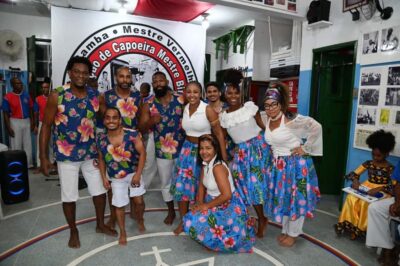
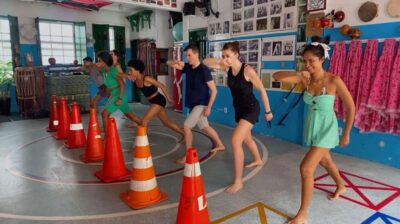
Capoeira Class at Mestre Bimba’s 1st Ever School.
Read our review →Browse the lists this tour appears in