
Reviewed · WORKSHOPS
Salvador: Traditional Drumming and Percussion Workshop
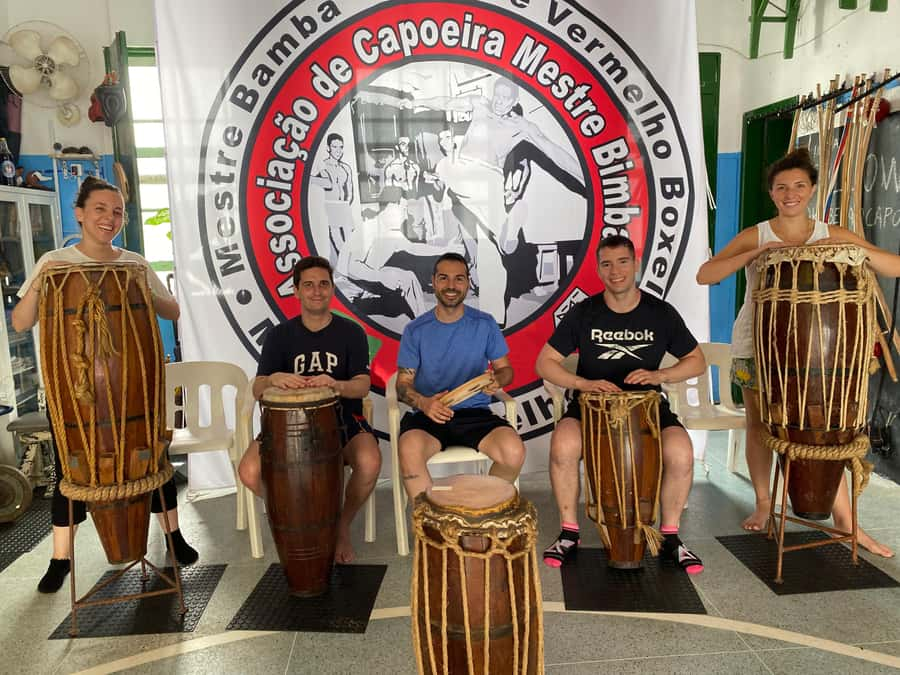
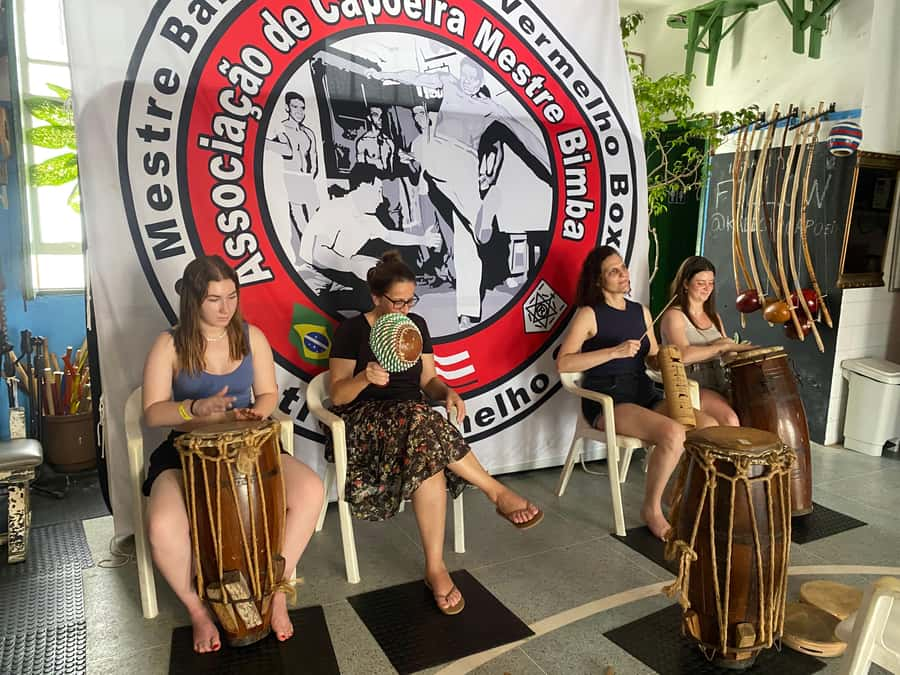
Salvador’s music is not background noise. It is part of the city’s identity, and this one-hour workshop lets you handle the instruments yourself at Mestre Bimba’s first school. You’ll learn Afro-Brazilian rhythms, try different percussion instruments, and hear how Capoeira, Samba, and drumming survived years of suspicion and legal pressure.
I like two things here: the class is small, with no more than 10 people, and the instruction is built for beginners. I also like the setting in Pelourinho, where you can pair the workshop with a walk through Salvador’s historic center. The main caution is language: Portuguese and English are offered, but one recent class did not provide the expected English instruction.
Key points to know
- A meaningful setting: The workshop takes place at Associação de Capoeira Mestre Bimba, described as a Quilombo of resistance and cultural survival.
- Hands-on practice: You learn beats, posture, gestures, and several ways to play percussion instruments.
- Yasmin’s patient teaching: One class included careful instruction in Capoeira percussion instruments and basic drumming.
- One hour is enough: The session gives you a focused introduction without taking over your day.
- Easy for beginners: No musical training or previous performance experience is required.
- Convenient Pelourinho location: Look for Ó Paí Ó Restaurante or São Domingos Gusmão Church in Largo do Terreiro de Jesus.
Inside Mestre Bimba’s first school
The strongest part of this experience is the place itself. You are not simply taking a generic drum lesson in a rented studio. You meet at Associação de Capoeira Mestre Bimba, the first school associated with Mestre Bimba, whose work helped carry Capoeira into a more recognized place in Brazilian culture.
The school is presented as a Quilombo of resistance and resilience. In this context, that idea matters. During the late 19th century, Capoeira, Samba, and drumming could be treated with suspicion and were sometimes criminalized. The class connects the rhythms you play with the Afro-Brazilian communities that protected and passed down these practices.
I value that context because it keeps the lesson from becoming only a fast tourist activity. You are not just tapping out a beat for a photograph. You are learning why these sounds matter in Salvador and how once-persecuted arts became part of Brazil’s national identity.
The setting is in Pelourinho, Salvador’s historic center. Use Largo do Terreiro de Jesus as your reference point. Ó Paí Ó Restaurante and São Domingos Gusmão Church are nearby landmarks that can help you locate the meeting point. There is no hotel pickup, so plan to make your own way there.
A few more Salvador days to weigh up
- Salvador: Capoeira Class at Mestre Bimba’s 1st Ever School.
★ 4.9 · 34 reviews - Salvador: CAPOEIRA CLASS – CULTURAL
★ 4.6 · 13 reviews - Salvador: 3-Hour Percussion Class
★ 4.9 · 10 reviews
Your first rhythms, even with no musical background
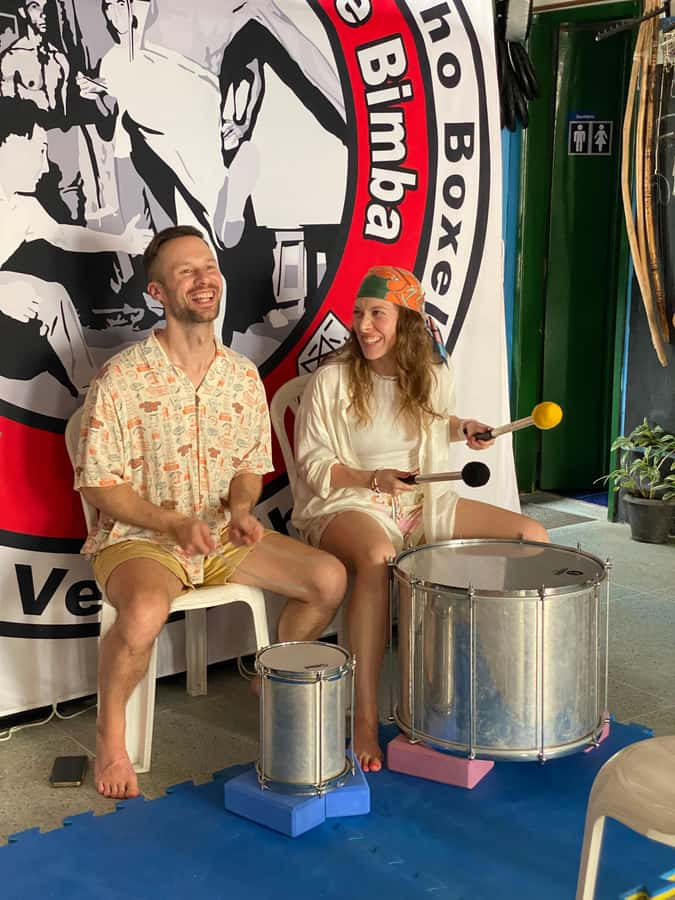
The workshop begins at a level that suits complete beginners. You do not need to read music, keep a complex beat, or know anything about Capoeira. The only real requirement is a willingness to listen, copy the instructor, and keep trying when your hands and ears do not quite agree.
That beginner-friendly approach is important. Percussion can look simple until you try to coordinate the hand position, timing, and force of each strike. The class gives you a chance to learn those basics without the pressure of performing for an experienced group.
You can expect the instructor to demonstrate the correct gestures and posture, then have you repeat them. Yasmin, who led one particularly well-received class, was noted for taking time to show the proper movements again when needed. That sort of patient correction is worth more than a rushed explanation, especially if you are worried about making mistakes.
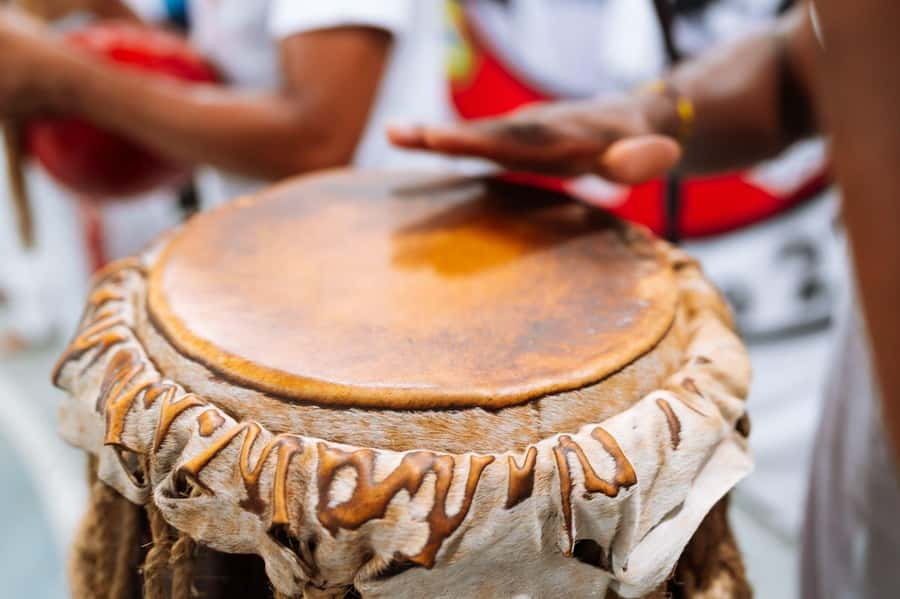
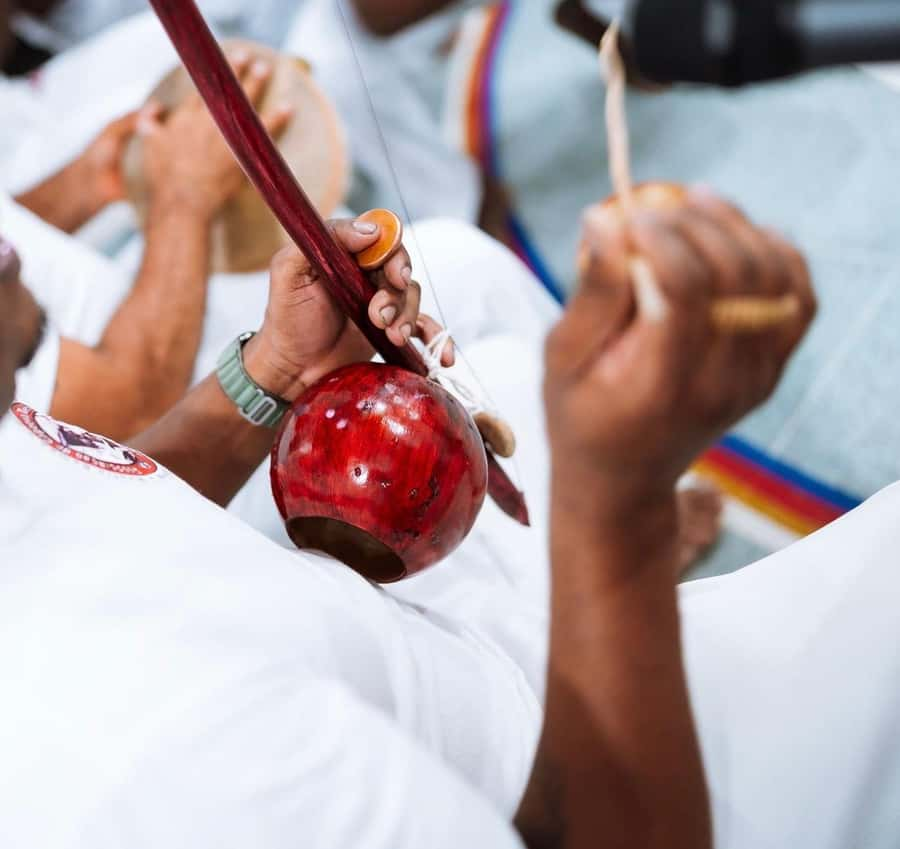
You may also work with more than one kind of percussion instrument. The lesson can include Capoeira percussion instruments and drumming, with different rhythms and methods of playing. The point is not to master a full musical tradition in 60 minutes. It is to give you a physical feel for how these instruments work and how their sounds fit together.
What the one-hour class can teach you
An hour is a sensible length for this activity. It is long enough to learn several basic patterns and hear the cultural background, but short enough to fit between sightseeing stops in Pelourinho.
The time generally breaks into three useful parts:
- An introduction to the cultural setting and instruments
- Demonstrations of hand position, posture, and rhythm
- Guided practice with different beats and percussion styles
The supplied details do not specify a fixed minute-by-minute schedule, so the exact balance may depend on your instructor and group. Still, the shape of the session is clear: cultural explanation comes together with active practice.
I like this format because it avoids two common problems. A purely historical talk can leave you interested but passive. A lesson with no context can feel detached from Salvador. Here, you get both the story and the physical experience of making the sound.
One hour also suits people planning a full day in the city. You can visit Pelourinho before or after class, then stop for food nearby. One participant combined the workshop with afternoon sightseeing during Carnival celebrations, which shows how easily it can fit into a larger day, though you should not assume the class itself includes Carnival activities.
Learning with Yasmin and the instructor team
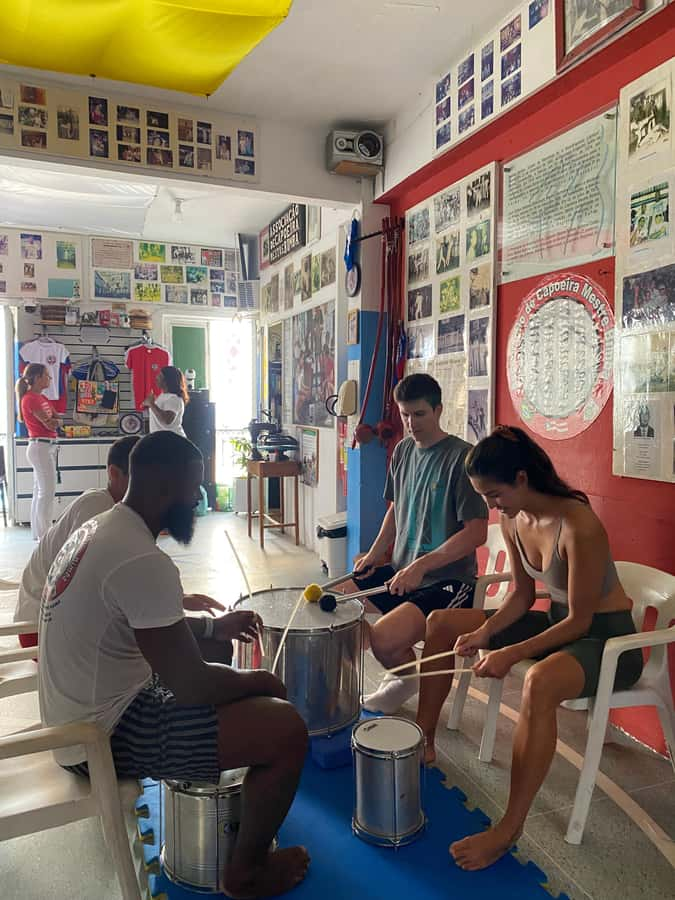
The strongest teaching detail available comes from a class led by Yasmin. Her approach included careful instruction in Brazilian Capoeira percussion instruments, explanations of their cultural role, and patient help with the playing technique.
That combination matters. A good percussion lesson needs more than enthusiasm. You need someone who can show the movement clearly, notice when your timing is off, and explain what you are trying to produce. Yasmin’s class appears to have done that through one-to-one attention, even within the short session.
The activity is offered in Portuguese and English. That makes it suitable for international visitors, but I would treat the English option as something worth confirming before you arrive. A recent participant booked an English class but found that the instructor could not teach in English. It did not ruin the activity, but it did create a clear communication problem.
If your English is essential for understanding the cultural explanation, send a message before booking or shortly afterward to confirm the language for your date. If you speak Portuguese, you have more flexibility. If not, the rhythm demonstrations may still be possible to follow, but the historical and cultural parts will be less useful without clear translation.
Same city, a completely different kind of day:
- From Salvador: Schooner Tour to Frades Islands and Itaparica
★ 3.9 · 98 reviews - Afro-Brazilian Roots Private City Tour in Salvador
★ 4.7 · 88 reviews - Salvador Historic Walking Tour – Pelourinho
★ 4.8 · 62 reviews - Salvador de Bahia African Culture Tour
★ 4.5 · 60 reviews
Why the cultural background adds value
Salvador’s Afro-Brazilian traditions cannot be separated neatly from the city’s social history. Capoeira, Samba, and drumming were not always treated as respectable public arts. Their survival required communities to protect their practices and keep teaching them.
The school’s Quilombo theme points to that history of resistance. You do not need a long academic lecture to understand the basic idea. The simple act of learning a beat in this setting becomes a way to see these traditions as living practices, not museum pieces.
That is also why the class works well for visitors who want more than a standard sightseeing stop. You hear about Brazil’s cultural identity, then use your own hands to take part in one small piece of it. The lesson remains light and social, but the subject has real weight.
Keep your expectations reasonable. You will not become a Capoeira percussion expert in one hour, and the activity does not promise an extended performance or a full course. Its value lies in the introduction: a focused taste of the instruments, rhythms, and people behind an important part of Salvador’s culture.
How the location fits a Pelourinho day
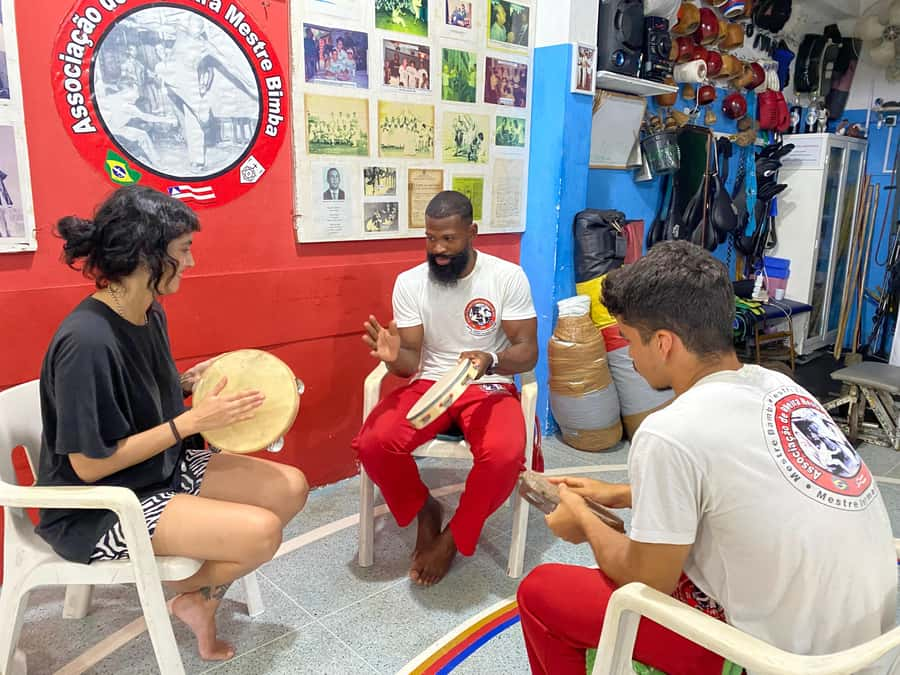
The meeting point at Associação de Capoeira Mestre Bimba is particularly convenient if you are already exploring central Salvador. The school is associated with Largo do Terreiro de Jesus, and the nearby Ó Paí Ó Restaurante and São Domingos Gusmão Church give you useful visual markers.
Because there is no pickup service, allow time to reach the school on your own. The supplied information does not give walking directions from a hotel or transport advice, so use the named landmarks and confirm the exact meeting instructions when you reserve.
I would plan the workshop as one stop in a Pelourinho route rather than as a standalone trip across the city. Before class, you can walk through the historic center. Afterward, you can continue sightseeing or find a meal nearby. That makes the $43 price easier to assess, since the class can fit into a day you are already spending in central Salvador.
The location may be less convenient if you are staying far from the center and have planned only a short visit. Since no hotel transfer is included, the cost of reaching Pelourinho and the time needed to return should be part of your decision.
Is $43 a fair price for one hour?
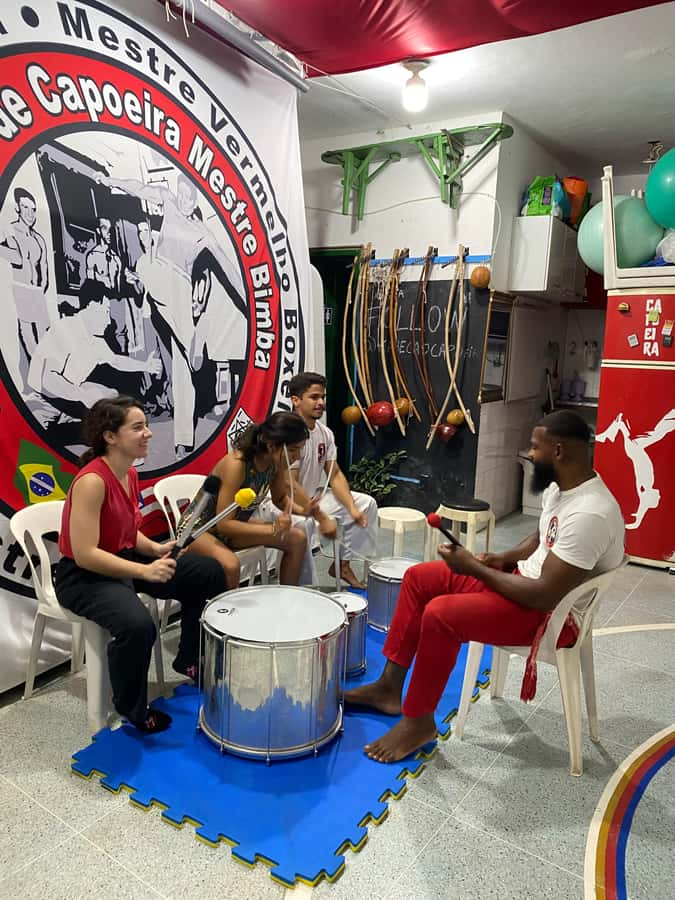
At $43 per person, this is not the cheapest way to fill an hour in Salvador. You are paying for a small-group cultural lesson, a local instructor, the use of instruments, and access to a historically important school. The group limit of 10 is a useful feature because it gives the instructor a better chance to correct your technique.
The value is strongest for you if you care about context and participation. A short lesson with hands-on practice can leave a more lasting impression than simply watching a Capoeira demonstration. You hear the background, make the sounds, and gain a basic sense of the coordination involved.
The value is weaker if you want a long class, a polished stage show, or a broad tour of Salvador’s music scene. Meals, drinks, hotel pickup, and drop-off are not included. You should also remember that one hour goes quickly, especially if the instructor needs to divide attention among several people.
A small group can sometimes become nearly private instruction. One class was described as attentive one-to-one teaching, but that level of personal focus cannot be guaranteed for every date. Still, a maximum of 10 participants is a favorable setup for a short beginner lesson.
Who will get the most from this activity?
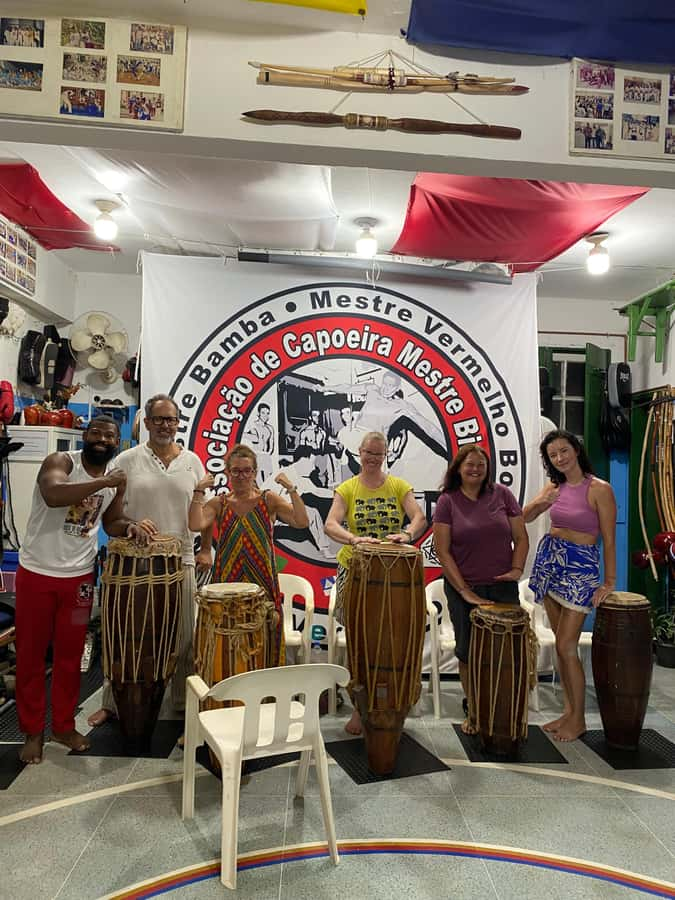
I would recommend this workshop to first-time visitors who want a direct introduction to Afro-Brazilian culture. It also suits couples, families with older children, and solo visitors who prefer doing something active rather than sitting through a talk.
You do not need musical experience, which removes the biggest barrier. If you are nervous about rhythm, expect to make mistakes and keep going. The class is designed around learning, not judging your performance.
It is also a good choice for people already planning time in Pelourinho. You can combine the workshop with nearby sightseeing and a meal, making the hour feel like part of a larger Salvador experience.
This may not suit you if you need guaranteed English instruction and cannot confirm the language ahead of time. It may also disappoint if you expect a full Capoeira class, an extended drumming course, or a performance by professional musicians. The focus is percussion learning and cultural explanation.
Practical planning before you book
The experience lasts one hour, and starting times depend on availability. Check the schedule before committing your Pelourinho plans, especially if you are working around a restaurant booking, a museum visit, or another guided activity.
Wear something that lets you sit and move your arms comfortably. The supplied information does not set a dress code or list physical restrictions, so avoid assuming that special clothing or equipment is provided beyond the workshop instruments.
The class is offered in Portuguese and English, but language delivery deserves attention. Confirm that your chosen session will have an instructor who can teach in your preferred language. This is the single practical concern most likely to affect how much you take from the cultural discussion.
Booking is flexible: you can reserve now and pay later, and cancellation is free up to 24 hours before the activity for a full refund. Those terms are useful if your Salvador schedule is still changing.
Should you book the drumming workshop?
Book it if you want a short, hands-on encounter with Salvador’s Afro-Brazilian traditions, especially if you will already be in Pelourinho. The school setting, small group, and beginner-friendly instruction give this activity more substance than a quick tourist photo stop.
I would be most likely to book it after confirming the teaching language. If English is available for your date, the class offers a good mix of basic percussion practice and cultural context at a reasonable price for a small group. If you are looking for a long musical course or a major performance, choose something else.
For most visitors, the best plan is simple: schedule the workshop during a Pelourinho day, use the nearby landmarks to find the meeting point, and arrive ready to copy the rhythm rather than perform perfectly.
FAQ
Do I need musical experience to join the workshop?
No. The activity is designed for beginners, and no previous music experience is required.
Where does the workshop meet?
It meets at Associação de Capoeira Mestre Bimba in Pelourinho. Ó Paí Ó Restaurante and São Domingos Gusmão Church in Largo do Terreiro de Jesus are nearby landmarks.
Is hotel pickup included?
No. The activity does not offer hotel pickup or drop-off, so you must make your own way to the meeting point.
What languages are offered?
The activity is offered in Portuguese and English. Confirm the teaching language for your date if English instruction is important to you.
How long does the activity last?
The drumming and percussion workshop lasts one hour.
Can I cancel for a full refund?
Yes. You can cancel up to 24 hours in advance for a full refund. You can also reserve now and pay later.
Just added around Salvador
- Salvador: Schooner Cruise with Pickup and Itaparica Stop★ 3.8 · 5 reviews
- Salvador: Cultural Treasure – Samba de Roda.★ 4.9 · 51 reviews
- Salvador by Night: Cultural Show and Dinner.★ 4.4 · 17 reviews
- Salvador: 3-Hour Percussion Class★ 4.9 · 10 reviews
- Salvador by Night: Cultural Dinner and Show★ 4.7 · 27 reviews
- Salvador: Caipirinha Masterclass with Unlimited Drinks★ 4.2 · 4 reviews
- Salvador: 4-Hour Candomblé Mysteries Tour★ 4.3 · 34 reviews
- Salvador, Bahia: A amazing Walking Tour!★ 5.0 · 14 reviews
Workshops, compared.
Capoeira Class at Mestre Bimba’s 1st Ever School.
Read our review →
Surf lessons with local instructors in Copacabana/ipanema!
Read our review →Browse the lists this tour appears in