
Reviewed · CITY TOURS
Salvador: Anthropological City Tour with Lunch IN 6 HOURS
Salvador’s African identity is not kept behind museum glass on this tour. You move from Pelourinho to São Joaquim Market, an old port, a Candomblé terreiro, and a fishermen’s altar for Yemanjá, seeing how memory and faith still shape daily life. The homemade feijoada lunch in a Black community is the most personal part of the day.
I like the small group, limited to four people, and the chance to ask plenty of questions. I also like the guides’ strong cultural focus: Mônia and D. Maria are praised for explaining Bahia’s history and spirituality with warmth, while Fernando is credited with arranging a lunch you might not otherwise find. The main drawback is pace. Six hours covers a lot, and the tour is not wheelchair accessible.
Key points to know before booking
- A focused look at Afro-Brazilian Salvador: The route connects Pelourinho, São Joaquim Market, Candomblé, and Yemanjá rather than treating them as separate sights.
- Lunch is part of the cultural experience: You eat homemade feijoada with a Black family in Garcia, a neighborhood tradition that has lasted more than 50 years.
- A maximum of four people: This makes it easier to ask questions and gives the guide room to adjust explanations to your interests.
- Several important religious places: The tour includes the first Yoruba-origin Candomblé terreiro founded in the New World and Yemanjá’s seaside altar in Rio Vermelho.
- Good for a short stay: In six hours, you see historic Salvador, markets, religious sites, views, and a local meal.
- Bring curiosity, not just a camera: The strongest part of the day is the explanation of African traditions, forced migration, freedom struggles, and cultural survival.
Why this tour offers a different Salvador
Many city tours give you a quick look at Salvador’s churches, colorful buildings, and postcard streets. This one asks a more useful question: how did African traditions survive, change, and remain part of life in Bahia?
That question guides the day. You see the UNESCO-listed historic area, but you also leave it. You visit places tied to enslaved Africans and their descendants, then connect those places with living religious practice, food, markets, and community life.
I like that balance. Salvador’s past is painful, and a good tour should not smooth it over. At the same time, this experience is not only about suffering. It shows creativity, faith, family, and the determined preservation of cultural practices.
The maximum group size of four matters here. Subjects such as enslavement, Candomblé, and religious identity deserve room for questions. Guides Mônia and D. Maria are particularly well suited to curious visitors who want more than a list of dates. D. Maria is praised for handling a steady stream of questions about Bahia, spirituality, world history, and culture. That is a strong sign for anyone who likes an active conversation rather than a fixed speech.
A few more Salvador days to weigh up
- From Salvador: Schooner Tour to Frades Islands and Itaparica
★ 3.9 · 98 reviews - Afro-Brazilian Roots Private City Tour in Salvador
★ 4.7 · 88 reviews - Salvador Historic Walking Tour – Pelourinho
★ 4.8 · 62 reviews
Starting in Pelourinho and the Afro-Brazilian Museum
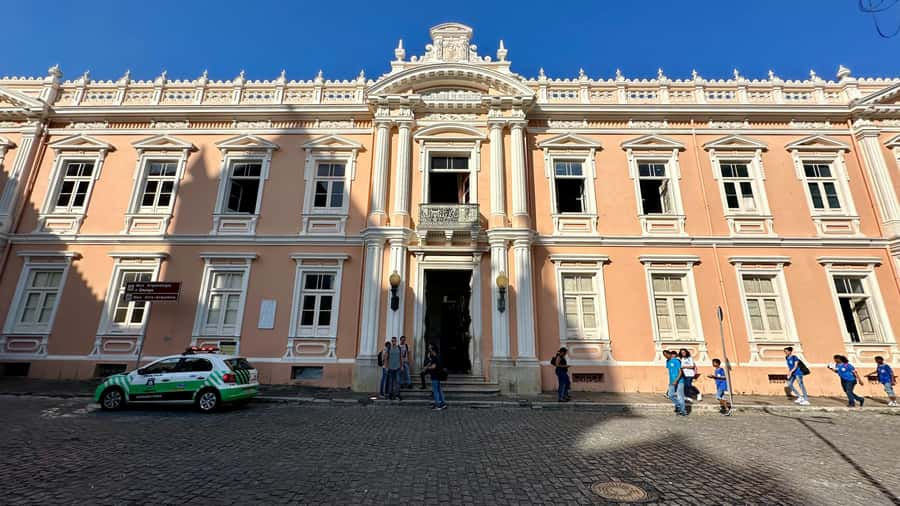
The day begins in Salvador’s historic center, at Pelourinho. Its UNESCO World Heritage status reflects the importance of the buildings and streets, but this tour gives the area a wider frame. You are not simply looking at façades. You are learning how the city’s African story fits into the center of power, trade, religion, and colonial life.
The Afro-Brazilian Museum adds substance to the visit. Its collection presents the history of Black people and helps you place the rest of the day in context. This is an important early stop because later places can otherwise seem disconnected. The market, the old port, the terreiro, and the Yemanjá altar all carry meaning that is easier to understand after a museum visit.
Expect about an hour in Pelourinho according to the advertised schedule. That is enough time for a guided walk and photographs, though not enough for every church, museum room, or side street in the historic center. If you want a slow architectural tour of Pelourinho, this experience may feel brisk. If you want a clear introduction before moving into other parts of Salvador, the timing works well.
Dique do Tororó and Salvador’s public symbols
Dique do Tororó is included as a photo stop and guided visit of about 20 minutes. The short visit suggests that this is a scenic and interpretive pause rather than a long walk around the water.
The site is useful in the flow of the tour because it breaks up the historical discussion with an open view and a recognizable Salvador setting. You will have time to take photographs and hear the guide explain why the place matters, but you should not expect a lengthy stop.
This is one reason comfortable shoes and a flexible attitude help. The day moves between major sites, neighborhoods, religious places, and food. Some stops are extended visits, while others are brief windows into the city.
São Joaquim Market, where food and history meet
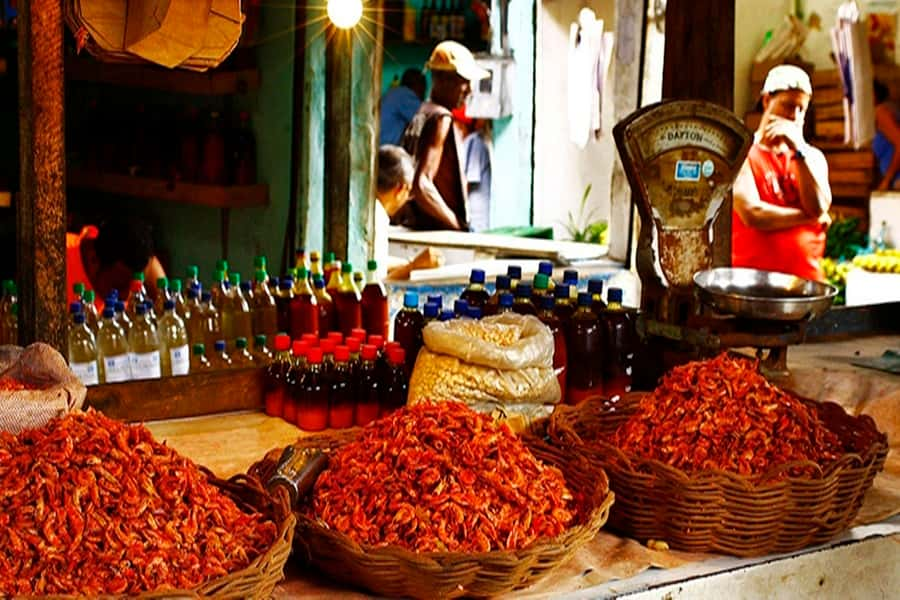
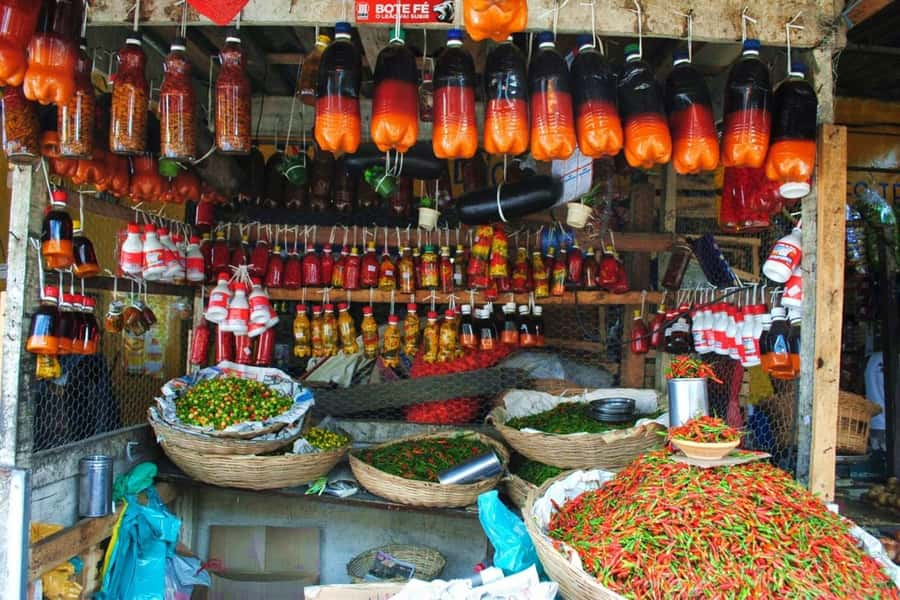
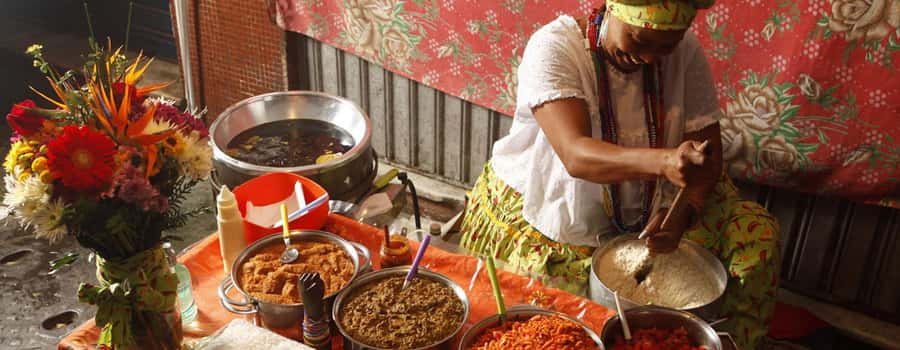
São Joaquim Market is one of the most interesting stops for anyone who wants to understand Salvador beyond monuments. It is the city’s largest open market and is recognized as an intangible heritage site in Brazil.
The market was founded by enslaved Africans in the 19th century. That detail gives the visit weight. You are not simply browsing stalls or looking for a souvenir. The market connects commerce, food, African cultural practice, and the long history of Black life in Bahia.
Markets can be sensory and unpredictable, so you should expect a more direct encounter with everyday Salvador than you get in the polished historic center. The guide helps explain what you are seeing and why the market matters. The available schedule allows about 40 minutes here, enough for an introduction and some browsing, but not for a slow, unhurried market exploration.
I would treat this as a place to listen first and shop second. If you are interested in local ingredients, religious items, or small purchases, ask the guide what is appropriate. A small group makes that conversation easier.
More city tours in Salvador:
- Historic City Tour in Salvador
★ 3.6 · 17 reviews - São Paulo: Main City Sights in 7 Hours – Shared Group Tour
★ 4.9 · 587 reviews - Rio: Carnival Backstage Tour at Samba City with Cocktail
★ 4.6 · 520 reviews - São Paulo: City Highlights Guided Tour
★ 4.5 · 307 reviews
The old port and the hard history of arrival
The route continues to the old port where Africans arrived, a site also connected to the slave trade. This is one of the tour’s most serious moments.
A place like this can be easy to pass without understanding its role. The guide’s job is to connect the physical setting with the people who were forced through it and with the communities formed by their descendants. That context helps explain why Salvador’s African heritage is not a decorative theme. It is tied to family history, religion, language, food, music, and social life.
The stop is listed as a photo stop, visit, and guided tour of about 40 minutes. Photographs are possible, but the setting calls for care and attention. I would not treat this as a casual sightseeing stop. Give the explanation time, and ask questions if the guide invites them.
Candomblé at Ilê Iyá Axé Nassô Oká
The tour then visits Ilê Iyá Axé Nassô Oká, described as the first Yoruba-origin Candomblé terreiro founded in the New World. The terreiro is grounded in a matriarchal tradition, an important detail for understanding how religious authority and community life developed here.
This stop gives the tour a living religious focus. The museum explains history through objects and exhibits. A terreiro helps you understand that Candomblé is not only a historical subject. It remains a practiced faith with its own traditions, sacred spaces, and forms of respect.
Your guide’s approach matters greatly here. Candomblé should not be treated as a curiosity or a show put on for outsiders. The strongest part of the experience is the explanation of its place in Bahian life and its connection to Yoruba heritage. D. Maria’s ability to discuss spirituality and culture is especially relevant for this part of the route.
The information provided does not promise a ceremony or a particular religious activity, so do not book expecting a performance. You are visiting an important terreiro and learning about its role. Dress and behave respectfully, and follow the guide’s instructions about photographs.
Yemanjá in Rio Vermelho
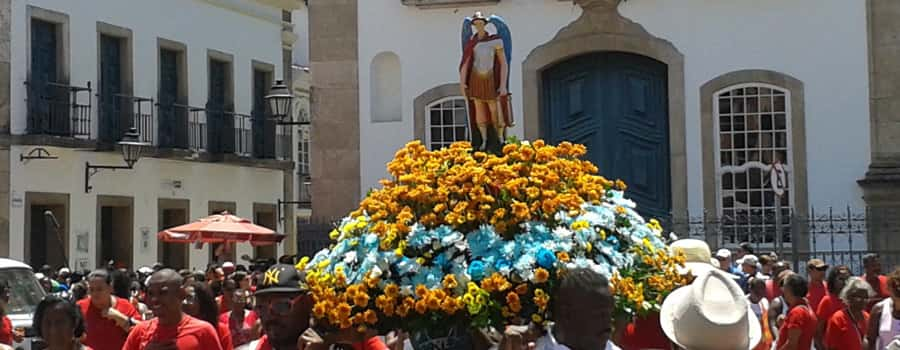
Near the beach in Rio Vermelho, you visit the Queen of the Sea House, a place connected to Yemanjá, the African orixá of the sea. Local fishermen built an altar in her honor, linking religious devotion with the working life of the coast.
This stop gives the day a different mood. After museums, markets, and sites tied to forced migration, the seaside setting shows how African religious traditions continue in public life. Yemanjá is especially visible during the annual February 2 ceremony, which draws more than 400,000 people.
The tour does not take place only during that festival, so you should expect the altar and its setting rather than the full event. Even so, the story helps you understand why Rio Vermelho is important in Salvador’s religious calendar.
The stop also gives you a chance to see a fishermen’s community and connect the sea with local faith. It is a good example of the tour’s method: each place carries a social meaning, not just a scenic one.
Feijoada in Garcia with a local family
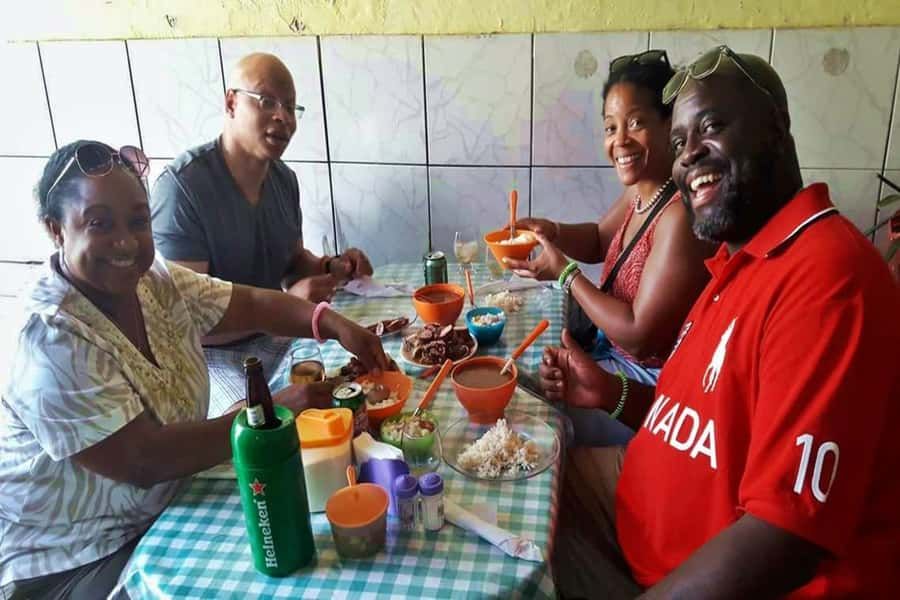
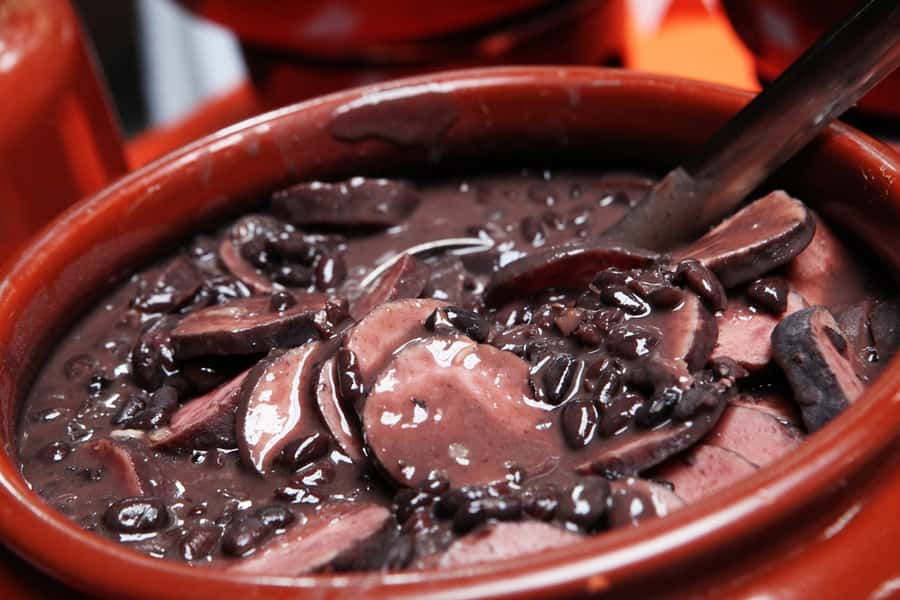
Lunch is the tour’s most distinctive feature. In the Garcia neighborhood, you eat feijoada, a homemade bean stew, in a Black community with a family tradition lasting more than 50 years.
This is more than a convenient meal between sightseeing stops. Food gives you a direct way to connect history and daily life. Feijoada is familiar across Brazil, but eating a homemade version in a family setting gives the dish a stronger local and personal context.
One participant specifically credited Fernando with making this local lunch possible. That detail is useful when comparing this experience with a standard restaurant-based city tour. You may not find this kind of meal on your own, especially during a short stay.
Plan on about one hour for lunch. Drinks are not included, so budget for those separately. A vegetarian option is available, but you need to request it when booking, along with any other dietary needs.
The meal may be the part you remember most, but it is also where expectations should stay realistic. This is a family meal, not a formal cooking class or a restaurant tasting menu. The value comes from the setting, the tradition, and the chance to share food connected to the community.
How the six-hour schedule works
The tour includes hotel pickup and drop-off in Salvador, a driver and guide, a professional guide, entrance fees, and lunch. The advertised duration is six hours, with starting times depending on availability.
The route covers a lot: the historic center, Dique do Tororó, market areas, the old port, a terreiro, Rio Vermelho, and Garcia. That makes this a strong choice if you have limited time or want a guided overview of Salvador’s Afro-Brazilian culture in one day.
The tradeoff is that no single stop receives unlimited time. Pelourinho receives about an hour, lunch about an hour, and several other visits are scheduled for around 20 to 40 minutes. You will gain range, but you may not have time to linger at every site.
Hotel pickup saves time and reduces the need to work out several taxi or rideshare journeys across the city. It also matters because the route moves between areas that feel quite different from one another. With only four participants, the outing has a private-tour feel without requiring a fully private booking.
Guided languages include English, Spanish, French, Italian, and Portuguese. The tour is not wheelchair accessible, so this is an important limitation to consider before reserving.
Is $150 a fair price?
At $150 per person, this is not a budget city tour. The price makes more sense when you consider what is bundled: six hours, hotel transportation, entrance fees, a driver and guide, a professional guide, and lunch.
The small group is the biggest value factor. A group capped at four allows more conversation and avoids the feel of a large coach excursion. You are also paying for access to a family lunch and for a route built around places that may be difficult to connect on your own.
The value is strongest for you if cultural context matters more than checking off famous sights. If you mainly want a cheap ride around Salvador with photo stops, there are less expensive ways to see the city. If you want a focused introduction to African heritage, Candomblé, local food, and community history, the cost is easier to justify.
The six-hour format also helps if you are short on time. You get a broad look at Salvador without spending several days arranging separate visits. The downside is that the schedule leaves little room for a spontaneous change of plan.
Who will enjoy this experience most?
I would recommend this tour to you if you enjoy asking questions, want historical context, and prefer local food and community stories over a checklist of monuments. It suits first-time visitors who want a meaningful introduction to Salvador and people with only one free day in the city.
It is also a good match if you are curious about African religious traditions but want them explained with care. Guides such as Mônia and D. Maria appear especially suited to visitors who like detailed discussion, while Fernando’s role in the local lunch is a practical strength.
You may want another type of tour if you need wheelchair access, want a relaxed full-day pace, or prefer to spend most of your time inside the historic center. This route is broad and active. It asks you to move between several areas and take in serious subjects along the way.
The tour has a rating of 4.9 from 20 ratings, and the praise focuses on the guide’s warmth, cultural understanding, and the local meal. Those are the qualities to weigh most heavily when deciding. The sights matter, but the interpretation and personal contact are what give this outing its value.
Should you book this Salvador tour?
Book it if you want Salvador explained through its African heritage, living religion, markets, neighborhoods, and food. The visit to Ilê Iyá Axé Nassô Oká, the Yemanjá altar, and the homemade feijoada lunch give it a stronger cultural focus than a standard city drive.
Skip it if you want a slow architectural tour, a beach day, or a low-cost sightseeing loop. For most curious visitors, especially those with limited time, the small group and family lunch make the $150 price reasonable. Request vegetarian or other dietary needs in advance, and remember that wheelchair users cannot take part.
FAQ
How long is the tour?
The tour lasts six hours, including transportation, guided visits, and lunch.
Where does pickup take place?
Pickup and drop-off are included from your hotel lobby in Salvador.
What languages are available?
The live guide may speak English, Spanish, French, Italian, or Portuguese.
How many people are in the group?
The group is limited to four participants.
Is lunch included?
Yes. Lunch is included and features feijoada served in a Black community in the Garcia neighborhood. Drinks are not included.
Can I request vegetarian food?
Yes. A vegetarian option is available, but you need to advise the operator when booking. You should also report any other dietary requirements in advance.
Is the tour wheelchair accessible?
No. The experience is not wheelchair accessible and is not suitable for wheelchair users.
Just added around Salvador
- Salvador: Schooner Cruise with Pickup and Itaparica Stop★ 3.8 · 5 reviews
- Salvador: Traditional Drumming and Percussion Workshop★ 4.4 · 10 reviews
- Salvador: Cultural Treasure – Samba de Roda.★ 4.9 · 51 reviews
- Salvador by Night: Cultural Show and Dinner.★ 4.4 · 17 reviews
- Salvador: 3-Hour Percussion Class★ 4.9 · 10 reviews
- Salvador by Night: Cultural Dinner and Show★ 4.7 · 27 reviews
- Salvador: Caipirinha Masterclass with Unlimited Drinks★ 4.2 · 4 reviews
- Salvador: 4-Hour Candomblé Mysteries Tour★ 4.3 · 34 reviews
City Tours, compared.
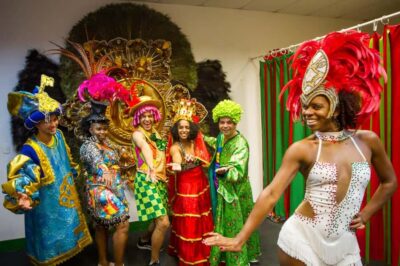
Carnival Backstage Tour at Samba City with Cocktail
Read our review →


Browse the lists this tour appears in