
Reviewed · HISTORICAL TOURS
Historic City Tour in Salvador
Salvador’s story comes into focus when you move between its Upper City and Lower City. This four-hour tour links the Barra Lighthouse, Lacerda Elevator, Cathedral Basilica, St. Francis Church, and Pelourinho, giving you a useful first look at Bahia’s capital without arranging several separate rides.
I like the Bay of All Saints view from Lacerda Elevator and the chance to walk through Pelourinho rather than only seeing it from a bus. Hotel pickup is another real plus. The main caution is that the pace can feel brisk, and one Spanish-speaking booking was handled mostly in Portuguese, with only short Spanish explanations.
Key points to know
- Barra Lighthouse begins the route, introducing Salvador’s coastal setting before the tour turns inland.
- The modern city comes first, with the Corredor de la Victoria, Campo Grande, and Piedade showing Salvador’s business side.
- Lacerda Elevator gives you the best broad view, including the bay, Upper City, Lower City, and Pelourinho’s rooftops.
- St. Francis Church is the major interior highlight, known for its ornate Portuguese Baroque design.
- Pelourinho is the strongest walking stop, with colorful streets, colonial buildings, and UNESCO recognition.
- Language deserves attention, since the advertised live languages are Spanish and Portuguese, while English is also listed among the guide options.
From Barra Lighthouse to Salvador’s modern center
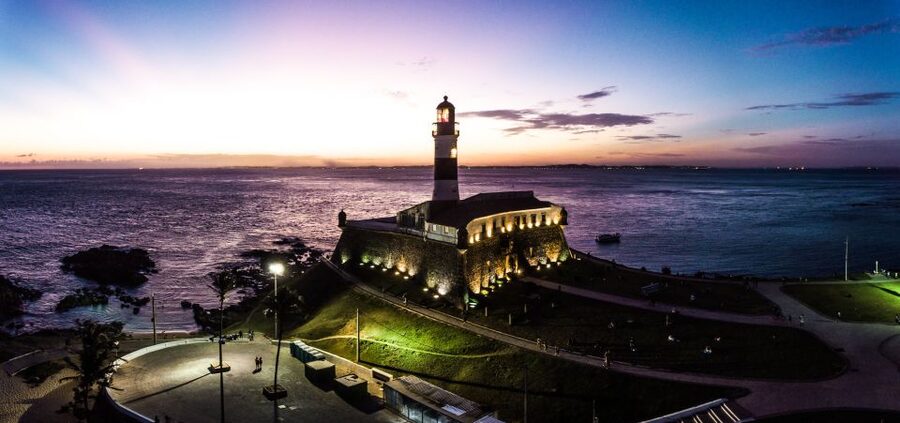
The tour starts with pickup from centrally located hotels, then heads to Barra Lighthouse. This is a smart opening stop because it places Salvador in its coastal setting before you begin the climb toward the historic upper city.
The lighthouse is more than a quick photo point. It helps you understand the shape of the city, with the Atlantic coast and the Bay of All Saints forming two important sides of Salvador’s character. You should expect an exterior visit and a short orientation rather than a long museum stop, since the full route has several major sites to cover.
From Barra, the vehicle follows the Corredor de la Victoria toward Campo Grande and Piedade. This stretch shows a different Salvador from the one pictured in tourist brochures. Tower blocks, shopping centers, and commercial activity define this part of the city, which serves as its economic center.
I like this contrast. If a tour went straight to Pelourinho, you would see the historic core but miss how it fits into the present-day city. Here, the route gives you a quick visual lesson: Salvador is not only pastel façades and old churches. It is also a modern Brazilian city with offices, shops, traffic, and tall buildings.
The tradeoff is time. These early points are mainly viewed from the vehicle, so do not book this tour expecting a detailed walking visit in Barra, Campo Grande, or Piedade. They work best as context for the places that follow.
More old-town walks in Salvador:
- Salvador Historic Walking Tour – Pelourinho
★ 4.8 · 62 reviews - From Salvador: Quilombo Heritage Daytrip with Lunch
★ 3.4 · 3 reviews - Rio de Janeiro: Historic Rio and Santa Teresa Half-Day Tour
★ 4.4 · 228 reviews
Municipal Square and the short ride between two cities
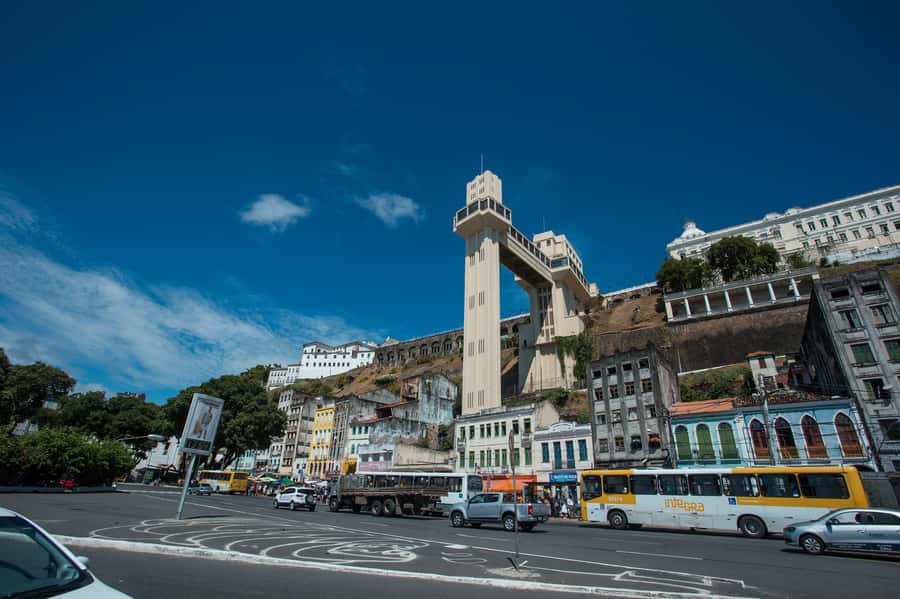
The route continues into the Cidade Alta, or Upper City, and reaches Municipal Square. This is one of the most useful places to begin understanding Salvador’s old civic center.
The square is home to Rio Branco Palace and City Hall. These buildings help explain the role of the Upper City as a center of government and public life. The setting also brings you close to one of Salvador’s most famous pieces of urban transport, the Lacerda Elevator.
The name can be misleading if you picture a conventional sightseeing elevator with a long visit inside. Its main value here is practical and visual: it connects the Upper City with the Lower City. The tour uses the area around it to show how dramatically Salvador changes in a short distance.
Depending on the group’s movement and the guide’s plan, you may spend more time viewing the elevator and its surroundings than riding it as a standalone attraction. The supplied information promises a panoramic view from the balustrades, which is the point to focus on. Have your camera ready, but keep one hand free for walking and regrouping.
One important practical note comes from a poor experience on a recent departure. After going up by the Lacerda Elevator, several families became separated from the guide and had difficulty finding the group again. If you book, stay close at transitions, especially after the elevator, and make sure you know where the guide wants everyone to meet before moving away.
That is not a reason to dismiss the tour, but it is a good reminder that city sightseeing depends on simple group discipline. If you are traveling with children, older relatives, or anyone who walks slowly, remain together and confirm the next meeting point.
The Lacerda view across Bay of All Saints
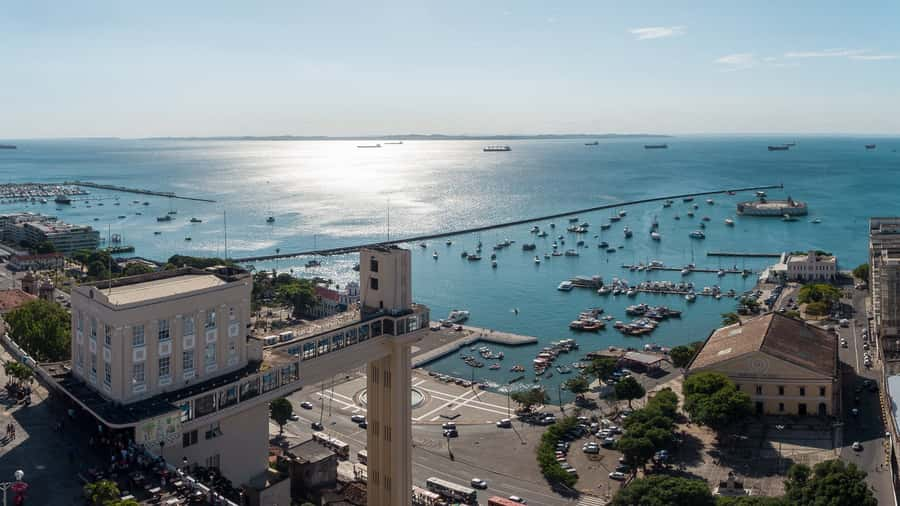
The Lacerda viewpoint is likely to be the tour’s best single panorama. From here, you can look across the Bay of All Saints and see how Salvador’s two levels work together.
Below lies the Lower City. Above and around you is the Upper City. The streets and houses of Pelourinho add a third layer, with tightly packed buildings and colorful façades spreading through the old district.
I like this stop because it turns a confusing city map into something you can see. Salvador’s slopes, levels, and waterfront are easier to understand from above than from street level. The view also helps you place the later walking stops in relation to the rest of the city.
The visit is not a full sightseeing session at every point. Four hours is enough for an introduction, not a slow architectural study. You will want to listen closely during the guide’s explanation, since the visual information comes quickly and there may be little time to linger.
Language is worth sorting out before you pay. The experience information lists a guide in English, Spanish, and Portuguese, while the activity details specifically identify Spanish and Portuguese as the live tour languages. One Spanish-speaking couple found that the main commentary was in Portuguese, followed by only short explanations in Spanish. If you need Spanish throughout, confirm that point when booking rather than assuming a bilingual group will receive equal time in both languages.
A guide called Painho received a particularly warm mention for a friendly beginning and a helpful attitude on one departure, while another account described a serious communication problem later in the route. Since guide assignments can vary, I would treat the guide as an important variable and ask the operator which language and guide arrangement applies to your date.
Terreiro de Jesus and Salvador’s church interiors
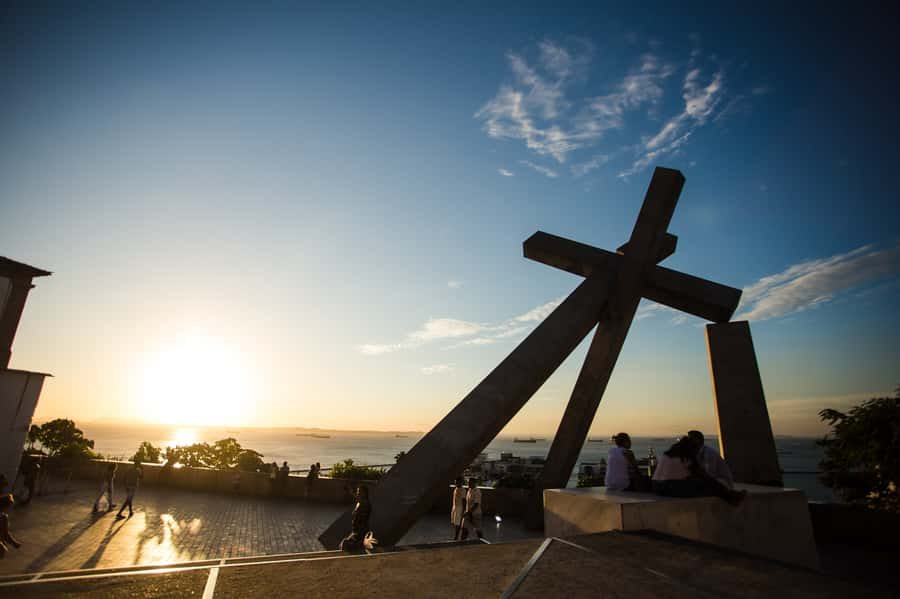
From the elevator area, the tour moves into Terreiro de Jesus. This square is one of the historic center’s key gathering places and brings you face to face with the Cathedral Basilica of the Savior.
The cathedral gives the walk a strong architectural focus. You are no longer simply looking down at old streets from a viewpoint. You are moving through the religious center of the Upper City and seeing how churches shaped public spaces in Salvador.
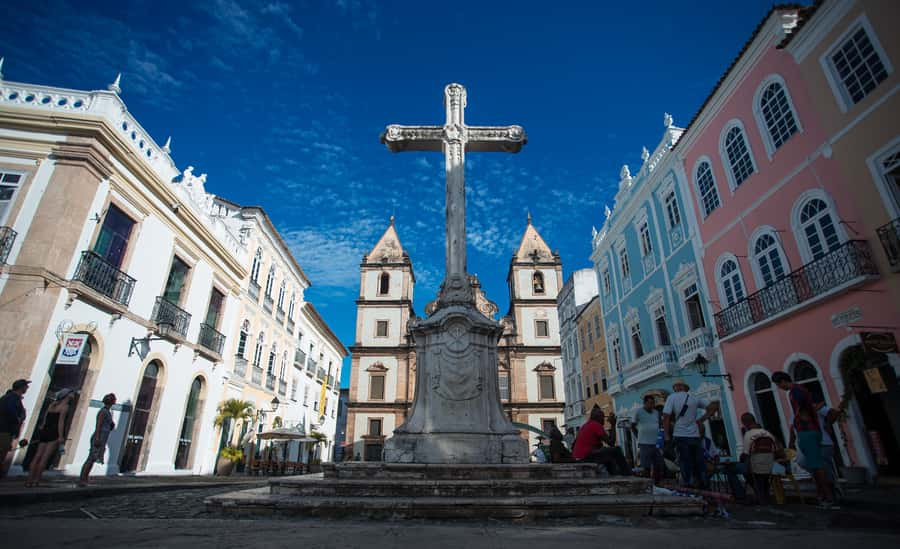
The next major stop is St. Francis Church, widely known for its lavish interior and Portuguese Baroque design. Of all the named buildings on this route, this is the one I would give the most attention. The church’s fame comes from its ornate decoration, so an interior visit matters far more than a passing look at the façade.
Check how much time the guide plans to spend inside. The route description includes the church, but some departures have been experienced as a series of drive-by or walk-by views with little time to enter historic buildings. That distinction matters. If you want a slow church visit, detailed art explanation, or time for quiet observation, this tour may feel too compressed.
Still, the pairing of Terreiro de Jesus and St. Francis Church gives you a useful introduction to Salvador’s religious architecture. You get both the public square and the interior expression of Portuguese Baroque style. Wear comfortable shoes, since the tour includes walking through the old center and the schedule may not allow you to stop whenever you wish.
A few more Salvador days to weigh up
- From Salvador: Schooner Tour to Frades Islands and Itaparica
★ 3.9 · 98 reviews - Afro-Brazilian Roots Private City Tour in Salvador
★ 4.7 · 88 reviews - Salvador de Bahia African Culture Tour
★ 4.5 · 60 reviews - Salvador: Praia Do Forte and Guarajuba Beach Day Trip
★ 4.1 · 56 reviews
Walking into Pelourinho
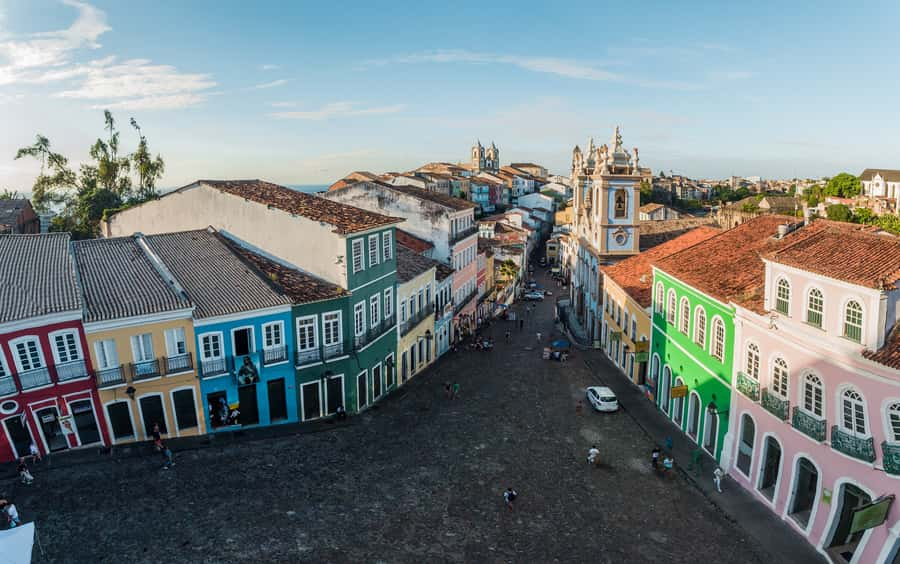
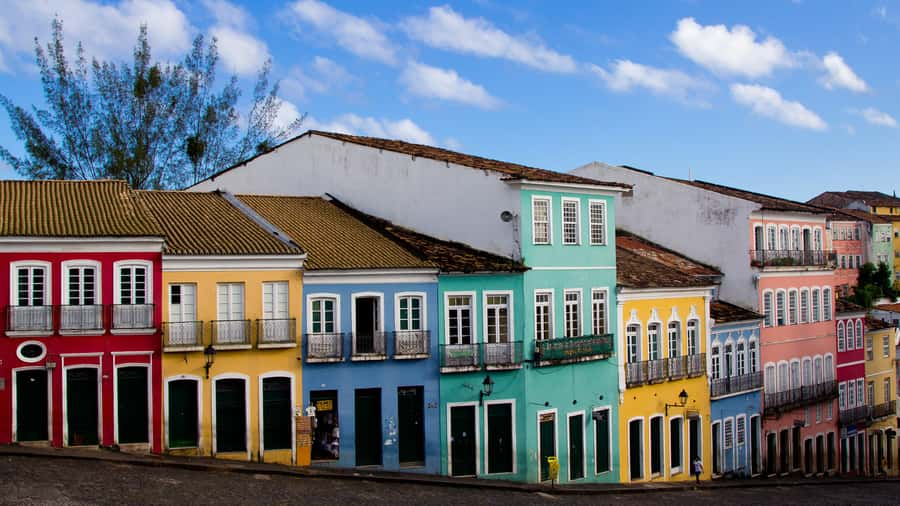
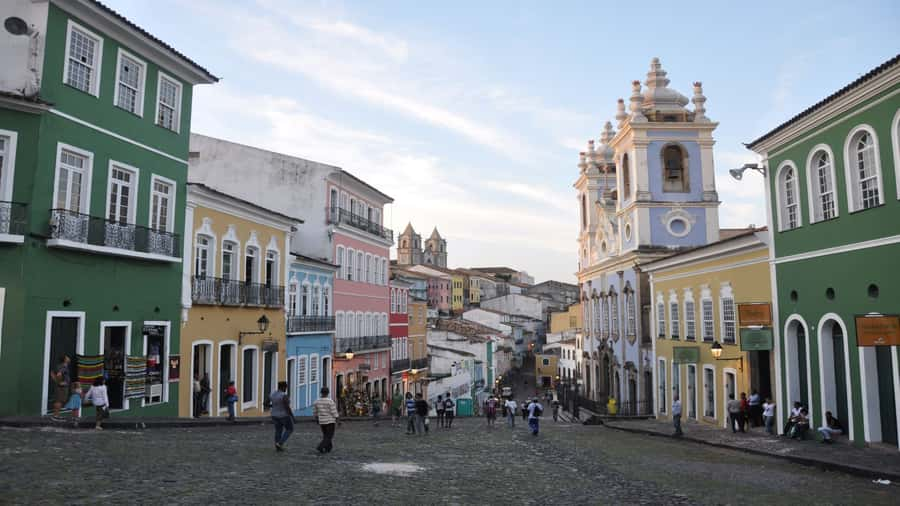
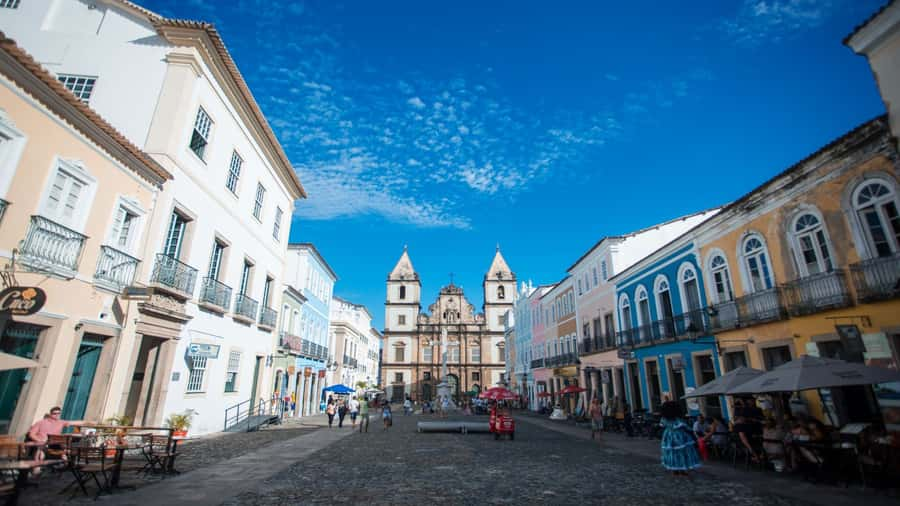
The final major stop is Largo do Pelourinho, the square at the heart of the Pelô district. This is where the tour’s various threads come together: colonial streets, churches, color, music, literature, and Salvador’s African and Portuguese cultural influences.
Pelourinho is recognized as a UNESCO World Heritage Site and is closely linked with the work of Brazilian writer Jorge Amado. You do not need to know his books in advance to appreciate the connection. His writing helped bring this part of Salvador to a wide audience, and the district’s streets still carry the sense of place that made it so important in Brazilian culture.
This is the section where walking matters most. From the vehicle, old buildings can blur into scenery. On foot, you can see the slope of the streets, the painted façades, and the way the square opens around the buildings. You also get a better feel for how the district functions as a lived urban area rather than a collection of monuments.
The drawback is that this may not be a relaxed neighborhood stroll. A four-hour tour must return everyone to their hotels, and the earlier stops take time. You may get a useful introduction to Largo do Pelourinho without having a long free period for shopping, cafés, photography, or independent exploration.
One past account described too much shopping and too little historical explanation. That is a useful warning for anyone choosing the tour mainly for context. If you want the guide to explain Salvador’s past in detail, say so early and ask questions as you walk. If the group spends time browsing shops, you may need to decide how closely that fits your own priorities.
What the four-hour format gives you
Four hours is a sensible length for a first orientation. You cover the coast, modern city, civic center, viewpoint, religious buildings, and Pelourinho in half a day. Hotel pickup and return also remove the need to work out the route yourself.
At $24 per person, the value is strongest if you want transportation and a broad introduction. The price includes hotel pickup, hotel drop-off, and a guide, but not lunch or drinks. You are paying for access to a connected route rather than an in-depth visit to every building.
I would compare it with the cost and effort of arranging several separate rides. The tour puts the main sights into one plan and gives you a basic explanation of what you are seeing. That is useful on a first day in Salvador, especially if your stay is short.
The value drops if your priority is detailed history, long church visits, or a quiet pace. One Spanish-speaking booking produced very little useful information because the commentary was mainly in Portuguese and the historic sites were often seen from outside. A current overall score of 3.6 out of 5 from 17 ratings reflects that mixed picture: the route itself is attractive, but execution and language balance matter.
I would not treat the itinerary as a replacement for a full day in the historic center. Think of it as a structured introduction. Afterward, you may want to return to Pelourinho or another church on your own, with more time to look closely.
Who will get the most from this tour
I would recommend this tour to you if you want:
- A compact first look at Salvador’s main historic areas
- Hotel pickup and return from a centrally located property
- A guide-led route in Spanish or Portuguese
- A major city panorama without arranging local transport
- An introduction to Pelourinho, Terreiro de Jesus, and St. Francis Church
- A mix of modern Salvador and the old Upper City
I would be more cautious if you need English commentary, since the activity details specifically name Spanish and Portuguese for the live guide. The general information also lists English, so confirm the exact language before booking.
I would also hesitate if you dislike group tours that keep moving. The route has several stops, but the schedule leaves limited room for long independent visits. Families can manage it, but everyone should stay together after the elevator and at other transitions.
Wear comfortable clothes and shoes. Bring a passport or ID card, and remember that lunch and beverages are not included. The exact pickup time is supplied after booking, so do not plan another fixed activity too close to the tour’s return.
Should you book the Historic City Tour in Salvador?
Book it if you want an affordable, practical overview and you value hotel transfers more than a slow, expert-led study of each monument. The Lacerda viewpoint and Pelourinho walk give the route real appeal, while Barra Lighthouse and the modern-city drive add useful context.
Before paying, confirm three things: the guide’s language, how much time will be spent inside St. Francis Church and the cathedral, and where the group will meet after using the elevator. If those answers suit you, $24 is fair for a four-hour introduction.
Skip it if your main goal is detailed historical commentary in English, extended church visits, or plenty of free time. For everyone else, it can be a good first pass through Salvador, as long as you stay close to the guide and keep your expectations focused on orientation rather than deep study.
FAQ
How long does the Historic City Tour in Salvador last?
The tour lasts four hours, including the sightseeing route and hotel transfers.
What places does the tour visit?
The route includes Barra Lighthouse, the Corredor de la Victoria, Campo Grande, Piedade, Municipal Square, Rio Branco Palace, City Hall, Lacerda Elevator, Terreiro de Jesus, the Cathedral Basilica of the Savior, St. Francis Church, and Largo do Pelourinho.
Is hotel pickup included?
Yes. Pickup and drop-off are included for centrally located hotels in Salvador.
What languages are available?
The activity information lists Spanish and Portuguese as the live guide languages. The general details also list English among the guide options, so you should confirm the language available for your date before booking.
Is lunch included?
No. Lunch is not included in the price.
Are drinks included?
No. Beverages are not included.
What should I bring?
Bring a passport or ID card, comfortable shoes, and comfortable clothes.
When will I know my pickup time?
The exact pickup time is provided after booking.
Can I cancel for a full refund?
Yes. You can cancel up to two days in advance for a full refund.
Just added around Salvador
- Salvador: Schooner Cruise with Pickup and Itaparica Stop★ 3.8 · 5 reviews
- Salvador: Traditional Drumming and Percussion Workshop★ 4.4 · 10 reviews
- Salvador: Cultural Treasure – Samba de Roda.★ 4.9 · 51 reviews
- Salvador by Night: Cultural Show and Dinner.★ 4.4 · 17 reviews
- Salvador: 3-Hour Percussion Class★ 4.9 · 10 reviews
- Salvador by Night: Cultural Dinner and Show★ 4.7 · 27 reviews
- Salvador: Caipirinha Masterclass with Unlimited Drinks★ 4.2 · 4 reviews
- Salvador: 4-Hour Candomblé Mysteries Tour★ 4.3 · 34 reviews
Historical Tours, compared.
Scenic Train ride to historical cities of Morretes and Antonina
Read our review →
Explore Little Africa : Unveiling Afro Heritage in Rio de Janeiro
Read our review →
Downtown-Center History Walking Tour – in English
Read our review →Browse the lists this tour appears in