
Reviewed · SAMBA EXPERIENCES
Salvador: Cultural Night of Capoeira, Samba, and Drumming
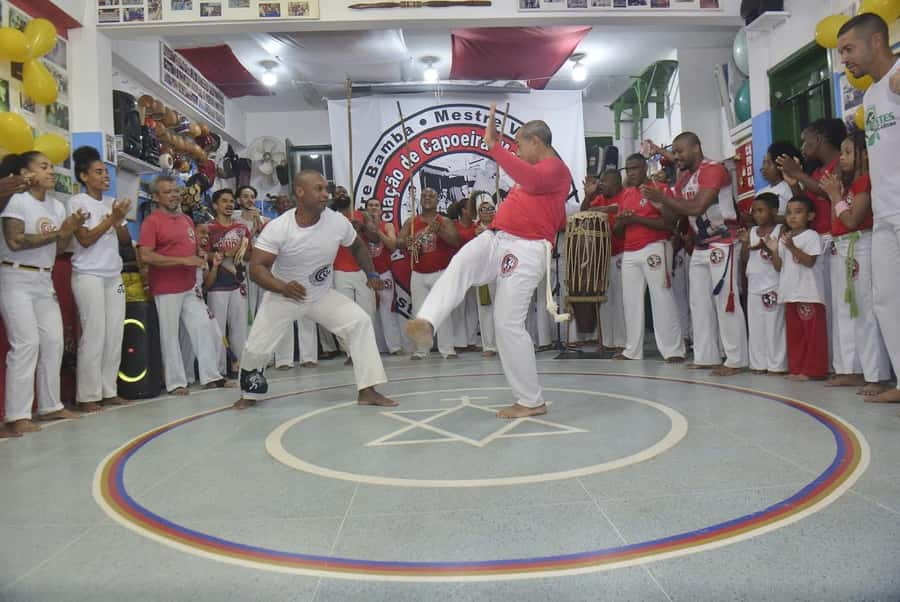
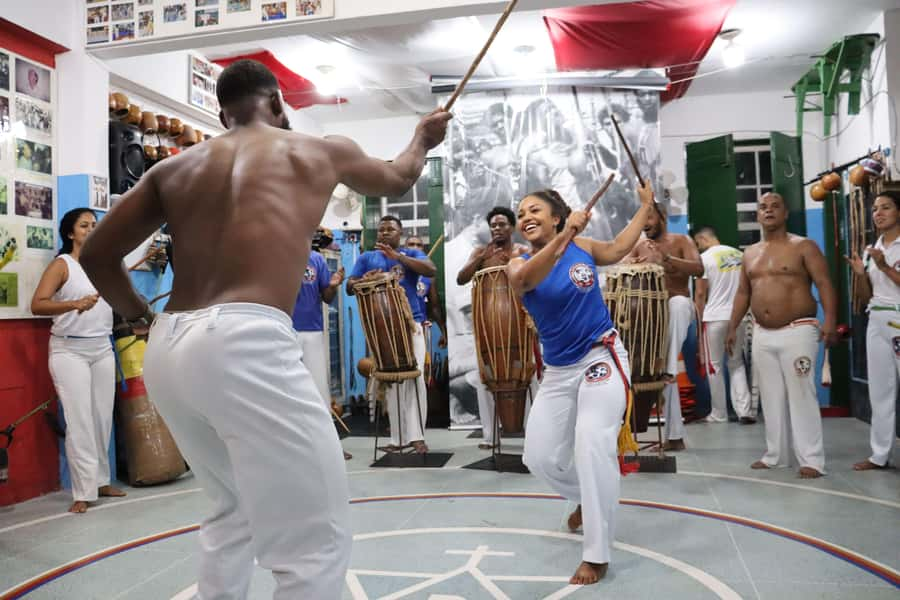
Salvador’s cultural night puts you inside the first Capoeira school in Brazil, founded by Mestre Bimba in 1937. Instead of a polished theater production, you’ll see Capoeira rodas, Samba, Maculelê, drumming, and acrobatics unfold in a working cultural space.
I like the strong Afro-Brazilian connection and the chance to see people of different ages and genders take part. I also like the short format, which fits neatly into an evening in Salvador. The main drawback is that the room can get very hot, and the action is physical, so this is not the right choice if you are pregnant or have back problems.
Key points
- Mestre Bimba’s 1937 school: Visit a landmark linked to Capoeira Regional and one of Brazil’s best-known Capoeira figures.
- More than Capoeira: The program also includes Samba, Maculelê, traditional drumming, live music, and acrobatics.
- Organic rather than polished: Expect real training and performance energy, with some variation from one segment to the next.
- A hot room: Wear light, comfortable clothing and bring water if allowed by the venue.
- Central meeting point: Find the Associação de Capoeira Mestre Bimba near Ó Paí Ó Restaurante and São Domingos Gusmão Church in Largo do Terreiro de Jesus.
- Good short evening activity: The advertised duration is one hour, though the detailed program describes a 1.5-hour concert and dance show, so confirm the exact timing when booking.
Entering Mestre Bimba’s 1937 Capoeira school
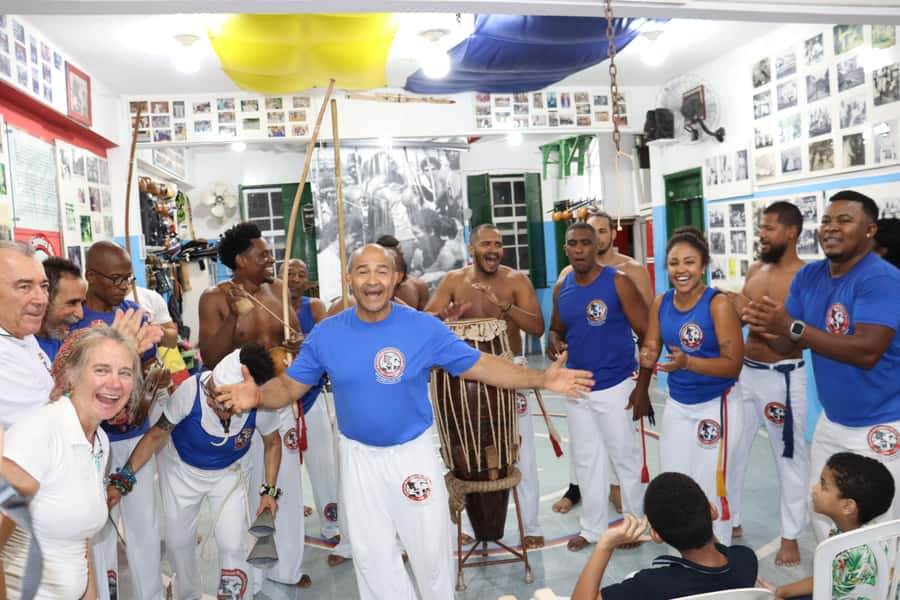
The setting is the first Capoeira school in Brazil, founded in 1937 by Mestre Bimba. He created Capoeira Regional, an important branch of the art that brought new structure and training methods to Capoeira while keeping its music, movement, and cultural roots.
That background changes the feel of the evening. You are not simply sitting in a hall watching a dance number. You are visiting a place tied to the development of one of Brazil’s most recognizable cultural forms.
The school is in Salvador’s historic center, at the Associação de Capoeira Mestre Bimba. The meeting point is near Ó Paí Ó Restaurante and São Domingos Gusmão Church, both in Largo do Terreiro de Jesus. Those landmarks are useful because the venue itself may not be as easy to spot as a major attraction.
There is no pickup service, so you need to make your own way there. Plan to arrive with enough time to locate the association and settle in before the performance begins.
More capoeira sessions in Salvador:
- Salvador: Capoeira Class at Mestre Bimba’s 1st Ever School.
★ 4.9 · 34 reviews - Salvador: CAPOEIRA CLASS – CULTURAL
★ 4.6 · 13 reviews - Rio de Janeiro: Favela Jeep Tour to Rocinha and Capoeira
★ 3.9 · 5 reviews
What the Capoeira roda feels like
Capoeira is part martial art, part dance, part musical conversation. Participants circle one another while musicians and singers set the pace. The movements can look playful one moment and sharply controlled the next.
The main event here is the Capoeira roda. You can expect fast movement, low sweeps, kicks, evasions, and acrobatic turns. The point is not simply to knock down an opponent. Timing, balance, awareness, and response matter just as much.
The setting also allows you to see different levels of experience. The program includes participants from young to older ages, and people of different genders take part. That variety gives you a better sense of Capoeira as a living practice rather than a specialty reserved for professional performers.
Some sequences may be more polished than others. That is part of the bargain. This is presented as an organic celebration rather than a tightly rehearsed tourist production. If you want every movement to land perfectly on cue, you may find the evening uneven. If you want to see real Capoeira activity with spontaneity and physical intensity, the rough edges add value.
Samba, Maculelê, and the power of rhythm
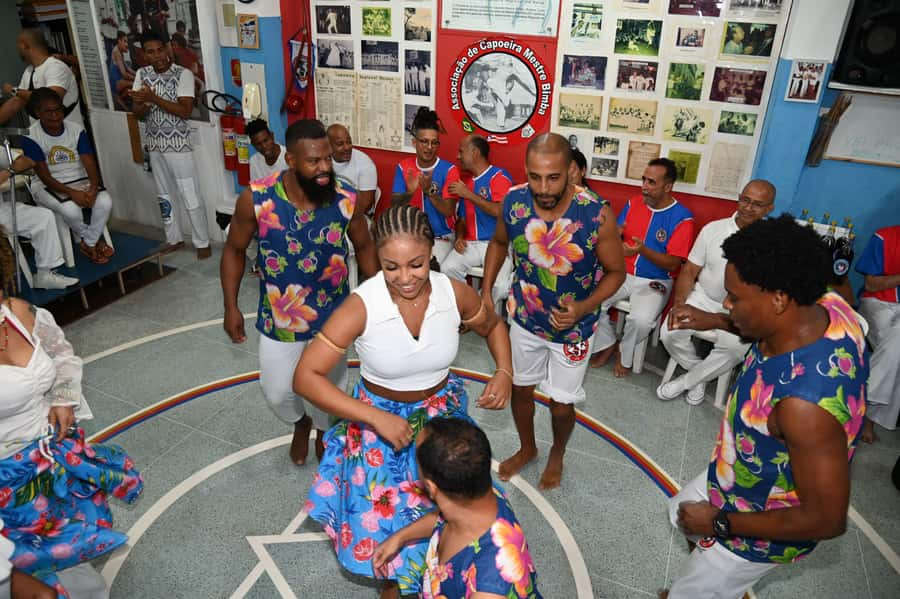
Capoeira is only one part of the program. Samba brings a different mood, with music, movement, and a strong social quality. The men and women who take part add their own style, so the Samba section feels like a cultural expression rather than a single fixed routine.
Maculelê adds a fiery visual change. Traditionally associated with rhythmic movement and sticks, it combines dance, timing, and theatrical combat. The quick patterns can make the group seem almost like a single moving unit, but each performer still has to keep precise control.
Traditional drumming holds the evening together. The beat is not background decoration. It guides the movement, supports the singing, and gives the performance its pulse. Live music also helps explain why Capoeira is more than a set of athletic tricks. The body, voice, instruments, and audience all belong to the same event.
You may notice that the evening shifts between intense activity and musical passages. That variety keeps the program from becoming a long series of similar acrobatic displays.
Why the informal format matters
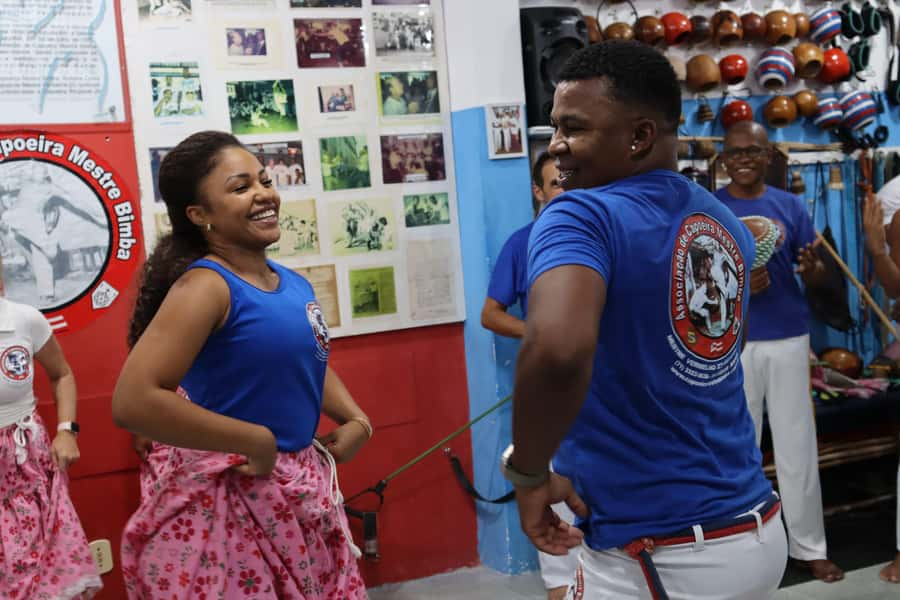
The most important choice you make is deciding what kind of cultural night you want. This is not advertised as a polished stage show with identical routines every night. It is closer to watching an association share its art, training, and performance traditions.
That means the quality can vary from one part to another. Some movements may look spectacular, while other moments may feel more like practice. One section may feature a highly skilled performer, while another may show a broader mix of ability.
I see that as a fair trade for being closer to the source. A formal production can be smoother, but it can also remove the surprise and social energy that make Capoeira special. Here, the unscripted quality helps you understand that these traditions are practiced by people, not displayed like museum objects.
The evening also gives you a look at cultural continuity. Young people, adults, men, and women all participate. That matters because it shows Capoeira as a community activity with room for different ages and abilities, not just a performance style for elite athletes.
More samba nights and rehearsals in Salvador:
- Salvador: Cultural Treasure – Samba de Roda.
★ 4.9 · 51 reviews - Rio de Janeiro: Beginner Samba Lesson in Ipanema
★ 4.9 · 1,071 reviews - Rio: Pub Crawl in Lapa with Cachaça Tasting and Live Samba
★ 4.7 · 881 reviews - Rio: Carnival Backstage Tour at Samba City with Cocktail
★ 4.6 · 520 reviews
A one-hour plan, with a possible timing question
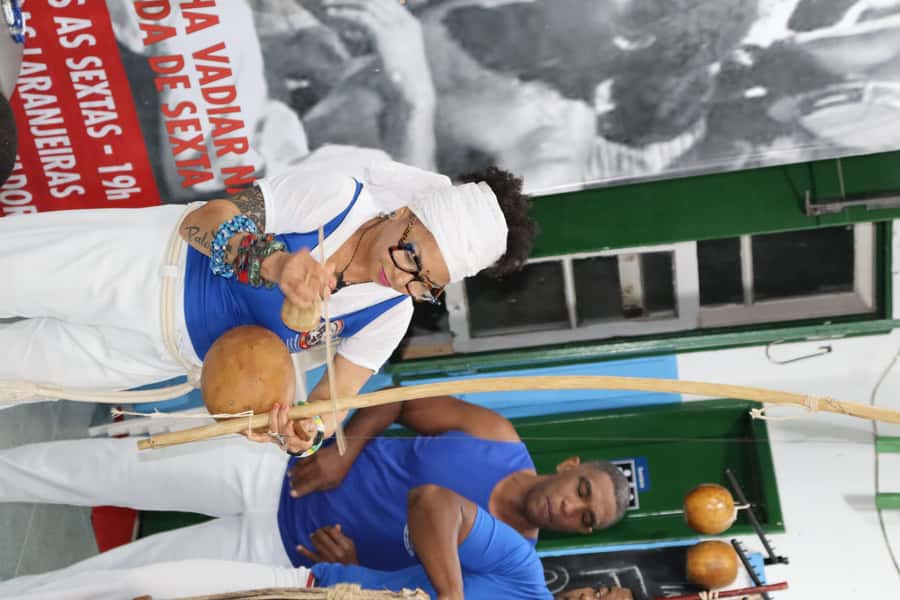
The activity is advertised as lasting one hour. That makes it easy to fit before dinner or alongside an evening walk through Salvador’s historic center.
At the same time, the detailed program describes a concert and dance show lasting 1.5 hours. Because those two time descriptions do not match, I would check the confirmed start and end times before making a dinner reservation or arranging another activity.
The program begins at the Associação de Capoeira Mestre Bimba and remains focused on the cultural presentation. You do not spend the evening moving between several venues. That keeps the experience simple and lets the energy build inside one place.
The structure is likely to move through Capoeira, Samba, Maculelê, drumming, live music, and acrobatics, though the exact order and balance may change. The description emphasizes spontaneous performance, so you should not expect a rigid schedule announced like a theater program.
A small refreshment may be offered afterward. One account describes a pleasant, refreshing treat at the end, but food and drinks are not included as a standard part of the booking. Do not arrive expecting a meal.
The heat and physical setting
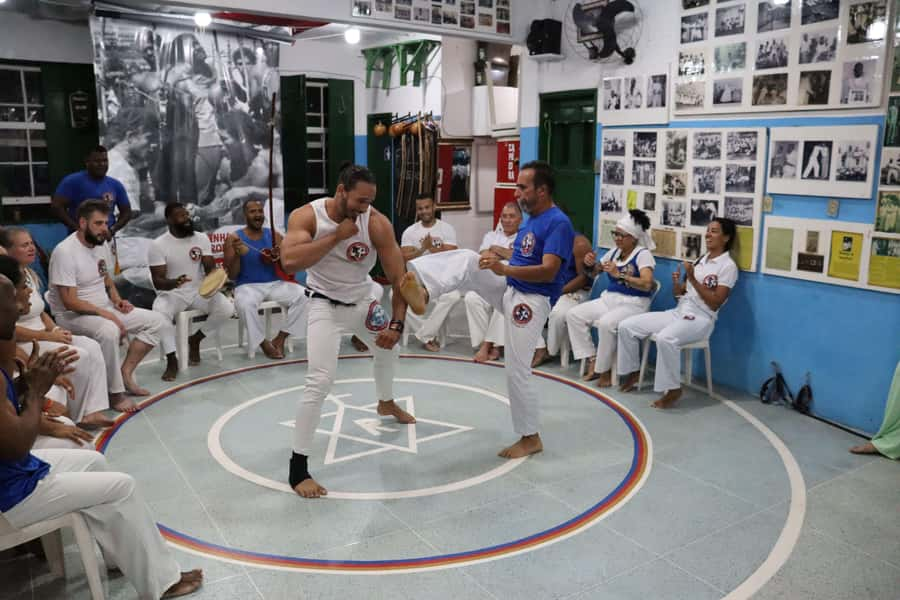
The room can become very hot. This is the most useful practical warning for the evening, especially because Capoeira and Samba involve constant movement and live drumming can raise the energy in the room.
Wear comfortable, breathable clothing and shoes that let you move easily. The official advice is to bring comfortable shoes and comfortable clothes. You are watching the performance rather than taking a Capoeira lesson, but a cramped outfit or stiff shoes will still make the evening less pleasant.
Smoking is not allowed. Food and drinks are not included, so plan accordingly. Since no transportation is provided, you also need to arrange your own route to the venue and back.
The activity is not suitable for pregnant women or people with back problems. The performance includes acrobatics and fast physical movement, and the setting may not offer the kind of quiet, spacious seating you would find in a conventional theater.
Finding the association in Largo do Terreiro de Jesus
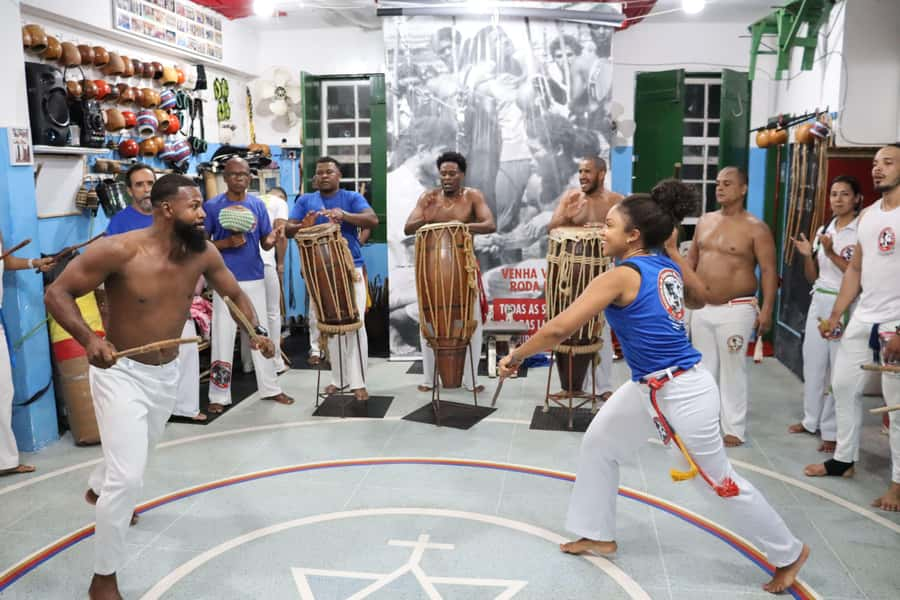
The meeting point is the Associação de Capoeira Mestre Bimba in Salvador. Use Ó Paí Ó Restaurante or São Domingos Gusmão Church as nearby landmarks in Largo do Terreiro de Jesus.
That advice is practical because historic Salvador can be confusing when you are following a street address alone. Give yourself extra time to identify the correct building, particularly if you are arriving after dark.
The location also makes this easy to combine with time in the historic center. You can build the evening around Terreiro de Jesus, but do not assume that transportation or an escort from your hotel is included. The meeting point is direct, and you are responsible for getting there.
The venue’s cultural importance is the main reason to visit this particular presentation. You could find Samba or drumming in many places, but the connection to Mestre Bimba and Capoeira Regional gives this evening a specific sense of place.
Is $30 a fair price?
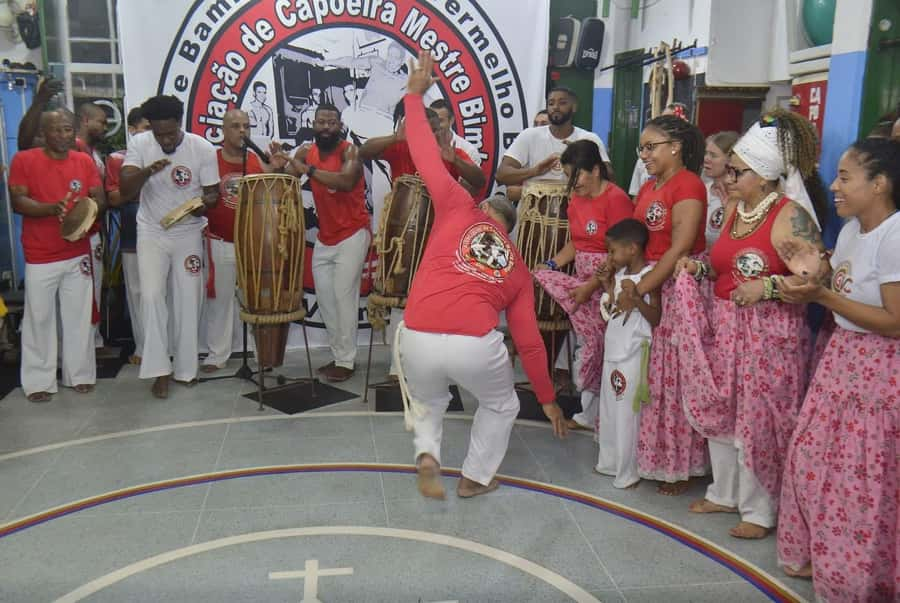
At $30 per person, the price is reasonable if you care about context and authentic participation rather than judging the event as a stage show alone.
You are paying for entry to a cultural presentation that combines several forms: Capoeira, Samba, Maculelê, drumming, live music, and acrobatics. You also get to see the activity in a historic school connected to Mestre Bimba, not an anonymous entertainment venue.
The value is strongest for someone who wants a compact introduction to several Afro-Brazilian traditions in one evening. You do not need to commit to a long class or a full-day cultural program.
The value is weaker if you expect a large-scale production with elaborate scenery, flawless choreography, or a formal lecture. The experience depends on the people performing that night, and some parts may feel more like association training than a finished theater number.
I would also factor in what is not included. Food, drinks, and transportation cost extra, and there is no hotel pickup. The ticket covers the cultural presentation itself.
Who should book this evening
I would recommend it to you if you want a short, energetic look at Salvador’s Afro-Brazilian culture and prefer a local association to a heavily packaged show.
It suits first-time visitors who want an accessible introduction to Capoeira. It also works well for anyone already interested in music, dance, martial arts, or the cultural history of Brazil.
Families with older children may find the mix of drumming and acrobatics appealing, though the supplied information does not give a specific age policy. Anyone who dislikes heat, loud music, or physical performance should think twice.
You should also choose something else if you want to participate in a class. This is a presentation, not a lesson. The action happens in front of you, with the exception that the group itself may include people at different stages of training.
The event is available with English or Portuguese live guidance. That can help frame the evening, though the music and movement carry much of the meaning even if you do not speak Portuguese.
What makes this different from a standard tourist show
The difference is not that every moment will be polished. In fact, the supplied details make clear that the performances can be uneven because they reflect real association activity.
The difference is the connection between the performers, the music, and the place. Capoeira is not presented as a random acrobatic act. It appears within the school founded by Mestre Bimba, whose work shaped Capoeira Regional.
You also get several art forms in one visit. Samba shows another side of Brazilian movement. Maculelê adds a more dramatic, rhythmic display. Drumming and live music explain the sound system behind the action.
For me, that combination makes the evening more useful than a single isolated dance performance. You leave with a broader picture of how movement, music, and community fit together in Salvador.
Should you book the Mestre Bimba Cultural Night?
Book it if you want an intimate, energetic introduction to Capoeira and related Afro-Brazilian traditions in a historic setting. The $30 price is fair for the range of performances and the cultural importance of the school.
Go with realistic expectations. You may see breathtaking acrobatics, but you may also see ordinary training moments. The room can be hot, the timing needs checking because the descriptions list both one hour and 1.5 hours, and transportation is not provided.
For visitors who value real community activity over perfect choreography, this is a strong choice. For anyone seeking air-conditioned seating, a carefully scripted production, or a quiet cultural lecture, it is probably not the right evening.
FAQ
Where does the Cultural Night take place?
It takes place at Associação de Capoeira Mestre Bimba in Salvador, near Ó Paí Ó Restaurante and São Domingos Gusmão Church in Largo do Terreiro de Jesus.
How long does the activity last?
The activity is advertised as one hour, while the detailed program describes a 1.5-hour concert and dance show. Check the confirmed schedule before booking other evening plans.
What performances are included?
The program includes Capoeira, Samba, Maculelê, traditional drumming, live music, and acrobatics.
Is transportation to the venue included?
No. There is no pickup service, so you must arrange your own transportation to the meeting point.
Are food and drinks included?
No. Food and drinks are not included. A refreshing treat may be offered afterward, but it is not listed as a standard inclusion.
Is the activity available in English?
Yes. Live guidance is available in English and Portuguese.
More Evening Tours in Salvador
- Salvador by Night: Cultural Dinner and Show
★ 4.7 · 27 reviews - Salvador by Night: Cultural Show and Dinner.
★ 4.4 · 17 reviews - Salvador by Night: Pelourinho & Old Town Tour
★ 4.3 · 8 reviews - Rio de Janeiro: Sunset Sailing Tour
★ 4.8 · 994 reviews
Just added around Salvador
- Salvador: Schooner Cruise with Pickup and Itaparica Stop★ 3.8 · 5 reviews
- Salvador: Traditional Drumming and Percussion Workshop★ 4.4 · 10 reviews
- Salvador by Night: Cultural Show and Dinner.★ 4.4 · 17 reviews
- Salvador: 3-Hour Percussion Class★ 4.9 · 10 reviews
- Salvador: Cultural Treasure – Samba de Roda.★ 4.9 · 51 reviews
- Salvador by Night: Cultural Dinner and Show★ 4.7 · 27 reviews
- Salvador: Caipirinha Masterclass with Unlimited Drinks★ 4.2 · 4 reviews
- Salvador: 4-Hour Candomblé Mysteries Tour★ 4.3 · 34 reviews
Samba Experiences, compared.
Pub Crawl in Lapa with Cachaça Tasting and Live Samba
Read our review →
Carnival Backstage Tour at Samba City with Cocktail
Read our review →
Ginga Tropical – Brazilian Samba and Folklore Show
Read our review →
Pedra do Sal: Live Samba Night with Local Guide & Drink
Read our review →
Browse the lists this tour appears in