
Reviewed · WORKSHOPS
Salvador: CAPOEIRA CLASS – CULTURAL
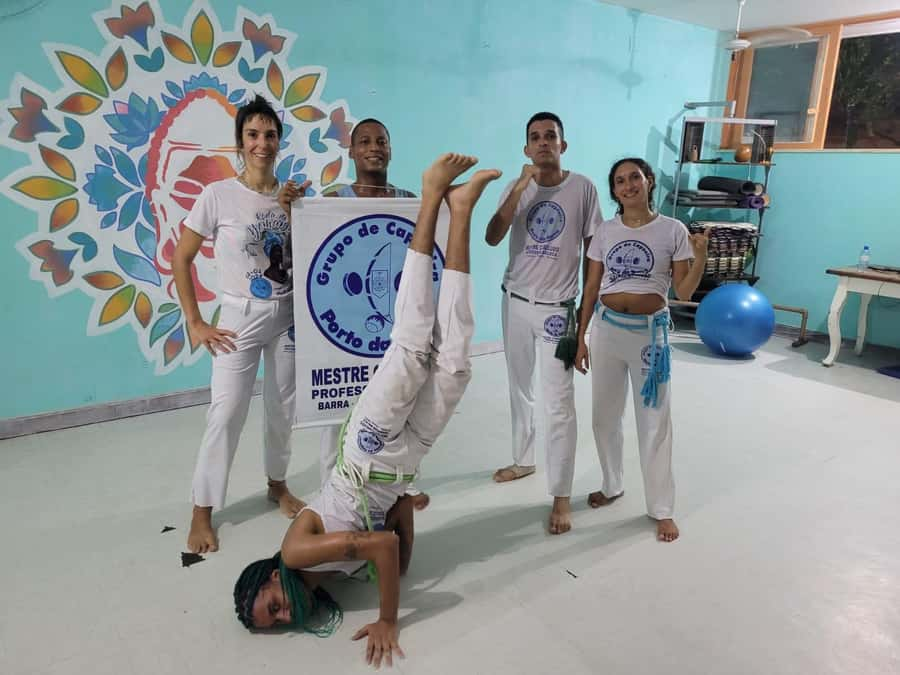
Capoeira is not simply a martial arts lesson. In this Salvador class, you learn a fight-and-dance tradition through movement, music, rhythm, and group practice. The session moves from warm-up drills to kicks, spins, and basic sequences, with the instructor explaining how capoeira connects resistance, personal strength, and present-day culture.
I like two things right away: the small limit of eight people, which gives the instructor room to watch your technique, and the chance to try instruments and learn songs as well as movements. The main drawback is that the class is taught in Portuguese. You can still follow along without speaking the language, but you should be ready to learn by watching closely.
- Monday and Wednesday at 7:30 PM: Plan your Salvador evening around the fixed class time.
- Ninety minutes of active instruction: Expect warm-up work, coordination drills, kicks, spins, and capoeira sequences.
- Portuguese-speaking master instructor: Demonstrations and body language make the class accessible, but spoken explanations may require patience.
- Music is part of the lesson: You may play instruments and learn songs, not just practice physical moves.
- Small group of up to eight: The format suits beginners who want more direct attention.
- $17 per person: A reasonable price for a guided cultural activity that includes water and workout equipment.
Starting at Hostel Nomads at 7:30 PM
The class meets at Hostel Nomads, with sessions held every Monday and Wednesday at 7:30 PM. That fixed schedule is useful if you are planning a short stay in Salvador, though it gives you less flexibility than an activity offered throughout the day.
The evening timing also makes sense for a physical class. You can spend the earlier part of your day seeing Salvador, then head to the lesson with enough time to change and prepare. Since the meeting point is a hostel rather than a major sightseeing landmark, check the exact location when booking and allow a little extra time to find the entrance.
The experience lasts 90 minutes. That is long enough to cover more than a quick demonstration, but short enough to fit into an evening without taking over your whole schedule. You will want comfortable clothing and shoes suited to movement, although the supplied information does not specify a required dress code.
Warm-ups That Test Agility and Coordination
The first part of class is a lively warm-up focused on agility, flexibility, and coordination. This is not filler. Capoeira asks your body to move in unusual patterns, and beginners need time to loosen up before attempting kicks, turns, and lower movements.
You may find the warm-up more demanding than expected, especially if you are not used to exercise that combines balance with constant motion. The class is designed as a workout, so do not treat it like a purely cultural talk with a few easy steps added on.
The useful part is that the warm-up prepares you for the skills that follow. Instead of being thrown straight into acrobatics, you begin by working on the control and flexibility needed for capoeira’s fluid style. The instructor can then build the lesson in stages.
Water is included, which is a small but practical touch. Even so, I would bring your own bottle if you prefer to drink often during exercise. The class provides basic workout tools, though the available information does not list each item.
More capoeira sessions in Salvador:
- Salvador: Capoeira Class at Mestre Bimba’s 1st Ever School.
★ 4.9 · 34 reviews - Salvador: Cultural Night of Capoeira, Samba, and Drumming
★ 4.9 · 17 reviews - Rio de Janeiro: Favela Jeep Tour to Rocinha and Capoeira
★ 3.9 · 5 reviews
Learning Kicks, Spins, and Basic Sequences
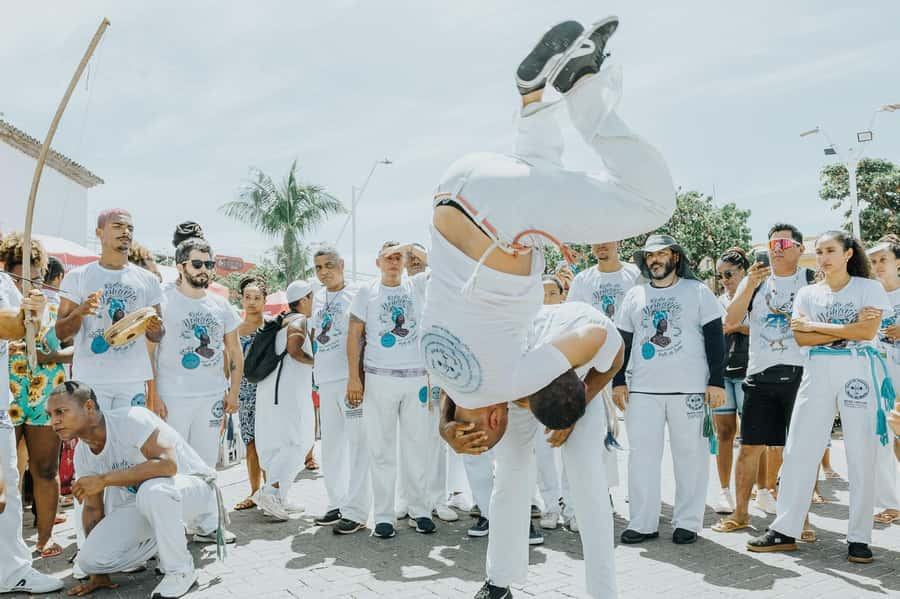
After warming up, the instructor guides you through capoeira movements, including kicks, spins, and acrobatic elements. The emphasis is on technique and expression, so the goal is not just to copy a move once. You are learning how movements connect and how to keep your body under control.
For a first class, the sequence matters. Capoeira can look effortless when performed by an expert, but the balance, timing, and coordination take practice. Expect to repeat movements and work at a beginner pace rather than master the full art in one session.
The lesson also brings a mental challenge. You need to listen, watch, remember the order of movements, and respond to the rhythm. That combination makes the activity more engaging than a standard exercise class. It also means you may feel pleasantly tired by the end.
The acrobatic side deserves a sensible note. The class includes acrobatics, but the available details do not promise advanced tricks or any particular skill level. Do not book expecting a professional performance workshop. Book it as an introduction in which you can learn basic movements and test your limits under instruction.
Capoeira as Movement, Music, and Community
The cultural value of the class comes from its full shape. You are not only learning how to kick or spin. You are being introduced to capoeira as a practice tied to history, resistance, empowerment, music, and community.
This context gives the physical lesson more meaning. The movements are not presented as a collection of gym exercises. They form part of an art that has changed over time and continues to appear in modern city culture.
Music is especially important. One participant’s detailed account describes learning songs and playing instruments during the 90-minute class. That detail makes the activity different from a basic martial arts workout. You may find that the rhythm helps you understand the movements, even if the Portuguese lyrics are unfamiliar.
Do not expect a full lecture on Brazilian history. The session is still an active class, and the description promises cultural and historical context alongside physical instruction. The balance is the point: you learn through doing, listening, moving, and joining the group.
Managing a Portuguese-Only Class
The instructor teaches in Portuguese. This is the clearest practical consideration before booking.
You do not need to speak Portuguese to take part. The physical nature of the lesson means demonstrations, repetition, and visual cues carry much of the instruction. Still, you may miss some of the cultural explanation or need extra time to understand a correction.
I would approach the language difference with a simple plan. Watch the instructor carefully, copy the basic motion before adding speed, and ask for a demonstration when a spoken explanation is unclear. A few Portuguese words connected to direction, repetition, and body position could also help, though they are not required by the activity information.
The language barrier can even make the class feel more focused. You rely less on lengthy verbal instruction and more on movement. But if you want detailed technical explanations in English, French, or another language, this is not the safest choice. The listed language is Portuguese only.
A few more Salvador days to weigh up
- Salvador: Traditional Drumming and Percussion Workshop
★ 4.4 · 10 reviews - Salvador: 3-Hour Percussion Class
★ 4.9 · 10 reviews - BOXE CLASS – EX BAHIAN CHAMPION (SALVADOR-BA)
★ 5.0 · 7 reviews - Rio de Janeiro: Beginner Samba Lesson in Ipanema
★ 4.9 · 1,071 reviews
Why the Eight-Person Limit Matters
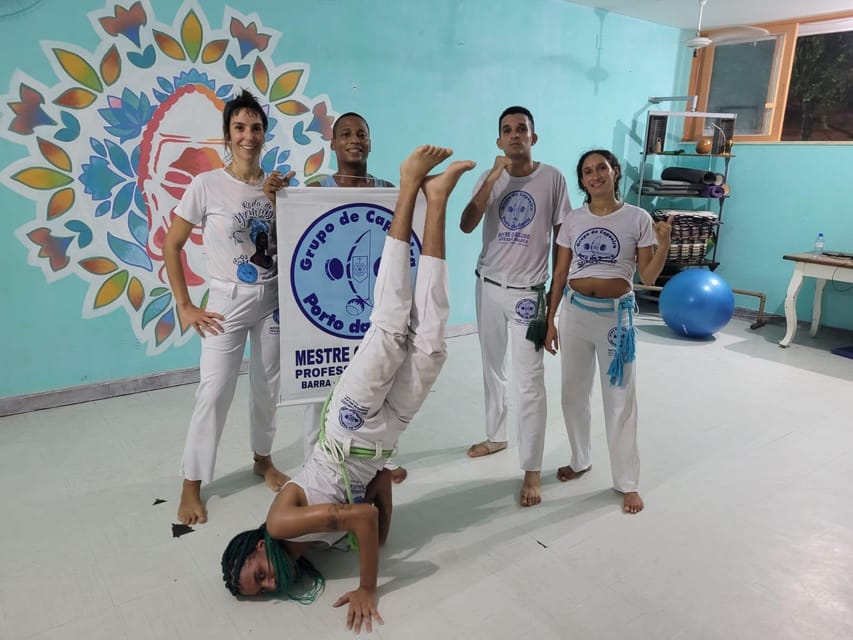
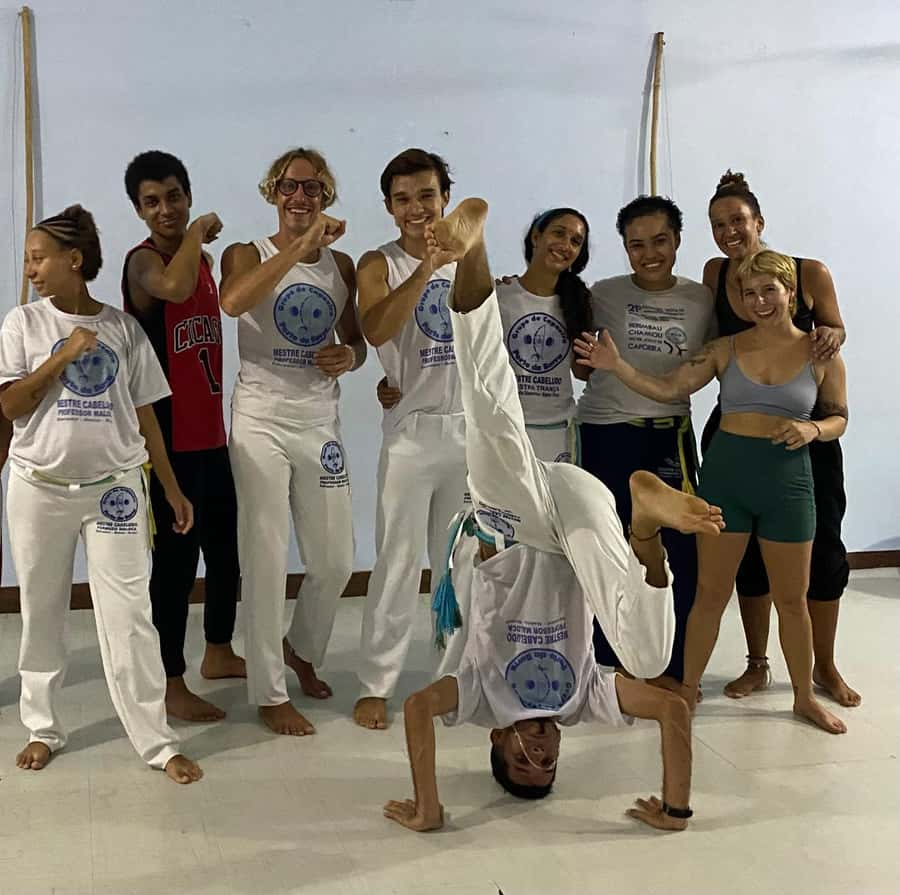
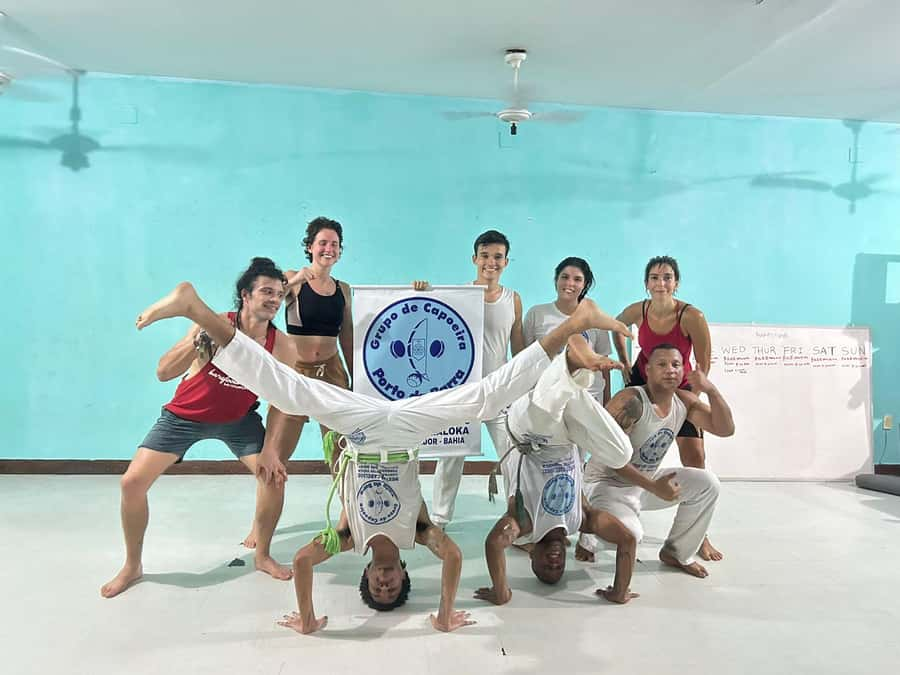
The group is limited to eight participants. That is a strong feature for a movement class, since crowded sessions make it harder to see the instructor and easier to collide with someone during a turn or kick.
A small group also gives the master instructor a better chance to notice posture, balance, and timing. The supplied information does not promise private coaching, so you should not expect a one-to-one lesson. Still, eight people is a manageable number for learning a physical skill.
The atmosphere may also feel more personal than a large tourist activity. You are practicing alongside a handful of other people, sharing the music and the challenge. That community element fits capoeira better than a silent, individual workout.
At the same time, a small group does not mean the class will be easy. The session remains active and can be intensive. One detailed account describes learning the basics while finding the class fun and demanding, which is a useful expectation for anyone considering the booking.
A $17 Activity With More Than a Workout
At $17 per person, this is priced as an affordable cultural activity rather than a premium private lesson. The value comes from the combination of instruction, physical training, music, and cultural context within 90 minutes.
The class includes a capoeira instructor, workout tools, and water. You are paying for more than a room and a short demonstration, but you are also not buying an extended course. The price makes the most sense if you want a focused introduction during a Salvador visit.
I would compare it with the cost of other guided activities in the city, but the real question is what kind of evening you want. If you prefer to sit and watch a cultural performance, this class asks more of you. If you want to take part and learn through your own body, $17 is a fair entry point.
The rating is 4.6 out of 5 from 13 ratings, with especially strong praise for the instructor’s care, energy, and teaching style. The feedback also points to the class being fun, intensive, and useful for learning the basics. That combination suggests good value for beginners, while still leaving room for a realistic warning: 90 minutes will give you a start, not full command of capoeira.
Who Will Enjoy This Salvador Class
I would recommend this class most strongly to you if you like active cultural experiences. It suits people who want to understand a Brazilian tradition by joining in rather than watching from the side.
It is also a good fit if you enjoy learning with a group. The music, songs, instruments, and shared sequences give the class a social side. You do not need previous capoeira experience, and the focus on basic movements makes it suitable for an introduction.
You should think twice if you dislike exercise, have no interest in martial arts or dance, or want instruction in English. The class includes physical conditioning and acrobatics, and it takes place in Portuguese.
Your fitness level may affect how you feel during the session. The supplied information does not give an age limit, medical guidance, or a detailed breakdown of physical difficulty. If you have concerns about kicks, spins, or acrobatic movements, ask the provider before booking.
Booking Details That Matter
You can cancel up to 24 hours in advance for a full refund. You can also reserve now and pay later, which helps if your Salvador schedule is not settled.
The activity runs on Mondays and Wednesdays at 7:30 PM. Check availability because the exact date and starting slot must be confirmed before booking, even though the regular class time is listed.
The provider is hakatrip. The instructor language is Portuguese, and the group size is limited to eight. Those three details matter more than they may first appear: the provider handles the booking, the language shapes how you learn, and the small group affects how much direct attention you may receive.
Should You Book This Capoeira Experience?
Book it if you want a hands-on Salvador activity that blends exercise, music, and cultural context. The small group, modest price, and 90-minute format make it an easy addition to a city visit, especially if you enjoy trying something outside the usual sightseeing route.
Skip it if you need English instruction, dislike physical exertion, or are looking for a polished stage performance rather than participation. For everyone else, this is a practical introduction to capoeira, with enough movement to feel like a real workout and enough music and history to show why the art is more than a series of kicks.
FAQ
Where does the capoeira class meet?
The meeting point is Hostel Nomads in Salvador.
When is the class held?
Classes are held every Monday and Wednesday at 7:30 PM.
How long does the capoeira class last?
The class lasts 90 minutes.
What language does the instructor speak?
The instructor speaks Portuguese. You can still participate without speaking Portuguese, but you will need to follow demonstrations and visual cues closely.
How many people can join the class?
The group is limited to eight participants.
What is included in the price?
The booking includes the capoeira class, a master capoeira instructor, workout tools, and water.
Just added around Salvador
- Salvador: Schooner Cruise with Pickup and Itaparica Stop★ 3.8 · 5 reviews
- Salvador: Traditional Drumming and Percussion Workshop★ 4.4 · 10 reviews
- Salvador: Cultural Treasure – Samba de Roda.★ 4.9 · 51 reviews
- Salvador by Night: Cultural Show and Dinner.★ 4.4 · 17 reviews
- Salvador: 3-Hour Percussion Class★ 4.9 · 10 reviews
- Salvador by Night: Cultural Dinner and Show★ 4.7 · 27 reviews
- Salvador: Caipirinha Masterclass with Unlimited Drinks★ 4.2 · 4 reviews
- Salvador: 4-Hour Candomblé Mysteries Tour★ 4.3 · 34 reviews
Workshops, compared.

Capoeira Class at Mestre Bimba’s 1st Ever School.
Read our review →
Surf lessons with local instructors in Copacabana/ipanema!
Read our review →Browse the lists this tour appears in