
Reviewed · AFRO-BRAZILIAN HERITAGE TOURS
Salvador: Walking Tour Through Pelourinho
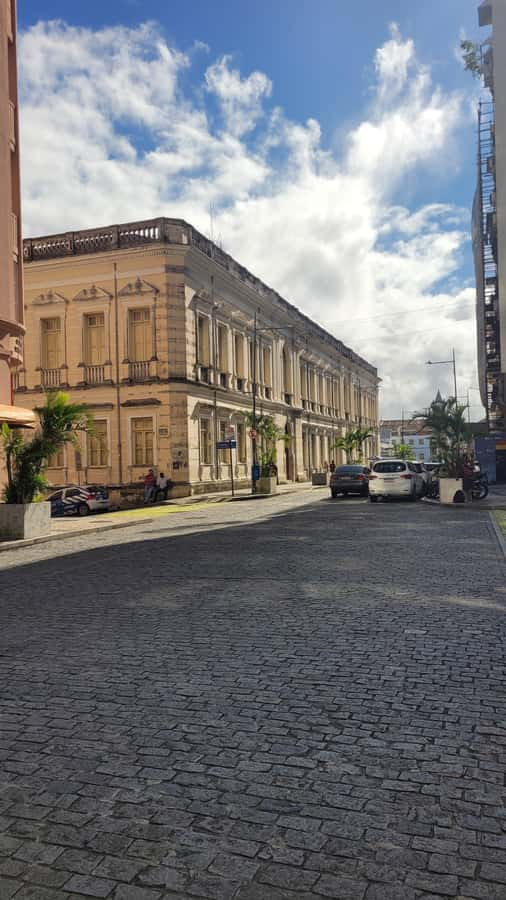
Salvador’s story comes into focus as you walk from the bay-facing Praça Castro Alves into Pelourinho’s old streets. This is not just a photo walk. The route connects Brazil’s colonial government, the legacy of slavery, Afro-Brazilian resistance, grand churches, and modern popular culture in a compact 90 minutes.
I like the small group of no more than seven, which gives Adriano room to answer questions and adjust his explanations to the people in front of him. I also like the way the tour links major sights with local context, from Zumbi dos Palmares to Olodum and the street where Michael Jackson filmed They Don’t Care About Us.
The main drawback is the pace. Ninety minutes is enough for a strong introduction, but not enough for long interior visits or a slow look at every church. The route also includes slopes, uneven streets, and considerable walking, so it is not suitable for wheelchair users or people with mobility impairments.
Key points to know before you book
- Begin with Baía de Todos os Santos: Praça Castro Alves gives you a broad view of the bay and its islands before you enter the historic center.
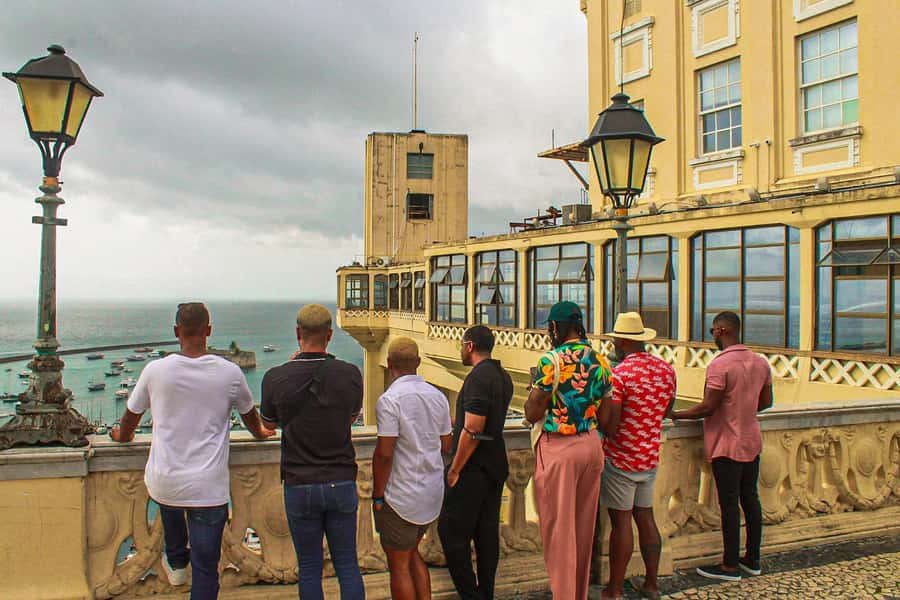
- Follow Salvador’s old civic spine: Rua Chile, Praça Thomé de Souza, and the Lacerda Elevator explain how the upper and lower parts of the city fit together.
- Expect history with difficult chapters: The tour addresses slavery, resistance, the demolition of Igreja da Sé, and the city’s changing identity.
- See Pelourinho’s Afro-Brazilian heart: The route includes Zumbi dos Palmares, the church and brotherhood associated with Black people in Brazil, and Olodum’s house.
- Adriano is the main draw: He is praised for clear English, a friendly manner, personal recommendations, and explanations that balance facts with stories.
- Pack for the sun: Wear light clothing and comfortable shoes, and bring water, sunscreen, a hat, and a camera.
Starting above the bay at Praça Castro Alves
You meet the guide in Praça Castro Alves, where Adriano identifies himself with a credential. This is a useful starting point because the square gives you an immediate sense of Salvador’s setting. From here, Baía de Todos os Santos opens out below, with islands visible across the water.
The view is more than a pleasant first photograph. It helps explain Salvador’s importance as a coastal city and gives you a reference point before the walk turns inland toward Cidade Alta, the upper city. Bring your camera, but listen before you start snapping. Adriano uses this opening to place Salvador within the wider story of Brazil.
The square also suits a small group. You can hear the guide without a struggle, and the view gives everyone a natural moment to get oriented. Several people who have taken this tour found that Adriano speaks clearly and loudly enough for the whole group, an important detail on an outdoor walk.
From Praça Castro Alves, you move along Rua Chile, described on the tour as the first street in Brazil. That claim gives the street a useful role in the route, but the real value is seeing how this old thoroughfare connects the bay-facing square with Salvador’s main historic plazas.
More Afro-Brazilian heritage walks in Salvador:
- Afro-Brazilian Roots Private City Tour in Salvador
★ 4.7 · 88 reviews - Salvador Historic Walking Tour – Pelourinho
★ 4.8 · 62 reviews - Salvador: 4-Hour Candomblé Mysteries Tour
★ 4.3 · 34 reviews
Rua Chile and the view from Pau da Bandeira
Rua Chile leads you toward Praça Thomé de Souza, but the route includes a photo stop on Pau da Bandeira street. This is one of the best pauses in the tour because it offers another fine view of the bay.
I appreciate the rhythm here. You are not asked to walk continuously while listening to a long lecture. The guide can explain the setting, then give you time to look around and take pictures. The stop also breaks up the first section before the tour reaches the city’s major civic landmarks.
The streets of the historic center are not presented as a polished museum set. You see the city as a living place, with old buildings, public squares, churches, cultural institutions, and people moving through their daily routines. That makes the guide’s local perspective useful. Adriano’s recommendations on food, bars, sights, and places to avoid can help you plan the rest of your stay.
The route does not include hotel pickup, transportation, food, or drinks. You need to reach Praça Castro Alves on your own, and a bottle of water is worth carrying from the start.
Praça Thomé de Souza and the Lacerda Elevator
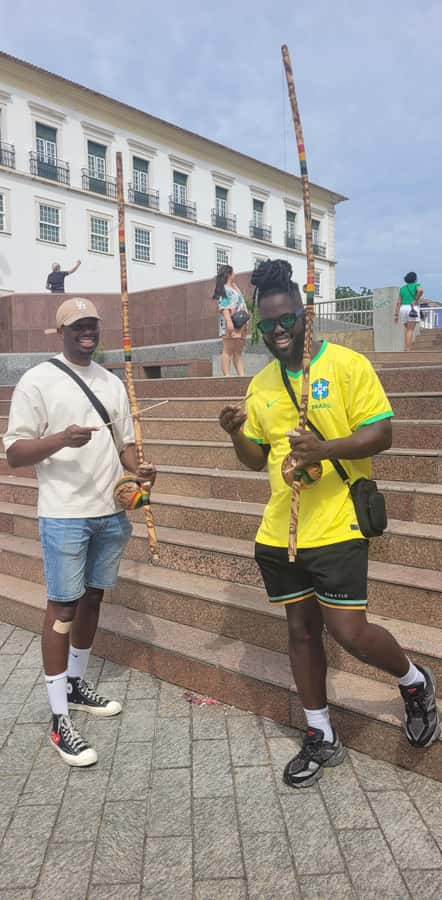
Praça Thomé de Souza is named for the first General Governor of Brazil. Here, the tour brings together government, punishment, and transport in one compact area.
You see the Palácio do Primeiro Governo, a building that was used as Brazil’s first prison, and then the Lacerda Elevator. The elevator connects Cidade Alta and Cidade Baixa, Salvador’s upper and lower areas. It is one of the city’s most recognizable structures, but the guide’s explanation makes it more useful than a quick photograph.
The elevator also clarifies Salvador’s unusual vertical arrangement. You can look from the upper city toward the lower city and understand why this connection matters. The tour does not list a ride in the elevator as part of the experience, so expect to see and discuss it rather than assume a separate ticket or visit is included.
This is a good example of what you are paying for. The fee is $80 per person, which is not a bargain for a 90-minute walk if you only want to check off landmarks. It becomes easier to justify if you want an English-speaking local guide to connect the buildings, explain the city’s past, and help you use the rest of your time in Salvador well.
From Rua Chile to Praça da Sé
After the Lacerda Elevator, the walk continues along Rua Chile and passes the Museu da Misericórdia. The museum is part of the route, but entrance fees to attractions are not included. If you want to go inside, plan to pay separately and understand that doing so could take time away from the walking itinerary.
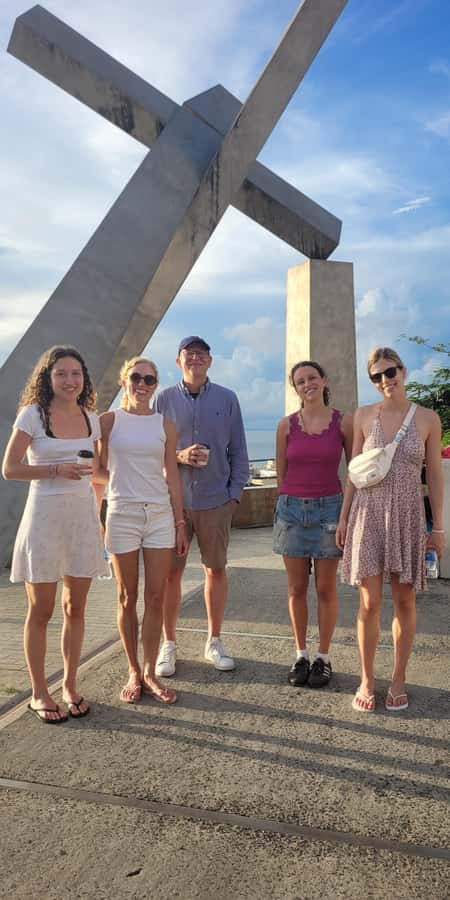
The next major stop is Praça da Sé. Here you see the Monument to the Fallen Cross, erected in protest after the demolition of Igreja da Sé. This is one of the tour’s more meaningful moments because the monument points to loss and disagreement, not just architectural beauty.
A good city walk should explain what has disappeared as well as what remains. That is what gives the square some weight. You are looking at a public space shaped by decisions about heritage, religion, power, and urban change.
At Praça da Sé, the guide makes two specific stops. One is at the statue of the first Bishop of Brazil, where Adriano explains the tragic end associated with him. The other is at the statue of Zumbi dos Palmares, a leader of resistance against slavery.
These stops broaden the story beyond colonial rulers and church builders. Zumbi’s place in the route gives you a direct connection to resistance and to the African and Afro-Brazilian experience that is central to Salvador. Adriano is also praised for being willing to discuss difficult parts of the city’s past rather than presenting a soft, postcard-only version of Pelourinho.
More walking tours in Salvador:
- Salvador, Bahia: A amazing Walking Tour!
★ 5.0 · 14 reviews - Rio de Janeiro: Rocinha Favela Walking Tour with Local Guide
★ 4.8 · 3,052 reviews - Rio De Janeiro: Half-Day Rocinha Favela Walking Tour
★ 4.7 · 2,272 reviews - Sunrise and Sunrise Walk Two Brothers with Local Guide
★ 5.0 · 193 reviews
Largo Terreiro de Jesus and Brazil’s first Faculty of Medicine
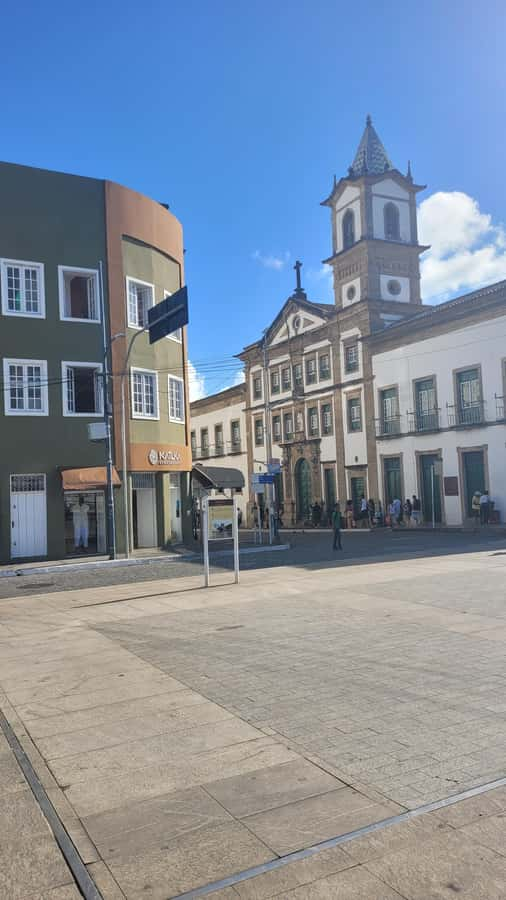
Leaving Praça da Sé, you continue to Largo Terreiro de Jesus. The square brings together one of the tour’s strongest academic and religious contrasts.
You see the first Faculty of Medicine in Brazil and a complex of churches around the square. The faculty is significant because it shows Salvador as a center of learning and public life, not only a colonial setting. The churches show how much religious architecture shaped the old center.
You should not expect an extended interior tour of each building. The experience is a guided overview, with stops for explanation and photographs. Entrance fees are not included, and the supplied details do not promise access inside every site.
That limitation matters. If your main aim is to study church interiors, carvings, or museum collections at length, you may want to return independently. If you want the city to make sense before you explore on your own, this sequence works well.
Igreja de Ouro and the route through Pelourinho
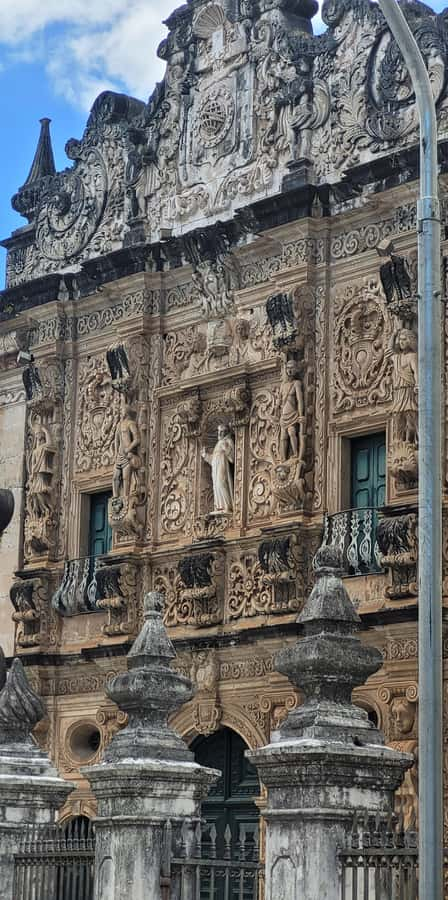
The walk then reaches Largo do Cruzeiro de São Francisco, where Igreja de Ouro is the headline sight. The name points to the church’s impressive gold decoration, and this is the place where a camera may come out quickly.
Even here, the guide adds value by placing the church among the other buildings around the square. You get a better sense of how religious institutions shaped public space and how the square functions as part of Pelourinho rather than as an isolated monument.
The tour also passes the church of Black people and the brotherhood of Black men in Brazil. This is an important part of the route because it draws attention to Afro-Brazilian religious and social life, not just the grand churches built by colonial authorities.
Salvador’s historic center can be visually dazzling, but it also carries the marks of slavery and inequality. A useful guide helps you hold both truths at once. Adriano’s strongest quality, based on the way his tour is described, is his willingness to add context without turning the walk into a dry classroom talk.
Olodum’s house and Ladeira do Pelô
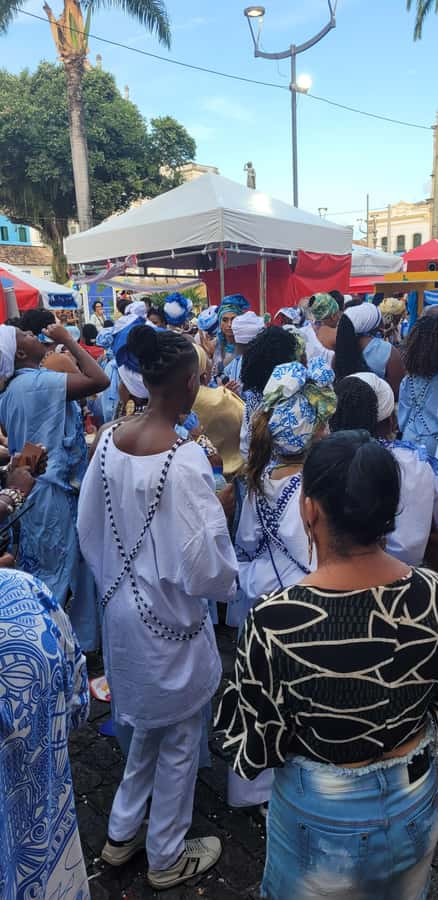
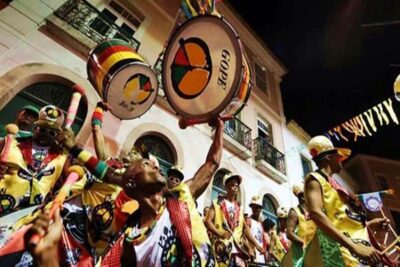
Near the end, you pass Olodum’s house. The stop connects the old center with Salvador’s modern cultural identity and its strong Afro-Brazilian musical tradition.
Then you reach the famous Ladeira do Pelô, the steep street associated with Michael Jackson’s filming of They Don’t Care About Us. This is the sort of detail that helps the area feel familiar even if you have never visited before. You may recognize the street from the video, then see how it fits into the larger historic district.
The Michael Jackson connection is memorable, but it should not overshadow the rest of the walk. The strongest part of this final section is the way it brings together music, popular culture, race, history, and place. Pelourinho is not only a collection of colorful buildings. It is also a setting for cultural expression and public memory.
The tour ends after this sequence, with no food or drinks included. Adriano’s personal recommendations can help you decide where to eat or go next, but you should treat those suggestions as advice for later rather than part of the booked experience.
What Adriano adds to the walk
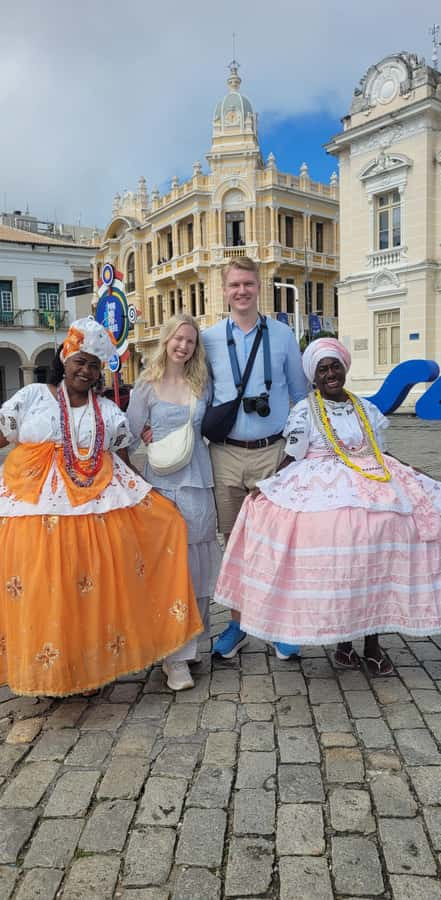
The guide is Adriano, and his role is a major reason to consider this tour. His English is described as fluent, clear, and easy to hear. He also makes an effort to include everyone, which matters in a group that may have different interests and levels of background knowledge.
I like that the guide does not appear to rely only on memorized dates. The strongest descriptions of the experience point to stories, fun facts, answers to general questions, and local advice. Adriano has also been praised for adapting recommendations to personal interests, from food and nightlife to places worth seeing and areas to avoid.
The small group limit of seven helps. You can ask about a statue, church, street, or local custom without feeling that you are holding up a large crowd. If you are one of only three people on the day, the experience may feel almost like a private walk, though the tour is not advertised as private.
At the same time, a good guide cannot remove the physical demands of the route. You still need to walk for 90 minutes through a historic district, with slopes and uneven surfaces. Wear comfortable shoes and light clothing. A hat, sunscreen, and water are not optional extras in Salvador’s sun.
Is $80 good value for 90 minutes?
At $80 per person, this tour costs more than a basic free walk, and the short duration deserves a close look. You are paying for a limited group, an English-speaking guide, a focused route, and local help with understanding Salvador beyond its famous photographs.
I see the price as reasonable for a first introduction if you value personal explanation and practical advice. The guide covers a large number of important sites in a compact period, and the small group makes it easier to ask questions. You can also use Adriano’s suggestions to shape the rest of your time in the city.
The value is weaker if you want entrance to the churches, museums, or elevator, since those costs are not included. It is also less suitable if you prefer to move slowly, linger inside buildings, or spend an entire afternoon taking photographs.
The booking terms are flexible: you can cancel up to 24 hours ahead for a full refund, and you can reserve now and pay later. The tour is offered in English, with availability depending on the starting time you choose.
Who should book this Pelourinho walk?
I would choose this tour for a first visit to Salvador, especially if you want the historic center explained in English and prefer a small group over a large bus tour. It suits curious walkers who want history, architecture, Afro-Brazilian culture, and local suggestions in one compact outing.
It is also a good first-day activity. The route gives you a map of the upper city, identifies places you may want to revisit, and helps you decide where to eat and what to see next.
I would think twice if you have limited mobility, use a wheelchair, dislike hills, or need frequent long stops. The tour is not suitable for wheelchair users or people with mobility impairments. I would also look elsewhere if your priority is full access to every interior, since admission is not included and the schedule is tight.
Should you book it?
Book this walk if you want a clear, personal introduction to Pelourinho and value a guide who can connect Salvador’s famous sights with its harder history. Adriano’s friendly style, strong English, and practical recommendations make the experience more than a quick circuit of monuments.
Skip it if you want a slow architectural study or a fully inclusive sightseeing package. For most able walkers spending a first day in Salvador, the 90-minute route offers a useful foundation, especially with water, sun protection, and realistic expectations about what fits into the time.
FAQ
Where does the tour begin?
The meeting point is Praça Castro Alves. The guide will be standing there with a credential.
How long does the walking tour last?
The tour lasts 90 minutes.
What language is the tour in?
The live tour guide speaks English.
How many people can join the group?
The group is limited to seven participants.
Who is the guide?
The guide is Adriano.
Does the tour include hotel pickup and drop-off?
No. Hotel pickup and drop-off are not included.
Are food and drinks included?
No. You need to arrange your own food and drinks.
Are entrance fees included?
No. Entrance fees to attractions are not included.
What should I bring?
Bring comfortable walking shoes, light clothing, a sun hat, sunscreen, water, and a camera.
Is the tour suitable for wheelchair users?
No. The activity is not suitable for wheelchair users or people with mobility impairments.
Just added around Salvador
- Salvador: Schooner Cruise with Pickup and Itaparica Stop★ 3.8 · 5 reviews
- Salvador: Traditional Drumming and Percussion Workshop★ 4.4 · 10 reviews
- Salvador: Cultural Treasure – Samba de Roda.★ 4.9 · 51 reviews
- Salvador by Night: Cultural Show and Dinner.★ 4.4 · 17 reviews
- Salvador: 3-Hour Percussion Class★ 4.9 · 10 reviews
- Salvador by Night: Cultural Dinner and Show★ 4.7 · 27 reviews
- Salvador: Caipirinha Masterclass with Unlimited Drinks★ 4.2 · 4 reviews
- Salvador: 4-Hour Candomblé Mysteries Tour★ 4.3 · 34 reviews
Afro-Brazilian Heritage Tours, compared.
Explore Little Africa : Unveiling Afro Heritage in Rio de Janeiro
Read our review →
Afro-Brazilian Roots Private City Tour in Salvador
Read our review →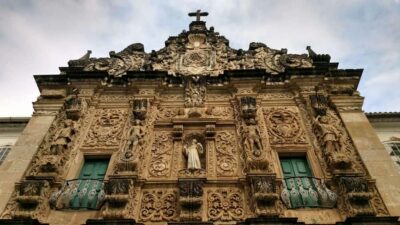
Browse the lists this tour appears in